
 Worksheets
Review Module 6-8
Total questions: 86
Worksheet time: 2hrs 0mins
In the formation of an ionic compound, a metal atom typically
Gains electrons to become positively charged
Loses electrons to become positively charged
Gains electrons to become negatively charged
Loses electrons to become negatively charged
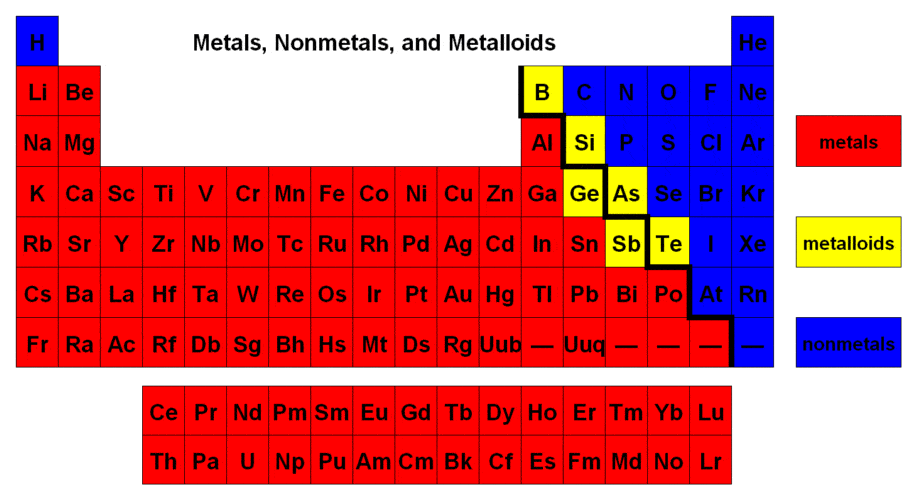
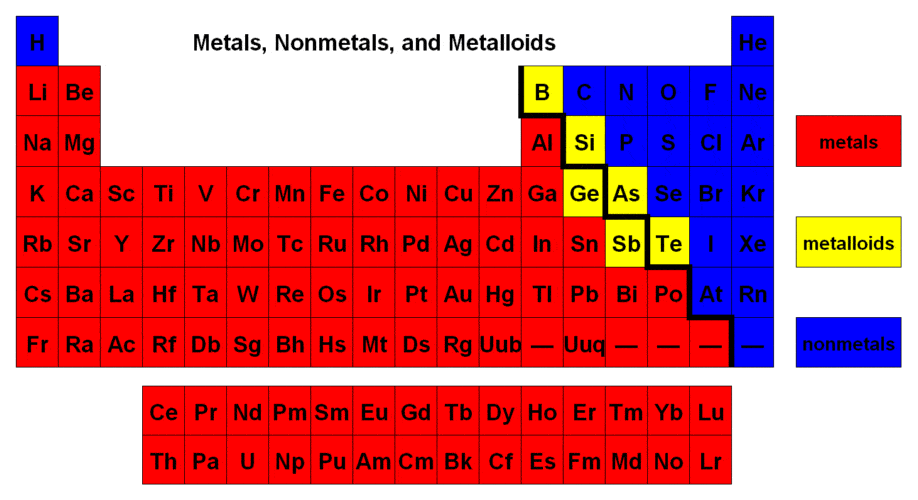
In chemical compounds, covalent bonds form when
the electronegativity difference between two atoms is very large.
electrons are completely transferred between two metals.
pairs of electrons are shared between two nonmetal atoms.
two nonmetal atoms are attracted to each other by opposite charges.
An ionic bond forms when
Valence electrons are shared
a sea of mobile electrons surround the cations
valence electrons are transferred between atoms
none of the above
What type of bond is expected to form between Oxygen (O) and Hydrogen (H)?
Ionic
Covalent
Metallic
Which of the following best describes a valence electron?
an electron located in the outermost energy level of an atom.
an electron located in the nucleus of an atom.
an electron located in the second energy level.
Which type of bond is formed between sodium and chlorine atoms?
covalent bond
ionic bond
hydrogen bond
metallic bond
Which compound is formed by a complete transfer of electrons between atoms?
H2O
CH4
NaCl
O2
Which suffix is commonly used for naming simple anions?
-ide
-ous
-ic
-ium
What is the primary reason atoms form chemical bonds?
To increase their energy levels
To decrease their temperature
To attain a stable electron configuration
To increase their size
Which of the following best describes the nature of metallic bonds?
A network of positive metal ions immersed in a sea of free electrons.
The covalent sharing of electrons between metal atoms.
The ionic transfer of electrons from metals to non-metals.
The electrostatic attraction between charged particles.
What is the number of valence electrons in Sulfur and its typical ionic charge?
6, -2
4, +2
6, +4
8, -2
How many valence electrons are present in an oxygen atom?
2
4
6
8

How many electrons does this atom need to gain to complete its valence shell?
1
2
3
4
What is the chemical name for FeCl3?
iron (III) chloride
iron chloride
iron monochloride
iron (II) chloride
True or false: Prefixes are not used when writing the names of ionic compounds.
True
False
What is the name for KCl
Potassium Chloride
Potassium monochloride
monopotassium Chloride
Potassium hypochlorite
How many electrons does hydrogen need to achieve a full valence shell?
1
2
3
4

What is the correct Lewis Dot Structure for ammonia NH3


What is the correct formula for Lead(IV) sulfate?
PbSO4
Pb(SO4)2
Pb2(SO4)4
Pb4(SO4)2
In a polar covalent bond, how are the electrons distributed between the atoms?
Equally
Unequally
Not distributed
None of the Above
In a nonpolar covalent bond, how are the electrons distributed between the atoms?
Equally
Unequally
Not distributed
All of the Above

What is the difference in electronegativity between Nitrogen and Silicon?
1.2
0.7
1.0
0.5
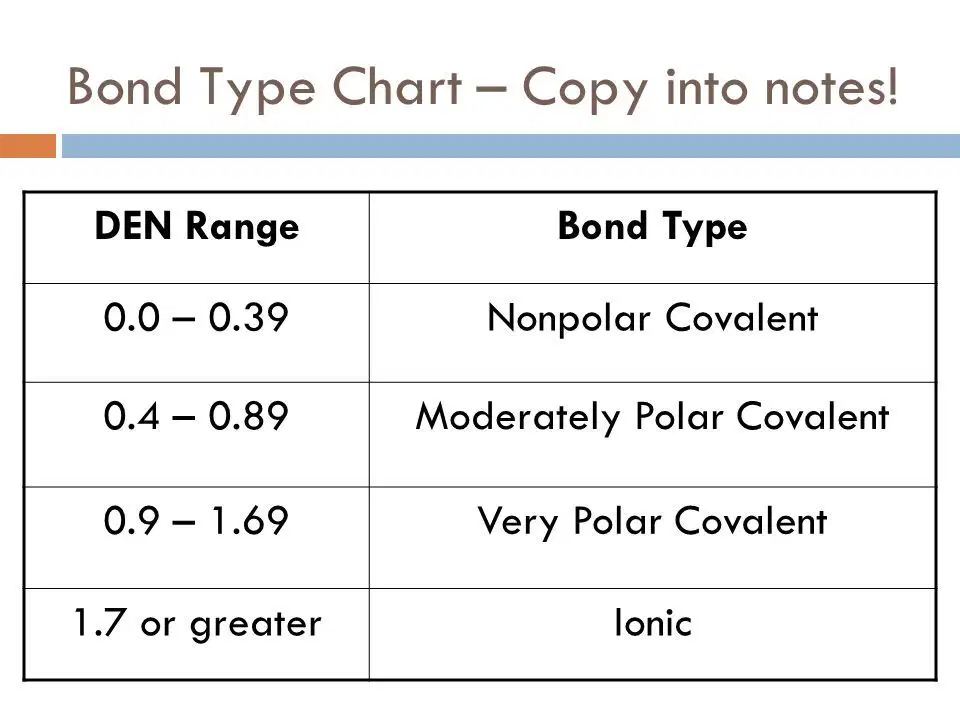
If Chlorine has an electronegativity of 3.0 and Sodium has an electronegativity of 0.9, what type of bond is formed between them?
Nonpolar Covalent
Ionic
Moderately Polar Covalent
Very Polar Covalent


The VSEPR theory states that electrons will
try to move as far apart as possible
form the fewest bonds possible
have an equal number of bonds on all atoms
have larger bond angles to accommodate larger elements
In a chemical equation, what does the coefficient represent?
The number of atoms in a molecule.
The number of molecules in a substance or compound
The number of electrons in an atom.
The number of protons in a nucleus.
Number of O in Mg(NO3)2
3
6
Balance this equation:
Na + O2 ---> Na2O
2Na + O2 ---> Na2O
4Na + O2 ---> 2Na2O
Na + 2O2 ---> Na2O
Na + O2 ---> 2Na2O
Balance this chemical reaction:
Al + O2 ---> Al2O3
4Al + 3O2 ---> 2Al2O3
2Al + O2 ---> Al2O3
Al + O2 ---> Al2O3
3Al + 2O2 ---> Al2O3
CuCl2 + Na2CO3 --> CuCO3 + 2NaCl
What type of reaction is this?
CH4 + O2 --> CO2 + H2O + ENERGY

What type of reaction?
Synthesis
Decomposition
Single Replacement
Double Replacement
Combustion
Rank these in order of strength:
covalent bond
London / Dispersion forces
hydrogen bond
dipole-dipole attraction
covalent bond>hydrogen bond>dipole-dipole>London/Disp.

What type of force?
intermolecular
intramolecular
Which of the following elements is most likely to form a cation?
Fluorine
Sodium
Chlorine
Oxygen
What is the name of the compound with the formula N2O5
dinitrogen pentoxide
nitrogen trioxide
nitrogen monoxide
nitrogen dioxide

According to the "Activity Series" Chart, which metals are less reactive, those at the top or those at the bottom?
Top
Bottom
Middle
No Reaction

Will Iron (Fe) react with HCL?
Yes, the reaction will occur
No reaction
Maybe
I have no clue
Which types of bonds are known for their high melting points? (Select all that apply)
Metallic Bonds
Ionic Bonds
Nonpolar Covalent Bonds
Polar Covalent Bonds
In the reaction 2H2 + O2 -> 2H2O, which side contains the reactants?
2H2 + O2
2H2O
2H2
O2
What information does a subscript provide in a chemical formula?
The number of molecules
The number of atoms of an element
The type of chemical bond
The state of matter
Which type of element typically forms an anion and what is its charge?
Metal & positive + charge
Nonmetal & negative - charge
Metalloid & positive + charge
Nonmetal & neutral charge
What molecular geometry would PH3 have?
Trigonal Pyramidal
Trigonal Bipyramidal
Bent
Linear
Which of the following elements would have a complete octet in its Lewis Dot Structure?
Neon
Sodium
Chlorine
Oxygen
What is the main use of Lewis Dot Structures in chemistry?
To predict molecular geometry
To calculate atomic mass
To determine the number of protons
To show valence electrons and bonding.
Which of the following elements would have a Lewis Dot Structure with five dots?
Phosphorus
Sulfur
Chlorine
Argon
What is the significance of a pair of dots in a Lewis Dot Structure?
They represent a pair of protons
They indicate a pair of neutrons
They show a pair of valence electrons
They display a pair of atomic masses.
Which of the following elements would have a Lewis Dot Structure with seven dots?
Fluorine
Neon
Sodium
Magnesium
What are the two things you need to know to draw a Lewis Structure?
A) Element symbol and atomic number
B) Element symbol and number of valence electrons
C) Atomic number and atomic mass
D) Number of valence electrons and atomic mass
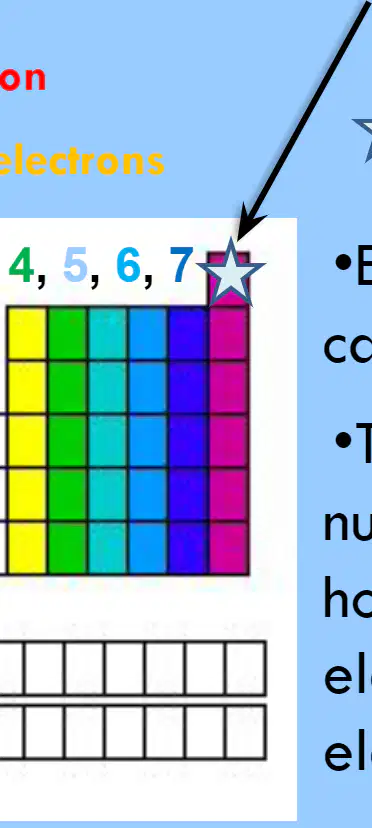
Which element is an exception in Group 8 with only 2 valence electrons?
Hydrogen
Helium
Lithium
Neon
What are valence electrons?
Electrons in the innermost ring
Electrons in the outermost ring
Protons in the nucleus
Neutrons in the nucleus
What is the main focus when drawing Lewis Structures?
Atomic mass
Valence electrons
Neutrons
Protons
Which group of elements is likely to have similar Lewis Structures?
Elements in the same period
Elements in the same group
Elements with the same atomic mass
Elements with the same number of protons.
What does a Lewis structure represent?
The atomic mass
The valence electrons
The number of protons
The atomic number.
How many valence electrons are represented in the Lewis structure of Aluminum (Al)?
1
3
5
7

This could be the dot diagram of
Mg
Cl
C
O


This could be the dot diagram of
Mg
Cl
C
O

Is this the correct Lewis Dot Structure for phosphorus?
Yes
No

Which is the correct Lewis dot for C?
D
E
F
G
H


What is the right part of a chemical equation called...
H2 + O2 --> H2O
Reactants
Products
Yields
Chemical Equation
What is the arrow in a chemical equation...
H2 + O2 --> H2O
Reactants
Products
Yields
Chemical Equation

