
 Worksheets
Real Biology Semester 1 25-26
Total questions: 130
Worksheet time: 4hrs 49mins
What is Ms. Real's favourite type of food?
Thai
Italian
Chinese
Tex Mex
The (a) are responsible for converting glucose (food) into (b) for the cell.
Cyclins signal cells to progress through stages of cell replication. Uncontrolled production of cyclins will most likely result in (a)

F
G
H
J

F
G
H
J

F
G
H
J

F
G
H
J

F
G
H
J

A
B
C
D

A
B
C
D

F
G
H
J

F
G
H
J
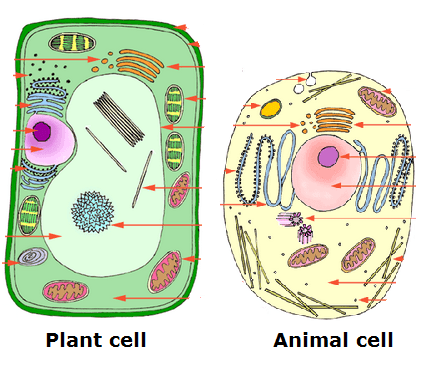
What distinguishes a plant cell from an animal cell? (How do you tell them apart) Hint: There's 3 ways (Check all 3)
Central Vacuole
Mitochondria
Cell Wall
Ribosomes
Chloroplasts
Stem cells are ____________________.
cells that grow uncontrollably
undifferentiated cells that can turn into other types of cells
the first cells of a new living organism (fertilized egg)
specialized cells that do one job

Control center of the cell.

Makes energy for the cell.

Site of photosynthesis.

Site of protein synthesis.

Controls what goes in/out of the cell.
Label the phases of Mitosis on the image shown. They are NOT in order.

Prophase: Chromatin condenses.

Interphase: Resting phase between mitosis cycles.

Metaphase: Chromosomes align in the middle.

Anaphase: Chromosomes are pulled apart.

Telophase: Chromosomes are pulled to opposite end and two nuclei form.
This question has two parts.
Roots of different plants can be connected by a network of underground fungal extensions called hyphae. These fungi contribute minerals to the plants, and the plants contribute carbohydrates to the fungi.
Part A:
Which statement about the transportation of these substances within the plant is true?
The minerals are transported from the phloem to the xylem in the shoot system.
The carbohydrates are transported from the shoot system to the fungi by the xylem.
The minerals are transported from the xylem to the phloem in the roots.
The carbohydrates are transported to the fungi through the phloem.
Part B:
Which statement supports the answer to Part A?
The xylem is part of the plant's vascular tissues.
The phloem transfers glucose through the plant.
The xylem can move substances up from the roots.
The phloem is connected to the roots by the xylem.
The temperature at which American alligator eggs are incubated will affect the gender of the offspring. Eggs kept at 30 oC tend to hatch mostly female, while eggs kept at 33 oC tend to hatch mostly male.
Which statement explains why the temperature affects the gender of alligator hatchlings?.3.b
Gene repair occurs differently at different temperatures.
Gene expression is different at different temperatures
Different parts of the embryo's DNA are deleted at different temperatures.
Different parts of the embryo's DNA are duplicated at different temperatures.
Which pair of statements best compares the primary functions of the carbohydrate chitin and the protein chitinase?
The chitin in the exoskeleton provides insulation for insects.
The chitinase stores genetic material for insectivorous bats.
The chitin in the exoskeleton breaks down for energy to be used by insects.
The chitinase provides insulation for insectivorous bats.
The chitin in the exoskeleton stores genetic material for insects.
The chitinase provides support and protection for insectivorous bats.
The chitin in the exoskeleton provides support and protection for insects.
The chitinase breaks down chitin for energy to be used by insectivorous bats.

The base sequence of a segment of DNA is shown.
Which base sequence correctly completes DNA Strand 2?
A T A C G T
G C G T A C
C G C A T G
T A T G C A
Which biomolecules act as energy storage for the cell and also cushions and insulates organs?
Carbohyrdates
Lipids
Proteins
Nucleic Acids

The biomolecule that holds an organism's genetic information is called ___________.
carbohydrate
lipid
nucleic acid
protein

protein

nucleic acid

carbohydrate

lipid
Carbs and lipids are similar because they...
Are a source of energy for living organisms
Help with immune response
build structures such as cellulose and chitin
Contain the same elements (CHO)
Match the following functions to the biomolecule
Act as hormones
Lipid
Build muscle
Protein
Carry genetic information
Nucleic acid
Energy source (cellular respiration)
Carbohydrate
True or False: Biomolecules are necessary for ALL living organisms
(a)
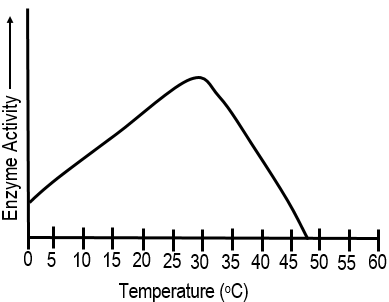
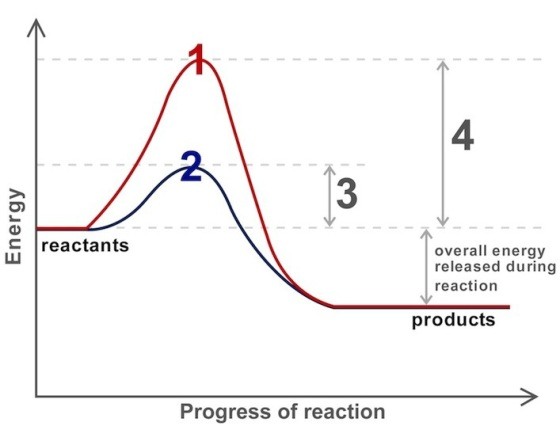
Which color line represent a reaction with an enzyme present?
Blue
Red
Both
Neither

The diagram represents one way an enzyme can be inhibited. Which statement explains the effect of an inhibitor on an enzyme?
A substrate will be able to bond with the enzyme.
The enzyme will likely be attacked by immune cells
The enzyme will be unable to produce more enzymes.
A substrate will be unable to attach to the enzyme.
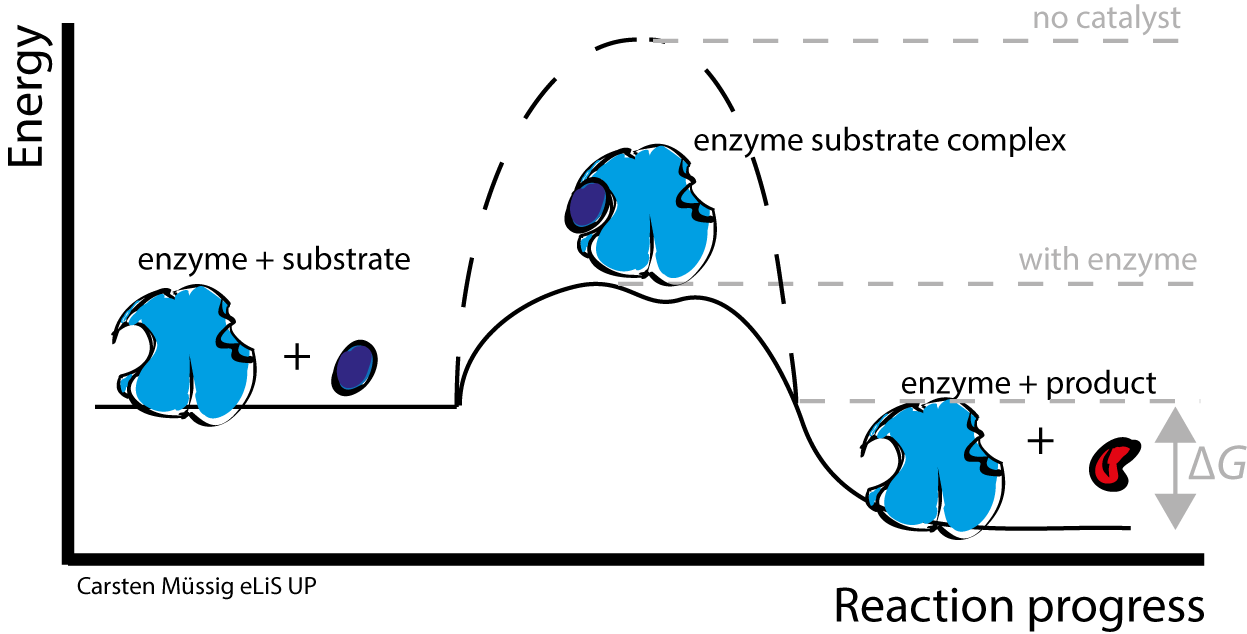
Label the parts of the enzyme model
Enzymes are (a) that (b) chemical reactions by (c) the amount of activation energy required to start the reaction.
Match the following Macromolecules to its structure

Carbohydrate

Lipid

Nucleic Acids

Protein
Enzyme can be used again and again
True
False
(a) are organisms that can be (b) or archaea. They are (c) , which means they are single-celled organisms.
No membrane-bound organelles
No nucleus
Simple
Small
Bacteria
Archea
Unicellular
Cytoplasm
Ribosomes
DNA
Cell Membrane
Complex
Large
Protist
Plant
Animal
Fungi
Multicellular
Nucleus
Membrane-bound organelles
Which do BOTH prokaryotes and eukaryotes contain?
nucleus
mitochondria
ribosomes
cell wall
Process plants use to make their own “food” from the sun's energy, carbon dioxide, & water.
Photosynthesis
Cellular respiration
Sunlight
Oxygen
Organisms that collect the energy from the sun and turn it into organic compounds.
Autotrophs
herbivores
SUnlight
Consumers
The location in which photosynthesis takes place; uses light energy to make food(glucose)
chloroplast
vein
stem
roots
What two things are the product (end result) of photosynthesis?
Oxygen
Glucose
Chloroplasts
Carbon Dioxide
What two things are the product (end result) of photosynthesis?
Oxygen
Glucose
Chloroplasts
Carbon Dioxide

An organism that gets its nutrients by ingestion
Autotroph
Heterotroph
Tree
Algae
Process that breaks glucose a down in the presence of oxygen
Photosynthesis
Fermentation
Protein Synthesis
Cellular Respiration
Organelle found in both plant and animal cells where cellular respiration takes place.
(a)
(a) cells can do photosynthesis AND cellular respiration.
Where does cellular respiration occur?
Put the sentence in the correct order.
Animal
cells
cannot
do
photosynthesis.
Label the diagram correctly
water
mitochondria
ATP
glucose
sunlight
chloroplast
oxygen
carbon dioxide

What are the four nucleotide bases found in DNA?
Adenine, Thymine, Cytosine, Guanine
Adenine, Uracil, Cytosine, Guanine
Adenine, Thymine, Cytosine, Uracil
Adenine, Uracil, Cytosine, Thymine
Which of the following correctly describes the structure of DNA?
Single-stranded helix
Double-stranded helix
Triple-stranded helix
Quadruple-stranded helix
What is the complementary RNA base pairing for Adenine?
Thymine
Cytosine
Guanine
Uracil
In DNA, which base pairs with Adenine?
Cytosine
Guanine
Thymine
Uracil
Given the DNA sequence 5'-GATTACA-3', what would be the corresponding mRNA sequence?
5'-CUAAUGU-3'
3'-CUAAUGU-5'
5'-GAUUACA-3'
3'-GAUUACA-5'
Compare and contrast the roles of DNA and RNA in protein synthesis.
DNA is involved in transcription, while RNA is involved in translation.
DNA carries the genetic code, while RNA translates the code into proteins.
DNA is found in the cytoplasm, while RNA is found in the nucleus.
DNA is single-stranded, while RNA is double-stranded.

A Nucleotide is shown above. What part of the Nucleotide is labelled "2"?
Sugar
Phosphate
Nitrogenous Base

Genes are short segments of DNA and are located on the ______ in a cell.
vaculoes
chromosomes
ribosomes
lysosmes
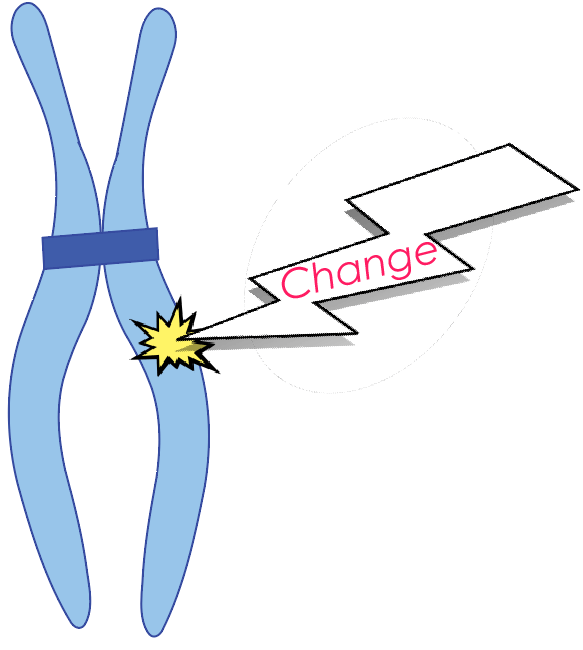
A change in a gene, group of genes or chromosome that results in a change in the proteins
Replication
Mutations
Translation
Transcription

A point mutation where one nucleotide base replaces an original nucleotide base
Inversion Mutation
Chromosomal Mutation
Translocation
Substitution Mutation
DNA molecule segment is : TTACGCAAG
The mutated DNA segment is TTCGCAAG. This is an example of ___ mutation.
Substitution
Deletion
Insertion
Inversion
Which of the following would result in a frameshift mutation?
Insertions only
Substitution only
Deletion only
Insertions and Deletions
What mutation has occurred here?
T-G-A-C-C-A
T-G-A-G-C-A
Substitution
Deletion
Insertion
Frameshift

What type of mutation is shown in the image?
Nondisjunction
Gene Translocation
Trinucleotide Repeat Expansion
Frameshift

Which of the following images is a DELETION?


Some mutations can be to the benefit of the species.
FALSE
TRUE
A mutation is defined as:
A change in the cell's structure
Anything that changes in an embryo
Any change in the physical features of a human
A change in the DNA sequence
Which is the organelle that makes proteins?
Nucleus
Ribosome
Rough ER
Golgi Apparatus
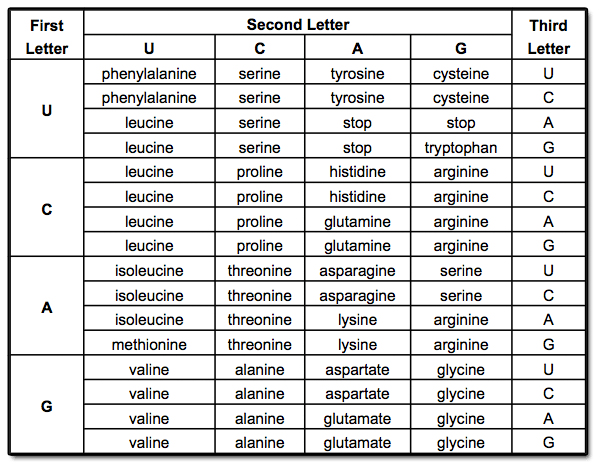
What amino acid is represented by the codon AUG?
Phenylalanine
Methionine
Leucine
Stop codon
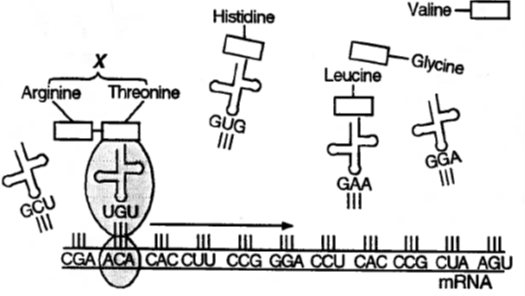
You are explaining protein synthesis to your grandmother, using her old heirloom cookbook as an analogy. "Imagine this cookbook is the DNA in each of your cells," you say. If you copy down one recipe on a scrap of paper and take it to the kitchen to make gingerbread cookies, this would be like what in the cell
paper is mRNA, kitchen is the ribosome, cookies are the protein
paper is tRNA, kitchen is mRNA, cookies are the ribosome
paper is the nucleus, kitchen is ribosome, cookies are tRNA
paper is ribosome, kitchen is mRNA, cookies are delicious.
When gene expression occurs
A gene is mutated with either an insertion or deletion
The gene is removed from the genotype in that cell
The gene is passed on to the daughter cells during mitosis
The gene is activated and used in protein synthesis

What is the end result of mitosis?
2 identical body cells
2 gametes
2 zygotes
2 different body cells
Cells pass through a G2 checkpoint before entering mitosis. Ideally, if DNA damage is detected, the cells do not enter mitosis until the damage is repaired. Why is DNA damage repaired before cells enter mitosis?
So that another round of DNA synthesis does not have to take place
So that the chromosomes can align at the metaphase plate during mitosis
So that the cytoplasm can be divided equally between the two daughter cells
So that healthy daughter cells are produced, allowing the organism to continue growing
What type of things can increase the risk of cancer? (check all that apply)
Genetic factors
Exposure to certain chemicals (smoking, asbestos, radon, vinyl chlorides etc)
Radiation and UV exposure
Some viruses
The unregulated, uncontrolled growth and division of cells is known as ___________.
Mitosis
Cytokinesis
Meiosis
Cancer
The cell cycle is regulated by proteins like CDK (cyclin dependent kinases) that help in transcription and translation. Cells that do not pass checkpoints in the cycle undergo cell death known as ____________.
Apoptosis
Lysis
Dehydration

A photograph of a virus is shown. The projections on the surface of this virus allow the virus to -
Control Host Cell
Attach to a host cell
Control the host cell's DNA
Infect Host Cell
A bacteriophage is a virus, what do viruses have in common with bacteria?
They lack membrane bound organelles.
They have identical genomes.
They reproduce by mitosis.
They contain antibodies.
Cells differentiate because they-
Metabolize sugars rapidly.
Have specific genes activated.
Can clump together.
Contain a lipid bilayer.

A model of a biological process is shown below. What is the purpose of this process?
To replicate the DNA of an organism before cell division.
To assemble nucleotides in an mRNA chain along a DNA template.
To synthesize amino acids used to unzip strands of DNA and copy the genetic code.
To translate the genetic code into a specific sequence of amino
acids.
Differences in traits such as hair texture are determined by
differences in -
The location of sugar groups in DNA
The sequence of nucleotides in DNA
The number of nitrogenous bases in DNA
The molecules attached to the phosphates in DNA
Which of the following is/are true of viruses?
They are unicellular
They are multicellular
They must infect a host to replicate its DNA.
They contain a nucleus
A typical virus consists of
a protein coat and a cytoplasm core
a carbohydrate coat and a nucleic acid core
a protein coat and a nucleic acid core
a polysaccharide coat and a nucleic acid core
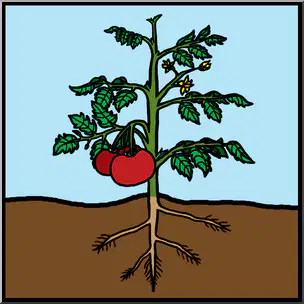
Where can you find xylem and phloem in a plant?
Leaf, stem, and root
Leaf and stem
Stem and root
Leaf and root

The photo shows the male part of the flower. What is the name of the male part of the flower?
Pollen grains
Stamen
Pistil
Carpel

The photo shows the female part of the flower. The female part consists of 4 parts. What are the 4 parts?
Petal, sepal, style, filament
Petal, anther, stigma, filament
Ovule, stigma, sepal, anther
Ovule, ovary, style, stigma
Plant's roots grow down, anchoring it into the ground. To what stimulus is the plant responding?
thigmotropism
phototropism
hydropism
gravitropism
A vine plant brushes against a fence and wraps itself around the fence. To what response is the stimulus is the plant responding to?
phototropism
gravitropism
hydrotropism
thigmotropism
Which part anchors the plant?
Stem
Fruit
Roots
Seed
Which part performs reproductive functions for the plant?
Flower
Fruit
Stem
Roots
What is a stimulus?
The plant's response to light
Anything causing a change in an organism
An organisms's reaction to a stimulus
-
What is nastic movement?
Directional response of plant to stimuli
Nondirectional response of plant to stimuli
Directional stimuli of plant to response
Nondirectional stimuli of plant to response
Protein synthesis means "to build" proteins. Place the following terms in order from start to finish in the process of protein synthesis.
DNA
Transcription
mRNA
Translation
Protein

Which of these functions are the main function of the endocrine system?
To ensure that we take in oxygen through the lungs
To make hormones that control growth and development
To control balance, movement, and coordination
To protect the body from disease caused by pathogens
Which systems are interacting when it's hot outside and your skin releases waste as sweat to prevent you from overheating? (PICK TWO)
Integumentary System
Muscular System
Excretory System
Endocrine System
Circulatory System
Someone is cold and shivers. Which systems are at work together?
Respiratory, Skeletal, and Integumentary
Nervous, Integumentary, and Muscular
Nervous, Digestive, and Circulatory
Last night Jane began to feel like she had a stopped up nose. Today she thinks she has come down with a cold. She went to the doctor and her temperature was 102 degrees and her white blood cell count determined she has an infection. Which organ systems (2) are mainly interacting in this scenario
lymphatic
integumentary
circulatory
muscular
You are running and start to feel light headed. Your brain is receiving messages that your body needs more oxygen. What systems would give your body more oxygen?
Respiratory and Nervous
Nervous and Cardiovascular
Circulatory and Respiratory
Excretory and Respiratory
Which two body systems are primarily responsible for gas exchange between the body and the environment?
skeletal and muscular
circulatory and respiratory
circulatory and digestive
respiratory and excretory
"The small intestine absorbs nutrients from our food and they are carried through the blood to the cells."
Why are the lungs, the major organ of the respiratory system, also considered an excretory organ?
They get rid of carbon dioxide, a cellular waste
They get rid of oxygen, a cellular waste
They get rid of urea, a cellular waste
They get rid of salt, a cellular waste
What systems do neurons depend on to be able to conduct cellular respiration (a process that has the key ingredients of oxygen and glucose)?
excretory, digestive, circulatory
musculoskeletal, nervous, respiratory
nervous, excretory, digestive
respiratory, digestive, circulatory

