
 Worksheets
Progressives: Defining the Movement
Total questions: 141
Worksheet time: 1hrs 11mins
Which statement best describes the organizational nature of the Progressive movement?
A regional movement limited to the Northeast
A secret society of urban industrial magnates
A loose coalition of varied reform activities
A tightly centralized national party apparatus
Progressives reacted primarily against which economic approach they believed fueled social problems?
Keynesian deficit spending policies
Mercantilist colonial trade controls
Laissez-faire and unregulated markets
Syndicalist worker ownership models
Which mix of professions commonly participated in Progressive reforms?
Artists, actors, musicians
Journalists, social workers, educators
Soldiers, shipbuilders, explorers
Bankers, railroad tycoons, mine owners
Which social conditions did Progressives witness firsthand in rapidly growing cities?
Poverty, filth, crime, and corruption
Universal healthcare and sanitation
Abundant farmland and rural prosperity
Declining industrial output and wages
What role did Progressives argue the government should take in addressing societal problems?
Remain neutral and avoid intervention
Focus solely on foreign policy matters
Take a more active role in solutions
Delegate all power to private charities
Which description best captures the typical social background of many Progressives?
Urban, educated, middle class
Frontier, self-sufficient homesteaders
Rural, uneducated, lower class
Aristocratic, landowning elite
How did Progressives view science and technology in relation to society?
Threats that undermine traditional values
Luxury goods for the wealthy elite
Neutral tools with no social impact
Means that could improve social conditions
Which statement best describes the reform tradition in American history during the Progressive Era?
Reform ends once a major law is passed nationally
Reform is limited to local charity and private aid
Reform appears only during economic prosperity periods
Reform is a continuing response to social injustices
Progressives drew on ideas from which earlier movement to shape their agenda?
Isolationists and nativists leagues
Temperance and abolition coalitions
Populists with strong rural backing
Federalists and Whigs political revival
Which set lists problems linked to industrial society that Progressives targeted?
Agricultural decline, low tariffs, gold scarcity
Religious conflict, frontier wars, voter apathy
Brutal labor, political graft, urban crowding
Fair wages, union growth, rural migration
What did Progressives argue after laissez-faire approaches failed?
Shift all authority to private philanthropy
Expand corporate self-regulation entirely
Maintain strict noninterference by government
Adopt limited government intervention solutions
Which description captures the social base of Progressive support compared with Populism?
Progressives were rural and sectional like Populists
Progressives were urban, middle-class, and national
Progressives were elite industrialists only
Progressives were small farmers in the South alone
Why did many middle-class professionals back Progressive reforms?
They aimed to abolish all business competition entirely
They believed scientific management could improve governance
They sought strict laissez-faire economic policies
They preferred local patronage over civil service
Which goal reflects Progressive beliefs about opportunity and business practices?
Reduce immigration to protect opportunity
Restore fair competition by curbing corruption
Preserve monopolies despite corruption
Expand colonial markets for American firms
Which development most directly expanded public awareness of industrial abuses during the Progressive Era?
Investigative reporting by muckraking journalists
Sensational entertainment columns in city papers
Corporate-sponsored advertising campaigns
Government wartime propaganda posters
Rising consumer consciousness among Americans primarily reflected which belief held by Progressives?
Purchases ought to support small artisans only
Mass production should end across industries
Goods must be safe and honestly represented
Products should be patriotic and locally themed
Which statement best distinguishes socialism, anarchism, and communism as responses to industrial capitalism?
Each rejected worker involvement in politics
All sought moderate regulation of large firms
All aimed to dismantle or bypass capitalism
Each endorsed private property protections
Who was the labor leader associated with advocating socialist control of basic industries during this period?
Eugene V. Debs of the socialists
Samuel Gompers of the AFL
Booker T. Washington of Tuskegee
John D. Rockefeller of Standard Oil
Which claim aligns with communist ideas described for the era?
Corporations ought to self-report safety violations
Government should lightly regulate monopolies only
States must decentralize into local voluntary councils
Workers should seize production through violent revolution
Progressives rejected radical revolutions while favoring which approach?
Strictly maintaining laissez-faire policies
Abolishing private property nationwide
Breaking society into self-governing communes
Moderate reforms to forestall social upheaval
Which factor most contributed to women’s and workers’ support for Progressive reforms?
Privatizing all public services and utilities
Expansion of overseas colonies for labor
Promotion of child labor in heavy industry
Support for women’s suffrage and workplace regulation

Which factor most directly motivated leaders in the Social Gospel Movement to pursue reforms during industrialization?
Political pressure from party machines
Moral responsibility rooted in religious beliefs
Economic self-interest among factory owners
Scientific management theories of efficiency

Which problem in late 19th-century cities did Social Gospel advocates seek to address?
Shortage of natural resources in the West
Rampant poverty in urban tenements
Overproduction of agricultural goods
Decline of transatlantic trade routes

Which reform aligned with the Social Gospel Movement’s goals?
Repealing antitrust laws nationwide
Reducing church involvement in charity
Abolishing child labor in factories
Privatizing public school systems

Religious organizations like the YMCA and Salvation Army most commonly advanced Social Gospel aims by doing what?
Lobbying for imperial expansion overseas
Promoting atheism among industrial workers
Providing community aid and social services
Enforcing wage controls through courts

Reasoning about cause and effect: Why did industrial employers’ lack of responsibility contribute to the rise of Social Gospel activism?
It exacerbated worker poverty that religious leaders sought to remedy
It strengthened labor unions that funded church missions
It eliminated child labor, reducing the need for reform
It created a surplus of skilled laborers seeking church jobs
Which statement best describes the primary purpose of settlement houses during the Progressive Era?
Organizing partisan political rallies and campaigns
Offering temporary shelter and essential social services
Building luxury housing for wealthy urban residents
Providing private clubs for urban business leaders
Which service was commonly offered by settlement houses to support immigrants?
Language and skills classes for daily work
Exclusive investment training for elites
Military drilling for national defense
Long-term bank loans for factory owners
Why did middle-class women play a central role in running settlement houses?
They sought civic reform through direct community work
They aimed to replace elected city officials entirely
They were barred from any paid employment options
They intended to create profit-making social enterprises
City governments were pressured by settlement house reformers to improve which services?
Federal tariff enforcement offices
Interstate railroad scheduling systems
Harbor dredging and naval shipbuilding
Trash collection and sewer maintenance
Which figure is most closely associated with the settlement movement and a notable institution in Chicago?
Jane Addams and Hull House
Ida Tarbell and Standard Oil
Upton Sinclair and Meatpacking
W.E.B. Du Bois and the Niagara
Which organization became a leading force advocating for banning alcohol during the Progressive Era?
Woman’s Christian Temperance Union
American Federation of Labor
National Grange of the Patrons
Populist Party of Farmers
Which leader is most closely associated with the Woman’s Christian Temperance Union during the Temperance Movement?
Jane Addams
Ida Tarbell
Carrie Chapman Catt
Frances Willard
Which reason was commonly cited by temperance reformers to argue that alcohol was a social problem?
Decline in railroad construction
Decreased tax revenues for cities
Wages spent on alcohol not family
Shortages of imported spices
Why would Protestant evangelical ministers have supported forming the Anti‑Saloon League in 1893?
They aimed to reduce tariffs on imported liquor
They sought moral reform through banning saloons
They planned to expand church‑run social clubs
They wanted to promote federal control of breweries
Early temperance advocates first promoted limiting consumption. What strategic shift later strengthened their political impact?
Opposing any federal constitutional changes
Promoting voluntary pledges without laws
Focusing solely on local tavern owners
Stressing prohibition through legal bans
Which constitutional change empowered Congress to restrict intoxicating liquors nationwide by 1920?
Eighteenth Amendment
Sixteenth Amendment
Seventeenth Amendment
Nineteenth Amendment
By 1908, what was the status of Dade County regarding alcohol laws in contrast to most counties in the old Confederacy?
It allowed alcohol only for medical purposes
It enforced partial bans on saloon hours
It had recently adopted statewide prohibition
It was still a wet county permitting alcohol
Which organization is directly associated with Carrie B. Nation’s activism against saloons?
Anti-Saloon League
American Temperance Union
Women’s Trade Union League
National Civic Federation
What tools did Carrie B. Nation famously carry when confronting saloons during her campaign?
A whistle and handbills
A petition and a banner
A camera and notebooks
A hatchet and a Bible
Why did Carrie B. Nation begin her crusade against alcohol, according to the material?
Her first husband died from alcoholism
She aimed to support brewery workers
She was responding to a federal mandate
She sought political office in Kansas
What local outcome followed Carrie B. Nation’s 1908 visit to Miami?
Stricter saloon ordinances were passed
Public gambling was legalized as revenue
Immediate countywide prohibition took effect
A new WCTU chapter replaced the council
Despite increased regulation after 1908, when did Dade County finally become dry?
1920
1909
1918
1913
Which best describes muckrakers during the Progressive Era?
Industrialists defending monopolies and large fortunes
Politicians promoting laissez-faire business regulation
Philanthropists funding charities without criticizing abuses
Journalists exposing industrial corruption and social ills
Why did Theodore Roosevelt use the term “muckrakers”?
He celebrated their partnership with corporate leaders
He labeled them as neutral recorders of business data
He mocked their fixation on scandal and corruption
He admired their balanced praise of big industry
Which focus of muckraker investigations most directly led readers to demand reforms?
Business practices harming consumers and the poor
Tax incentives offered to small shop owners
Military procurement policies during foreign wars
Technical advances in factory machinery costs

A modern equivalent of muckrakers would most likely be which group?
Public relations teams improving brand reputation
Venture capital analysts evaluating investment risk
Entertainment reporters covering celebrity lifestyles
Investigative journalists exposing corporate wrongdoing
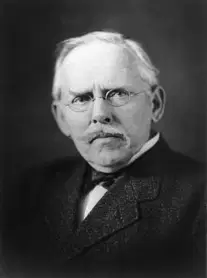
Which reformer used photography to expose poverty and disease in immigrant neighborhoods in New York City, publishing the work in How The Other Half Lives?
Upton Sinclair, author of The Jungle
Jacob Riis, photojournalist and reformer
Ida Tarbell, oil industry critic
Jane Addams, Hull House founder
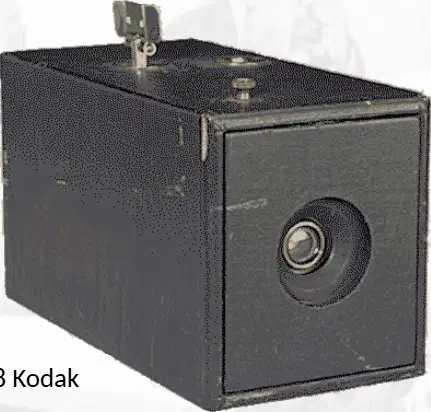
What technological change in 1888 most directly enabled wider use of photography in documenting urban life?
Flash powder for studio portraits
Kodak camera with roll film
Tripod-mounted wet plates
Color film for newspapers
Before 1880, why was photography less practical for investigative work in crowded city streets?
Photos could only be taken at night
Subjects were legally barred from images
Lenses could not focus beyond ten feet
Cameras required immediate film development
Which phrase best captures the purpose of Riis’s photographs shown in the images?
Celebrate immigrant cultural festivals
Highlight urban poverty and unhealthy conditions
Advertise new housing construction projects
Promote tenement tourism to outsiders
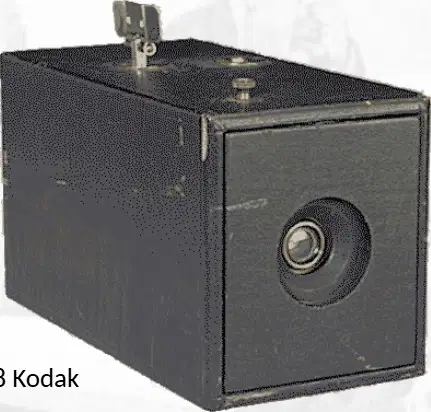
How did George Eastman’s innovations change the social impact of photography during the Progressive Era?
Made cameras heavier and costlier
Enabled portable cameras and roll film
Limited photographers to studio settings
Reduced image clarity and reliability
Which evidence from the images suggests Riis documented living conditions rather than staged studio scenes?
Formal backdrops and posed lighting
Blur-free portraits with painted sets
Outdoor alleys with hanging laundry
Elegant interiors with polished furniture
What Progressive Era reform goal is most closely connected to the muckrakers referenced on the slide?
Suppressing investigative journalism
Expanding laissez-faire policies
Exposing social ills to spur reforms
Privatizing municipal services
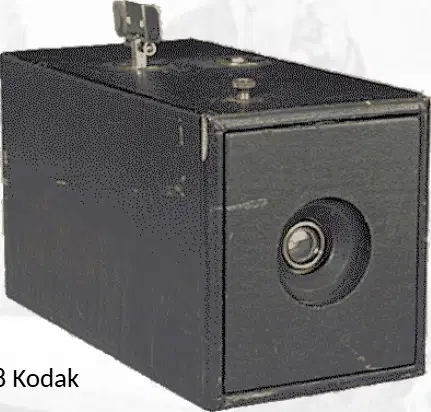
Given the $25 Kodak with 100-picture roll of film, what practical change did this bring for reformers like Riis?
Prohibition on photographing minors
More shots and easier field work
Fewer shots and slower processing
Mandatory studio development only
Which problem did political machines create in many city governments during the Progressive Era?
Transparent bidding and low-cost contracts
Graft that made government expensive and inefficient
Strict ethics rules and limited patronage
Balanced budgets and reduced municipal debt
Which journalist is noted for exposing municipal corruption associated with political machines?
Upton Sinclair
Jacob Riis
Ida B. Wells
Lincoln Steffens
Progressive mayors replaced urban party bosses primarily to achieve which outcome?
Limit public spending on social programs
Expand city services to address urban hazards
Increase machine patronage networks
Privatize sanitation and fire services
What was a key feature of the commission plan for city governance?
City manager elected by popular vote
A single strong mayor controls all departments
Departments led by expert commissioners
Council members appointed by party bosses
In the city manager system, who held primary accountability over the city manager?
The state governor
The city council
The county board
The traditional mayor

Which scenario best illustrates the intended benefit of municipal reform efforts by Progressives?
A mayor awards contracts to donors without oversight
A city council hires a manager to streamline departments
Party bosses control sanitation and housing permits
Commissioners ignore fire hazards to cut expenses
Which statement compares the commission plan and city manager system most accurately?
City manager system divides departments; commission plan centralizes power
Both rely on expert leadership, but the manager answers to the council
Commission plan elects a manager, while city system uses party bosses
Both create stronger mayors with direct control over departments
Which office did Robert La Follette hold during 1900–1906 in Wisconsin?
Chief Justice of Wisconsin
Governor of Wisconsin
Mayor of Milwaukee
Senator from Wisconsin
Which reform best illustrates La Follette’s effort to curb corporate power at the state level?
Privatizing public utilities statewide
Eliminating all railroad commissions
Taxing railroads at the same rate as others
Subsidizing railroad expansion statewide
A key element of the Wisconsin Idea was using expert advice in policymaking. Which policy area from La Follette’s reforms most likely required technical expertise to implement effectively?
Regulation of public utilities operations
Hosting Progressive political rallies
Scheduling legislative floor debates
Printing statewide election posters
La Follette acted to conserve forests and water resources. Which outcome aligns with this goal and distinguishes it from industrial exploitation?
Increasing timber clear-cutting quotas
Expanding unregulated factory waste dumping
Establishing protections against pollution
Dismantling conservation commissions entirely
Political machines and railroad influence dominated the legislature before La Follette’s reforms. Which strategy best explains how his policies reduced that influence?
Granting machines exclusive ballot control
Creating commissions to regulate railroads
Outlawing expert advisory roles statewide
Suspending all taxes on rail carriers
Which reform most directly protects voters from intimidation by keeping choices private?
Suffrage expanding voting rights for citizens
Secret ballots keeping votes confidential
Initiative proposing bills by citizens
Direct primaries choosing party nominees
What is the main purpose of the initiative process in state politics?
Enable courts to veto laws
Permit parties to select nominees
Allow citizens to introduce bills
Let governors write legislation
Which mechanism lets voters remove an elected official before the end of a term?
Recall holding a special removal election
Suffrage expanding the right to vote
Secret ballots ensuring private voting
Referendum voting on laws directly
Direct primaries were designed to reduce the influence of which political actors?
Governors signing referendum laws
State legislators writing bills
Party bosses controlling nominations
Judges reviewing initiatives
A legislature passes a controversial law. Which reform allows voters to approve or repeal it directly?
Initiative proposing new bills
Suffrage expanding voter eligibility
Referendum deciding on existing laws
Recall removing officials early
Two states consider making government more responsive to citizens. Which pair of reforms best advances that goal together?
Direct primaries and initiative
Recall and referendum
All of the above
Suffrage and secret ballots
A party boss seeks to control nominations despite Progressive changes. Which single reform most undermines that strategy?
Secret ballots during general elections
Direct primaries for party candidates
Suffrage expanding voter participation
Referendum on party rules
Before 1913, how were U.S. senators commonly selected at the state level?
Elected by popular statewide vote
Chosen by state legislatures
Selected by state governors
Appointed by the President
What was a primary Progressive goal behind advocating direct election of senators?
Reduce federal taxation
Expand executive authority
Increase public responsiveness
Strengthen party machines
Which constitutional change established the direct election of U.S. senators?
19th Amendment
17th Amendment
16th Amendment
15th Amendment
Explain one likely problem Progressives aimed to solve by ending legislature-chosen senators.
Limited public accountability of senators
Insufficient number of Senate committees
Excessive voter turnout in primaries
Too few senators per state
In 1913, what immediate effect did the 17th Amendment have on the selection process for senators?
Introduced lifetime appointments
Transferred selection to governors
Shifted to direct popular elections
Centralized selection in Congress
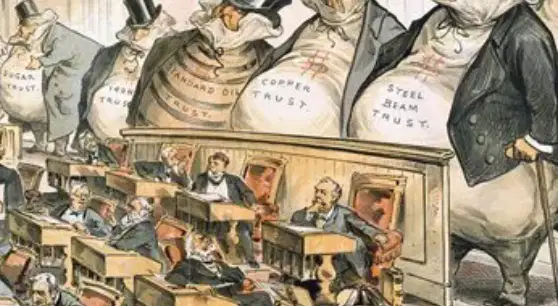
In the cartoon titled "The Bosses of the Senate," which group is depicted as exercising dominant influence over senators?
Monopolists and trusts in big industries
Immigrant laborers seeking fair wages
Grassroots farmers from rural states
Party bosses from local city wards
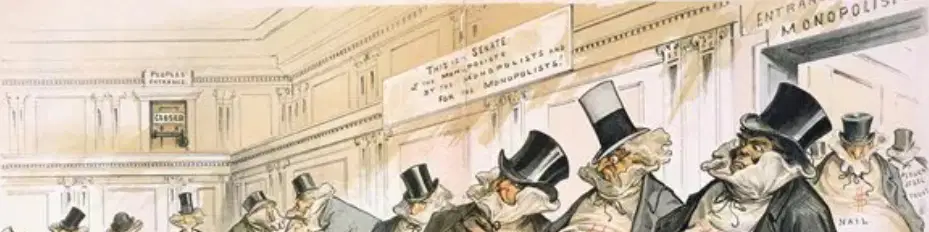
Which visual detail best symbolizes the lack of public control over the Senate prior to the 17th Amendment?
Senators holding constituent letters
A clock showing late-night sessions
Flags flying above the chamber
An entrance labeled for monopolists only
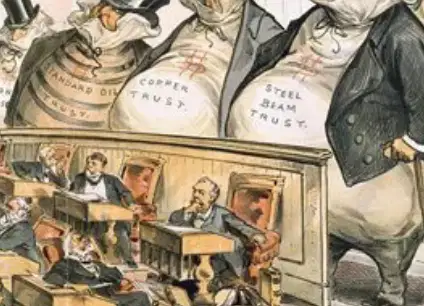
Using evidence from the cartoon, what reform goal of Progressive Era activists is most directly supported?
Government ownership of all railroads
Expansion of the navy for national defense
Creation of new western territories
Direct election of senators to curb corruption
Which Progressive Era priority did many women reformers pursue in workplaces and homes?
Expanding military enlistment quotas
Improving conditions at work and home
Privatizing public transportation systems
Reducing immigration through quotas
What issue became another major focus for women reformers during the Progressive Era?
Gold standard in banking
Annexation of overseas territories
Protective tariffs on imports
Suffrage and voting rights
Which statement best describes the differing strategies of NWSA and AWSA in seeking women’s voting rights?
NWSA pursued a constitutional amendment; AWSA pursued state-level rights
Both prioritized temperance over voting campaigns
NWSA focused on state laws; AWSA focused federal amendment
Both avoided legal approaches and used only protests
Who co-founded the National Woman Suffrage Association in 1869?
Elizabeth Cady Stanton and Susan B. Anthony
Frances Willard and Carrie Chapman Catt
Jane Addams and Ida B. Wells
Lucy Stone and Julia Ward Howe
Which pair led the American Woman Suffrage Association?
Sojourner Truth and Alice Paul
Lucy Stone and Julia Ward Howe
Elizabeth Cady Stanton and Susan B. Anthony
Clara Barton and Dorothea Dix
In 1890, what organizational change advanced the suffrage movement’s unity?
NAWSA aligned with temperance parties
AWSA disbanded after court ruling
NWSA split into regional chapters
NWSA merged with AWSA to form NAWSA
Which Progressive reforms were commonly pursued by middle and upper class women entering public life?
Subsidies for agriculture and steel
Military conscription and naval expansion
Railroad deregulation and gold reserves
Health care, education, and banning child labor
Why did many women feel slighted after the Civil War amendments?
The 13th Amendment ended slavery for men only
The amendments imposed new taxes on property
The amendments reduced state powers over education
The 14th and 15th Amendments excluded equal rights for women
Which actions exemplified Susan B. Anthony’s activism before and after the Civil War?
Medical practice; founded hospitals
Anti-slavery and temperance work; arrested for voting
Industrial organizing; led railroad strikes
Foreign diplomacy; appointed to Congress
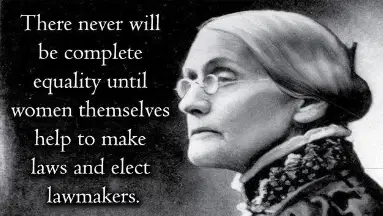
What central message appears in the featured suffragette slogans shown with Susan B. Anthony’s quotations?
Education should be restricted to private tutors
Women must help make laws and elect lawmakers
Economic equality depends on tariff reform
Peace requires isolation from world affairs
Which organization did Carrie Chapman Catt lead that pursued nationwide woman suffrage?
National American Woman Suffrage Association
League of Women Voters association
Women’s Christian Temperance Union group
National Woman’s Party organization
Catt’s second NAWSA presidency aligned with which major outcome in 1920?
Ratification of the Nineteenth Amendment
Establishment of the Equal Rights Amendment
Creation of the National Woman’s Party
Outlawing of hunger strike tactics nationwide
After 1920, what civic organization did Catt found to continue reform efforts?
League of Women Voters
American Civil Liberties Union
National Woman’s Party
Women’s Christian Temperance Union
Alice Paul helped form which group in 1913 to press for more immediate action?
National Woman’s Party
Women’s Christian Temperance Union
American Federation of Labor
League of Women Voters
Which strategy best characterizes Alice Paul’s approach compared to NAWSA’s gradualism?
Fundraising for wartime relief programs
Direct action tactics and public pressure
Educational campaigns and petition drives
Legal challenges through state courts
Which is a tactic associated with Alice Paul and her allies?
Temperance-era saloon inspections
Secret ballot reforms
Demonstrations and hunger strikes
County-level school board elections
Which statement contrasts the post‑1920 priorities of Catt and Paul?
Catt launched temperance campaigns; Paul opposed suffrage
Both withdrew from politics entirely
Catt built voter education; Paul pursued equal rights
Paul focused state referenda; Catt organized parades
Why did the National Woman’s Party emerge as a splinter from NAWSA in 1913?
To escalate pressure using militant methods
To shift toward prohibition enforcement
To support presidential campaigns exclusively
To replace NAWSA’s leadership permanently
Which pair correctly matches leader and affiliated organization?
Carrie Catt — NAWSA
Alice Paul — League of Women Voters
Carrie Catt — National Woman’s Party
Alice Paul — WCTU
In the Progressive Era, which development most directly followed nationwide suffrage?
A federal ban on picketing tactics
Adoption of the Equal Rights Amendment
Formation of the League of Women Voters
Creation of the National Woman’s Party
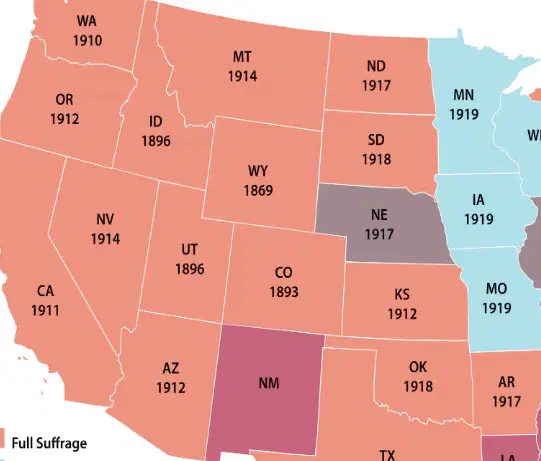
Which region shows the highest concentration of states with full women's suffrage by 1919, as indicated by the map's color key?
The Deep South and Gulf Coast states
The Northeast and Mid-Atlantic corridor
The Mountain West and Pacific Coast region
The Lower Midwest and Ohio Valley
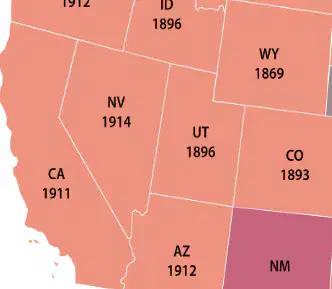
According to the map, which pair of states both had full women's suffrage before 1910?
Wyoming and Utah
California and Arizona
Washington and Oregon
Colorado and Nevada
Using the geographic patterns on the map, which inference best explains a likely political strategy suffragists used to secure the Nineteenth Amendment by 1919?
Focused lobbying only in states with local school elections
Targeted campaigns in populous states lacking full suffrage
Concentrated efforts in already supportive Western states
Avoided presidential-suffrage states to reduce resistance
Which constitutional change granted women the right to vote nationwide in 1920?
Nineteenth Amendment ratification in 1920
Fourteenth Amendment enforcement in 1868
Twenty-First Amendment ratification in 1933
Fifteenth Amendment expansion in 1870
Which state's early action is noted for granting women full suffrage before most others?
Illinois granted partial suffrage in 1913
Wyoming granted full suffrage early
New York granted full suffrage in 1917
Massachusetts granted school suffrage only
How did World War I affect the women's suffrage movement in the United States?
It diverted attention to prohibition campaigns
It halted activism through strict censorship laws
It caused Congress to delay all amendments
It showcased women’s war contributions aiding support
Identify the first state east of the Mississippi River that granted some form of suffrage to women in 1913.
Ohio in 1915 with local elections
New Jersey in 1916 with school board voting
Pennsylvania in 1912 with municipal voting
Illinois in 1913 with partial suffrage
Why did New York’s 1917 decision to grant full suffrage significantly tilt momentum toward a national amendment?
It provided federal funding for suffrage groups
It was the first western territory to act decisively
It was a large, populous state influencing politics
It eliminated the need for federal legislation
Which organization did Florence Kelley help lead as its first general secretary beginning in 1899?
Progressive Party Committee
National Consumers League
American Federation of Labor
Women's Trade Union League
Which reform focus best matches Florence Kelley's advocacy during the Progressive Era?
Antitrust prosecutions against railroads
Prohibition and temperance campaigns
Minimum wage and eight-hour workdays
Foreign policy and imperial expansion
How did Florence Kelley contribute to the Muller v. Oregon decision limiting women's work hours?
She testified as an expert economic witness
She organized nationwide factory strikes
She served as a Supreme Court justice
She helped work on the persuasive legal brief
Given Kelley's work at Hull House from 1891 to 1899, which strategy most likely enhanced her effectiveness addressing sweatshop abuses?
Solely publishing academic monographs
Lobbying foreign governments for tariffs
Community-based settlement work with workers
Military enforcement of factory closures
Which combination accurately pairs Kelley's causes with her organizational action in 1909?
Immigration restriction; headed the Dillingham Commission
Prohibition; led the Anti-Saloon League
Banking reform; chaired the Federal Reserve
Children's rights; co-founded the NAACP
Which reform aimed to improve living conditions in densely populated cities during the Progressive Era?
Prohibition of alcoholic beverages
Railroad rate standardization
Urban housing regulation measures
Child labor restrictions in factories
What was the primary goal of child labor laws enacted at the state level in the Progressive Era?
To increase factory productivity
To lower adult wages statewide
To expand railroad employment
To restrict employment of minors
An employer pays medical bills and lost wages to a worker injured on the job. Which Progressive reform does this illustrate?
Working hours limits
Urban housing regulation
Worker's compensation
Prohibition policies
States introduced limits on daily or weekly work schedules. Which outcome best aligns with the intent of these laws?
Reduced industrial accidents and fatigue
Higher child employment rates
Elimination of railroad monopolies
Expansion of alcohol sales
A state commission sets maximum rates for a private utility to prevent price gouging. Which reform category is this?
Railroad and utility regulation
Worker safety and health rules
Urban housing code enforcement
Conservation of natural resources
Conservation policies in the Progressive Era most directly targeted which public interest?
Privatizing urban water systems
Increasing factory night shifts
Repealing worker safety standards
Protecting wildlife and preserves
Temperance advocates secured laws banning the sale of alcohol. In Progressive reform terms, this is best described as what?
Industrial safety legislation
Urban housing ordinances
Prohibition measures
Child labor exemptions
What was a key reason reformers targeted child labor during the Progressive Era?
Children faced fatigue-related accidents at work
Child labor reduced school overcrowding
Factories lacked adult workers for machines
Children earned higher wages than adults
Which workplace risk increased for children due to long hours?
Guaranteed medical supervision
Improved physical endurance
Exposure to advanced training
Accidents caused by fatigue
In textile mills, what challenge did young workers commonly face?
Receiving generous health benefits
Leading adult teams on schedules
Operating dangerous machinery while tired
Working brief shifts with tutors
Breaker boys in coal mines primarily did which task?
Picked slag from coal for hours
Inspected ventilation equipment
Drove mine trains between shafts
Sorted pay ledgers for managers
What physical consequence was associated with coal mine work for children?
Improved posture through stretching
Hands bent and sometimes crippled
Reduced injuries due to padding
Stronger joints from daily exercise
Which reform goal addressed child labor directly?
Expanded overtime pay for minors
Mandatory factory uniforms for safety
Higher taxes on adult wages only
Minimum age and maximum working hours
By 1918, what shift occurred in many states regarding child labor?
Expanded mines employing younger children
Eliminated all adult positions in mills
Limited or banned child labor and required schooling
Privatized schools funded by factories
Which evidence best supports the claim that fatigue increased accident risk for child workers?
Long shifts operating moving machinery
Short breaks for supervised playtime
Frequent classroom lessons during work
Daily naps provided by employers
Why would reformers advocate compulsory education laws alongside labor limits?
Education trains children for harder labor
Schools enforce factory productivity quotas
School attendance reduces time available for work
Schooling ensures longer night shifts
Which policy combination most effectively protects children in industrial settings?
Minimum hiring age and capped hours
Unlimited overtime and piece-rate pay
Adult-only supervision with no age rules
Open hiring with flexible child contracts
Which Progressive reform effort successfully gained support from unions to aid families of injured workers?
Worker’s compensation programs for injuries
Federal child labor ban in all industries
Mandatory minimum wage laws nationwide
Universal eight-hour day for all workers
In Lochner v. New York (1905), what principle did the Supreme Court prioritize when overturning limits on male workers’ hours?
Federal supremacy over state labor laws
Equal protection for male and female workers
Freedom of contract between employers and employees
Police power to protect public health
States attempted to reduce the hours of work during the Progressive Era. What was one major barrier to these reforms?
Lack of voter support for reforms
Supreme Court decisions limiting state authority
Opposition from immigrant labor groups
Insufficient industrial technology advancements
Muller v. Oregon (1908) upheld limits on women’s working hours. What justification did the Court accept?
Equal rights required identical hour limits
Union contracts mandated hour caps
Women’s weaker status required protection
Economic efficiency demanded shorter shifts
How did Supreme Court rulings in Lochner (1905) and Muller (1908) differ in their treatment of hour limits?
Both struck down male and female limits equally
Lochner upheld limits; Muller struck them down
Lochner struck male limits; Muller upheld female limits
Both upheld hour limits for all workers
Which statement best describes women’s roles by the late 19th and early 20th centuries?
Women focused mainly on political office rather than work
Women left cities to return to rural household labor
Women became visible participants in the urban workforce
Women remained exclusively in domestic roles at home
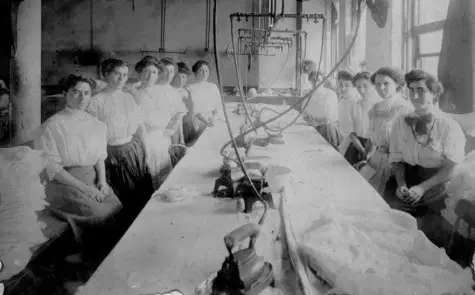
Which sector provided significant urban employment for women around 1900?
Heavy construction and mining work
Garment trade and related factory sewing
Military service and policing roles
Maritime shipping and dock labor
By 1870, what proportion of employed women worked as servants?
About half of employed women
About seventy percent of employed women
About ninety percent of employed women
About one quarter of employed women
A historian argues that formal education was not necessary for women’s early economic contributions. Which evidence best supports this claim?
Women entered universities in large numbers in 1870
Women were mostly unemployed without diplomas
Women without formal schooling contributed through domestic work
Women focused on government careers requiring degrees

