
Font size
 Worksheets
Sukshma Vyayama – Extraction
Total questions: 24
Worksheet time: 12mins
Fill in the blank: __________ is the foundation of all yogic practices.
Sukshma vyayama
Pranayama
Titli Asana
Meditation practice
Fill in the blank: Ankle bending, ankle rotation and knee bending are the sukshma vyayama of __________ joints.
lower limb joints
upper limb joints
spinal joints
neck joints
Fill in the blank: Asana related to the knee strengthen the __________ and __________ around the knee joint.
muscles and ligaments
bones and cartilage
nerves and blood vessels
skin and fascia
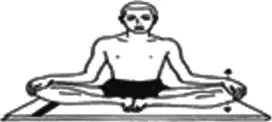
Fill in the blank: Benefit of full butterfly asana is __________.
relieves tension of inner thigh muscles
increases wrist flexibility
reduces shoulder stiffness only
strengthens upper back extensors primarily
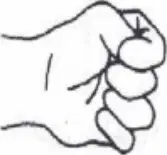
Hand clenching (Practice – 1): Sit in base position or any comfortable cross-leg posture. Stretch both arms in front at shoulder level with palms facing downward. Open the hands and stretch the fingers wide, then close the fingers to make a tight fist with the thumb inside as shown. What is the correct thumb position while making the fist in this practice?
Outside the fingers
Inside the fingers
Between index and middle fingers
Resting on the palm
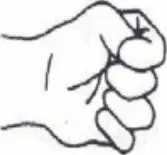
Hand clenching (Practice – 1): Arms are stretched in front of the body at shoulder level with palms facing downward. During the breathing cycle, when should you inhale and exhale?
Inhale while making the fist; exhale while opening
Inhale while opening the hands; exhale while making the fist
Inhale after each repetition; exhale before starting
Breath is held throughout
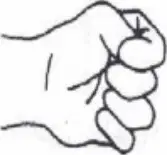
Hand clenching (Practice – 1): How many repetitions are prescribed for this practice?
Five times
Eight times
Ten times
Twelve times
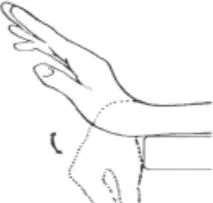
Wrist bending (Practice – 2): Remain in the same starting pose with arms in front at shoulder level, hands open and facing downward. When bending the hands forward from the wrist, where should the fingers point?
Toward the ceiling
Toward the floor
Toward the body
Straight ahead
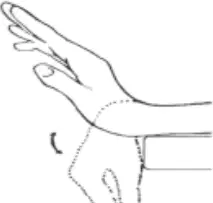
Wrist bending (Practice – 2): Keep the elbows straight and do not bend knuckle joints or fingers. What is the recommended breathing pattern?
Inhale with the forward movement; exhale with the upward movement
Inhale with the upward movement; exhale with the forward movement
Hold the breath during both movements
Breathe only through the mouth
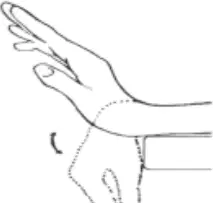
Wrist bending (Practice – 2): How many total repetitions are advised for this exercise?
Three times
Five times
Eight times
Ten times
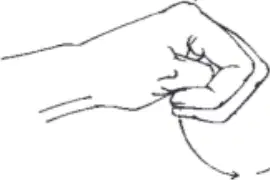
Wrist joint rotations (Practice – 3): Remain in the same starting position and make a fist with the thumb inside. During rotation, which way should the palm face throughout?
Upward
Sideways
Downward
Toward the body
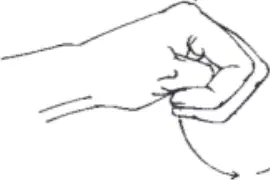
Wrist joint rotations (Practice – 3): What is the prescribed sequence and count for rotations?
Five clockwise only
Ten clockwise and ten anticlockwise
Twenty clockwise only
Ten anticlockwise only
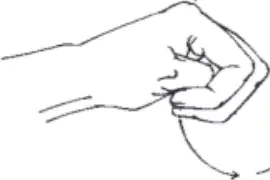
Wrist joint rotations (Practice – 3): What is the breathing instruction associated with the movement?
Inhale in downward movement; exhale in upward movement
Inhale with upward movement; exhale in downward movement
Hold breath for the entire circle
Breathe irregularly
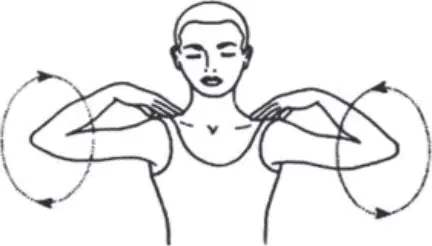
Shoulder socket rotation (Practice – 5): Which benefit is explicitly mentioned?
Improves ankle flexibility
Relieves strain from prolonged sitting and helps in cervical spondylitis
Strengthens the jaw muscles
Reduces foot cramps only
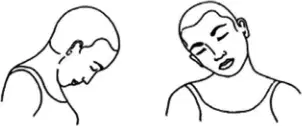
Neck movements (Practice – 6, Stage 1): Who is contraindicated for this stage?
Persons with acute cervical spondylitis
Persons with mild shoulder stiffness
Persons recovering from a cold
Persons with healthy neck mobility
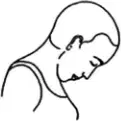
Neck movements (Practice – 6, Stage 3): What benefit is mentioned for these asanas?
Increase knee strength only
Release tension, heaviness and stiffness in the head, neck and shoulder region
Improve digestion exclusively
Enhance ankle mobility
Which of the following are hand joint practices? Select three.
Finger bending
Finger rotation
Wrist bending
Knee bending
Ankle rotation
Which practice is helpful in cervical spondylitis and good for respiratory muscles?
Neck joint practice
Leg joint practice
Abdominal contraction practice
Eye exercise practice
Answer in about 150 words: Explain why sukshma vyayama is called Yogic warm-up.
It prepares the body for asanas by gently mobilizing joints and muscles and increasing circulation.
It is a high-intensity workout that rapidly elevates heart rate before meditation.
It is a cooling practice done to end a yoga session.
It focuses only on breath without any physical movement.
Answer in about 150 words: Explain why sukshma vyayama is called Premeditative practice.
It calms the mind and gently loosens joints to prepare the body and attention for meditation.
It is performed only after deep sleep to induce dreams.
It replaces meditation entirely with vigorous exercise.
It is done to improve athletic sprint performance before competition.
Answer in about 300 words: Explain therapeutic uses of sukshmavyayama.
Relieves strain from prolonged sitting through shoulder movements.
Helps in cervical spondylitis by mobilizing hand, wrist, elbow, and shoulder joints.
Releases tension, heaviness, and stiffness in the head, neck, and shoulder region through neck movements.
Primarily increases blood glucose levels in the short term.
Answer in about 300 words: What is psychosomatic effect of sukshmavyayama?
Integration of body and mind via conscious, gentle movements and breath leading to reduced stress and improved awareness.
Purely mechanical joint motions with no effect on attention or emotion.
Exclusive strengthening of leg muscles without mental impact.
Temporary dehydration that enhances cognitive performance.
Answer in about 300 words: What is the importance of Sukshmavyayama in this modern life style?
It counteracts sedentary habits by relieving joint and muscle stiffness, improving mobility, and reducing stress.
It is mainly a competitive sport to increase medal counts.
It is meant only for advanced practitioners performing complex acrobatics.
It is irrelevant for people who work at desks.
Answer in about 300 words: Differentiate the effect of conscious movement and mechanical movements.
Conscious movement engages awareness and breath, producing psychosomatic benefits beyond physical mobilization; mechanical movement is rote and yields limited mind–body effect.
Mechanical movement produces superior mind–body integration, while conscious movement only increases heart rate.
Both have identical effects on body and mind with no meaningful difference.
Conscious movement weakens joints, while mechanical movement strengthens them exclusively.

