wayground logo

Free Printable Worksheets

Font size

S
M
L
XL
Worksheets

Unit 1-3 Review

Total questions: 50

Worksheet time: 34mins

Name
Class
Date
1.
What city is located at the coordinates shown on the map (40°N, 74°W)?
a)
Los Angeles
b)
New York City
c)
Miami
d)
Chicago
2.
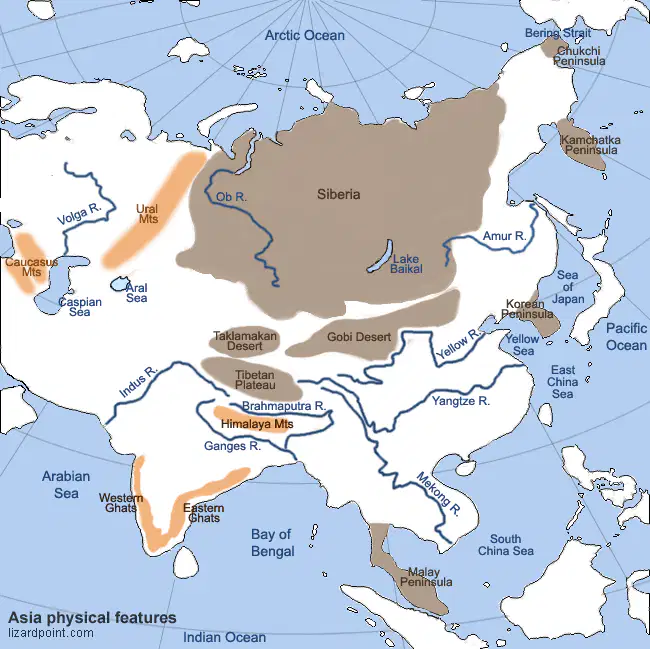
Which feature on the map has historically limited cultural diffusion between India and China?
a)
Gobi Desert
b)
Himalaya Mountains
c)
Indus River
d)
Bay of Bengal
3.
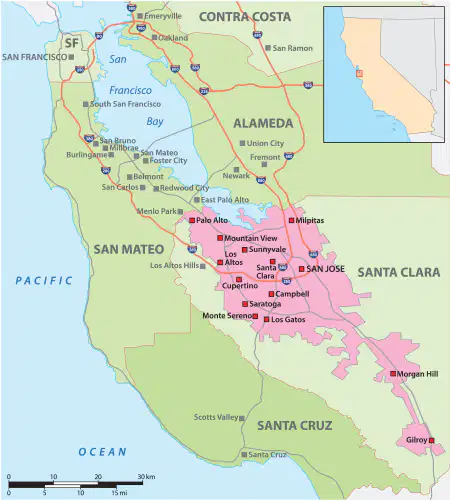
Which highlighted region represents a modern cultural hearth for technology?
a)
Nile River Valley
b)
Mesopotamia
c)
Indus River Valley
d)
Silicon Valley
4.
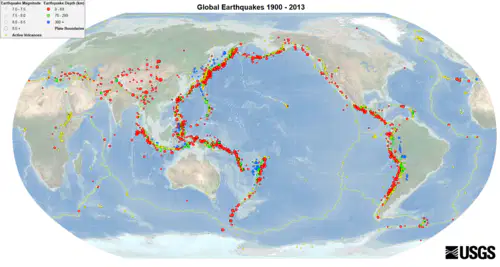
Based on the map, why does Japan experience frequent earthquakes?
a)
It is near the equator
b)
It lies on convergent and transform plate boundaries
c)
It is surrounded by deep ocean trenches
d)
It has high elevation
5.
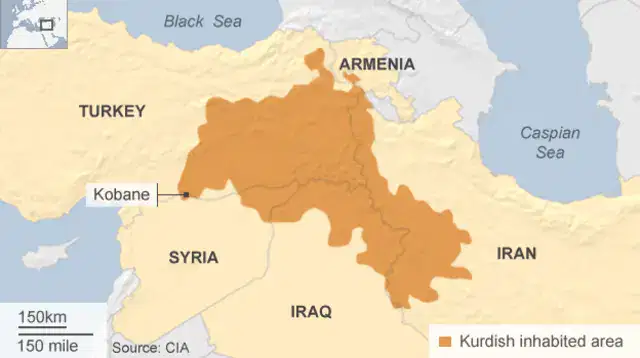
What does the map illustrate about the Kurds?
a)
They form a stateless nation spread across multiple countries
b)
They control a sovereign state in the Middle East
c)
They live exclusively in one country
d)
They have no cultural identity
6.
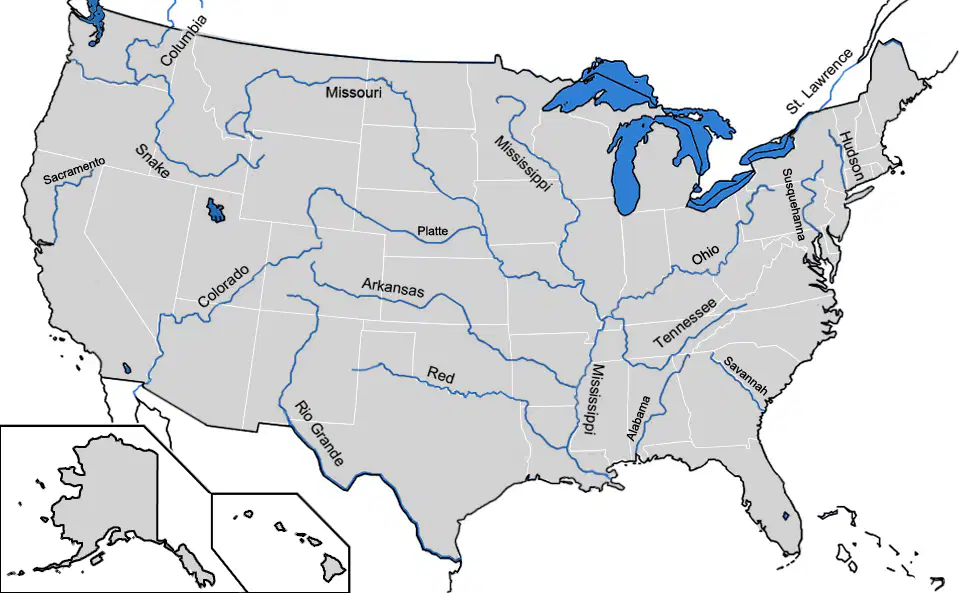
Which major U.S. river system drains to the Gulf of Mexico?
a)
Mississippi River
b)
Columbia River
c)
St. Lawrence River
d)
Hudson River
7.
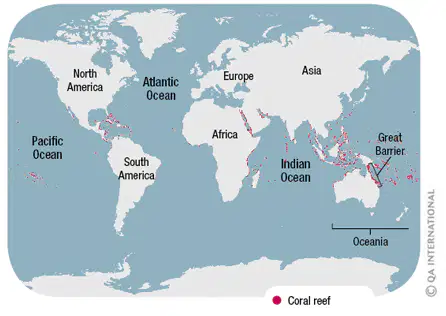
In which ocean is the Great Barrier Reef located?
a)
Atlantic Ocean
b)
Pacific Ocean
c)
Indian Ocean
d)
Southern Ocean
8.
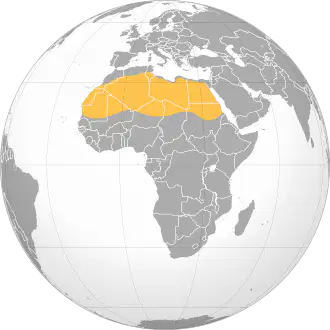
On which continent is the Sahara Desert located?
a)
Asia
b)
Africa
c)
Australia
d)
South America
9.
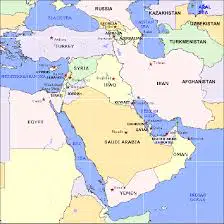
Which region is the Persian Gulf located in?
a)
Southeast Asia
b)
Middle East
c)
North Africa
d)
Central Europe
10.
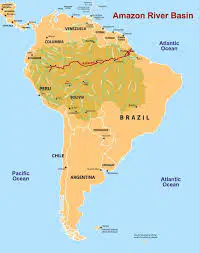
The Amazon River Basin is located on which continent?
a)
Africa
b)
South America
c)
Asia
d)
Australia
11.
A geographer is given only latitude and longitude for a site. What can they determine with certainty?
a)
Relative location within a region
b)
Absolute location on Earth’s grid
c)
Local time zone and daylight hours
d)
Köppen climate classification
12.
Which set correctly lists the Five Themes of Geography used to organize spatial thinking?
a)
Climate, Culture, Economy, Politics, Migration
b)
Location, Place, Region, Movement, Human–Environment Interaction
c)
Latitude, Longitude, Elevation, Population, Resources
d)
Physical, Political, Cultural, Economic, Environmental
13.
Geographers delineate regions primarily to:
a)
Fix international treaty boundaries
b)
Organize complex spatial information into analyzable units
c)
Determine absolute locations of cities
d)
Measure annual rates of population growth
14.
Which of the following religions are monotheistic? (Select ALL that apply)
a)
Hinduism
b)
Buddhism
c)
Judaism
d)

Christianity

e)

Islam

15.
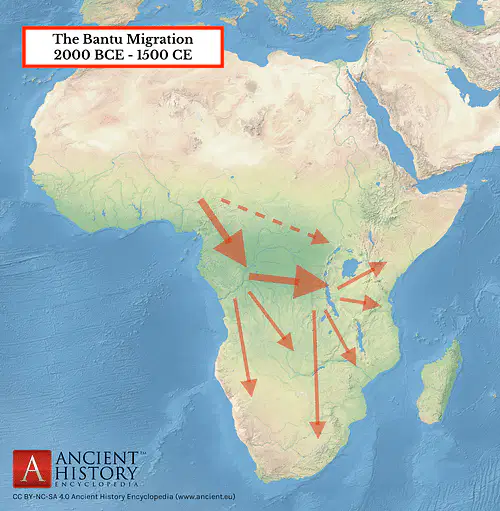
The Bantu migrations most strongly influenced Sub‑Saharan Africa by:
a)
Spreading Arabic and Islamic law across East Africa
b)
Diffusing ironworking, agriculture, and Bantu language families
c)
Establishing trans‑Saharan caravan routes to the Mediterranean
d)
Introducing Christianity from the Ethiopian Highlands
16.
Why is pork production minimal in predominantly Islamic regions?
a)
Climate conditions universally prevent swine husbandry
b)
Islamic dietary law (halal) prohibits consumption of pork
c)
Pigs are regarded as sacred in Islamic doctrine
d)
There is no market demand for animal protein
17.
Which statement best distinguishes universalizing from ethnic religions?
a)
Universalizing religions actively seek converts globally; ethnic religions are tied to a specific people/place
b)
Ethnic religions have codified scriptures; universalizing religions do not
c)
Universalizing religions are polytheistic; ethnic religions are monotheistic
d)
Ethnic religions dominate urban areas; universalizing religions dominate rural areas
18.
In the traditional Indian caste hierarchy, which group has historically occupied the lowest status?
a)
Brahmins
b)
Kshatriyas
c)
Dalits (Untouchables)
d)
Vaishyas
19.
The legal system of racial segregation in South Africa that ended in 1994 was called:
a)
Jim Crow
b)
Apartheid
c)
Colonialism
d)
Feudalism
20.
Which process best describes the global influence of American television and social media on other cultures?
a)
Cultural diffusion via hierarchical and contagious pathways
b)
Environmental determinism shaping cultural traits
c)
Acculturation limited to rural regions
d)
Cultural isolation reinforced by media firewalls
21.
The speed of cultural diffusion increased most dramatically with the advent of:
a)
The printing press
b)
The steam locomotive
c)
The telegraph
d)
Global digital networks (the Internet)
22.
Which statement accurately captures the relationship between race and ethnicity?
a)
Race is a subset of ethnicity used to classify language families
b)
Ethnicity refers to shared cultural traits; race is a separate social construct not determinative of ethnicity
c)
Ethnicity is biological; race is cultural
d)
Race and ethnicity are interchangeable in geographic analysis
23.
Historically, the original distinction between Hutu and Tutsi in Rwanda/Burundi was based primarily on:
a)
Religious affiliation
b)
Language differences
c)
Socioeconomic status and cattle ownership
d)
Colonial passport assignment
24.
A stateless nation is best defined as:
a)
A country without a functioning government
b)
A cultural group lacking its own sovereign state
c)
A country with no internationally recognized borders
d)
A region under military occupation
25.
The European Union primarily exists to:
a)
Replace the United Nations with a single global body
b)
Eliminate all national borders across Europe
c)
Promote economic integration, free movement, and political cooperation among member states
d)
Establish a unified European military under centralized command
26.
A major post‑imperial outcome across parts of Africa was:
a)
Immediate economic prosperity and political unity
b)
Political instability and ethnic conflict linked to colonial-era borders
c)
Elimination of European languages from public life
d)
Permanent federal unions among former colonies
27.
The partition of India (1947) and the breakup of Yugoslavia (1990s) were similar largely because both involved:
a)
Geographic isolation producing economic autarky
b)
Religious and ethnic divisions driving territorial reorganization
c)
Colonial treaties requiring equal land distribution
d)
Climate change forcing population resettlement
28.
Which is a persistent disadvantage for landlocked states like Switzerland?
a)
Lack of freshwater resources
b)
Elevated volcanic risk
c)
Dependence on transit states and higher transport costs for seaborne trade
d)
Absence of any international borders
29.
How have physical and human geography in the Balkans contributed to regional dynamics over time?
a)
Uniform religious practice producing political unity
b)
Ethnolinguistic diversity and complex borders fostering recurrent conflict
c)
High mountain barriers eliminating migration entirely
d)
Coastal access preventing outside influence
30.
Natural borders are typically established by:
a)
Geometric lines of latitude and longitude
b)
Physical features such as rivers, mountains, and deserts
c)
Trade agreements among regional blocs
d)
Electoral districting rules
31.
As an enclave entirely within South Africa, Lesotho must:
a)
Maintain sovereign deep‑water ports for maritime trade
b)
Avoid trade to preserve neutrality
c)
Rely on South Africa for transit access, imports/exports, and cross‑border infrastructure
d)
Join a monetary union to keep open ocean routes
32.
Which are common outcomes of interstate war against a foreign adversary? (Select THREE)
a)
Economic disruption
b)
Population displacement/refugee flows
c)
Changes to political boundaries or sovereignty
d)
Rapid tourism growth
33.

Identify the landforms

34.

This is an image of a ​ (a)  

Choose from the below words
delta
gulf
canal
rainforest
35.

Movement is...

a)

The way people, goods and ideas travel from place to place.

b)

The way people and the environment affect each other.

c)

Where a place is on Earth.

d)

None of the above are correct.

36.

Regions are ...

a)

Areas of the world that have common physical, human or cultural characteristics.

b)

An absolute location on Earth.

c)

The physical and human characteristics of a place.

d)

All of the above are correct answers.

37.

An example of an absolute location would be.........

a)

St. Louis and Chicago

b)

United States of America

c)

The South

d)

37.02 degrees N, 93.20 degrees W

38.

What does relative location tell you?

a)

a place's exact position on Earth

b)

why people moved to a certain place

c)

a place's position in relation to other people and places

d)

how a place is similar to other places

39.

Which of the following is a human characteristic of a place?

a)

landforms

b)

climate

c)

vegetation

d)

language

40.

Someone tells you about the population, languages spoken, landforms and animal life in Virginia. Which theme of geography is he or she most likely talking about?

a)

location

b)

place

c)

movement

d)

human-environment interaction

41.
Human and Environment Interactions are ...
a)
The way people and the environment affect each other.
b)
Areas of the world that have common physical, human or cultural characteristics.
c)
The way people, goods and ideas travel from place to place.
42.

An example of relative location would be............

a)

37.02 degrees N, 96.2 degrees W

b)

a few miles south of Springfield on HWY 65

c)

Paris, France

43.

What is ethnicity?

a)

Refers to factors like nationality, religion, language, and culture

b)

Refers to someone's physical characteristics like bone structure and skin, hair, or eye color

c)

Refers to where a person lives

44.

Which of the following describes a person's physical appearance or attributes?

a)

race

b)

ethnicity

c)

nationality

45.

Which of the following was not an example of how language can be divisive that we learned in class?

a)

French-speaking Quebec wanted independence from the rest of English-speaking Canada

b)

The Basque region in Spain wanted independence from the rest of Spain because of its unique language and culture

c)

The region of Catalonia in Spain wanted independence from Spain because the culture that developed is unique

d)

Vatican City wants to remain independent because of the religious differences between itself and Rome, Italy

46.

What is an ethnic religion?

a)

Religion that is always working to get more followers

b)

Religions that are contained to a common group where followers are usually born into the faith

47.
Name the supranational organization:
a)
European Union
b)
NATO
c)
African Union
d)
Arab League
48.
What do the highlighted regions have in common?
a)
All are nation-states
b)
All are microstates
c)
All are landlocked
d)
All are stateless nations
49.

Which provides the strongest support for the conclusion that Japan has few centrifugal forces?

a)

Japan is an island located off the east coast of China

b)

Japan is part of the United Nations

c)

Japan has never colonized another country

d)

Japan has a high degree of ethnic and linguistic homogeneity

e)

Japan has one of the largest economies in the world

50.

Which term describes a state with control over its internal affairs, independent of outside influence?

a)

centripetal

b)

nationality

c)

centrifugal

d)

sovereignty

e)

ethnicity