
 Worksheets
AP BIO-Unit 4-Cellular Communication and Signal Transduction-MCQ
Total questions: 25
Worksheet time: 13mins
Which of the following best explains how a group of cells can send chemical signals to cells in another part of the body?
The chemical is released into the extracellular space and immediately binds to specific receptors on the surface of the target cells that released it.
The chemical diffuses through the extracellular space until it reaches target cells with specific receptors for that chemical.
The chemical is released into blood vessels, where it circulates until it reaches target cells that have specific receptors for that chemical.
The chemical is sent from the group of cells through neurons to the target cells, where it binds to specific receptors.
Which of the following mechanisms best explains how drug K increases the cellular response?
Drug K inhibits the activation of the receptor protein.
Drug K promotes the activation of relay molecules.
Drug K inhibits the deactivation of the receptor protein.
Drug K promotes the circulation of relay molecules.
Which of the following best explains why some cells do not respond to the hormone?
Some cells lack hormone receptors.
Some cells lack regulators.
Some cells lack cholesterol.
Some cells lack embedded proteins.
Which of the following describes a critical role of cAMP during the transduction stage of a G protein signal transduction pathway?
cAMP carries the signal to the nucleus of the cell and results in new sequences of nucleotides being added to the cell’s DNA.
cAMP binds the extracellular signal molecule and carries it to the intracellular target specified by the signal.
cAMP modifies a specific monomer so that it can be added to an elongating structural macromolecule.
cAMP results in the activation of an enzyme that amplifies the signal by acting on many substrate molecules.
Which of the following best describes a molecule that relays messages from receptors to other molecules only inside the cell?
The molecule is a ligand.
The molecule is a hormone.
The molecule is a secondary messenger.
The molecule is a transport protein.
Which of the following steps in a signaling pathway typically occurs first once a chemical messenger reaches a target cell?
Specific genes are activated.
A second messenger molecule is produced.
A ligand binds to a receptor.
Specific proteins are synthesized.
During a fight-or-flight response, epinephrine is released into the body’s circulatory system and transported throughout the body. Some cells exhibit a response to the epinephrine while other cells do not. Which of the following justifies the claim that differences in components of cell signaling pathways explain the different responses to epinephrine?
Cell signaling depends on the ability to detect a signal molecule. Not all cells have receptors for epinephrine. Only cells with such receptors are capable of responding.
Cell signaling depends on the transduction of a received signal by the nervous system. Not all cells are close enough to a synapse to receive the signal and respond.
Cell signaling depends on the signal being able to diffuse through the cell membrane. Epinephrine is incapable of diffusing through some plasma membranes because of the membrane’s phospholipid composition.
Cell signaling requires reception, transduction, and response. All cells can receive epinephrine, all cells respond with a pathway, but only select cells have the proper coding in their DNA to respond.
Signal transduction may result in changes in gene expression and cell function, which may alter phenotype in an embryo. An example is the expression of the SRY gene, which triggers the male sexual development pathway in mammals. This gene is found on the Y chromosome. Which statement provides evidence to justify the claim that signal transduction may result in an altered phenotype?
If the SRY gene is absent or nonfunctional, the embryo will exhibit male sexual development.
If the SRY gene is absent or nonfunctional, the embryo will exhibit female sexual development.
An embryo with a male sex chromosome will always exhibit male sexual development.
An embryo with two male sex chromosomes will always exhibit male sexual development.
Researchers have discovered details about apoptosis (programmed cell death) by studying embryologic development of a nematode worm, Caenorhabditis elegans. Apoptosis is a normal developmental process in C. elegans. They found several genes involved in apoptosis, including ced-9 and ced-3. The ced-3 gene was found to promote cell death, and ced-9 to inhibit it. The ced-9 gene serves as a regulator that prevents apoptosis in the absence of a signal promoting apoptosis. Which of the following statements best justifies the claim that changes in the expression of ced-9 in C. elegans can affect regulation of apoptosis in the cell?
An experiment showed that a mutation in the ced-9 gene led to excessive cell death in C. elegans.
An experiment showed that the ced-9 gene normally produces a protein that promotes excessive cell death in C. elegans.
A mutation in ced-3 will cause ced-9 to be incorrectly transcribed.
Apoptosis is dependent on a signal from the ced-9 gene in C. elegans.
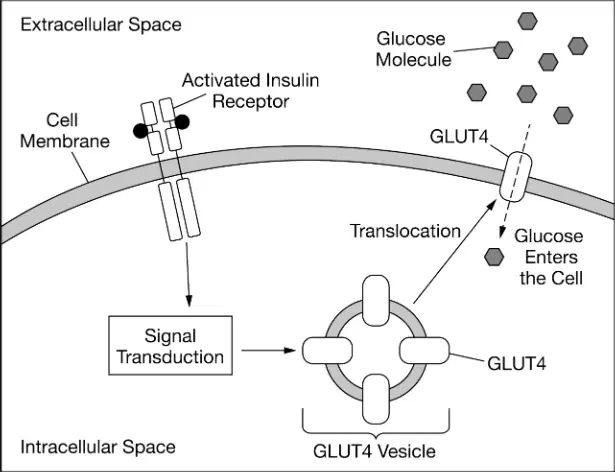
The insulin receptor is a transmembrane protein that plays a role in the regulation of glucose homeostasis. The receptor’s extracellular domain binds specifically to the peptide hormone insulin. The receptor’s intracellular domain interacts with cellular factors. The binding of insulin to the receptor stimulates a signal transduction pathway that results in the sub-cellular translocation of GLUT 4, a glucose transport protein that is stored in vesicles inside the cell. A simplified model of the insulin receptor–signaling pathway is shown in Figure 1.
Which of the following statements best predicts the effect of a loss of function of the insulin receptor’s intracellular domain? A simplified model of the insulin receptor–signaling pathway is shown in Figure 1.
The stimulation of the signal transduction pathway will increase.
The storage of GLUT4 in vesicles inside the cell will increase.
The number of GLUT4 molecules in the plasma membrane will increase.
The concentration of glucose inside the cell will increase.
The insulin receptor is a transmembrane protein that plays a role in the regulation of glucose homeostasis. The receptor’s extracellular domain binds specifically to the peptide hormone insulin. The receptor’s intracellular domain interacts with cellular factors. The binding of insulin to the receptor stimulates a signal transduction pathway that results in the sub-cellular translocation of GLUT4, a glucose transport protein that is stored in vesicles inside the cell. A simplified model of the insulin receptor–signaling pathway is shown in Figure 1..
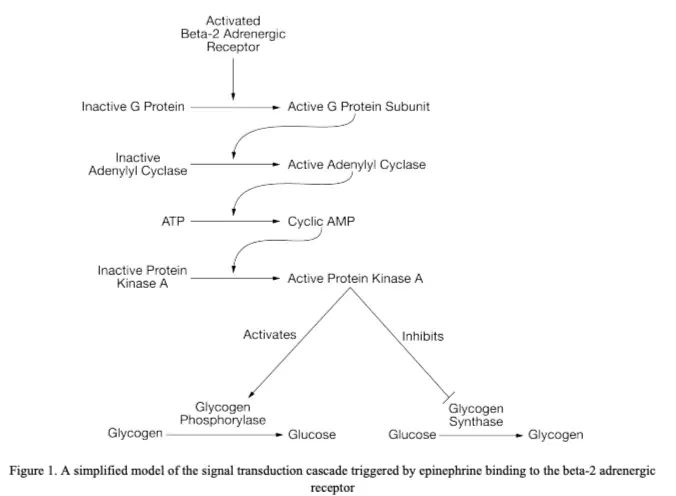
Which of the following outcomes will most likely result from the inactivation of the beta-2 adrenergic receptor?
The cellular concentration of cyclic AMP will increase.
The enzymatic activity of protein kinase A will increase.
The activation of glycogen phosphorylase will increase.
The rate of glycogen synthesis in the cell will increase.
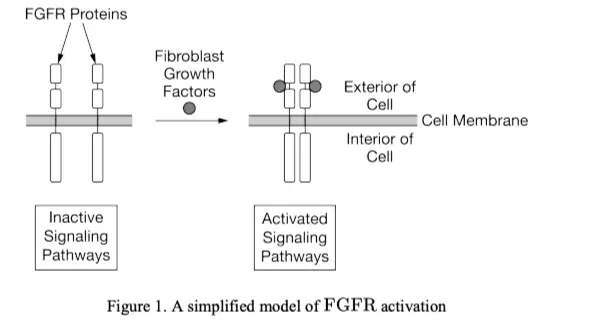
Fibroblast growth factor receptors (FGFRs) are transmembrane proteins that regulate cellular processes such as cell proliferation and differentiation. The extracellular domains of FGFR proteins bind specifically to signaling molecules called fibroblast growth factors. The intracellular domains of FGFR proteins function as protein kinases, enzymes that transfer phosphate groups from ATP to protein substrates.
FGFR activation occurs when binding by fibroblast growth factors causes FGFR proteins in the plasma membrane to become closely associated with each other. The association of two FGFR proteins stimulates protein kinase activity, which triggers the activation of intracellular signaling pathways. A simplified model of FGFR activation is represented in Figure 1.
Which of the following changes in the FGFR signaling pathway is most likely to result in uncontrolled cell proliferation?
The irreversible association of FGFR proteins
The loss of the FGFR protein kinase function
A decrease in the intracellular concentration of ATP
A decrease in the extracellular concentrations of fibroblast growth factors
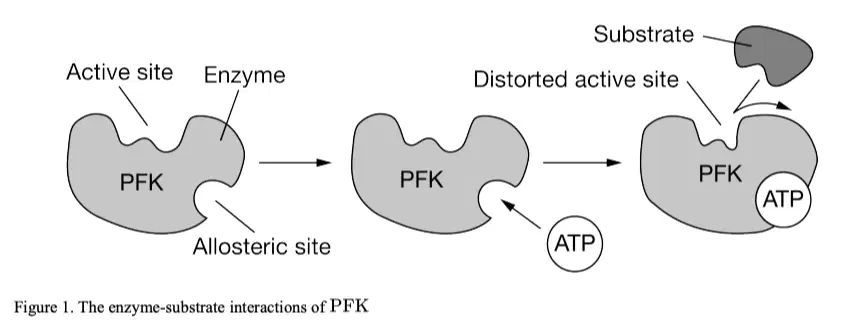
Phosphofructokinase (PFK) is a key enzyme in glycolysis. ATP is one of the two substrates for the reaction catalyzed by PFK. ATP is also an allosteric regulator of PFK.
Figure 1 shows the enzyme-substrate interactions of PFK.
A researcher found a mutation that resulted in the PFK enzyme being unable to bind ATP to the allosteric site. Which of the following best predicts the effect of the mutation?
The activity of the enzyme will not be affected because the active site is not involved in substrate binding at the allosteric site.
Negative feedback regulation does not occur, so the enzyme will be active when glycolysis is not needed.
Positive feedback does not occur, and the activity of the enzyme will decrease when glycolysis is needed.
The activity of the enzyme will fluctuate independent of the ATP concentration.
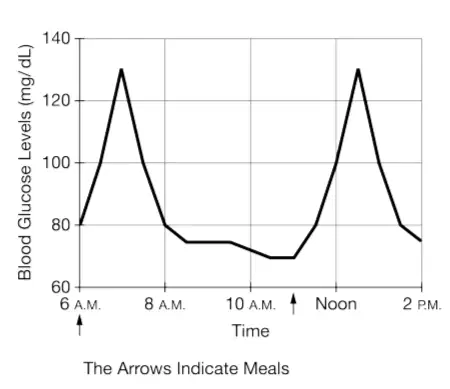
A person’s blood glucose level fluctuates during the day, as represented in Figure 1. Two hormones, insulin and glucagon, are directly involved in regulating the blood glucose level to maintain a healthy level. Insulin acts to lower the blood glucose level, and glucagon acts to increase the blood glucose level.
Which of the following best predicts what will happen to the blood glucose level if the person has another meal at 5 P.M.?
Immediately after the meal, the blood glucose level will decrease because of the increase in glucagon levels.
Immediately after the meal, the blood glucose level will increase, and then insulin will be secreted to counter the increase.
Several hours after the meal, the blood glucose level will increase sharply because of an increase in the amount of glucagon secreted.
The blood glucose level will not change after the 5 P.M. meal because the person has already consumed two meals and the blood glucose level has been adjusted to a steady-state level.
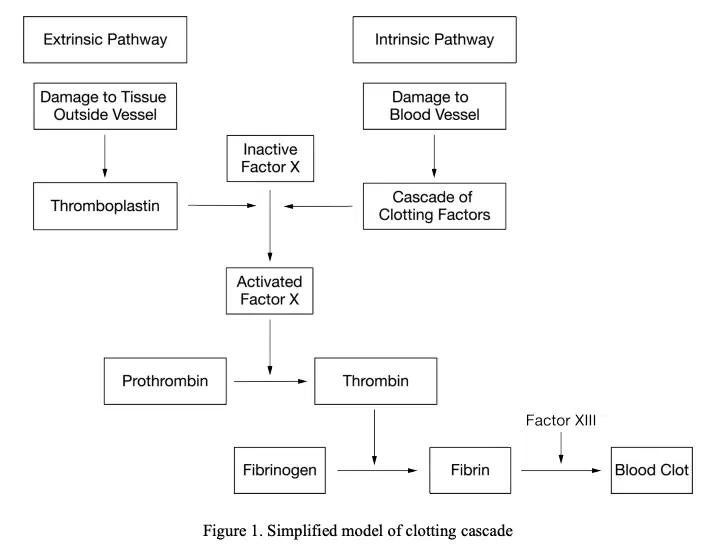
Which of the following best predicts the effects of warfarin on a patient, based on the simplified model of the blood clotting cascade?
Fibrinogen will form fibrin, but the clot will not form because Factor XIII will not be synthesized.
The intrinsic pathway will take over because the clotting factors are part of that pathway.
Thrombin will be converted to prothrombin because Factor X will reverse the reaction.
Factor X will not be activated, which will prevent thrombin from forming.
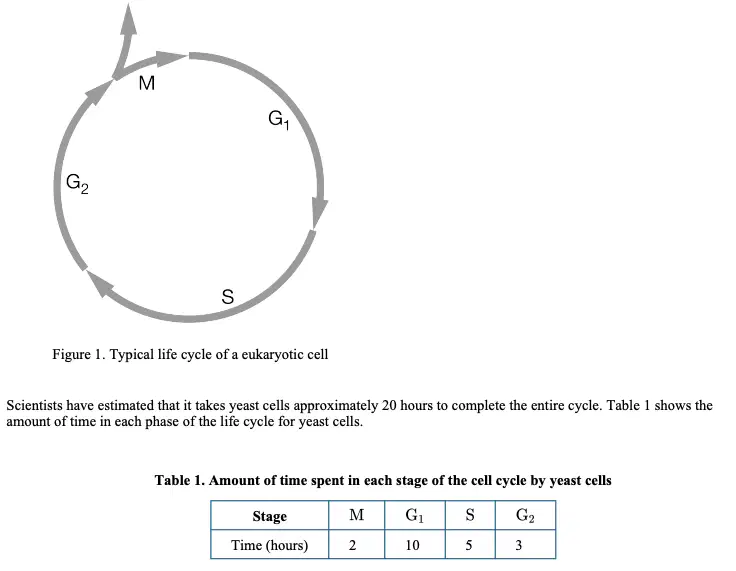
Based on Table 1, what percent of the life cycle of yeast cells is spent in DNA replication?
5 percent
10 percent
25 percent
50 percent
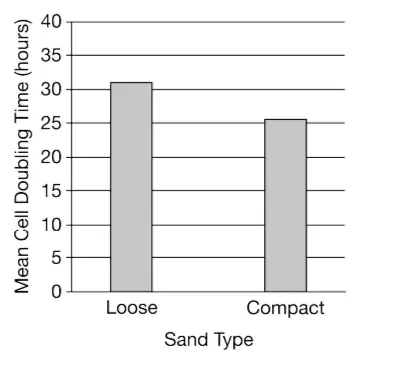
Researchers grew seedlings of corn, Zea mays, in loose and compact sand. The researchers measured the amount of time required for the cells in the growing root tips of the seedlings to double in number. The mean cell doubling times for the two groups of seedlings are shown in Figure 1.
Based on the sample means, which of the following conclusions about the cells in the growing root tips of Zea mays seedlings is best supported by the results of the experiment?
The cells of the root tips grow to larger sizes when the seedlings are planted in compact sand than when the seedlings are planted in loose sand.
The average rate of mitotic cell division is greater for the root tips growing in loose sand than for the root tips growing in compact sand.
The average cell cycle time is greater for the root tips growing in compact sand than for the root tips growing in loose sand.
More cells are produced per unit of time in the root tips growing in compact sand than in the root tips growing in loose sand.
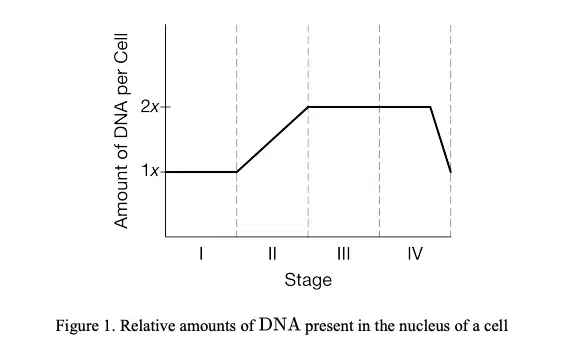
Based on Figure 1, which of the following statements correctly links a stage of the cell cycle with the event occurring at that stage?
Stage I represents the G2 phase of the cell cycle.
Synthesis of sufficient DNA for two daughter cells occurs in stage II.
Stage III includes mitosis.
The replication of genetic material occurs in stage IV.
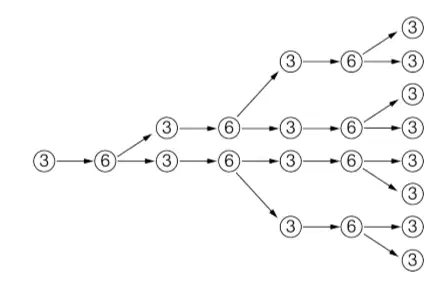
Researchers tracked the amount of DNA (measured in picograms) over time beginning with a single cell and continuing through several rounds of cell division. The researchers observed threadlike chromosomes prior to cell division. The threadlike chromosomes disappeared from view shortly after each division. The amount of DNA in picograms per cell over several rounds of cell division is shown in Figure 1.
Which of the following statements is consistent with the data in Figure 1 regarding the amount of DNA in picograms per cell over several rounds of cell division?
The amount of DNA doubles during mitosis and remains constant afterward.
The amount of DNA alternates between 3 and 6 picograms during cell division.
DNA replication occurs only once during the entire process of cell division.
Chromosomes remain visible throughout all stages of cell division.
The cells have a haploid chromosome number of 3. Which of the following statements is correct regarding the DNA content during cell division?
The cells have a haploid chromosome number of 3.
The cells have a diploid chromosome number of 6.
There is a change from 3 to 6 picograms of DNA because DNA is replicated before each round of cell division.
There is a change from 6 to 3 picograms of DNA after each cell division because the chromosomes lengthen following cell division.
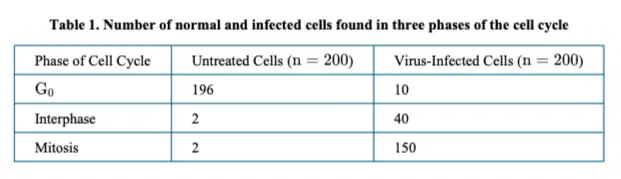
A cell culture commonly used in research was selected to study the effect of a specific virus on the timing of cell cycle phases. Two separate cultures were started, one untreated and one inoculated with the virus. Both cultures were incubated under identical conditions. After a period of time, 200 cells from each culture were observed and classified as shown in Table 1.
Which of the following most accurately describes an observation and an effect of the viral infection indicated by the data in Table 1?
Normal cells spend 98 percent of their time cycling in and out of interphase. The virus reduces this to 5 percent of the time.
Twenty percent of the virus-infected cells are in interphase. These cells are no longer part of the cell cycle.
Forty percent of the virus-infected cells are in interphase. These cells are preparing for replication of genetic material.
Seventy-five percent of the virus-infected cells are found in mitosis. The virus stimulates frequent cell division.
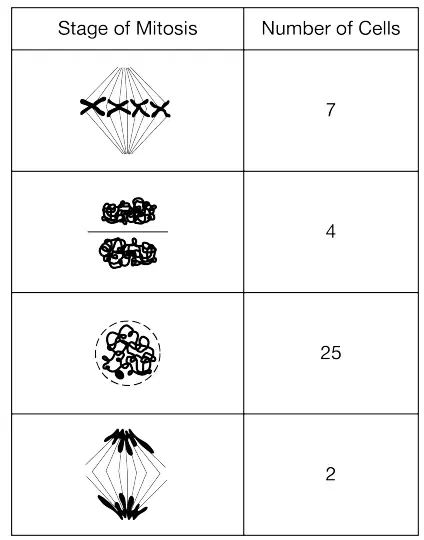
A student used microscopy to investigate the relative lengths of the different stages of mitosis. The student prepared slides of cells isolated from a growing onion root tip and viewed the slides under a dissecting microscope. The student then made diagrams of cells that were in different stages of mitosis and counted the number of cells that were in each of those stages. The student’s data are presented in Table 1.
Based on the data, the percent of the mitotic cells that were in metaphase is closest to which of the following?
5%
11%
18%
66%
The epidermal growth factor receptor EGFR is a cell surface receptor. When a growth factor binds to EGFR , the receptor is activated. The activated EGFR triggers a signal transduction pathway, which leads to increased frequency of cell division.
Which of the following best predicts the effect of a mutation that causes EGFR to be active in the absence of a growth factor?
Increased apoptosis will lead to abnormal growth of the tissue.
Increased cell division will lead to the formation of a tumor.
Cells will exit the cell cycle, entering a non-dividing G₀ phase.
Fewer cells will be in any of the stages of mitosis.

Which of the following will most likely result from a loss of p53 function?
Rapid cell growth without cell division
Immediate activation of apoptosis pathways
Uncontrolled cell proliferation
Increased expression of p53 target genes
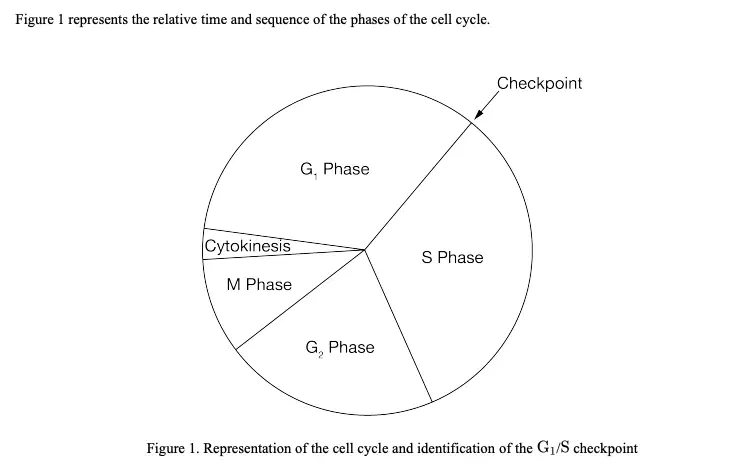
Which statement best predicts why a cell's progression through the cell cycle might be halted at the G₁/S checkpoint?
Spindle fibers have not correctly attached to chromosomes.
There are not enough nucleotides available to construct new DNA.
Damage occurred to DNA when it was being copied in G₁.
Proteins necessary for M phase of the cell cycle have not been produced.

