
 Worksheets
Science Midterm DA Review
Total questions: 147
Worksheet time: 4hrs 38mins
The hardened remains of a plant or an animal that lived long ago
extinction
fossil
tree
tissue
What do scientists learn from fossils?
how rocks form
what sediments are
what animals are like today
about plants and animals that lived millions of years ago
A fossil of an animal has a mouth full of sharp, pointed teeth. What can you infer about this animal.
The animal ate fruit and vegetables
The animal animal did not live on land
The animal ate meat
The animal did not know how to brush it's teeth
What replaces the wood of a once-living tree to form
petrified wood?
minerals
sap
leaves
bark

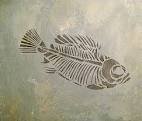
If scientists found this fossil, what could they infer?
what fish are like today
the color of the fish
what kind of animal ate this fish
that water once covered the area

The illustration shows a map with four locations and the fossils found there. A fossil shark tooth was also found. In which area was the shark tooth most likely found?
Area A
Area B
Area C
Area D
The first step in the process of how fossil are formed is _________
As time passes, sediment hardens into rock, layering on top of the animal or plant part. The bones or shells decay into minerals, joining the rock.
An animal dies in a wet environment (such as a riverbank).
The animal's body or plant's leaves are covered in mud. Soft tissues or organs decompose or are eaten by other living things.
The hard parts are left behind. (bones, teeth, claws, beaks, etc.)
The second step in the process of how fossils are formed is _______
As time passes, sediment hardens into rock, layering on top of the animal or plant part. The bones or shells decay into minerals, joining the rock.
An animal dies in a wet environment (such as a riverbank)
The animal’s body or plant’s leaves are covered in mud. Soft tissues or organs decompose or are eaten by other living things.
The hard parts are left behind. (bones, teeth, claws, beaks, etc.)
The third step in the process of how a fossil is formed is ________.
As time passes, sediment hardens into rock, layering on top of the animal or plant part. The bones or shells decay into minerals, joining the rock.
An animal dies in a wet environment (such as a riverbank)
The animal’s body or plant’s leaves are covered in mud. Soft tissues or organs decompose or are eaten by other living things.
The hard parts are left behind. (bones, teeth, claws, beaks, etc.)
The last step in the process of how a fossil is formed is ________.
As time passes, sediment hardens into rock, layering on top of the animal or plant part. The bones or shells decay into minerals, joining the rock.
An animal dies in a wet environment (such as a riverbank)
The animal’s body or plant’s leaves are covered in mud. Soft tissues or organs decompose or are eaten by other living things.
The hard parts are left behind. (bones, teeth, claws, beaks, etc.)
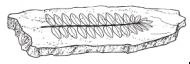
_______________is a scientist who studies fossils.
geologist
fossilologist
paleontologist
extinct
What happens to insects when they become trapped in amber?
they form molds
they are preserved (they stay the same)
they decay
they form casts
Which statement BEST describes how the fossil bones of a dinosaur are formed?
The dinosaur stepped in wet mud.
The dinosaur was covered in sediment.
The dinosaur became trapped in amber.
The dinosaur was frozen in ice.
Which of the following is NOT an example of a fossil?
an insect stuck in amber
a petrified dinosaur bone
a seashell found on the beach
a footprint captured in mud
A paleontologist finds a fossil of a fish on top of a mountain. She can infer that the area was once ___________________________.
animals eating fish on the mountain
the mountain was once underwater
Fish used to live in the mountains
The area was once a desert.
Long ago, small organisms became trapped in sticky tree sap that hardened. What is the hardened sap called?
a cast
an imprint
a mold
amber
Which of the following is often found when discovering fossils?
bones
skin
eyes
tongue

An animal has sharp, pointy teeth, what can we infer about this animal?
The animal lived in the water
The animal lived near the beach.
The animal is a carnivore.
The animal only ate plants.

What can we infer about animals with dull teeth?
They ate other animals.
They ate only plants.
They ate nothing.
They only ate fish.
Students notice a fossil of seaweed in a rock found in the middle of Georgia. What conclusion could they form based on this evidence?
Part of Georgia was once under salt water.
Weathering and erosion break down rocks.
Trees in the forest need sunlight in order to grow.
Ancient animals ate seaweed to get energy.

The illustration shows a fossil of a dinosaur skull. Which of the following best describes why this fossil is not made of bone but rock?
The dinosaur ate many plants that contained minerals.
The dinosaur died when a rock fell on it and crushed it.
The dinosaur skull changed from bone to rock in the ground.
The dinosaur died in the ocean and sank to the bottom.
Facts and information that show if something is true is __________.
evidence
sequence
fossils
organism
____________ is the particular order of objects, movements, or events.
Evidence
Sequence
Fossils
Organism
A fossil of a fish found many layers below a fossil of a lizard would have lived after the lizard.
true
false
Scientists can study fossils to learn about
the ___________.
past
present
future
none of the above

What is the correct listing of steps for a fossil?
1) Pressure created a rock.
2) Plant or animal is buried.
3) Plant or animal is left alone for years.
4) Plant or animal dies.
1) Plant or animal dies.
2) Plant or animal is left alone for years.
3) Pressure created a rock.
4) Plant or animal is buried.
1) Plant or animal dies.
2) Plant or animal is left alone for years.
3) Plant or animal is buried.
4) Pressure created a rock.
1) Plant or animal dies.
2) Plant or animal is buried.
3) Plant or animal is left alone for years.
4) Pressure created a rock.

The picture shows a tooth fossil of the extinct
Megalodon shark next to teeth from a great white
shark, which is still found today.
Which of the following best explains the
difference in the size of the teeth?
Sharks were once larger than the sharks that are living today.
The fossilized tooth was filled with water, which made it grow in size.
Sharks alive today do not live long enough to grow very large teeth..
The fossilized tooth had extra sediment around it, which became a part of it

Which property of the leaf can be learned from
the fossil?
the size of the leaf
the color of the leaf
how fast the leaf grew
which animals ate the leaf
When MOST animals die, what will most likely happen to the soft, fleshy part of the animal?
They will be preserved.
They will be fossilized.
They will be eaten or decompose.
They will turn to rock.


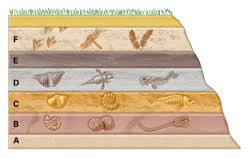
Which is true about the chart?
Layer B is older than layer D.
There were no fossils in layers A and E.
Layer C was covered in water.
All of the above.

This fossil was found at the beach. What can you deduct from this?
The area has always been the beach. Someone must have dropped it.
The area was once the desert and the spider was covered in sand.
The area must have once had trees because the spider was trapped in amber.
The beach is a great place to find amber fossils.
Real bones and teeth of dead animals decompose and are replaced with....
minerals
skin
sand
water
Which is NOT a way an organism could become a fossil?
It can be frozen in ice.
It can be quickly buried in sediment after death.
It can be trapped in the resin of a tree.
It can be left out in the sun to harden.
Which is statement is NOT true?
All dead animals do not become fossils.
Most dead animals are eaten by other animals.
Most dead animals decompose quickly because they aren't covered by dirt.
Most dead animals will become a fossil.
What does decompose mean?
to turn into stone
to rot away
to become very hard
to turn into water


A student gathers the materials in the diagram to test properties of soil. The question that the student is most likely trying to investigate is –
Do all soils have the same mass?
Which soils grow the best plants?
Which soil holds the most water?
Which soil feels softest?

Some students added 500 milliliters of water to equal amounts of four different samples of soil.
In this investigation, which sample of soil held the most water?
Soil W
Soil X
Soil Y
Soil Z

A student wanted to investigate which type of soil retains the most water. She put 200 mL of water in each type of soil and measured how much water came through the soil after 1 hour. The results are shown above.
1. According to the diagram above, which soil retains the least amount of water?
Red Soil
Clay Soil
Sandy Soil
Black Soil

A student conducts an investigation using four identical cans, each with a hole in the bottom. The student fills each can with a different type of soil and then adds 200 milliliters (mL) of water to each can.
Some plants have roots that reach very deep underground. Which type of soil will most likely stop water from flowing to the deepest roots of these plants?
Soil 1
Soil 2
Soil 3
Soil 4
Which of the following is the BEST way to test a soil's ability to hold water?
adding soil to a beaker full of water and seeing if the soil sinks
pouring water through a funnel of soil and seeing how much water drips out
stirring soil into a bowl of water and seeing if the soil disappears
mixing water with a pile of soil and seeing if the water changes temperature

What probably caused the bank of the river to change?
humans
waves
animals
thunder


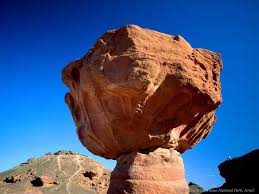
What caused the landform in this picture to form?
wind
ice
gravity
water

What caused the landform in this picture to form?
wind
ice
gravity
water

What caused the landform in this picture to form?
wind
ice
gravity
water

______________ is the movement of rocks from one location to another location.
Erosion
Deposition
Weathering
Reproduction

_____________ is the dropping off/ depositing of rocks.
Metamorphosis
Deposition
Weathering
Erosion

A farmer's topsoil is blown away during a hurricane is an example of ___________.
weathering
erosion
deposition

Sediments at the bottom of a pond is an example of _________.
weathering
erosion
deposition

Waves leaving behind deposits of sand and shells along the ocean's coastline is an example of ________________.
weathering
erosion
deposition

Caves being formed by acid rain dissolving underground rock is an example of ____________.
weathering
erosion
deposition

Strong winds blowing sand from one place to another is an example of ________________.
weathering
erosion
deposition

Rocks being picked up and carried downstream is an example of ____________.
weathering
erosion
deposition
Wind blasting sand at rock and carving out arches
weathering
erosion
deposition
What gives topsoil its dark color?
special types of rocks
lots of water
big chunks of rock pieces
dead plants and animals
Which word best describes the texture of sandy soil?
gritty
smooth
sharp
water

What are the properties of sand.
Select all that apply.
smooth
gritty
tan
doesn't hold water

What are the properties of clay?
Select all that apply.
smooth
gritty
gray
holds water
What is loam?
large particles and water drains quickly
small particles and water drains slowly
a rich and moist mixture of clay, sand, silt, and humus
slippery when wet and hard when dry
What is the difference between erosion and weathering
Erosion is breaking down rocks, and weathering is the movement of sediments.
Erosion is the settling of sediments in a new location, and weathering is breaking down of rocks.
Erosion is the movement of sediments, and weathering is the breaking down of rocks.
Erosion is the breaking down of rocks, and weathering is the settling of sediments.
Why is Loam a great soil for growing seeds?
It doesn't hold any water.
It holds the most water.
It holds more water than sand, but less water than clay.
It holds less water than sand, but more water than clay.

Using the chart, which soil particle below is the largest?
sand
silt
clay
minerals

Which list of particles is in order from greatest to smallest?
gravel, silt, clay, sand
gravel, sand, clay, silt
clay, silt, sand, gravel
gravel, sand, silt, clay

4 students looked at this diagram and explained what the diagram was trying to teach them. Which student made the BEST answer?
Student 1 says the sand absorbed all the water that is why they are so big.
Student 2 said clay is so small that water goes right through it
Student 3 said the sand has so much space between the big particles that water goes right through
Student 4 said that they turned black because the water was dirty
How do you identify an unknown type of soil?
Taste it, look at the color, and feel the texture.
Measure water retention, look at the color, and feel the texture.
Look at the luster and color, and feel the texture.
Test the hardness with the Moh's scale, measure the water retention, and look at the color.
Ryan and his family are taking a hike in the Georgia mountains. He reaches a waterfall and spots a bear. Ryan is curious to know where else bears could be found. What question and explanation would Ryan need to ask to figure out where bears live?
Do bears need access to water? If that is the case, then bears could live in mountains and coastal plains.
Are bears found in areas where food can be easily accessible? If that is the case, then bears could live in the Piedmont region.
Do bears sleep during the winter? If that is the case, then bears could only live in mountain areas.
Are bears found in areas where they need a lot of space? If that is the case, then they could only live in mountain areas.

You are working with your class to identify habitats within Georgia’s geographic regions. The table below represents data for one type of habitat in Georgia.
What further question can you ask to further identify if the habitat is in the Piedmont region?
Is this habitat found in Georgia?
Are there farms and businesses located in this region?
Does it rain a lot in this region?
Is this habitat located in the central region of Georgia?

Which habitat is region D on this map?
Coastal Plains
Marsh and Swamp
Atlantic Ocean
Piedmont
Pine trees are able to live in many habitats in Georgia, including the Piedmont habitat that has dense clay soil. What is the best question that scientists should ask to help them learn more about the other types of habitats that pine trees can live in?
What are other plants and trees that can live in clay soil?
How much water and nutrients do pine trees need in order to live?
Do pine trees provide shelter to other organisms?
Why do pine trees have needles on their branches and not leaves?

Which habitat is region C on this map?
Coastal Plains
Blue Ridge Mountains
Piedmont
Atlantic Ocean
You are playing a game with your classmates. In this game, someone chooses a Georgia plant and answers questions from others to help them figure out which plant has been chosen. You must ask questions about the features of the plant that help it survive. Which of the following questions could be asked?
What is the most commonly found plant in Georgia?
What type of soil do the plants live in in order to survive?
Does the plant grow over 10 feet tall?
What is the color of the plant?
In which Georgia habitat would plants that eat insects most likely be found?
Marsh and Swamp
Piedmont
Blue Ridge Mountain
Coastal Plains

Nigel is playing a guessing game, trying to figure out which Georgia habitat a hooded pitcher plant lives in. He gets to ask two questions before he guesses. Below is a list of questions Nigel has made.
Which two questions will best help Noah decide which habitat a hooded pitcher plant grows in?
Questions 1 and 2
Questions 2 and 3
Questions 1 and 4
Questions 1 and 3

Which habitat is region B on this map?
Marsh and Swamp
Atlantic Ocean
Coastal Plains
Piedmont
The mountain laurel plant only grows in the mountain habitat of Georgia. This plant grows on rocky slopes in forested areas. A student wants to know if this plant could survive in the marsh and swamp habitat. What question should the student ask?
Does the marsh and swamp habitat have hot temperatures?
Does the marsh and swamp have sandy soil?
Does the marsh and swamp habitat have rocky soil?
Does the marsh and swamp have a rainy climate?
Which of the following habitats in Georgia has the coldest weather?
Atlantic Ocean
Coastal Plains
Blue Ridge Mountains
Marsh and Swamp
Ms. Lopez was given a plant as a gift from one of her students. She believes this plant is native to the Coastal Plains. Which question would best help Ms. Lopez determine if the plant is from the Coastal Plains?
Does the plant grow well in salt water?
Does the plant grow well in dry areas?
Does the plant grow well in sandy soil?
Does the plant grow well in cold areas?

. The chart shows Georgia habitats and the plants and animals found in them.
The letter X is most likely which type of habitat?
Atlantic Ocean
Blue Ridge Mountain
Coastal Plains
Piedmont
The highest point in Georgia, Brasstown Bald, is located in which habitat region?
Coastal Plains
Piedmont
Blue Ridge Mountains
Atlantic Ocean

Kyle was given the picture below and asked to determine what habitat this organism is most likely to survive in. From the list below, what is the best question that Kyle should ask about this organism to help him determine the habitat they are most likely to be found in?
Does this organism have a long lifespan?
What does this organism eat in order to survive?
What does this organism like to do during the day?
How many teeth does this organism have in its mouth?

Which habitat is region A on this map?
Piedmont
Coastal Plains
Blue Ridge Mountains
Marsh and Swamp
All of the living AND nonliving things that surround an organism is an
habitat
environment
house
forest
1. What type of animal may you find in the Coastal Plain?
Alligator, gopher tortoise, Sandhill Crane, green tree frog
Bat, red fox, squirrels
Eagle, black bear, salamander
1. Which animal would NOT be found in the Piedmont?
raccoon
rattlesnake
Seagull
What is an adaptation?
A body part or behavior that helps a living thing survive in its environment.
An animal that lives in a water habitat such as a lake, pond, river, stream, marsh, or the ocean.
The way a plant or animal acts.
The coloring, markings, or other physical features of an animal that help it blend with its surroundings.
What does hibernate mean?
Any animal that hunted for food by another animal.
To move to warmer regions during cold months when food becomes scarce.
An adaptation that allows an animal to protect itself by looking like another kind of animal.
To go into a deep sleep during cold months when food is hard to find.
What is mimicry?
Any animal that hunted for food by another animal.
To move to warmer regions during cold months when food becomes scarce.
An adaptation that allows an animal to protect itself by looking like another kind of animal.
To go into a deep sleep during cold months when food is hard to find.
What does it mean to migrate?
Any animal that hunted for food by another animal.
To move to warmer regions during cold months when food becomes scarce.
An adaptation that allows an animal to protect itself by looking like another kind of animal.
To go into a deep sleep during cold months when food is hard to find.
What is prey?
Any animal that hunted for food by another animal.
To move to warmer regions during cold months when food becomes scarce.
An adaptation that allows an animal to protect itself by looking like another kind of animal.
To go into a deep sleep during cold months when food is hard to find.
Why do plants and animals have to adapt?
Plants and animals do not have to adapt.
The Earth has different environments
They are carnivorous.
They do not need water.
Why would an alligator need dark skin?
Camouflage, to help it catch its prey.
Mimicry, so it will look like something more dangerous.
So it can help it hibernate.
Why would a black bear need to eat a lot of food before winter?
Camouflage, to help it catch its prey.
Mimicry, so it will look like something more dangerous.
So it can help it hibernate.
Why would a king snake, which is NOT poisonous, need to look like a coral snake?
Camouflage, to help it catch its prey.
Mimicry, so it will look like something more dangerous.
So it can help it hibernate.
Why would a squirrel look like the forest it lives in?
Camouflage, to help it catch its prey.
Mimicry, so it will look like something more dangerous.
So it can help it hibernate.
An eagle has an adaptation that helps it catch prey. Which adaptation is the most appropriate for the eagle?
Feathers
Color
Talons
A Canadian goose has run out of food up north? What is it most likely to do?
Hibernate
Use mimicry
Migrate
When an animal tries to look like something more dangerous, this is called:
Camouflage
Mimicry
Migration
When an animal tries to blend in to protect itself, or to hide, it is called:
Camouflage
Mimicry
Migration
When an animal moves from one location to another to find food, this is called:
Camouflage
Mimicry
Migration

Which region(s) are marked by the number 4
coast
Blue Ridge
Swamp/Marsh
coastal plains
piedmont
Which region is marked by the number 5
Appalachian Plateau
Blue Ridge
Ridge and Valley
Piedmont

Which is region is marked by the number 2?
Appalachian Plateau
Ridge and Valley
Blue Ridge
Piedmont
Which is region is marked by the number 3?
Appalachian Plateau
Ridge and Valley
Blue Ridge
Coastal Plain

Which region is marked by the number 1?
Appalachian Plateau
Ridge and Valley
Blue Ridge
Coastal Plain
If a plant lives in very wet and nutrient-poor soil, where in Georgia would you find it?
mountains
swamps/marshes
piedmont
ridge and valley
Where would you find salt water animals in Georgia?
mountains
piedmont
Atlantic Ocean
Pacific Ocean
If you build a tall building that blocks the sunlight from the plants that were growing beside it, what would happen?
The plants would get up and move away.
The plants would grow bigger.
The plants would be happy without sunlight.
The plants might die without the sunlight.
What external(outside) features help a turle survive?
hardshell
webbed feet
furry body
gills
If you bring a new animal into a habitat and it eats the same thing as other animals that already live in that habitat, what will happen?
every animal will get along
the old animals will move away
they will have trouble sharing food and both populations will decrease
they will share food and both populations will increase.
If bears eat nuts and berries and you move the bears to the new habitat and they die. What happened?
They didn't like their new habitat.
Their new habitat didn't have nuts and berries.
They were scared.
They tried to find their way home and forgot to eat.

