
 Worksheets
25-26 Unit 4 Part 1 - Causes of the Revolution Test
Total questions: 25
Worksheet time: 13mins
Name
Class
Date
1.
1. Why did Great Britain tax the American colonies?
a)
The British were in debt from buying too many fidget spinners.
b)
The British were in debt from fighting the French in a war.
c)
The British were in looking for money to pave their roads.
2.
2. Define: Patriot
a)
American colonist who stayed loyal to Great Britain
b)
American colonist who favored American Independence
c)
the lawmaking body of the British government
d)
freedom from outside control
3.
3. Define: Loyalist
a)
the usually violent attempt by many people to end the rule of one government
b)
a required payment to the government
c)
a tax on imported goods
d)
American colonists who remained loyal to Britain and opposed the war for independence
4.

4. Define: Tax
a)
a required payment to the government
b)
freedom
c)
a person who lives in a colony
d)
brutal killing of many people
5.
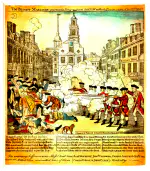
5. Define: Propaganda
a)
A type of colonial newspaper
b)
A committee that communicated between colonies
c)
Biased or exaggerated information used to influence opinion
d)
A peaceful protest
6.
6. "No taxation without representation!" The person who said this is most likely a...
a)
Loyalist
b)
Patriot
7.
7. "My family has benefited greatly from trade with England. Independence would make me
lose money!" The person who said this is most likely a...
a)
Loyalist
b)
Patriot
8.
8. "We have the ability to govern and rule ourselves." The person who said this is most likely a...
a)
Loyalist
b)
Patriot
9.
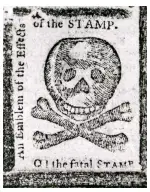
9. Which statement best describes the Stamp Act
a)
The Stamp Act forced colonists to house British soldiers
b)
The Stamp Act placed a tax on all paper products
c)
The Stamp Act placed a tax on tea
d)
The Stamp Act was bad but nothing could be done about it.
10.

10. What helped lead to the Boston Massacre?
a)
Rising tension between colonists and British soldiers in Boston
b)
Parliament lowering taxes on British goods
c)
he colonists winning a battle against the British
d)
Britain giving colonists more rights
11.
11. What happened at the Boston Tea Party?
a)
Sons of Liberty threw all the tea in the ocean to protest the tax on tea
b)
Patriots sat and had tea with King George
c)
Native Americans threw all the tea in the ocean
d)
King George had a sale on tea
12.
12. Which British law was passed to punish the colonists for the Boston Tea Party?
a)
Stamp Act
b)
Tea Act
c)
Coercive or Intolerable Acts
d)
Townshend Acts
13.
13. What was one major effect of the Intolerable Acts on the colonies?
a)
Boston Harbor was closed until the destroyed tea was paid for
b)
Colonists were allowed more representatives in Parliament
c)
All taxes were removed
d)
Colonial governors were elected by the people
14.
14. What was the main purpose of the Proclamation of 1763?
a)
To give colonists free farmland
b)
To stop colonists from settling west of the Appalachian Mountains
c)
To allow colonists to trade with any country
d)
To prevent new conflicts with Native American groups
15.
15. Which British action caused colonists to say their rights were being violated?
a)
Allowing colonists to vote
b)
Raising the price of newspapers
c)
Searching homes without warrants (Writs of Assistance)
d)
Allowing colonists to move freely
16.
16. What was the main reason colonists disliked the Quartering Act?
a)
It forced colonists to fight in the British army
b)
It required colonists to house and provide supplies for British soldiers
c)
It banned colonists from owning property
d)
It raised taxes on clothing
17.
17. Why did the colonists boycott British goods?
a)
They wanted British businesses to lose money
b)
They preferred goods from Spain
c)
They could not afford anything
d)
King George told them to
18.
18. What were the Townshend Acts?
a)
Laws that banned colonists from speaking against the king
b)
Taxes placed on imported goods like glass, lead, paint, and tea
c)
A military draft for the British army
d)
A rule that colonists must build forts for soldiers
19.
19. What is one reason Britain wanted tighter control over the colonies after 1763?
a)
Colonists were trading illegally
b)
Colonists refused to eat British food
c)
The colonists wanted to elect a king
d)
Americans were building ships too quickly
20.
20. How did Samuel Adams help lead colonial resistance?
a)
He wrote plays about the king
b)
He organized protests and helped form the Sons of Liberty
c)
He led the British soldiers
d)
He built the first American navy
21.
21. Why did colonists call the Coercive Acts the “Intolerable Acts”?
a)
The laws were easy to understand
b)
The laws were harsh and punished all of Massachusetts
c)
They helped colonists gain new rights
d)
They lowered taxes on tea
22.
22. Which event showed that tensions between colonists and Britain were turning violent?
a)
Boston Massacre
b)
Signing of the Declaration
c)
Building of Jamestown
d)
French and Indian War
23.
23. What did the Sugar Act do?
a)
Banned sugar in the colonies
b)
Taxed sugar and molasses and increased enforcement of smuggling laws
c)
Required colonists to grow sugar crops
d)
Forced colonists to buy sugar only from France
24.
23. Why were colonists angry about the Tea Act even though the price of tea went down?
a)
They preferred coffee
b)
Tea was banned in the colonies
c)
Tea was only sold in England
d)
It forced colonists to buy only British East India Company tea
25.
25. What was one major overall cause of the American Revolution?
a)
The colonists wanted to move to France
b)
The colonists wanted a new king
c)
The colonists believed their rights as English citizens were being denied
d)
Britain banned colonists from having pets
100 %

