wayground logo

Free Printable Worksheets

Font size

S
M
L
XL
Worksheets

Ag Power Mechanics Fall Final 2025

Total questions: 114

Worksheet time: 4hrs 48mins
Name
Class
Date
1.
What is an SAE project?
a)
Raising a sheep
b)
Building a trailer
c)
Growing plants
d)
Working for an Ag business
e)
All of the above
2.
What are the parts of the 3 ring model of agricultural education
a)
FFA, Homework, Farm
b)
School work, job, home
c)
classroom instruction, leadership, experiential learning
d)
Welding, woodworking, farming
3.
An SAE project must be:
a)
Agriculture in nature
b)
50 hours per year or more
c)
A welding project
d)
A and B only
4.
What organization governs the safe operations in the workplace?
a)
ANSI
b)
OSHA
c)
Z87
d)
CDPH
5.
A type ABC fire extinguisher will put out which class of fire?
a)
A: Ordinary combustibles
b)
B: Flammable liquids
c)
C: Electronics
d)
All of the above
6.
What is the most essential PPE that must ALWAYS be worn in the shop?
a)
gloves
b)
lab coat
c)
welding hood
d)
safety glasses
7.
Which of the following is NOT a part of the "Fire Triangle"
a)
heat
b)
fuel
c)
oxygen
d)
fire
8.
Identify the safety color that means "danger or emergency"
a)
red
b)
green
c)
blue
d)
orange
e)
yellow
9.
How does electricity flow?
a)
Through a defined path of conductors
b)
From negatively charged areas to positively charged areas
c)
Only in a complete circuit with a path from source to load and back
d)
All of the above
10.
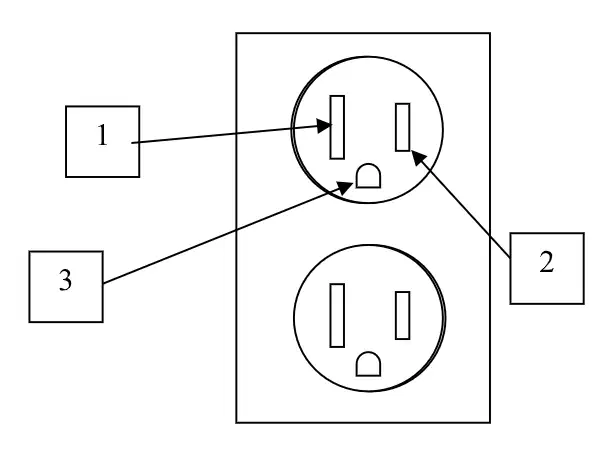
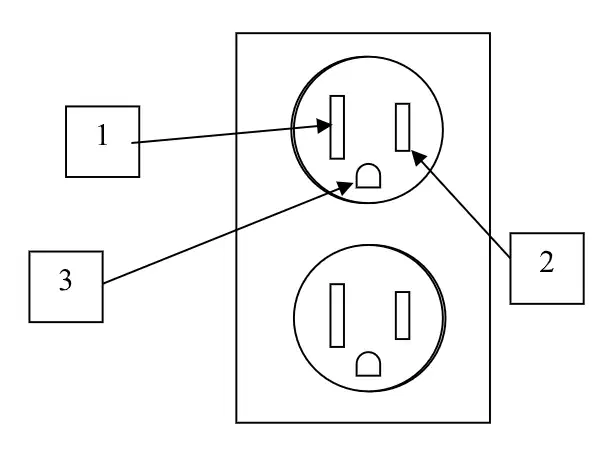
Identify the slot designated "1" in the picture
a)
Hot
b)
Switched
c)
Neutral
d)
Grounding
11.
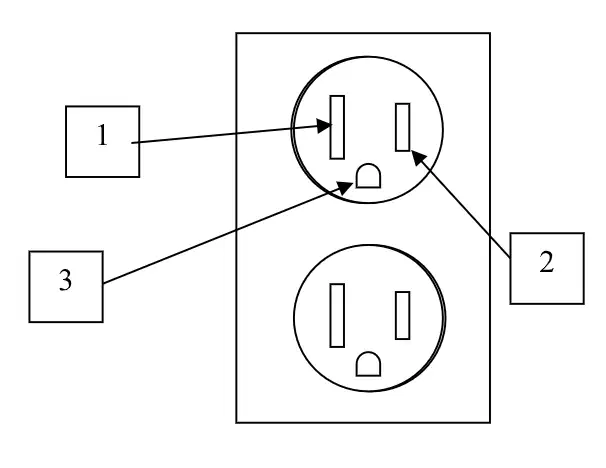
Identify the slot designated "2" in the picture
a)
Hot
b)
Encabulator
c)
Neutral
d)
Grounding
12.
Identify the slot designated "3" in the picture
a)
Hot
b)
Encabulator
c)
Neutral
d)
Grounding
13.
What is the definition of "Amps"
a)
Electrical pressure
b)
Electrical current
c)
Electrical power
d)
Electrical resistance
14.
What is the definition of "Watts"
a)
Electrical pressure
b)
Electrical current
c)
Electrical power
d)
Electrical resistance
15.
What is the definition of "Volts"
a)
Electrical pressure
b)
Electrical current
c)
Electrical power
d)
Electrical resistance
16.

How many amps does a 1200-watt iron have if it uses 115-volts

a)
1000W
b)

8.69A

c)

0.0958A

d)

10.43A

17.
What is the definition of a cable
a)
Group of conductors in a non-metallic insulator
b)
Material that allows for the flow of electricity
c)
Material that blocks the flow of electricity
18.
What is the definition of an "Insulator"
a)
Group of conductors in a non-metallic insulator
b)
Material that allows for the flow of electricity
c)
Material that blocks the flow of electricity
19.
What is the definition of a "Conductor"
a)
Group of conductors in a non-metallic insulator
b)
Material that allows for the flow of electricity
c)
Material that blocks the flow of electricity
20.
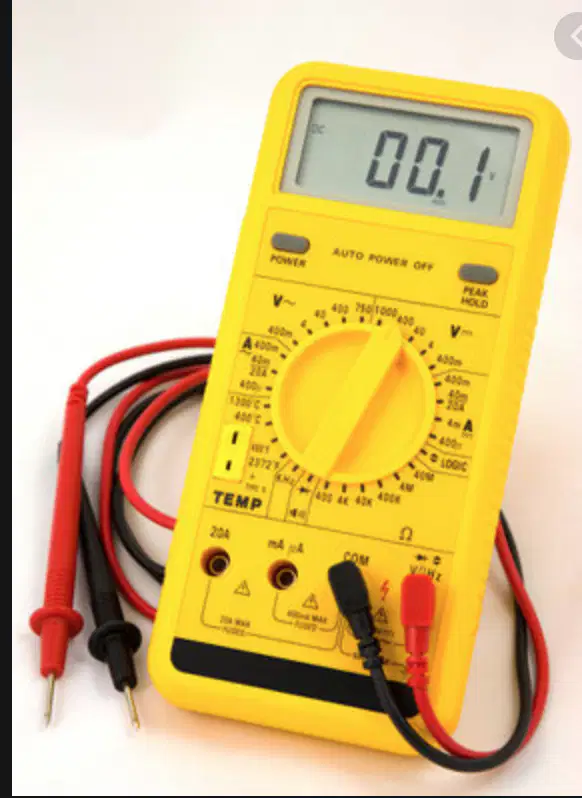
Identify the tool shown below:
a)
Electrical measurer
b)
Digital Volt Ohm meter
c)
Adjustable measuring tape
d)
Spark Tester
21.
Ohms are a measurement of:
a)
Eletrical Flow
b)
Electrical Pressure
c)
Electrical Resistance
d)
Electrical Power
22.
What types of (electrical) power are used in Agriculture and Industrial shops?
a)
110V
b)
208V two phase
c)
208V three phase
d)
480V three phase
e)
110V three phase
23.
What frequency does regular AC have?
a)
60Hz
b)
0hz
c)
140V
d)
120Hz
24.
Why is more power available in 3 phase circuits than single phase circuits?
4 lines
25.
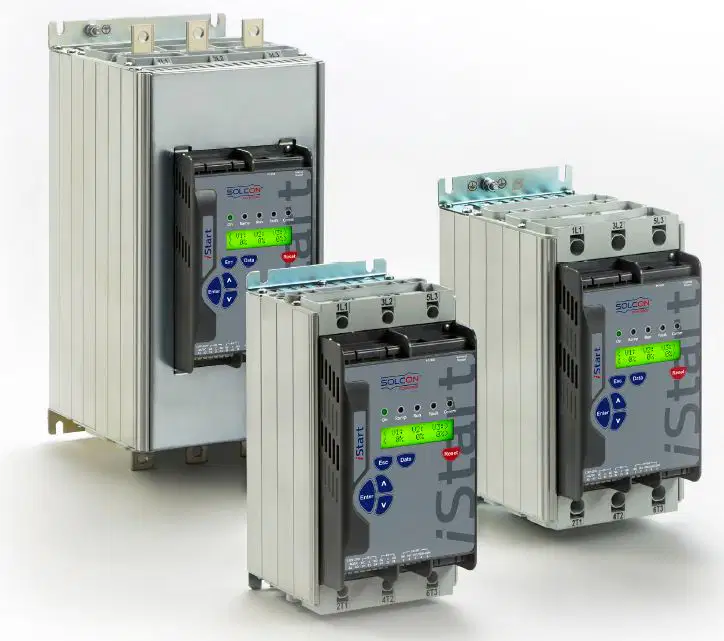
What is the component in the picture?
a)
Transformer
b)
Coil
c)
Relay
d)
Contactor
26.
What is the component in the picture?
a)
Transformer
b)
Coil
c)
Relay
d)
Contactor
27.
What is the component in the picture?
a)
Transformer
b)
Coil
c)
Relay
d)
Contactor
28.
________ are designed to pass an electrical signal when a limit that has been set is reached.
a)
Float Switches
b)
Toggle Switches
c)
Pressure Switches
d)
Limit Switches
29.

A voltage of 120V is applied to a 6 ohm resistor. How much current flows through the resistor?

a)

2.0 Amps

b)

20 Amps

c)

7.2 Amps

d)

7200 Amps

30.

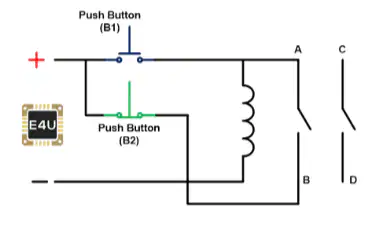
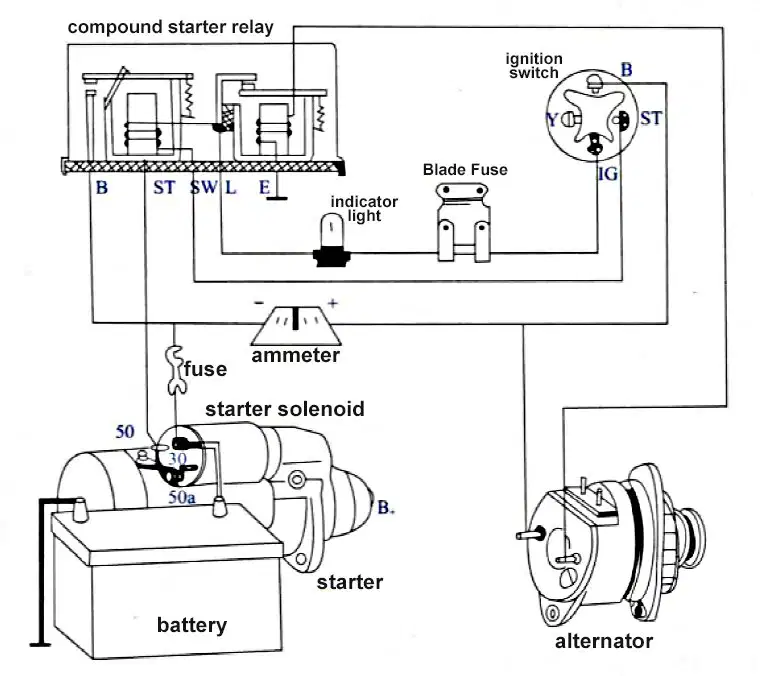
Which diagram shows a latching relay circuit?

a)

b)

c)

d)

31.
This is an example of a ______ circuit
a)
Series
b)
Parallel
c)
Open
d)
Dihexedral
32.
Primary power in an ignition system is:
a)
The power supplied to the system from a battery or magneto charging a coil
b)
The power supplied to the spark plug
c)
The power from a building or utility
d)
The power the engine creates
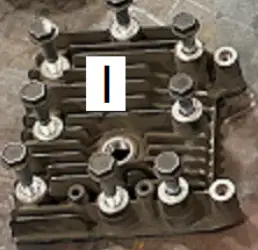
33.
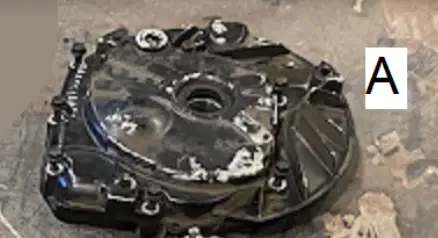
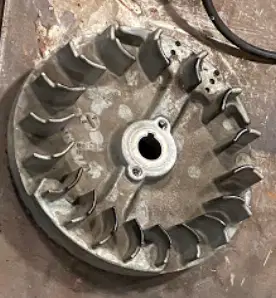
Please identify the part in the photo
a)
Cylinder head
b)
Crankcase cover
c)
flywheel
d)
crankshaft
34.
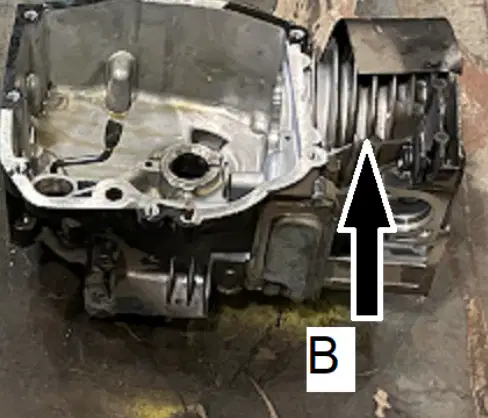
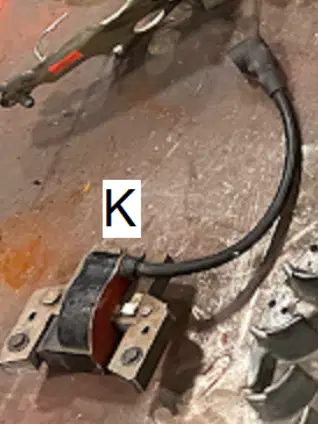
Please identify the labeled part in the photo
a)
Crankcase cover
b)
Cylinder
c)
Flywheel
d)
Ignition Coil
35.
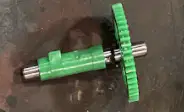
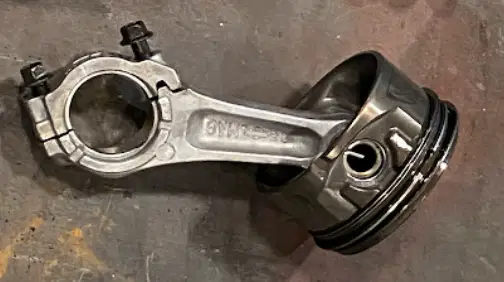
Please identify the part in the photo
a)
Crankshaft
b)
Camshaft
c)
Timing motor
d)
Piston
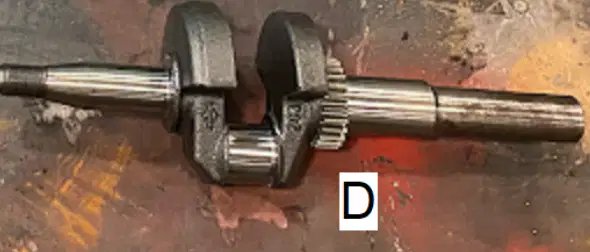
36.
Please identify the part in the photo
a)
Crankshaft
b)
Camshaft
c)
Piston
d)
Intake valve
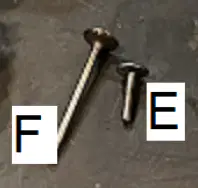
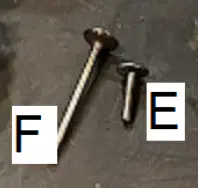
37.
Please identify the labeled part (E) in the photo
a)
Exhasut valve
b)
Intake valve
c)
Timing valve
d)
Secondary piston
38.
Please identify the labeled part (F) in the photo
a)
Intake valve
b)
Exhaust valve
c)
Timing valve
d)
Secondary piston
39.
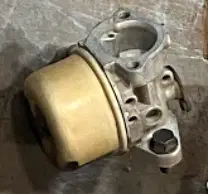
Please identify the part in the photo
a)
Piston
b)
Exhaust valve
c)
Crankshaft
d)
Carburetor
40.
Please identify the part in the photo
a)
Carburetor
b)
Flywheel cap
c)
Exhaust valve
d)
Turbo wastegate actuator
41.
Please identify the part in the photo
a)
Crankcase cover
b)
Gas Tank Cover
c)
Flywheel
d)
Cylinder head
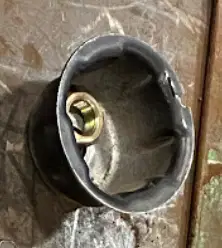
42.
Please identify the part in the photo
a)
Flywheel starter cup
b)
Carburetor float bowl
c)
Ignition coil
d)
Piston
43.
Please identify the part in the photo
a)
Ignition Armature
b)
Flywheel cap
c)
Transformer
d)
Battery
44.
Please identify the part in the photo
a)
Flywheel
b)
Cylinder head
c)
Crankcase cover
d)
Fan
45.
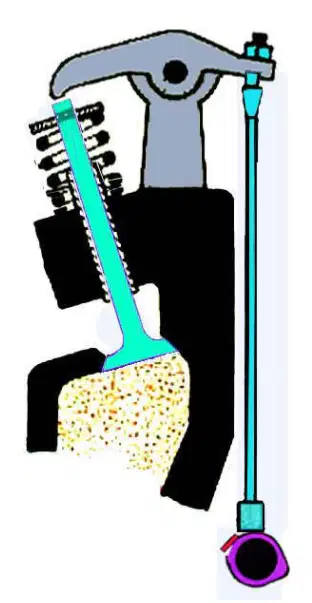
Which of the following is not a part of the valve train?
a)
Valve Guide
b)
Tappet
c)
Cam lobe
d)
spark plug
46.
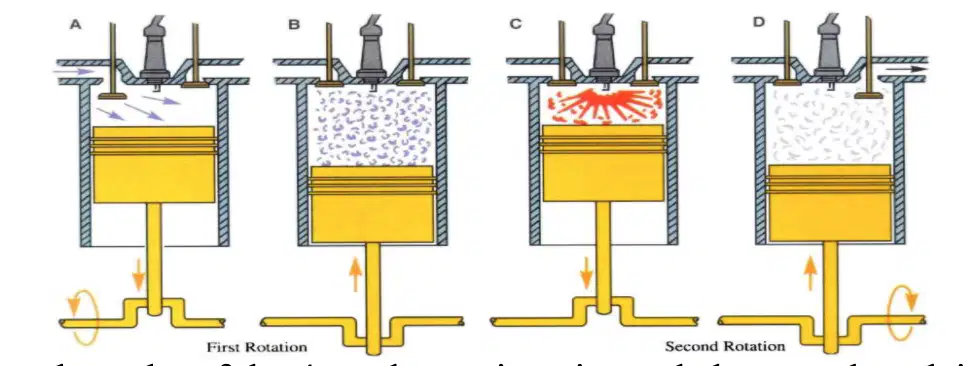
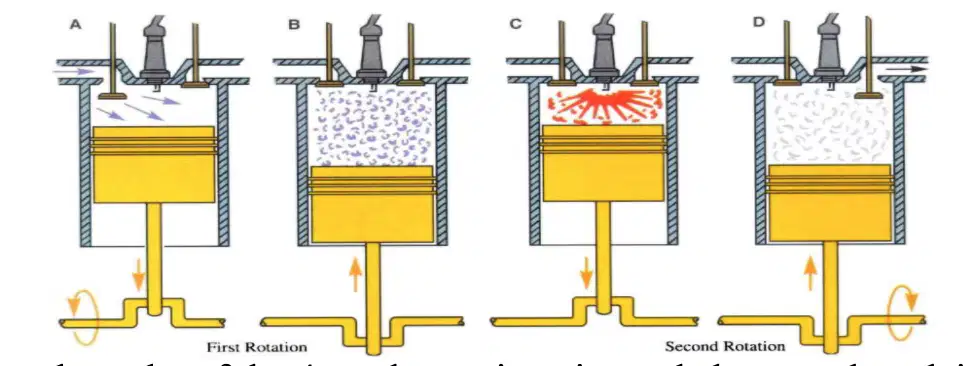
Name the stroke in the following diagram labeled "A", and identify what the valves are doing
a)
Intake stroke (Intake valve:open, Exhaust valve:closed)
b)
Intake stroke (Intake valve: closed, Exhaust valve: open)
c)
Compression stroke (Intake valve: closed, Exhaust valve: closed)
d)
Exhaust stroke (Intake valve: closed, Exhaust valve: open)
47.
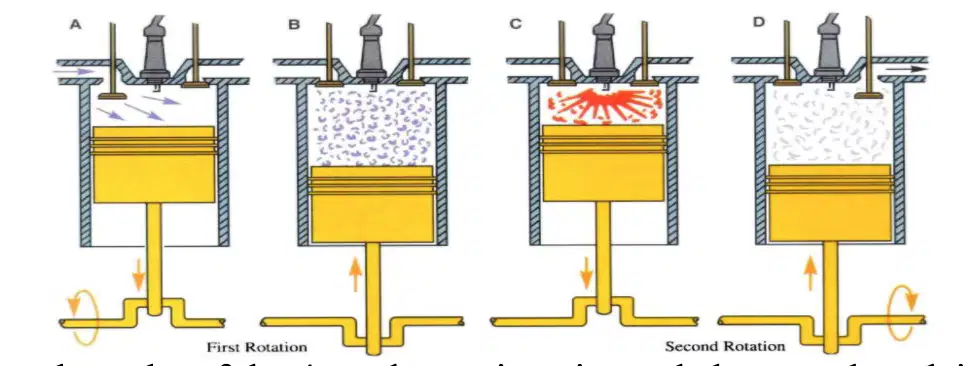
Name the stroke in the following diagram labeled "B", and identify what the valves are doing
a)
Intake stroke (Intake valve: closed, Exhaust valve: closed)
b)
Intake stroke (Intake valve: closed, Exhaust valve: open)
c)
Compression stroke (Intake valve: closed, Exhaust valve: closed)
d)
Compression stroke (Intake valve: closed, Exhaust valve: open)
48.
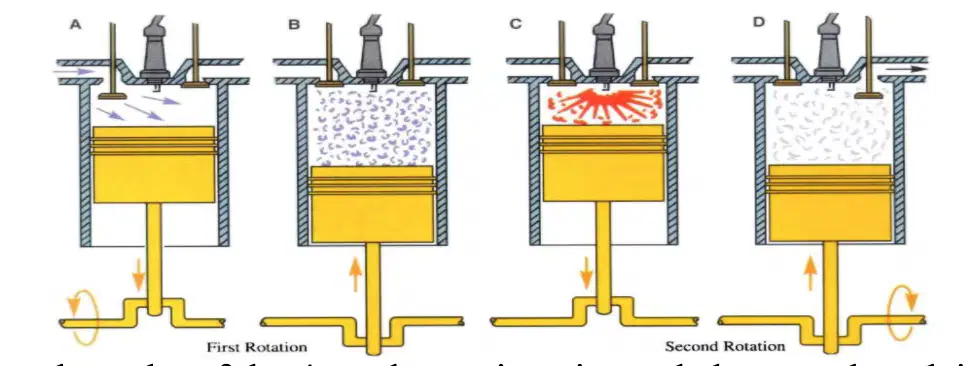
Name the stroke in the following diagram labeled "C", and identify what the valves are doing
a)
Intake stroke (Intake valve: closed, Exhaust valve: open)
b)
Compression stroke (Intake valve: closed, Exhaust valve: closed)
c)
Power stroke (Intake valve: closed, Exhaust valve: closed)
d)
Exhaust stroke (Intake valve: closed, Exhaust valve:open)
49.
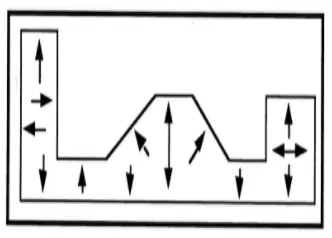
Name the stroke in the following diagram labeled "D", and identify what the valves are doing
a)
Exhaust stroke (Intake valve: closed, Exhaust valve:open)
b)
Power stroke (Intake valve: closed, Exhaust valve:open)
c)
Intake stroke (Intake valve: open, Exhaust valve:open)
d)
Compression stroke (Intake valve: closed, Exhaust valve:closed)
50.
What is the main principle of hydraulics?
a)
All pressure is multiplied
b)
All fluid in the system is under the same pressure
c)
All fluid and surfaces are under the same pressure
d)
None of the above
51.
How are hydraulic systems similar to small engine systems?
4 lines
52.
What are some agricultural uses of hydraulic systems?
4 lines
53.

The part marked in red is ...

a)

Frame

b)

Spindle

c)

Lock nut

d)

Ratchet

54.

The part marked in red is ...

a)

Frame

b)

Sleeve

c)

Lock nut

d)

Ratchet

55.

The part marked in red is ...

a)

Anvil

b)

Sleeve

c)

Thimble

d)

Ratchet

56.

The part marked in red is ...

a)

Anvil

b)

Sleeve

c)

Thimble

d)

Ratchet

57.
What is this micrometer reading?
a)
0.230"
b)
0.023"
c)
0.23"
d)
2.330"
58.
What is this micrometer reading?
a)
4.30"
b)
.0430"
c)
0.430"
d)
0.4253"
59.
What is this micrometer reading?
a)
0.552"
b)
5.552"
c)
.0552"
d)
5.52"
60.
What is this micrometer reading?
a)
2.450"
b)
.2450"
c)
0.256"
d)
.125"
61.

The picture is an example of this type of micrometer.

a)

Outside micrometer

b)

Depth micrometer

c)

Inside micrometer

d)

Digital

62.

The picture is an example of this type of micrometer.

a)

Outside micrometer

b)

Depth micrometer

c)

Inside micrometer

d)

Digital

63.
What type of dial caliper measurement it shown in the picture?
a)
Inside 
b)
Outside
c)
Hole Diameter
d)
Step Distance
64.
a)

4.443 inches

b)

4.543 inches

c)

4.43 inches

d)

4.53 inches

65.
a)

2.65 inches

b)

2.465 inches

c)

2.365 inches

d)

2.346 inches

66.
a)

1.242 inches

b)

1.42 inches

c)

1.142 inches

d)

1.400 inches

67.
a)

0.271 inches

b)

0.376 inches

c)

3.71 inches

d)

2.71 inches

68.
What is Part A
a)
Internal Jaws
b)
External Jaws
c)
Measure blades
d)
Seperating Jaws
69.

The dial caliper in class measures to

a)

1/8th"

b)

1/1000"

c)

1/10000"

d)

1/100"

70.
What type of dial caliper measurement it shown in the picture?
a)
Inside 
b)
Outside
c)
Hole Diameter
d)
Step Distance
71.

a)

torque wrench

b)

socket wrench

c)

breaker bar

d)

long hand wrench

72.

a)

feeler valve gauge

b)

spark plug gap gauge

c)

wire gauge

d)

six end circle

73.

What tool is seen here?

a)

Dial Indicator

b)

Feeler Gauge Set

c)

Tread Depth Gauge

d)

Micrometer

74.

What tool is seen here?

a)

Dial Indicator

b)

Spacer Set

c)

Feeler Gauge Set

d)

Micrometer

75.

Identify the following Part

a)

Leak Down Tester

b)

Compression Tester

c)

Fuel Pressure Regulator

d)

Injector Tester

76.
This Telescoping Tool is part of what category of tools used to repair small engines?
a)
Measuring
b)
Fastening
c)
Specialty
d)
Testing
77.

The figure shown shows …………………… .

a)

hydraulic pump with a single flow direction.

b)

variable size hydraulic pump.

c)

  two-way hydraulic pump for flow.

d)

two-way variable-flow hydraulic pump for flow

78.

The figure shown shows ……………………….. .

a)

single acting cylinder.

b)

  single acting ram cylinder.

c)

  double acting cylinder.

d)

  double acting telescoping cylinder.


79.

The fluid used for the transmission of power in pneumatic systems is

a)

oil .

b)

water.

c)

air.

d)

benzene.

80.

The fluid used to transport power in hydraulic systems is ………………… .

a)

oil .

b)

water.

c)

air.

d)

  benzene.

81.

What is the formula for calculating Force ?

a)

Density v Volume

b)

Length x Width

c)

3.142 x Atmospheric pressure

d)

Pressure x Area

82.

What type of directional control valve is pictured here ?

a)

3 way 3 position

b)

4 way 3 position

c)

2 way 2 position

d)

5 way 3 position

83.

What is the approx pressure range that Hydraulic systems operate in ?

a)

20 - 40 psi

b)

50-70 psi

c)

700 - 9000

d)

80 - 100 psi

84.

What must you NEVER do with respect to a hydraulic hose leak ?

a)

Turn off the hydraulic pump before you start working on it

b)

Clean up oil spills immediately

c)

Lock and Tag the electrical switch and put the keys in your pocket.

d)

Place your finger over the leak in an attempt to stop this

85.

Once hydraulic oil has done mechanical work where does it return to ?

a)

To the engineering factory drains

b)

Back to the tank or reservoir

c)

To the Atmosphere

d)

Non of the above

86.

The basic idea behind any hydraulic system is very simple: Force that is applied at one point is tranitted to another point using________

a)

A compressible fluid

b)

An incompressible fluid

c)

A cold compress

d)

A hot compress

87.

Air is compressible and liquid is incompressible.

a)

True

b)

False

88.

If an object is compressible it can be squeezed to fit into a smaller space than it normally does.

a)

True

b)

False

89.

What is a hydraulic system?

a)

A system that uses a liquid under pressure to transmit a force to do work.

b)

A system that uses a gas under pressure to transmit a force to do work

c)

Pascal's law.

d)

It uses water to push an object.

90.

Where can you look on your car to see a good example of a basic piston-driven hydraulic system?

a)

The power steering system

b)

The instrument panel

c)

The brake system

d)

The radio system

91.

What is one of the best places to get up close with the large hydraulic machines?

a)

At the local mall

b)

A deli

c)

A farm

d)

Farmers market

92.

A ________ is a sliding plug that fits closely inside the bore of a cylinder

a)

A jack

b)

A piston

c)

A valve

93.

What does Pascal's law state?

a)

When you apply a small amount of pressure to a compressed fluid, it will send that pressure nowhere.

b)

When you apply pressure to a confined fluid, the fluid will send that pressure out in all directions at the same rate.

c)

When you apply a large amount of pressure to an object, it will float.

d)

When you use a fluid to apply pressure, the pressure will release.

94.

What is Hydraulics a study of ?

a)

The movement of gases that convert fluid energy to mechanical energy

b)

The movement of oil that converts fluid energy into mechanical energy.

c)

The movement of solids within a liquid.

d)

All of the above

95.

What symbol is pictured ?

a)

A hydraulic motor

b)

A heater

c)

A Hydraulic filter

d)

Non Return Valve

96.

Hydraulic systems use many different components to make up a system. Identify this component:

a)

Pump

b)

Motor

c)

Reservoir

d)

Power Supply

97.

A ________ is a sliding plug that fits closely inside the bore of a cylinder

a)

A jack

b)

A piston

c)

A valve

98.

What is a pump?

a)

A fluid system that allows pressure to be applied to another object.

b)

Compressed air that pushes out pressure from an object.

c)

A mechanical device or part that is used to move a fluid through or into something.

d)

A mechanical device that does not move a fluid.

99.

Which one is an example of valves?

a)
b)
c)
d)
100.

What is a valve?

a)

A mechanical device or part that moves a fluid through or into something.

b)

A system that allows a fluid to move quickly.

c)

A mechanical fluid system that releases pressure.

d)

A mechanical device or part that controls the flow of fluids.

101.

What is the term used for the amount of fluid moving in a system measured over a certain amount of time?

a)

Flow

b)

Compressible and incompressible fluids.

c)

Pressure

d)

Force

102.

What is the term used for the amount of fluid moving in a system measured over a certain amount of time?

a)

Flow

b)

Compressible and incompressible fluids.

c)

Pressure

d)

Force

103.

Hydraulic systems use many different components to make up a system. Identify this component:

a)

Pump

b)

Motor

c)

Reservoir

d)

Power Supply

104.

Hydraulic systems use many different components to make up a system. Identify this component:

a)

Pump

b)

Motor

c)

Reservoir

d)

Power Supply

105.

Hydraulic systems use many different components to make up a system. Identify this component:

a)

Control Valve

b)

Pressure Indicator

c)

Cylinder

d)

Swivel Fitting

106.

Hydraulic systems use many different components to make up a system. Identify this component:

a)

Control Valve

b)

Pressure Indicator

c)

Cylinder

d)

Swivel Fitting

107.

What is the term used for the pounds of force spread out over a defined surface area?

a)

Flow

b)

Compressible and incompressible fluids.

c)

Pressure

d)

Force

108.

What part of the lathe is used for the drill operation?

a)

Apron

b)

Cross-slide

c)

Compound

d)

Tail stock

109.

What part of the lathe holds the tool?

a)

Tool Holder

b)

Tool Post

c)

Compound

110.

Headstock consists of some gears that function is to . . . the speed of RPM

a)

increase

b)

lower

c)

maximize

d)

adjust

111.

Parts of lathe machine that function is basically used for clamping or holding the workpiece

a)

headstock

b)

chuck

c)

spindle

d)

tool post

112.

main part of lathe machine that holds top feed, cross feed and longitudinal feed in one place is called . . .

a)

chip pan

b)

tail stock

c)

three jaws chuck

d)

carriage

113.

a place for collecting the chip or rest materials after machining is shown by number . . .

a)

1

b)

3

c)

4

d)

6

114.

Think about your experience in our class this semester. What was your favorite unit/project? What would you have liked to spend more time on? What do you wish we had covered this semester? Best part of semester 1? What would you change?

4 lines