
 Worksheets
AP Biology 2025 TEST - UNIT 1-3a
Total questions: 95
Worksheet time: 48mins
Nitrogen is much more electronegative than hydrogen. Which of the following statements is correct about the atoms in ammonia (NH3)?
There are ionic bonds between the hydrogen and nitrogen atoms.
The nitrogen atom has a strong positive charge.
Each hydrogen atom has a partial positive charge.
Each hydrogen atom has a partial negative charge.
Sulfur has an atomic number of 16 and a mass number of 32. How many electrons are needed to complete the valence shell of a sulfur atom?
A. 1
B. 2
C. 7
D. 9
About 25 of the natural 92 elements are known to be essential to life. Which three of these elements make up 96% of living matter?
carbon, nitrogen, hydrogen
oxygen, carbon, sodium
carbon, hydrogen, phosphorous
hydrogen, oxygen, carbon

Which functional groups are present in the following molecule?
methyl and carboxyl
hydroxyl and carbonyl
carbonyl and hydroxyl
carbonyl and amine
The tertiary structure of a protein is the
order in which amino acids are joined by peptide bonds.
organization of a polypeptide chain into an alpha helix.
the combination of various secondary structures into one globular mass.
the combination of more than one globular masses into the overall 3D protein structure.
What is the pH of a solution with a hydroxyl ion [OH-] concentration of 10−6M ?
pH 2
pH 6
pH 8
pH 14
Which of the following best describes the dehydration synthesis of carbohydrates?
The removal of a water molecule breaks a covalent bond between sugar monomers.
The removal of a water molecule forms a covalent bond between sugar monomers.
The addition of a water molecule breaks a covalent bond between sugar monomers.
The addition of a water molecule forms a covalent bond between sugar monomers.
How would acidification of seawater affect marine organisms?
Acidification would increase dissolved carbonate concentrations and promote faster growth of corals and shell-building animals.
Acidification would decrease dissolved carbonate concentrations and promote faster growth of corals and shell-building animals.
Acidification would increase dissolved carbonate concentrations and hinder growth of corals and shell-building animals.
Acidification would decrease dissolved carbonate concentrations and hinder growth of corals and shell-building animals.
The slight negative charge at one end of one water molecule is attracted to the slight positive charge of another water molecule. What is the attraction called?
a covalent bond
a hydrogen bond
an ionic bond
a hydrophilic bond
Which of the following statements correctly describes any chemical reaction that has reached equilibrium?
The concentration of products and reactants are equal.
The reaction is now irreversible.
The rates of the forward and reverse reactions are equal.
The rates of the forward and reverse reactions are reversed.
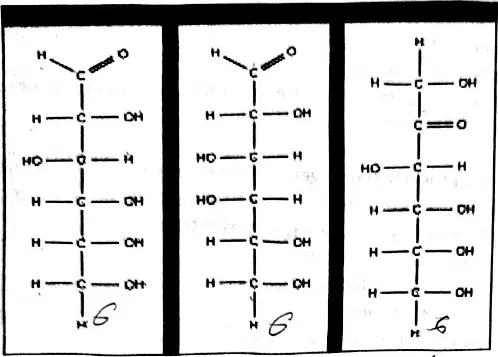
What term best describes the two molecules below?
enantiomers
cis-trans isomers
structural isomers
optical isomers
Nitrogen (N) is much more electronegative than hydrogen (H). Which of the following statements is correct about the atoms in ammonia (NH3)?
Each hydrogen atom has a partial positive charge.
The nitrogen atom has a strong positive charge.
Each hydrogen atom has a slight negative charge.
The nitrogen atom has a partial positive charge.
Which of the following solutions has the greatest concentration of hydroxyl ions [OH-]?
lemon juice at pH 2
vinegar at pH 3
human blood at pH 7.2
household bleach at pH 12
In organisms, what is the typical order of chemical bond strength (STRONGER -> WEAKER)?
ionic, hydrogen, covalent
covalent, hydrogen, ionic
hydrogen, covalent, ionic
covalent, ionic, hydrogen
Which of the following best describes a structural difference between DNA and RNA?
DNA contains four types of nitrogenous bases, whereas RNA contains only two types of nitrogenous bases.
The backbone of DNA contains deoxyribose, whereas the backbone of RNA contains ribose.
DNA contains nucleotides but RNA has no nucleotides.
Phosphate groups provide rigidity to DNA, but RNA is flexible and contains no phosphate groups.
A typical bag of fertilizer contains high levels of nitrogen, phosphorus, and potassium but trace amounts of magnesium and calcium. Which of the following best matches the fertilizer component with the molecule in which it will be incorporated by organisms in the area?
Nitrogen will be incorporated into nucleic acids.
Phosphorus will be incorporated into amino acids.
Potassium will be incorporated into lipids.
Magnesium will be incorporated into carbohydrates.
In the diagram below, which of the following is an accurate description of the process shown?
The linking of amino acids with an ionic bond as an initial step in the protein synthesis process.
The formation of a more complex carbohydrate with the covalent bonding of two simple sugars.
The hydrolysis of amino acids with the breaking of covalent bonds with the release of water.
The formation of a covalent peptide bond in a dehydration synthesis reaction.
Which of the following contains nitrogen in addition to carbon, hydrogen, and oxygen?
an alcohol such as ethanol
an amino acid such as glycine
a hydrocarbon such as benzene
a steroid such as testosterone
Which of the following solutions has the greatest concentration of hydrogen ions (H+)?
gastric juice at pH 2
vinegar at pH 3
household bleach at pH 12
black coffee at pH 5
How many molecules of water are needed to completely hydrolyze a polymer that is 12 monomers long?
12
11
10
9
Upon chemical analysis, a particular polypeptide was found to contain 50 amino acids. How many peptide bonds are present in this protein?
100
50
48
49
Which of the following polysaccharides are correctly matched with most likely location in a cell?
starch – storage in fungi
glycogen – exoskeleton of insects
cellulose – cell wall of plants
chitin – cell membrane of fungi
Which of the following are nitrogenous bases of the pyrimidine type?
cytosine and guanine
guanine and adenine
adenine and thymine
thymine and uracil
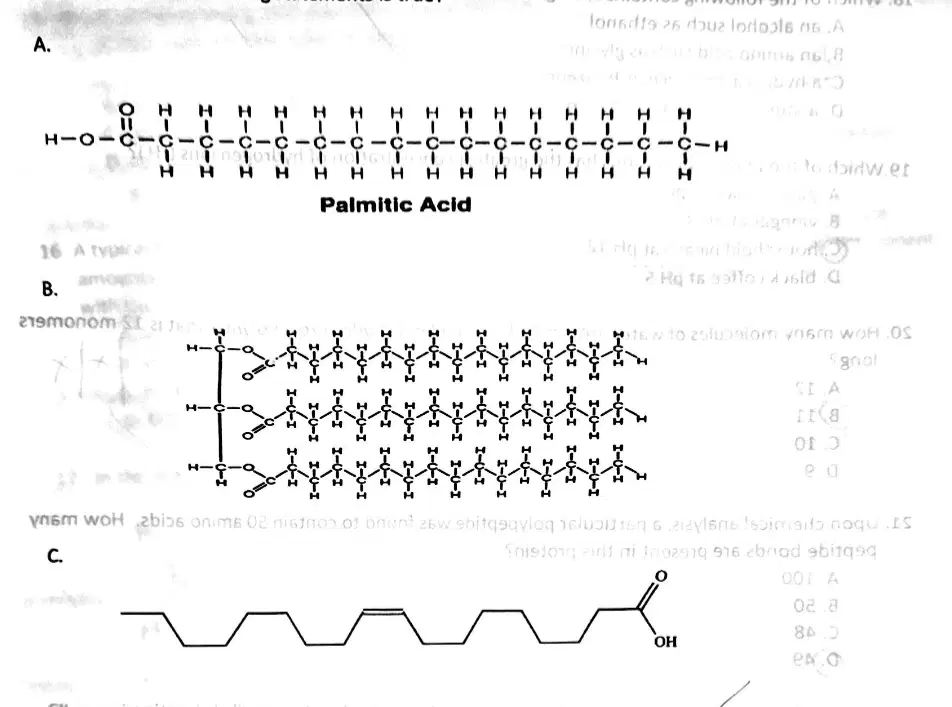
Which of the following statements is true?
Both A and B are unsaturated fat examples.
Both A and C are unsaturated fat examples.
Both B and C are saturated fat examples.
A and B are saturated fats and C is an unsaturated fat.
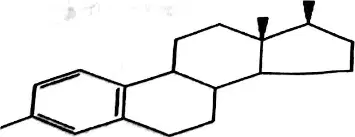
Which group of macromolecules would one most likely classify the following molecule?
carbohydrates
lipids
proteins
nucleic acids
The alpha helix and beta pleated sheet are both common polypeptide forms found in which level of protein structure?
primary
secondary
tertiary
quaternary
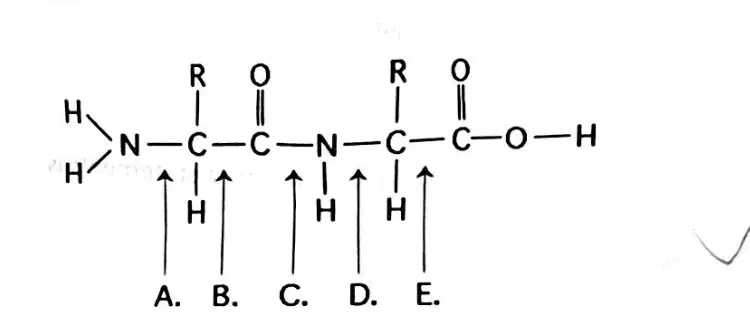
In the above diagram, where was the water removed to join the two monomers?
A
B
C
D
Carbon is unparalleled in its ability to form molecules that are large and complex. The reason for this is that carbon
has six valence electrons.
can form up to four ionic bonds.
is more electronegative than oxygen.
can form up to four covalent bonds.
Large bodies of water are prevented from freezing solid because
water is more dense as a solid than as a liquid.
ice is more dense than liquid water.
the hydrogen bonds are more stable in liquid water than ice.
ice is less dense that liquid water.
Hydrophobic substances include which of the following?
oils
sugar
ionic compounds
both A and C
Which level of protein structure would be most immediately affected by a change in one amino acid?
primary
secondary
tertiary
quaternary
The main difference between a nucleoside and a nucleotide is
A. A nucleoside contains a nitrogenous base and a phosphate.
B. A nucleotide contains a nitrogenous base and a pentose sugar.
C. A nucleotide contains a nitrogenous base and a hexose sugar.
D. A nucleotide contains a pentose sugar and a phosphate.
Glucose combines with a second glucose to form maltose. Which of the following statements is correct?
Glucose is a disaccharide and maltose is a monosaccharide.
Glucose is a monosaccharide and maltose is a disaccharide.
Glucose is a disaccharide and maltose is a polysaccharide.
Glucose combines with the second glucose by an ionic bond.
Bicarbonate (HCO₃⁻) neutralizes blood pH by
removing hydrogen ions.
accepting hydrogen ions.
releasing hydrogen ions.
releasing hydroxide ions.
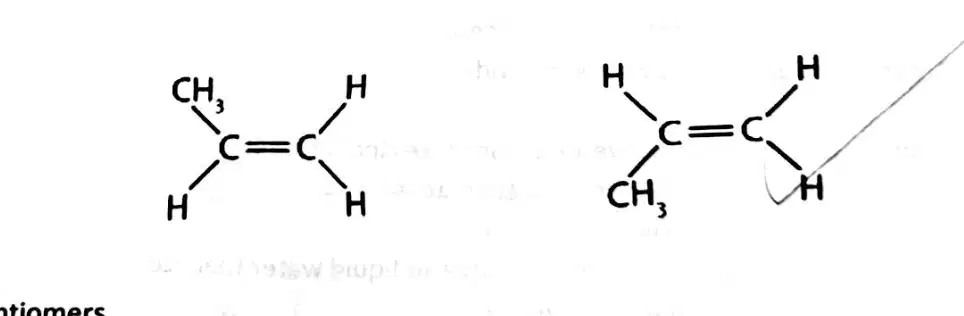
The molecular structures seen below can best be described as
enantiomers.
having methyl and hydroxyl groups.
the same molecules.
cis-trans isomers.
Which of the following is a major reason why size limits are in place for certain cells?
the need for a sufficient surface area for cell functions
the evolution of larger cells after the evolution of smaller cells
the fact that larger cells have greater volume than smaller cells
the need for increasing volume at the expense of surface area
Tay-Sachs disease is a human genetic abnormality that results in cells accumulating and becoming clogged with very large and complex lipids. Which cellular organelle must be involved in this condition?
Golgi apparatus
lysosome
endoplasmic reticulum
mitochondrion
Which of the following contain their own DNA and ribosomes?
A. chloroplast and mitochondrion
B. endoplasmic reticulum and mitochondrion
C. Golgi and endoplasmic reticulum
D. chloroplast and endoplasmic reticulum
A cell has the following molecules and structures: RNA, ribosomes, cell wall, and cytoplasm. It could be a cell from
a bacterium or animal
a plant or an animal
a plant, but not a fungus
a plant or a bacterium
Which of the following is NOT part of the endomembrane system in animal cells?
A. mitochondrion
B. endoplasmic reticulum
C. lysosome
D. Golgi apparatus
Ions can travel directly from the cytoplasm of one animal cell to the cytoplasm of an adjacent cell through
tight junctions.
plasmodesmata.
desmosomes.
gap junctions.
According to the fluid mosaic model of the cell membrane, which of the following is a TRUE statement about membrane phospholipids?
They have hydrophilic tails in the interior of the membrane.
They can move laterally among proteins that have no movement.
They can move vertically from interior of membrane to exterior of membrane.
They can move side-to-side along the plane of the membrane.
An integral protein
binds loosely to the surface of the membrane.
exists only as a transmembrane protein.
can be used as a carrier protein.
exists as a channel protein for glucose transport into the cell.
Of the following functions, which function is most important for a glycoprotein in animal cell membranes?
active transport of molecules down their concentration gradients
maintaining fluidity of the phospholipid bilayer
cell-cell recognition
simple diffusion of gases
Which of these are NEVER embedded into the hydrophobic region of the lipid bilayer?
transmembrane proteins
peripheral proteins
glycoproteins
integral proteins
What types of molecules are able to move across the cell membrane with the least problems?
monosaccharides
ionic
large and hydrophobic
small and hydrophobic
Water moves quickly across the cell membrane due to the fact that
it uses a carrier protein for passage.
it is a small, polar charged molecule.
it can move against the concentration gradient.
it uses aquaporins for passage.
Membrane transport processes labeled as types of diffusion
require ATP on some occasions.
require carrier proteins.
are passive because molecules are moved from a region of lower concentration to a region of higher concentration.
are passive because molecules are moved from a region of higher concentration to a region of lower concentration.
A patient has had a serious accident and lost a lot of blood. In an attempt to replenish body fluids, distilled water, equal to the volume of blood lost, is transferred directly into one of his veins. What will be the most probable result of this transfusion?
It will have no unfavorable effect.
The patient's red blood cells will swell because the blood fluid is hypotonic to the cells.
The patients' red blood cells will shrivel (shrink) because the blood fluid is hypertonic to the cells.
The patient's red blood cells will burst because the blood fluid is hypertonic to the cells.
A cell with a cytoplasm (concentration of 0.05 molar sucrose) is surrounded by an aqueous solution of 0.05 molar sucrose. With the understanding that the membrane is impermeable to sucrose, which term below describes the tonicity of the aqueous solution relative to cell's cytoplasm?
isotonic
turgid
hypotonic
hypertonic
Which of the following conditions promotes "best environment for efficiency" in plant and animal cells?
plant cell = hypertonic; animal cell = isotonic
plant cell = hypotonic; animal cell = hypertonic
plant cell = isotonic; animal cell = isotonic
plant cell = hypotonic; animal cell = isotonic
Glucose is moved from the digested food to the cells (lining the small intestine). Which process would be most efficient at aiding the diffusion of glucose into these cells?
simple diffusion
active transport pumps
osmosis
facilitated diffusion
A newly synthesized protein is transported to the plasma membrane by following which correct order of structures?
ER -> vesicle -> Golgi -> vesicle -> plasma membrane
Golgi -> vesicle -> ER -> lysosome -> plasma membrane
What type of cell junction prevents the movement of chemicals between two adjacent animal cells?
desmosome
gap junction
plasmodesmata
tight junction
Which of the following processes is not like the others?
osmosis
passive transport
endocytosis
facilitated diffusion
White blood cells remove bacteria from the human body by what process?
exocytosis
pinocytosis
receptor-mediated endocytosis
phagocytosis
In receptor-mediated endocytosis, receptor molecules initially project to the outside of the cell. Where do they end up after endocytosis?
on the outside of vesicles
on the inner surface of the vesicle
on the inside surface of the cell membrane
on the ER
Cytoplasmic streaming and amoeboid movement are examples of forms of motility within eukaryotic cells. These examples are due to the presence of
microfilaments (actin filaments)
intermediate filaments
centrioles
microtubules
A severe case of familial hypercholesterolemia is due to
complete lack of LDL receptor proteins.
a partial lack of LDL receptor proteins.
lack of glycolipids
inhibition of the cholesterol active transport system in red blood cells
Use the following statement to answer question 25. An eager AP Biology student interested in studying osmosis and the movement of water in solutions took a dialysis bag containing a 0.5 M solution and placed it into a beaker containing a 0.6 M solution. After the bag has been sitting in the beaker for a while, what would you expect to have happened to the bag?
There will have been a net flow of water out of the bag, causing it to decrease in size.
There will have been a net flow of water into the bag, causing it to swell in size.
The solute will have moved out of the dialysis bag into the beaker.
The bag will be the exact same size because no water will have moved at all.
The movement of potassium into an animal cell requires:
low cellular concentrations of sodium.
an energy source such as ATP.
a cotransport protein.
a potassium channel protein.

Label part A in the membrane structure: fluid-mosaic model diagram.
Phospholipid bilayer
Cholesterol molecule
Integral protein
Glycoprotein

Label part B in the membrane structure: fluid-mosaic model diagram.
B: Integral protein
B: Glycolipid
B: Cholesterol
B: Peripheral protein

Label part C in the membrane structure: fluid-mosaic model diagram.
C: Carbohydrate chain
C: Phospholipid bilayer
C: Protein channel
C: Cholesterol

Which structure is labeled G?
cholesterol
transport protein
glycolipid
glycoprotein

Which structure is labeled A?
integral protein
cholesterol
peripheral protein
glycoprotein

Which structure is labeled an oligosaccharide (sugar)?
I
G
C
H
The sodium-potassium pump usually pumps
sodium ions into the cell.
potassium ions out of the cell.
potassium ions into the cell.
sodium and potassium ions at an equal rate (1:1).
Which of the following is the greatest advantage of having multiple steps in a transduction pathway?
Each step can be used in multiple pathways.
Having multiple steps in a pathway requires the least amount of ATP.
Having multiple steps provides for greater possible amplification of a signal.
Each step can be activated by several G proteins simultaneously.
Which of the following is a statement describing the first law of thermodynamics?
The entropy of the universe is decreasing.
The entropy of the universe is constant.
Energy cannot be created nor destroyed.
Energy cannot be transferred nor transformed.
Which of the following statements is TRUE regarding the second law of thermodynamics?
Every chemical reaction must decrease the total entropy of the universe.
Every chemical reaction must increase the total entropy of the universe.
Heat creates a store of energy that can be used by most organisms to do work.
If there is an increase in the energy of a system, there must be a corresponding decrease in the energy of the rest of the universe.
Which of the following is an example of potential rather than kinetic energy?
A. Water flowing down the Chattahoochee River
B. Mashed potatoes filled with energy-rich carbohydrates on a plate
C. Athena shipping a robot for food
D. Jogging around the SPX campus three times
A positive value for delta G indicates that the chemical reaction is
exergonic.
exothermic.
spontaneous.
endergonic.
When chemical, transport, or mechanical work is done by an organism, what happens to the heat generated?
It is used to store energy as more ATP.
It is lost to the environment.
It is used to do work.
It is used to convert ADP to ATP.
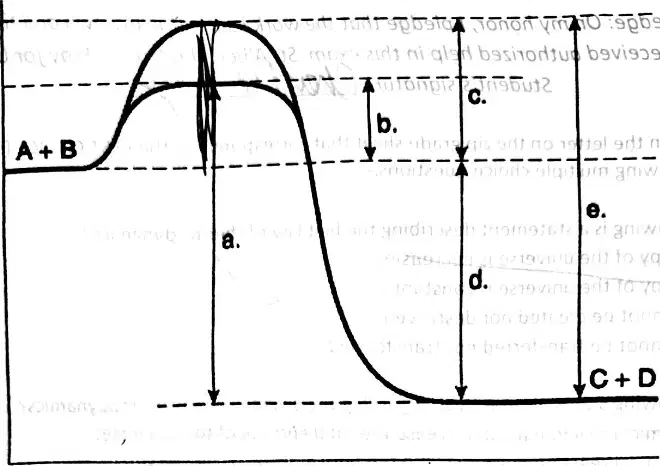
Which of the following represents the activation energy required for the non enzyme-catalyzed reaction?
a
b
c
d
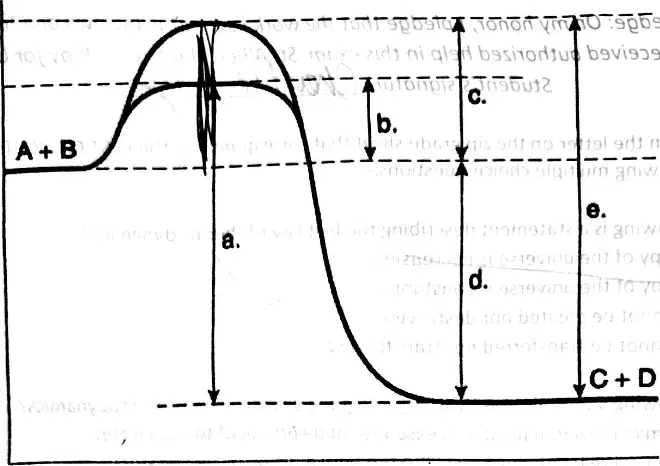
Which of the following represents the delta G of the reaction?
a
b
c
d
A series of enzymes catalyze the reaction X -> Y -> Z -> A. Product A binds to the enzyme that converts X to Y at a position that covers completely the active site. This binding decreases the activity of the enzyme. Substance A functions as
a coenzyme
a competitive inhibitor
an allosteric inhibitor
an intermediate.
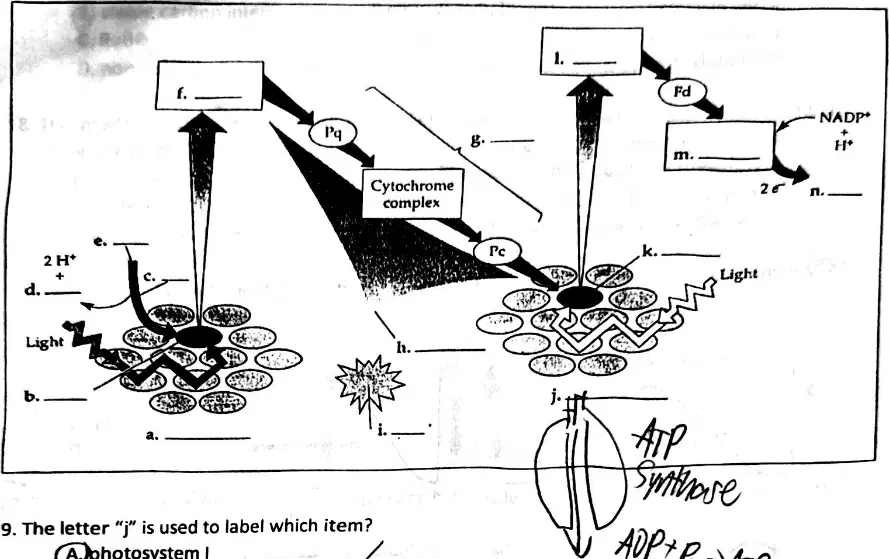
The letter "j" is used to label which item?
photosystem I
photosystem II
ATP
NADPH
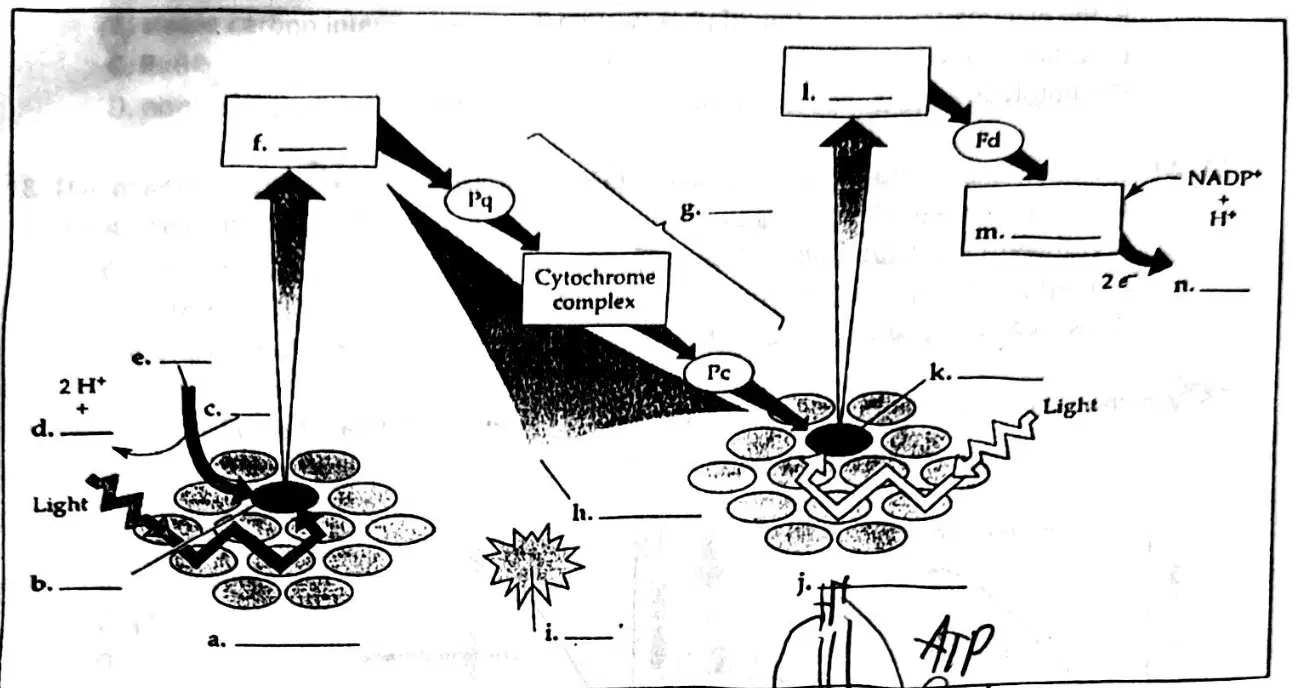
The above reactions take place in which area of the cell?
matrix of the mitochondrion
stroma of the chloroplast
cristae
thylakoids
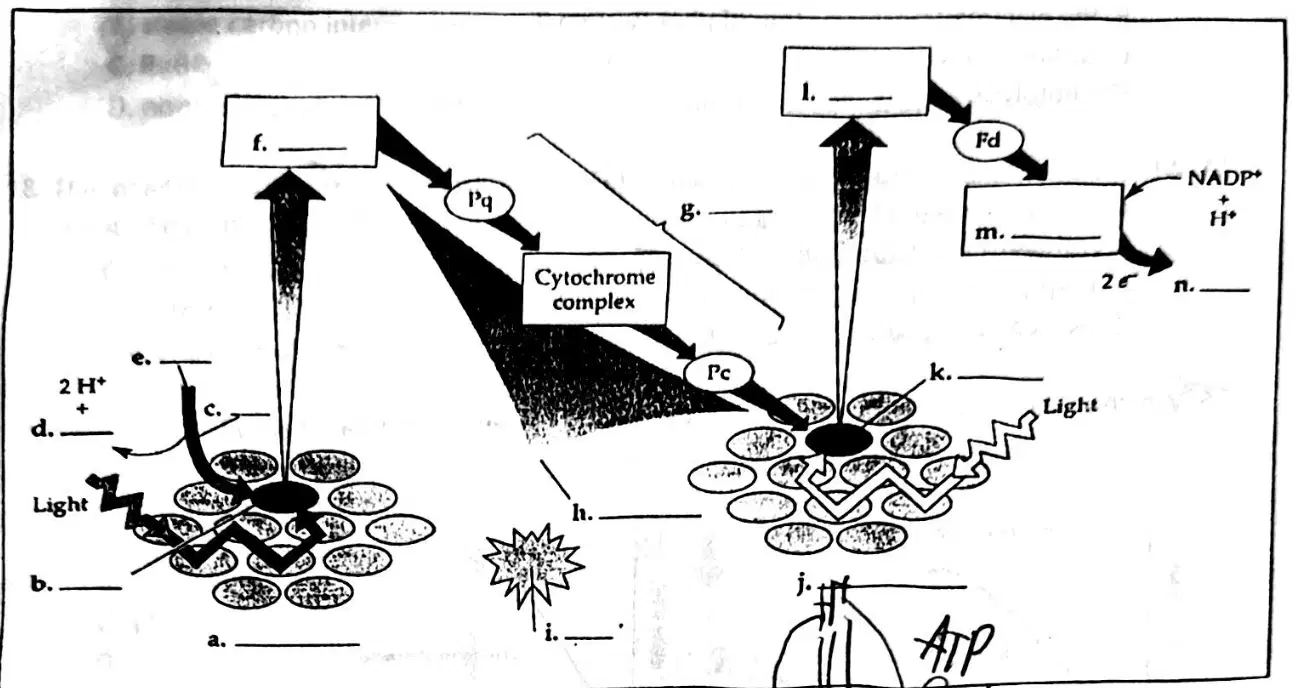
The letter "g" represents which of the following?
photosystem
oxidative phosphorylation
electron transport system
photolysis
In an animal cell, where are the ATP synthase complexes located?
grana
cristae
cell membrane
both A and B
When oxygen is released as a result of photosynthesis, it is a by-product of which of the following?
the electron transfer system of photosystem I
the electron transfer system of photosystem II
carbon fixation
photolysis
What is the primary purpose of the Calvin cycle?
split water and release oxygen
transport RuBP out of the chloroplast
synthesize simple sugars from carbon dioxide
use NADPH to release carbon dioxide
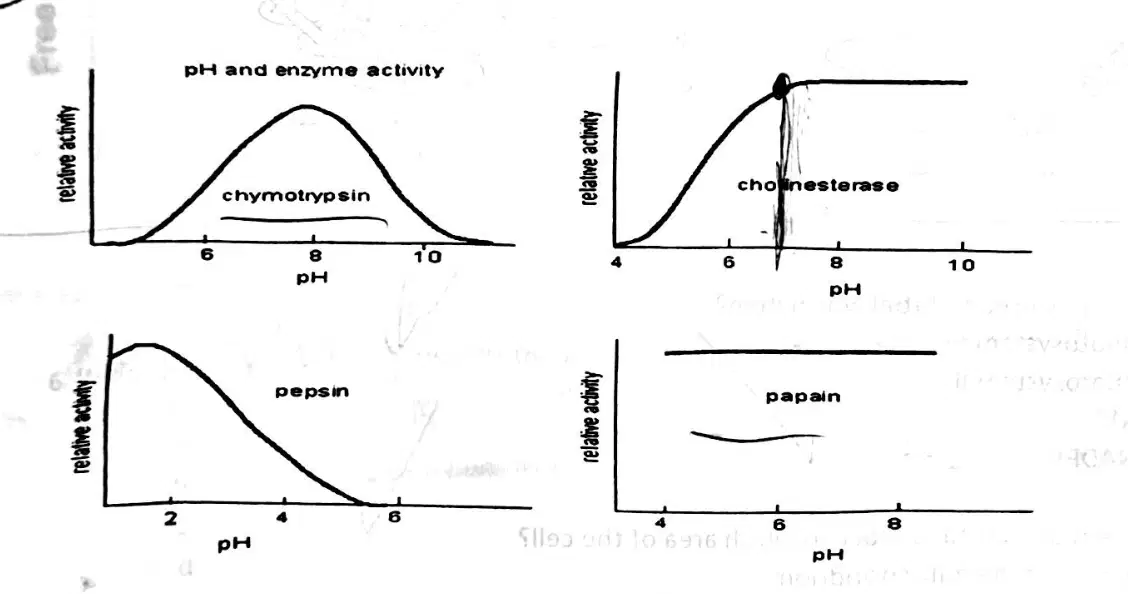
Which of the following conclusions is most accurate given the diagram below?
Chymotrypsin and pepsin share the same optimum pH values.
Cholinesterase works best in basic conditions.
Papain's activity is inhibited by pH in neutral conditions.
Chymotrypsin and pepsin are effective enzymes in the same organ locations of the human body.
Which of the following events cannot occur in photorespiration?
use of ATP
use of O2
production of CO2
production of glucose
Carbon fixation involves ALL of the following molecules EXCEPT
rubisco
stable carbon intermediate
RuBP
none of the above – therefore all of the above are part of carbon fixation
The inner folded membrane of the mitochondria serves primarily to
separate the many reactions that occur in the organelle
provide increased surface area for the molecules and reactions of the electron transport system
provide a site for reactions to occur with Coenzyme A
compartmentalize the diffusing waste products from the cellular respiration reactions
For three molecules of glucose oxidized by cellular respiration, how many molecules of CO₂ are released in the Krebs citric acid cycle?
2
6
12
18
If pyruvate oxidation is blocked, what will happen to the levels of oxaloacetate and citrate in the Krebs Cycle?
There will be no change in the levels of oxaloacetate and citrate.
Both oxaloacetate and citrate will decrease.
Oxaloacetate will decrease and citrate will accumulate.
Oxaloacetate will accumulate and citrate will decrease.
Starting with citrate, which of the following combinations of products would result from three acetyl CoA molecules entering the Krebs Cycle?
3 ATP, 2 CO₂, 3 NADH, and 1 FADH₂
3 ATP, 6 CO₂, 9 NADH, and 3 FADH₂
2 ATP, 2 CO₂, 3 NADH, and 3 FADH₂
3 ATP, 3 CO₂, 3 NADH, and 3 FADH₂
For each molecule of glucose that is metabolized by glycolysis and the Krebs Cycle, what is the total number of NADH and FADH₂ molecules produced?
8
10
12
14
Most CO2 from catabolism is released during
glycolysis.
the Krebs Cycle.
electron transport.
oxidative phosphorylation.
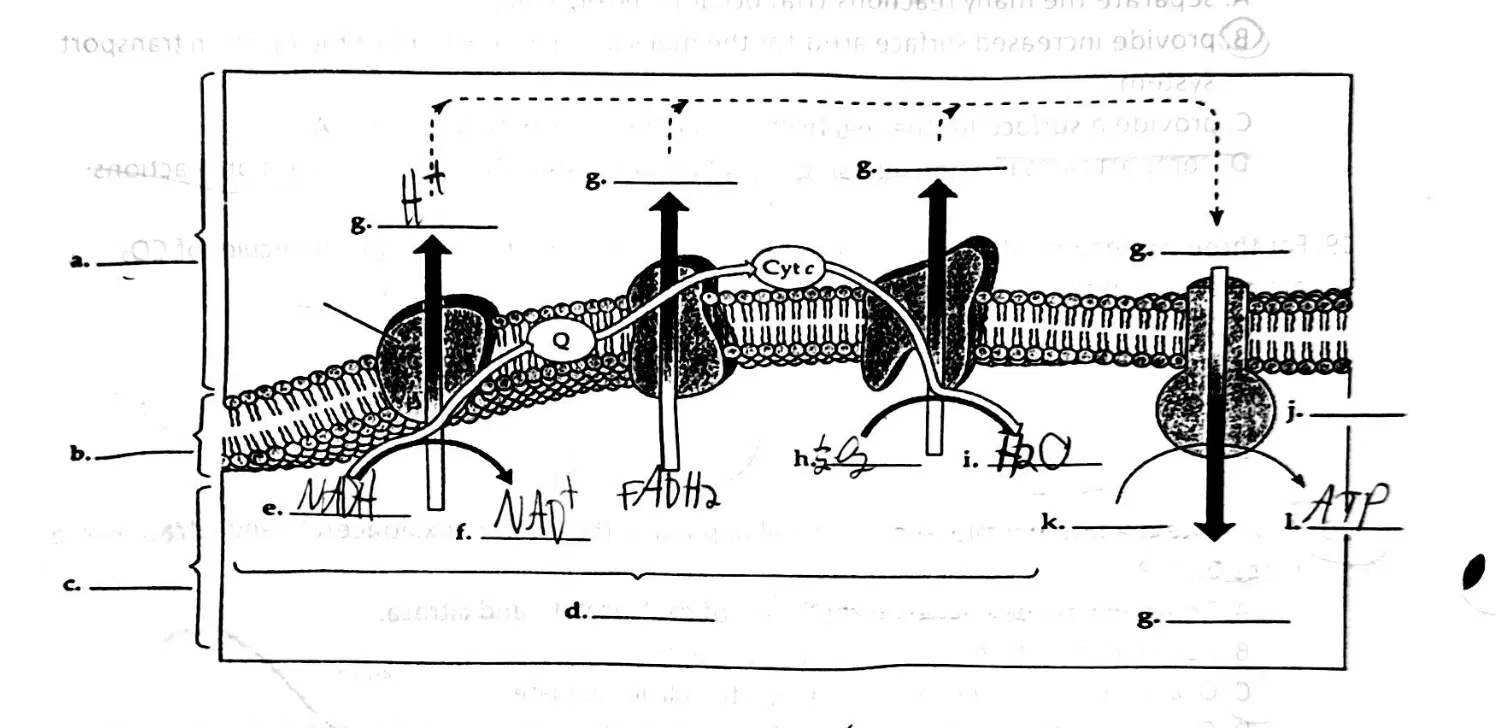
The molecule labeled "h" in the diagram is
CO2
O2
H2O
ATP.
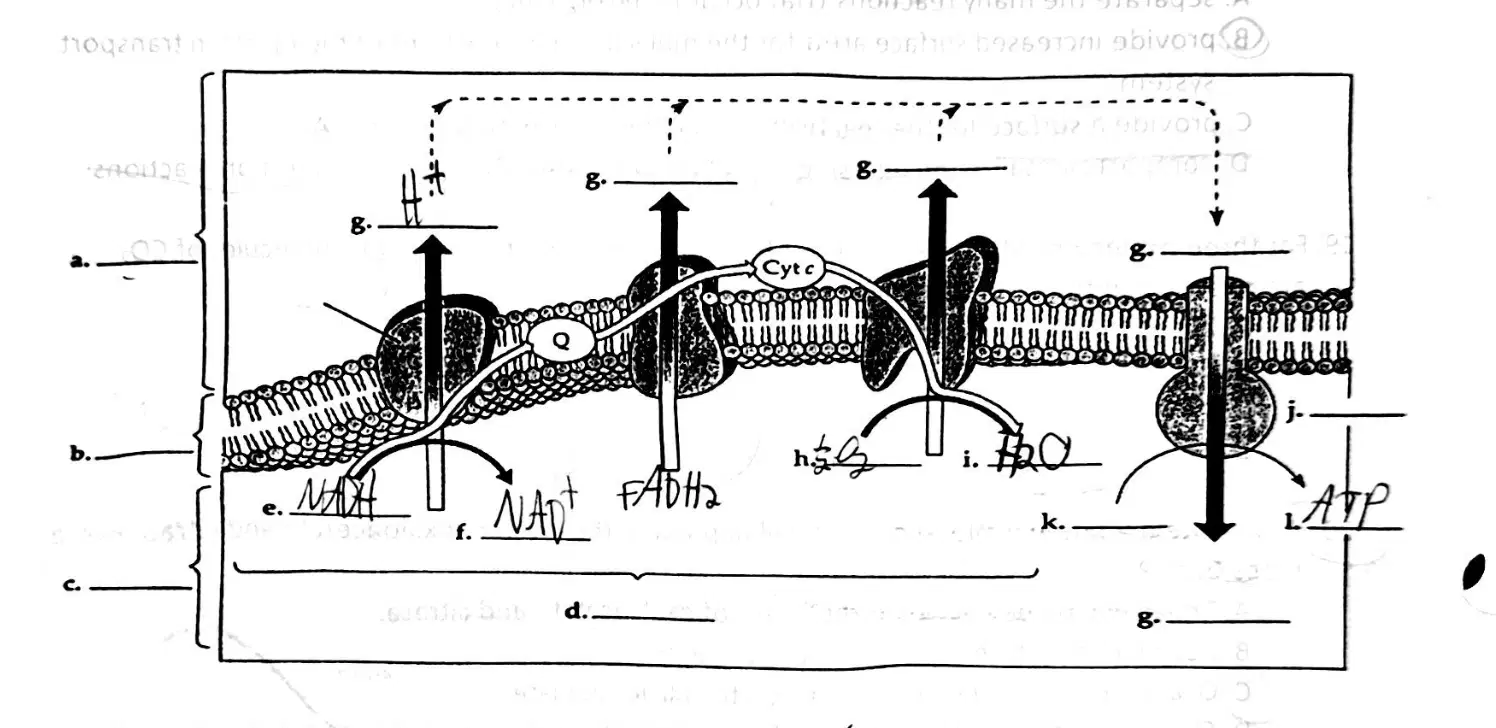
The letter "g" is used in multiple locations in the diagram. What does this letter represent?
ATP
hydrogen electron
O2
hydrogen proton.
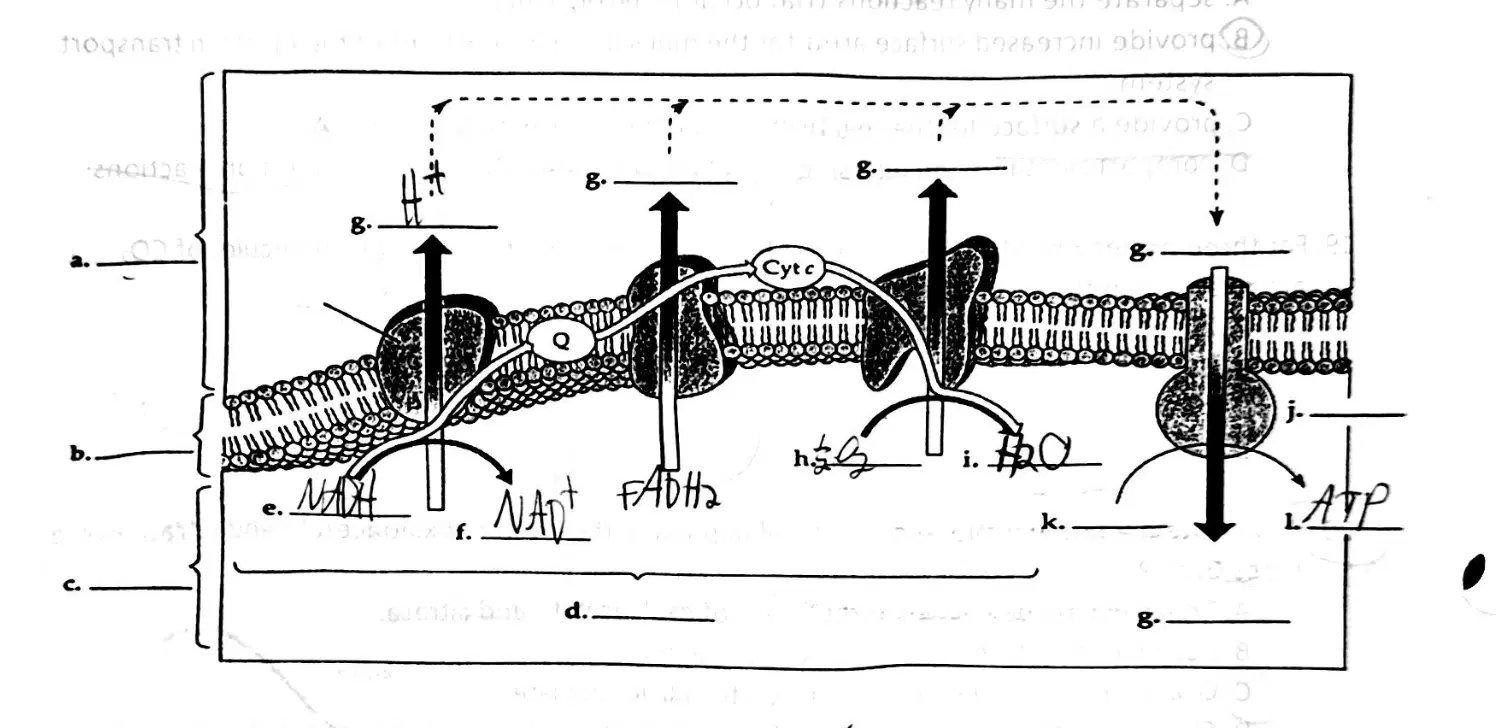
The letter "k" represents which of the following?
ATP
ADP and Pi
NADH
H2O.

