
 Worksheets
Politics, Social Class, and Religion of Egypt
Total questions: 80
Worksheet time: 40mins
Who held the highest rank in ancient Egyptian government and was considered a god?
Pharaoh ruling the kingdom
Nomark over local areas
Vizier under the pharaoh
Scribe keeping records
What role did the vizier play in ancient Egypt’s political structure?
Priest who led ceremonies
Local mayor of a district
Military general in charge
Highest leader under the pharaoh
Which statement best describes nomarks in ancient Egypt?
Royal scribes recording taxes
Top priests serving the pharaoh
Local leaders similar to mayors
Elite soldiers guarding tombs
How were social classes in ancient Egypt commonly organized?
Like a ladder with rungs
Like a circle with rings
Like a pyramid with levels
Like a square with equal sides
Which group made up the majority of Egypt’s population but ranked lowest in power?
Military leaders and priests
Farmers, servants, slaves
Scribes and craftsmen
Nobles from rich families
What belief was central to Egyptian religion?
Reincarnation into animals
Afterlife where spirit continues
End of existence at death
Return as a new pharaoh
Why did Egyptians practice mummification?
To punish enemy leaders
To help bodies enter afterlife
To decorate tomb walls
To cure common illnesses
Which statement best explains why Egyptians called the fertile soil the “Gift of the Nile”?
It came from the Red Sea coast
It was traded from distant kingdoms
It was mined from desert cliffs
It was created by yearly river floods
What was the main difference between the red land and the black land in ancient Egypt?
Red land was desert; black land was fertile
Red land flooded yearly; black land stayed dry
Red land had forests; black land had dunes
Red land was coastal; black land was mountainous
Which crop and product pair were commonly grown and made by Egyptians along the Nile?
Wheat for bread; flax for linen cloth
Corn for porridge; cotton for rope
Barley for soup; hemp for canvas
Rice for noodles; silk for garments
Why did Egyptians welcome the Nile’s annual flooding?
It refreshed fertile soil for more crops
It carved new gold mines each year
It washed away all village houses
It stopped travel and trade for months
How did the Nile River support transportation and relationships among Egyptians?
It forced caravans to cross the desert
It blocked all movement with strong rapids
It connected only Upper Egypt to mountains
It served as a highway for travel and trade
Which building materials came from the Nile region and helped Egyptians construct homes and pyramids?
Mud bricks and sandstone blocks
Marble slabs and granite tiles
Timber beams and iron nails
Glass panes and concrete mix
Which food sources did the Nile provide to people living near it?
Fish in the river and animals near the banks
Cattle herds in desert grasslands
Orchards in mountain valleys
Whales from the Mediterranean
Which statement best describes Egyptian hieroglyphics?
A picture-based system with over 1,000 symbols
A spoken language with no writing form
A number system used only for taxes
An alphabet of exactly twenty-six letters
What was papyrus mainly used for in ancient Egypt?
Weaving cloth for royal clothing
Creating metal tools for farmers
Building stone walls for temples
Making strong, durable writing material
Who were scribes in ancient Egypt?
Specialists trained to read and write
Soldiers who protected the pharaoh
Artists who carved statues and idols
Merchants who traded goods at markets
How did hieratic and demotic scripts relate to hieroglyphics?
They were faster cursive forms used for daily writing
They were unrelated languages from distant empires
They were ceremonial songs performed in temples
They were secret codes used only by generals
What was the Rosetta Stone’s key importance to historians?
It showed that Coptic replaced hieratic immediately
It proved that papyrus was stronger than clay tablets
It helped decode Egyptian writing by showing three scripts
It confirmed that scribes were mostly soldiers by rank
Which script combined elements of Egyptian writing with the Greek alphabet?
Meroitic script replaced Greek with Phoenician symbols
Demotic script mixed Nubian letters and Roman
Hieratic script used only temple carvings and chants
Coptic script used both hieroglyphic ideas and Greek
What was an early purpose of hieroglyphics before storytelling and religion?
Recording only royal family birthdays
Keeping records like lists and accounts
Teaching music to young apprentices
Designing agricultural irrigation plans
What did ancient Egyptians use when trading goods without money?
A bartering system of exchange
Paper bills from markets
Metal coins called drachma
Shell tokens from the Red Sea
Which statement best describes Deben in ancient Egypt?
A market where merchants met
A tax collected by pharaohs
A weight measure of copper or silver
A river boat used for trade
Why was the Nile River important for Egyptian trade?
It provided forests for timber
It served as an easy boat route
It created mountains for mining
It blocked invasions from Kush
Which is an example of an Egyptian import from Kush?
Precious stones and gold
Papyrus scrolls and baskets
Copper tools and plows
Wheat grain and barley
What were Egypt’s main exports to other regions?
Spices, silver coins, clay tablets
Timber logs, animal furs, iron weapons
Silk cloth, tea leaves, porcelain vases
Papyrus items, stones, gold, copper, crops
Who were merchants in ancient Egypt?
Officials who collected taxes
Craftsmen who built temples
People who traded goods for a living
Soldiers who guarded caravans
Which outcome followed Egypt’s trading relationships?
End of contact with Kush and Greece
Greater luxury and spread of culture
Decline of Egyptian culture abroad
Less access to needed resources

Which best explains why religion appears so often in ancient Egyptian art and architecture?
Religion guided daily life and government choices
Religion was rare but used for special festivals
Religion was private and kept out of public spaces
Religion was mostly for farmers in rural villages
What do historians learn about Egyptians mainly from their art and architecture?
Beliefs and daily life details
Modern engineering formulas
Exact tax records
Precise military ranks
Which structure was built as a burial place for Egyptian royalty?
Open-air marketplace
Granary for storing grain
Pyramid with inner tombs
Harbor with stone docks
Why did Egyptians place valuables in tombs with the deceased?
To pay a fine to temple guards
To prevent storms from damaging tombs
To trade with visiting merchants
To help in the afterlife as believed
What is a sarcophagus in ancient Egypt?
Clay tablet for writing laws
Ceremonial crown for kings
Decorated coffin for a mummy
Stone pillar supporting roofs
Which statement about Egyptian relief carvings is correct?
Drawings focused on front-facing portraits
Statues made from wood and clay
Paintings done only on papyrus sheets
Images carved on walls or structures
How did Egyptian artists usually draw human figures?
Front view with deep 3-D shading
Aerial view with complex perspective
Profile view with flat 2-D style
Cartoon style with exaggerated features
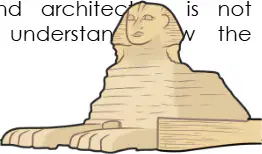
What makes the Great Pyramids and Great Sphinx notable to visitors today?
They are famous monuments and giant sculptures
They are small shrines used for household worship
They are underground canals for irrigation
They are modern buildings from recent centuries
Which statement best describes the Old Kingdom of ancient Egypt?
A time of frequent leadership change and wars
An era focused on monotheism and temple reforms
A time of growth, development, and rising social classes
A period when foreign rulers controlled the country
What is a dynasty in ancient Egypt?
A military alliance with neighboring lands
A series of rulers from the same family
A festival honoring multiple gods
A group of temples built in one city
Which event marks the beginning of the Middle Kingdom?
A new pharaoh restored order after civil wars
The Hyksos conquered and divided Egypt
Ramses II became the longest ruling pharaoh
Alexander the Great took control of Egypt
Who were the Hyksos in Egypt’s history?
Priests who promoted monotheism in temples
Invaders who attacked and conquered the Egyptians
Architects who designed pyramids in the Old Kingdom
Farmers who increased trade across the Nile
During the New Kingdom, which leader tried to change Egypt’s religion to monotheism?
Ramses II
Menes
King Tutankhamun
Amenhotep IV
What major change happened after Amenhotep IV’s rule?
Polytheism was restored by King Tutankhamun
Egypt permanently adopted monotheism
Foreign leaders ended the rule of pharaohs
The Hyksos returned and rebuilt the army
Which statement about the end of pharaoh rule is accurate?
It ended when the Hyksos were expelled
It ended when Alexander the Great took Egypt
It ended when Menes united Upper and Lower Egypt
It ended when Ramses II died of illness
Where was the Kush civilization primarily located?
In the Ethiopian Highlands far from the Nile
On the Arabian Peninsula near the Red Sea
Along the Indus River in modern Pakistan
South of Egypt along the Nile in Sudan
What resource was especially abundant in Kush and helped its wealth and trade?
Copper from coastal quarries
Salt from desert flats
Silver from mountain mines
Gold from river deposits
How would you best describe Kush’s relationship with Egypt over time?
Mostly unknown and distant
Permanent alliance against Mesopotamia
Always peaceful and cooperative
Both trade partners and occasional rivals
Why were some Kushite pharaohs called “black pharaohs”?
They ruled only at night under stars
They wore black crowns in ceremonies
They painted palaces with black dye
They had darker skin than Egyptians
What was a major reason Kush moved its capital from Napata to Meroe?
To escape Assyrian and Egyptian attacks
To find better farmland for grain
To join Greek colonies on the coast
To access Mediterranean sea ports
Which new trade partners did Kush connect with from Meroe’s location?
Sumer, Hittites, and Scythians
Axum, Carthage, and Gaul
Greece, Persia, and Phoenicia
Rome, India, and China
What marked the end of the Kush civilization’s independence?
Voluntary union with Egypt’s New Kingdom
Invasion and takeover by Axum
Annexation by the Roman Republic
Conquest by the Hittites of Anatolia
How old was Tutankhamen when he became pharaoh of Egypt?
About twelve years old
About nine years old
About sixteen years old
About twenty years old
Which earlier pharaoh attempted major religious changes that King Tut later reversed?
Thutmose III, a general
Ramses II, a rival
Horemheb, an advisor
Akhenaten, his father
What was Akhenaten’s main religious change during his rule?
Promoting Aten alone
Banning temple art
Worshiping animal gods
Ending burial rituals
Why did Tutankhamen change his name from Tutankhaten to Tutankhamun?
To honor Amun again
To avoid enemies
To please Horemheb
To claim new lands
Which officials likely guided the young King Tut’s government decisions?
Priests of Aten
Foreign ambassadors
Nefertiti and Ankhesenamun
Horemheb and Ay
Which statement best explains why Tutankhamen’s tomb remained mostly untouched until 1922?
It was built in a desert
It was small and hidden
It was guarded by soldiers
It was sealed by a curse
Recent research suggests which health problems may have affected King Tut?
Diabetes and seizures
Leprosy and fractures
Blindness and asthma
Malaria and foot defects
What happened to Egypt’s royal line after King Tut’s sudden death?
His advisors took power
His son became king
His cousin seized Egypt
His sister ruled alone
Who was Queen Hatshepsut originally married to before becoming pharaoh?
A general named Ahmose
Her father Thutmose I
Her stepson Thutmose III
Her half-brother Thutmose II
Why did Hatshepsut step in to rule instead of waiting for Thutmose III to grow up?
Thutmose III refused the throne
She was elected by nobles
She defeated Egypt’s enemies
It was a tradition to act as regent
What made Hatshepsut’s reign controversial among some Egyptians?
She moved the capital city
She ended temple building
She raised taxes heavily
She ruled as a female pharaoh

Which achievement is strongly linked to Hatshepsut’s leadership?
Inventing iron tools
Writing new law codes
Conquering distant kingdoms
Major architectural projects
What action did Thutmose III reportedly take regarding Hatshepsut’s legacy?
Adopted her royal titles
Built a statue in her honor
Destroyed her name on monuments
Published her speeches widely
Which possible reason do historians suggest for Hatshepsut claiming the throne herself?
Win a chariot race festival
Protect Egypt from outside threats
Follow advice from foreign rulers
Avoid temple rituals entirely

How did Hatshepsut often choose to be depicted in art to justify her rule?
As a male with a ceremonial beard
As a goddess with wings
As a child wearing royal ribbons
As a scribe holding papyrus scrolls
Which role best describes Ramses II during the New Kingdom of Egypt?
Weak ruler during a decline
Trader who stayed neutral
Military leader and builder
Scholar who avoided warfare
What major battle showcased Ramses II’s military leadership?
Battle of Megiddo
Battle of Kadesh
Battle of Giza
Battle of Thebes
At the Battle of Kadesh, about how many Egyptians did Ramses II lead?
About 20,000 soldiers
About 50,000 soldiers
About 5,000 soldiers
About 10,000 soldiers
Who were the main opponents of Egypt in Ramses II’s long conflict that led to a peace treaty?
Babylonians
Hittites
Persians
Greeks
Why is Ramses II connected to the first recorded peace treaty?
He avoided fighting entirely
He signed a treaty after decades of war
He conquered the Hittite capital
He paid tribute to end the war
Which statement about Ramses II’s building projects is most accurate?
He built only small forts on borders
He banned new temples and statues
He focused solely on roads
He ordered many grand structures
Which description best explains Ramses II’s legacy at his death?
Nomadic leader who left Egypt
Beloved ruler with a long reign
Short‑lived ruler with few heirs
Forgotten leader with little impact
Which statement best describes Cleopatra VII’s leadership during her reign?
Relied completely on Roman rulers for decisions
Centered only on dramatic personal life events
Focused on strengthening and growing Egypt
Ignored politics to live a quiet private life
Cleopatra’s family background in Egypt was primarily connected to which culture?
Carthaginian merchant families
Roman patrician households
Native Egyptian pharaoh lineage
Greek Macedonian ruling dynasty
How did Cleopatra regain Egypt’s throne after being pushed out by Ptolemy XIII?
Asked Syrian rulers to restore her
Married Ptolemy XIII to end the feud
Allied with Julius Caesar’s Roman army
Signed peace with Octavian’s forces
What famous legend explains Cleopatra’s daring first meeting with Julius Caesar?
She sent a letter through secret couriers
She disguised herself as a Roman soldier
She arrived on a golden barge at sunset
She rolled herself in a carpet to sneak in
After Julius Caesar’s assassination, what step did Cleopatra take to protect her son Caesarion’s claim?
Eliminated threats including rival siblings
Disbanded her army to avoid conflict
Fled to Greece and hid in exile
Sought recognition from Octavian
What was Cleopatra’s alliance with Mark Antony primarily aimed at achieving?
Establishing trade with distant Asian kingdoms
Restoring Ptolemy XIII to the Egyptian throne
Defending Carthage from Roman invasion
Building power and a Roman–Egyptian empire
Why did Octavian and other Roman leaders attack Egypt during Cleopatra’s later reign?
They were avenging Julius Caesar’s earlier defeat
They wanted spices and silk from Egypt
They opposed Antony’s appointment of Cleopatra’s family
They feared Cleopatra would invade Rome alone
What event marked the end of the Egyptian Empire under Cleopatra?
Cleopatra’s death and Octavian’s victory
Ptolemy XIII’s return and peace treaty
Caesarion ruling Rome and Egypt together
Antony’s coronation as Roman emperor

