
 Worksheets
Ancient Egypt Review # 1
Total questions: 45
Worksheet time: 23mins
What does the term 'polytheism' mean?
A) Belief in one god
B) Belief in many gods and goddesses
C) Belief in no gods
D) Belief in animals as gods
These deities (gods) often appeared with both human and animal features, such as the jackal-headed Anubis and the cat goddess, Bastet. Which god is described as jackal-headed in Ancient Egyptian religion?
Bastet
Anubis
Osiris
Ra
Why did priests perform regular rituals in Ancient Egypt?
To keep the gods happy.
To train new priests.
To collect taxes.
To build monuments.
Egyptians believed that everything in nature—from the flooding of the Nile to the rising of the sun—was controlled by these powerful deities.
True
False
What was the 'Next World' in Ancient Egyptian belief?
A place where one's life continued after death.
A city built by the pharaohs.
A festival celebrated every year.
A sacred animal worshipped by priests.
Read the passage below and answer the question: Mummification involved several important steps: first, the body was washed and purified. Next, the internal organs were removed and preserved in special jars called canopic jars. The heart was left inside the body because Egyptians believed it would be needed in the Afterlife. The body was then packed with natron, a natural salt, to dry it out for about 40 days. After drying, the body was wrapped in many layers of linen cloth, and protective amulets were placed between the wrappings to guard the soul. Finally, the mummy was placed in a decorated coffin and buried in a tomb with food, treasures, and written spells to help the soul on its journey. Doing all of this allowed the person's spirit, called the "ka," to recognize its body and live on forever in the Next World.
To preserve the body for the Afterlife
To prepare the body for reincarnation
To honor the gods
To create art
Read the passage below and answer the question: Mummification involved several important steps: first, the body was washed and purified. Next, the internal organs were removed and preserved in special jars called canopic jars. The heart was left inside the body because Egyptians believed it would be needed in the Afterlife. The body was then packed with natron, a natural salt, to dry it out for about 40 days. After drying, the body was wrapped in many layers of linen cloth, and protective amulets were placed between the wrappings to guard the soul. Finally, the mummy was placed in a decorated coffin and buried in a tomb with food, treasures, and written spells to help the soul on its journey. Doing all of this allowed the person's spirit, called the "ka," to recognize its body and live on forever in the Next World. What were the jars called in which the internal organs were preserved during mummification?
Canopic jars
Clay pots
Sacred vases
Spirit jars
Fill in the blank: The body was packed with ________, a natural salt, to dry it out for about 40 days.
natron
gypsum
limestone
sulfur
Read the passage below and answer the question: Mummification involved several important steps: first, the body was washed and purified. Next, the internal organs were removed and preserved in special jars called canopic jars. The heart was left inside the body because Egyptians believed it would be needed in the Afterlife. The body was then packed with natron, a natural salt, to dry it out for about 40 days. After drying, the body was wrapped in many layers of linen cloth, and protective amulets were placed between the wrappings to guard the soul. Finally, the mummy was placed in a decorated coffin and buried in a tomb with food, treasures, and written spells to help the soul on its journey. Doing all of this allowed the person's spirit, called the "ka," to recognize its body and live on forever in the Next World.
True
False
What was placed between the wrappings of linen cloth to guard the soul during mummification?
Protective amulets
Papyrus scrolls
Clay tablets
Golden coins
Why did Egyptians leave the heart inside the body during mummification?
Because Egyptians believed the heart would be needed in the Afterlife.
Because the heart was too difficult to remove.
Because the heart was considered unimportant.
Because the heart was used to store treasures.
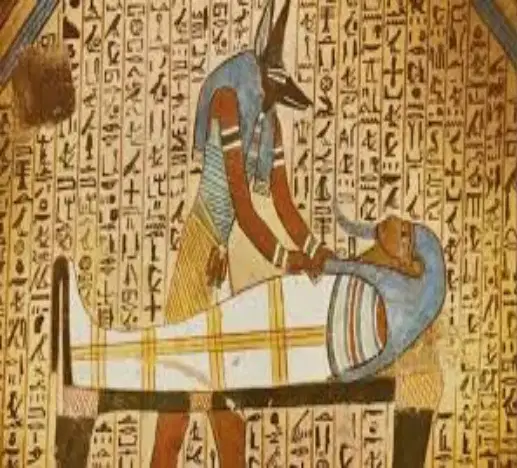
Look at the image showing a jackal-headed figure performing a ritual on a mummy. Which Egyptian god is depicted in this scene?
Osiris
Anubis
Horus
Thoth
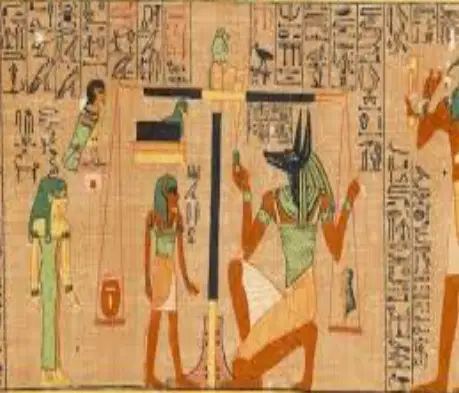
In the image with a scale and a feather, which ancient Egyptian ceremony is being depicted?
The Opening of the Mouth
The Weighing of the Heart
The Festival of Opet
The Sed Festival
Read the passage below and answer the question: Ancient Egyptian hieroglyphics are a fascinating writing system made up of pictographs (pictures) and symbols. The Egyptians used hieroglyphics to record important events, religious texts, and stories about their gods and pharaohs. One special way they wrote names was inside an oval shape called a cartouche. Only the names of pharaohs and royal family members were placed inside cartouches, which were meant to protect them and showed their importance. What is a cartouche?
A type of Egyptian god
An oval shape used to write names
A kind of ancient Egyptian food
A tool for building pyramids
Who were the only people whose names were placed inside cartouches?
Pharaohs and royal family members
Priests and scribes
Merchants and artisans
Foreign diplomats
Read the passage below and answer the question: For many years, people could not understand hieroglyphics. That changed when the Rosetta Stone was discovered in 1799. The Rosetta Stone had the same message written in three scripts: Greek, Demotic, and hieroglyphics. Because scholars could read Greek, they used it to figure out what the hieroglyphics said. This breakthrough allowed historians and archaeologists to finally translate ancient Egyptian writing and learn more about this incredible civilization.
Greek, Latin, and Hieroglyphics
Greek, Demotic, and Hieroglyphics
Demotic, Latin, and Coptic
Greek, Coptic, and Hieroglyphics
The discovery of the Rosetta Stone was important for understanding ancient Egyptian writing because:
it provided a key to deciphering hieroglyphics
it was the first stone found in Egypt
it contained a map of ancient Egypt
it was used as a royal tomb
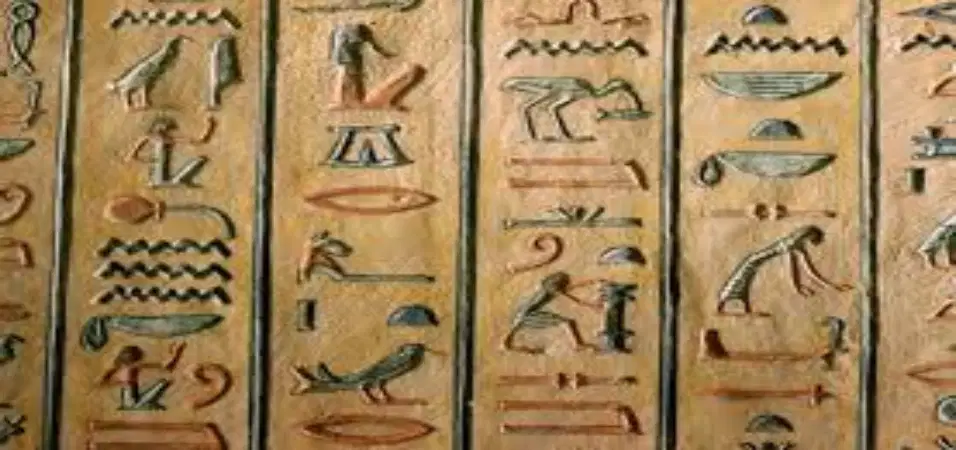
What type of writing system is shown in this image?
Cuneiform
Hieroglyphs
Latin alphabet
Cyrillic
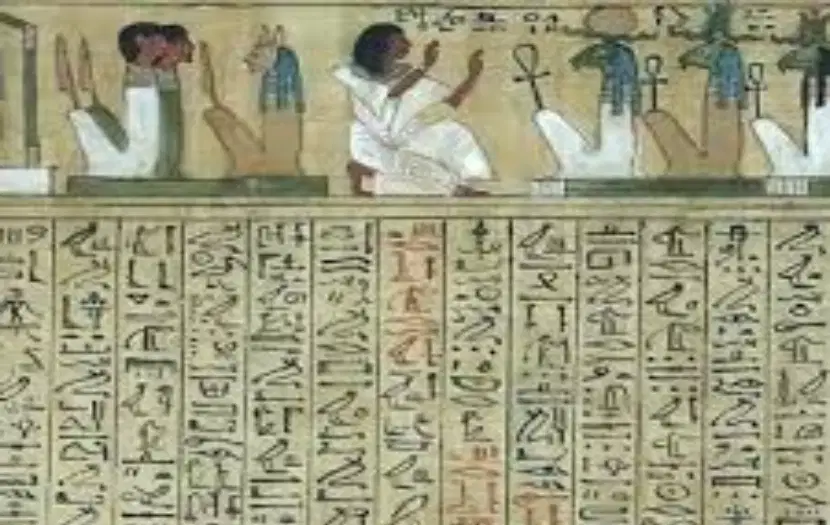
Observe this image. What activity are the people engaged in?
Farming
Writing Hieroglyphics
Building Pyramids
Cooking

Fill in the blank: The writing system shown in the images is called _________.
Hieroglyphics
Cuneiform
Sanskrit
Greek
What was the main purpose of the pyramids in Ancient Egypt?
To serve as homes for the pharaohs
To serve as tombs for the pharaohs
To store food and supplies
To hold religious ceremonies
The Egyptians believed that the pyramids would help the pharaohs reach the Next World by preserving and protecting their _______.
bodies
weapons
jewels
servants
The pyramids were built mainly during the Old Kingdom along the West bank of the Nile River.
True
False
According to Egyptian beliefs, the items buried with the pharaohs in the pyramids included:
jewelry, food, and treasures
modern books and electronics
statues of Greek gods
plastic toys and coins
The Egyptians chose the pyramid shape for their tombs because:
it symbolized the rays of the sun and helped the pharaoh's soul ascend to the heavens.
it was the easiest shape to build with stone blocks.
it represented the Nile River.
it was a popular design in neighboring countries.
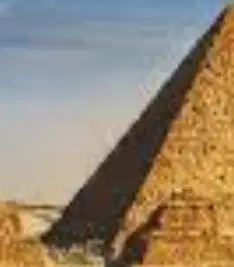
Which pyramid is the largest and most well-known?
The Pyramid of Menkaure
The Pyramid of Khafre
The Great Pyramid (built for Pharaoh Khufu)
The Pyramid of Djoser
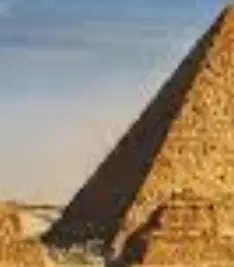
Who was the Great Pyramid built for?
Pharaoh Khufu
Pharaoh Ramses II
Pharaoh Tutankhamun
Pharaoh Akhenaten
The Great Sphinx sits outside the pyramids of Giza and acts as a guardian and protector for the pharaohs buried there.
True
False
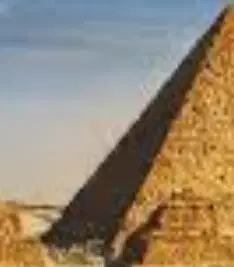
Name two other pharaohs, besides Khufu, who had pyramids built for them at Giza.
Pharaoh Khafre and Pharaoh Menkaure
Pharaoh Tutankhamun and Pharaoh Ramses II
Pharaoh Akhenaten and Pharaoh Sneferu
Pharaoh Djoser and Pharaoh Pepi II
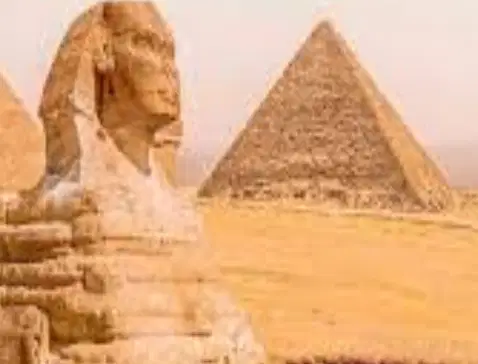
What famous monument is shown in front of the pyramids?
The Colosseum
The Sphinx
The Eiffel Tower
The Statue of Liberty
Who was considered both a king and a living god in ancient Egypt?
Priest
Pharaoh
Merchant
Farmer
Pharaohs were responsible for the well-being and success of the entire country.
True
False
Pharaohs made laws, collected taxes, ensured there was enough food, and protected Egypt from _______.
enemies
friends
priests
farmers
What special crown did pharaohs wear during grand ceremonies?
Double Crown
Nemes Headdress
Blue Crown
Red Crown
Name two symbols of authority that pharaohs carried.
Crook and flail
Scepter and orb
Sword and shield
Crown and ring
Pharaohs were believed to be the connection between the gods and the people because:
they were considered divine representatives on earth.
they built the largest pyramids.
they were the richest people in Egypt.
they controlled the Nile River.
Who was known as the 'boy king' and became pharaoh at a very young age, with his tomb found filled with treasures?
Ramses II
Tutankhamun
Cleopatra VII
Hatshepsut
Which pharaoh ruled for over 60 years and built many statues and temples?
Cleopatra VII
Hatshepsut
Ramses II
Tutankhamun
Who was one of the few female pharaohs, known for expanding trade and building impressive monuments?
Cleopatra VII
Hatshepsut
Ramses II
Tutankhamun
The last pharaoh of Egypt, famous for her intelligence and her relationships with Roman leaders Julius Caesar and Mark Antony, was _________
Cleopatra VII
Nefertiti
Hatshepsut
Sobekneferu
Pharaohs were buried in magnificent tombs with treasures, food, and other items they might need in the _________
afterlife
palace
marketplace
desert
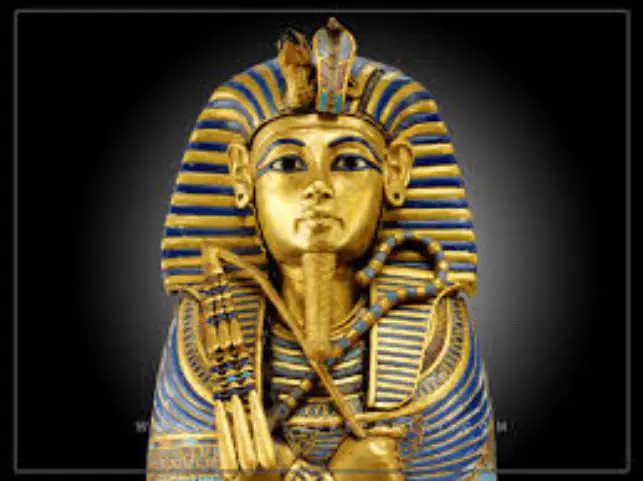
What is the name of the famous golden mask shown in the picture?
Mask of Ramses II
Mask of Tutankhamun
Mask of Cleopatra
Mask of Akhenaten
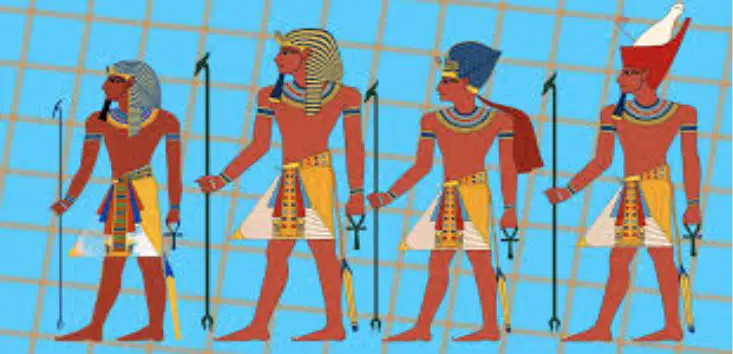
Look at this image. Fill in the blank: The people shown in the illustration are wearing traditional linen clothing of ancient _________.
Egyptians
Romans
Chinese
Greeks
The reason ancient Egyptians wore heavy black eye make-up was:
to keep bugs out
as protection from the sun & sand
as part of their religion
to show their social class
The Period of Inundation in ancient Egypt took place during the following months:
Sept. - Nov.
Aug. - Oct.
July - Oct.
Feb. - May

