
 Worksheets
Economics and Government Quiz
Total questions: 57
Worksheet time: 29mins
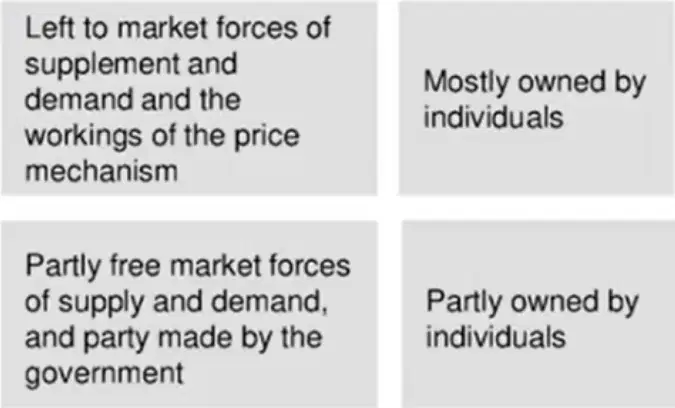
In a market economy, who primarily makes decisions about resource allocation?
The government
Market forces of supply and demand
Both government and market forces
Courts
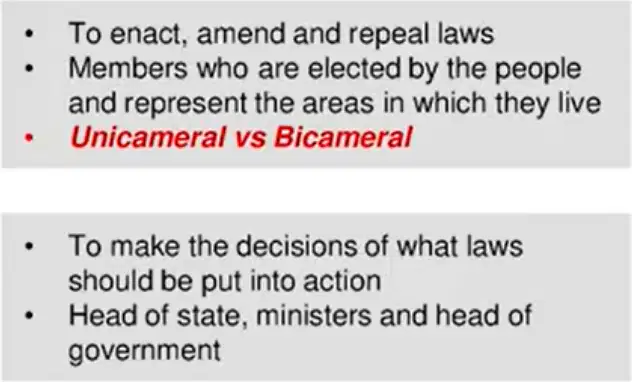
Compare and contrast the roles of the Head of State and Head of Government in Vietnam, the US, and the UK, based on the information provided.
In all three countries, the Head of State and Head of Government are the same person.
In Vietnam, they are different; in the US, they are the same; in the UK, the Head of State is the monarch and the Head of Government is the Prime Minister.
In Vietnam and the UK, they are the same; in the US, they are different.
In all three countries, the Head of State is the monarch.
Which of the following best describes "positive law"?
Rules imposed by the state to regulate human behavior
Customs followed by society without formal legislation
General principles of fairness and equity
Laws based on religious beliefs
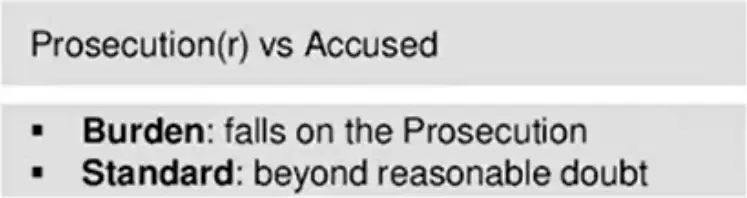
Which standard of proof is required in criminal law cases?
Preponderance of evidence
Balance of probabilities
Beyond reasonable doubt
Clear and convincing evidence
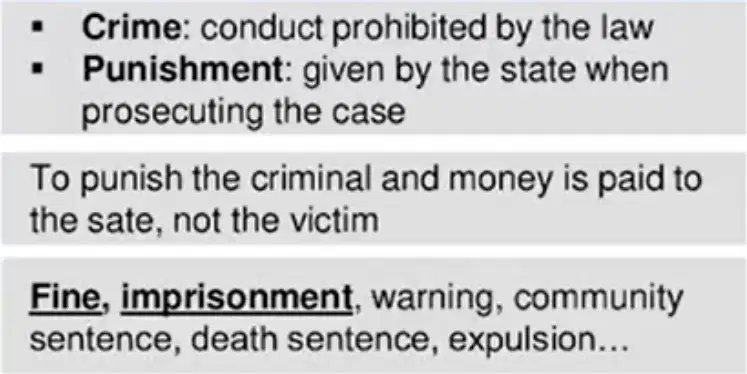
If a person is found guilty in a criminal law case, who receives the money from fines?
The victim
The accused
The state
The plaintiff
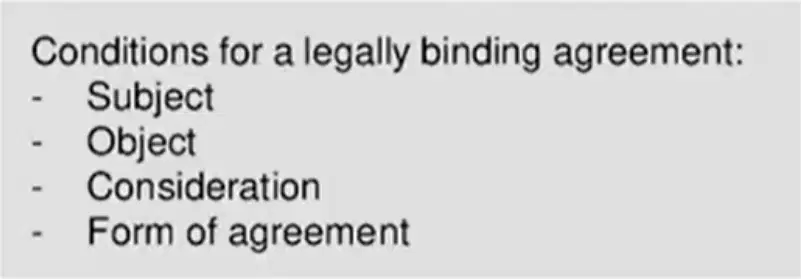
Given the example of consideration in contracts, how might the value of goods affect the validity of a contract in different jurisdictions?
A. The value of goods is irrelevant in all jurisdictions.
B. Some jurisdictions may require a minimum value for consideration, while others may accept promotional items with zero value.
C. All contracts must have goods valued at more than $1.
D. Only written contracts are valid.

Which of the following is a source of law in the Sharia law system?
Statutes
EU law
Sunnah
Custom
Strategically, why is it important for the WTO to have special councils such as the Council for Trade Goods, Council for Trade Services, and Council for TRIPs?
To increase the number of meetings held each year
To address specific issues in trade goods, services, and intellectual property rights, ensuring focused expertise and effective policy implementation
To reduce the workload of the Secretariat
To replace the Ministerial Conference
Which organization was established in 1961 by countries in North America and Europe, and later expanded to include Japan, Australia, Mexico, and Korea?
United Nations
World Trade Organization
Organization for Economic Co-operation and Development (OECD)
International Monetary Fund
Strategically, how does the ICA differ from a traditional court in terms of its arbitration process?
ICA allows parties to choose arbitrators, while traditional courts assign judges
ICA only handles criminal cases, while courts handle civil cases
ICA is part of the legal system of each member state, while courts are not
ICA does not confirm the appointment of arbitrators, while courts do
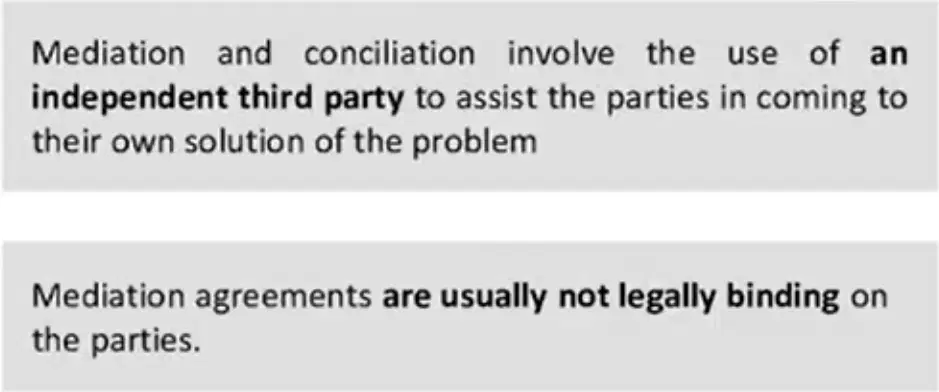
Which statement is true about mediation agreements?
They are always legally binding on the parties
They are usually not legally binding on the parties
They must be approved by a judge to be valid
They are only binding if signed by both parties
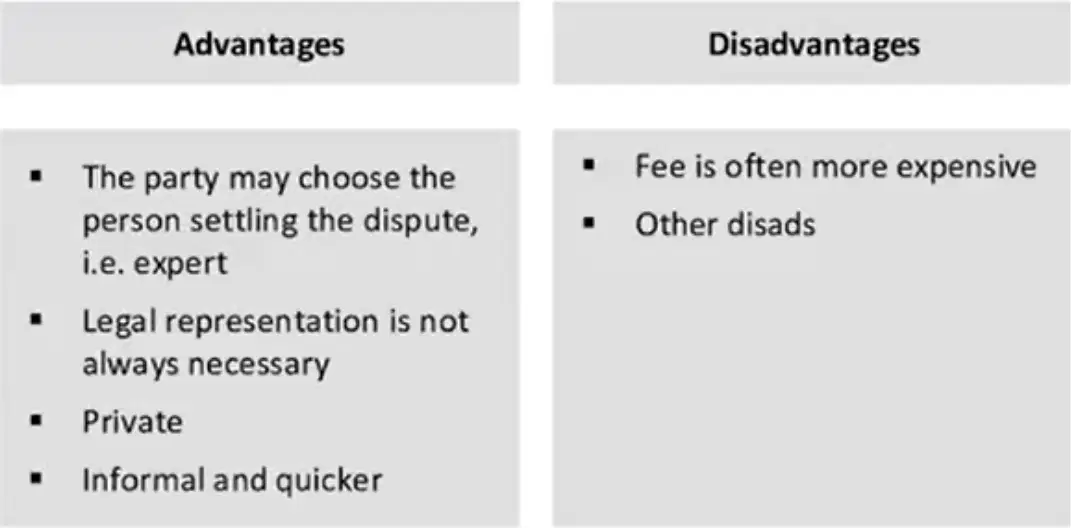
Why might parties prefer arbitration over court-based adjudication for resolving disputes?
Arbitration always requires a public hearing
Arbitration is always less expensive than court
Arbitration allows parties to choose an expert to settle the dispute
Arbitration decisions can always be appealed
Specifying the form of an arbitration agreement in international commercial arbitration is important because:
It is not important because oral agreements are always accepted.
It is important because written evidence ensures clarity and enforceability of the agreement.
It is only important for domestic arbitration.
It is important only if the parties are from the same country.

According to the UNCITRAL Model Law on ICA, under what condition should a court refer a matter to arbitration?
If the clause is in writing and not null and void
If the parties agree to settle outside the court
If the contract is between companies from different countries
If the arbitration clause is not specified
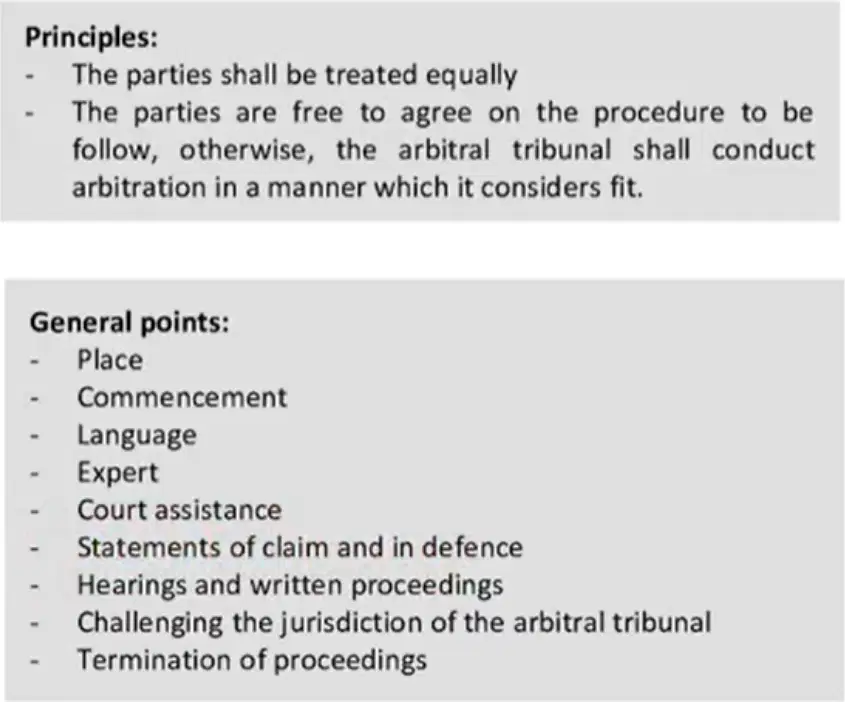
Which of the following is NOT listed as a general point in arbitral proceedings under the UNCITRAL Model Law on ICA?
Expert
Court assistance
Termination of proceedings
Financial compensation
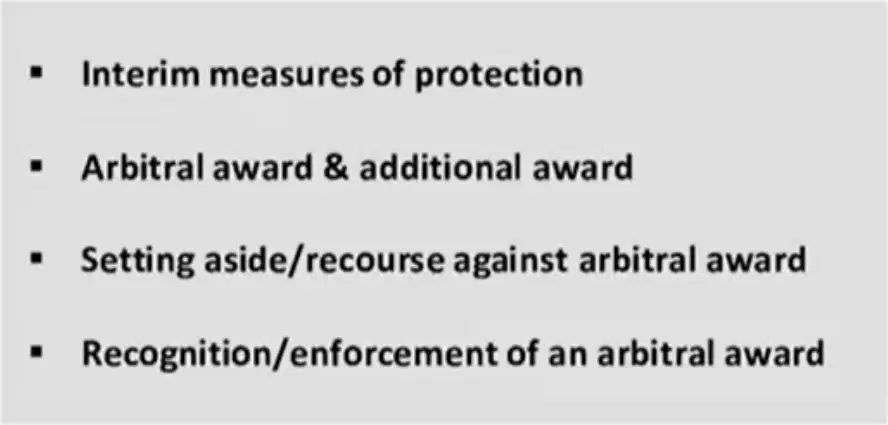
If parties disagree with an arbitral award, what recourse do they have according to the UNCITRAL Model Law on ICA?
They can submit an application to the court to set aside the award.
They must accept the award without question.
They can request a change in the language of proceedings.
They can terminate the proceedings immediately.
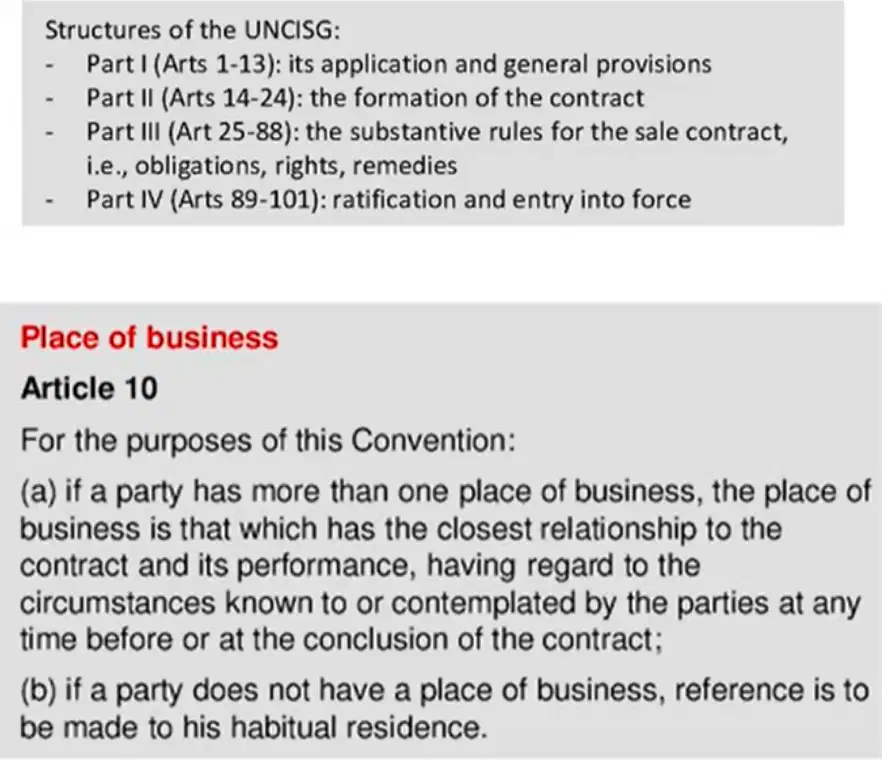
A Vietnamese company establishes a branch in Singapore. If the branch is not a legal entity but only an extension of the parent company, how does the UNCISG treat disputes between the branch and another Vietnamese company?
The dispute is treated as between two companies in Vietnam, unless the branch is a separate legal entity.
The dispute is always treated as international.
The dispute is resolved under Singapore law.
The dispute is not covered by UNCISG.

Explain how Article 94 could impact a contract between two businesses located in contracting states that have opted out of the CISG in relation to each other.
The CISG would still apply to their contract.
The CISG would not apply, and other applicable laws would govern the contract.
Only Article 1 of the CISG would apply.
The contract would be invalid.

What is the main difference between the "thuyết tổng phát" and "thuyết tiếp thu (reaching rule)" regarding the effectiveness of a contract document?
"Thuyết tổng phát" requires a witness, "thuyết tiếp thu" does not
"Thuyết tổng phát" is effective when sent, "thuyết tiếp thu" is effective when received
"Thuyết tổng phát" applies only to oral contracts, "thuyết tiếp thu" applies to written contracts
"Thuyết tổng phát" is used for domestic contracts, "thuyết tiếp thu" for international contracts

If a party makes an error in the transmission of a notice under Article 27, what is the consequence according to the Convention?
The party loses the right to rely on the communication
The communication is automatically void
The error or delay does not deprive the party of the right to rely on the communication
The contract is terminated
According to Article 18, which of the following does NOT constitute acceptance of an offer?
Silence or inactivity.
A statement made by the offeree.
Other conduct of the offeree indicating assent.
Dispatch of goods by the offeree.
Which of the following is NOT an issue regulated by ICC Incoterms?
Who pays customs duties
Who raises customs documentation
Transfer of property rights in the goods
Who bears the risk that damage will occur to the goods
What does the acronym CIF stand for in international trade?
Cost + Insurance (paid by seller) + Freight
Cost + Insurance paid to (paid by seller)
Cost + Freight (paid by buyer)
Cost + Insurance (paid by buyer) + Freight
Under DDP (Delivered Duty Paid), what is the main responsibility of the seller?
To arrange and pay for all transportation and import duties
To only deliver goods to the buyer’s premises
To pay for insurance only
To arrange export clearance only
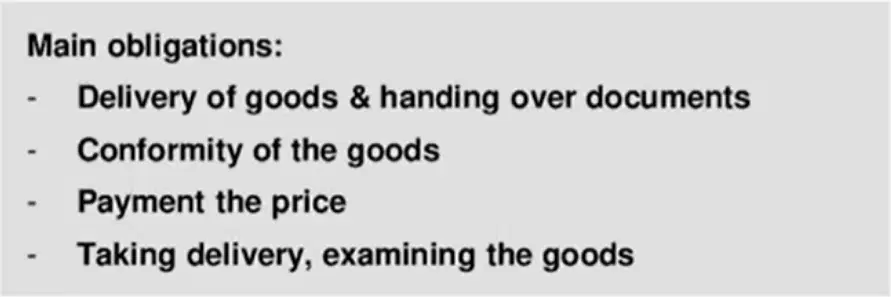
What is the main obligation related to the delivery of goods in international sales contracts?
Ensuring the goods are delivered on time and at the correct location
Setting the price of goods
Determining the method of payment
Establishing the contract terms

A contract between a Vietnamese and Singaporean merchant does not specify a penalty clause, and the Vienna Convention is also silent on this issue. What law is applied to fill this gap?
The law of the country of the seller
The law of the country of the buyer
The law of Vietnam or Singapore
The law of the United Nations

According to Article 72, what must a party do before declaring a contract avoided if time allows?
Immediately terminate the contract without notice.
Give reasonable notice to the other party to permit him to provide adequate assurance of his performance.
Request additional payment from the other party.
Suspend all deliveries until further notice.
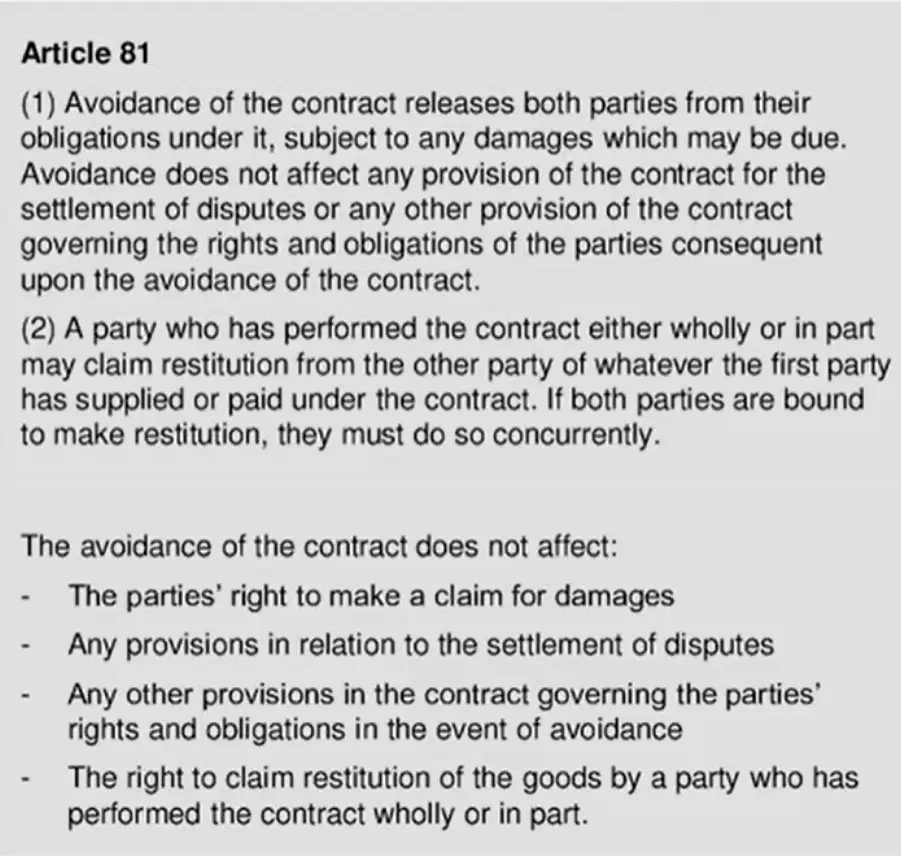
Which of the following is NOT affected by the avoidance of the contract?
The parties’ right to make a claim for damages.
The obligation to deliver goods.
Provisions in relation to settlement of disputes.
Rights and obligations in the event of avoidance.
According to Article 84, what must the seller do if he is bound to refund the price?
Only refund the price
Refund the price and pay interest from the date the price was paid
Refund the price and pay a penalty fee
Only pay interest on the price
What must a party do if they fail to perform due to an impediment, according to Article 79?
Ignore the other party
Give notice to the other party of the impediment and its effect on their ability to perform
Cancel the contract immediately
Deliver substitute goods
What is the primary purpose of the Incoterms in international trade?
To define the responsibilities of buyers and sellers
To provide a standard for product quality
To establish the legal framework for international contracts
To regulate tariffs and trade barriers
In the context of international sales, what does the term "force majeure" refer to?
A method of dispute resolution
A clause that allows for contract termination due to unforeseen circumstances
A type of penalty for breach of contract
A requirement for all contracts to be in writing
Which of the following is a key characteristic of a bilateral contract?
It can only be verbal and not written
It requires mutual consent and exchange of promises
It is always enforceable in court
It involves only one party's promise
What is the primary role of the arbitral tribunal in international commercial arbitration?
To resolve disputes based on the parties' agreement and applicable law
To enforce national laws
To act as a mediator between the parties
To provide legal representation for both parties
Which of the following is a key principle of the UNCITRAL Model Law on International Commercial Arbitration?
Public hearings for all arbitration proceedings
Mandatory court involvement in all arbitration cases
Arbitrators must be licensed attorneys
Confidentiality of the arbitration process
What is the significance of the 'seat of arbitration' in international arbitration?
It has no legal significance
It is where the parties must meet during the arbitration
It is the location where the arbitration award is enforced
It determines the applicable law governing the arbitration
Which international agreement aims to facilitate international trade by removing barriers and promoting fair competition among member countries?
General Agreement on Tariffs and Trade (GATT)
World Trade Organization (WTO)
North American Free Trade Agreement (NAFTA)
Trade-Related Aspects of Intellectual Property Rights (TRIPS)
In the context of international contracts, what does the term 'force majeure' refer to?
A legal term for breach of contract
A clause that allows for contract termination due to unforeseen circumstances
A requirement for all parties to meet in person
A type of arbitration process
What is the primary purpose of the United Nations Convention on Contracts for the International Sale of Goods (CISG)?
To establish trade tariffs between countries
To provide a uniform framework for international sales contracts
To enforce national laws in international trade
To regulate international shipping laws
What is the significance of the principle of 'pacta sunt servanda' in international contracts?
It requires contracts to be in writing to be enforceable.
It allows parties to change the terms of the contract at any time.
It emphasizes that agreements must be kept and are legally binding.
It provides a basis for dispute resolution.
Which of the following is a key feature of the CISG regarding the formation of contracts?
Contracts must be in writing to be valid.
Offers can be revoked before acceptance unless stated otherwise.
All contracts require a notary public for validation.
Acceptance must be communicated immediately to the offeror.
In international trade, what does the term 'incoterms' refer to?
International commercial terms that define the responsibilities of buyers and sellers.
Legal terms that govern international arbitration.
Trade agreements between countries.
Regulations set by the World Trade Organization.
What is the main difference between "common law" and "civil law" systems?
There is no significant difference between the two systems.
Common law relies heavily on case law, whereas civil law is primarily codified.
Common law is based on statutes, while civil law is based on judicial decisions.
Common law is used only in the United States, while civil law is used worldwide.
Which of the following best describes the concept of "jurisdiction" in international law?
The authority of a state to govern itself and make laws
The power of a court to hear a case and make legal decisions
The ability of countries to negotiate treaties
The enforcement of international laws by the United Nations
What is the role of the International Court of Justice (ICJ) in resolving disputes between states?
To create new international laws and treaties
To mediate negotiations between conflicting parties
To provide advisory opinions and settle legal disputes submitted by states
To enforce international laws through military action
What is the significance of the arbitration clause in international commercial contracts?
It is only relevant for domestic contracts.
It must be notarized to be valid.
It defines the method of dispute resolution agreed upon by the parties.
It is optional and can be disregarded by the parties.
In international arbitration, what is the effect of a party's failure to comply with procedural rules?
It has no effect on the arbitration process.
The non-compliant party may face sanctions or adverse inferences.
The arbitration will automatically be terminated.
The other party must accept the non-compliance.
What is the role of the 'seat of arbitration' in determining the applicable procedural law?
It has no impact on the procedural law.
It determines the legal framework governing the arbitration proceedings.
It is only relevant for the enforcement of the award.
It is chosen based on the parties' preferences without legal implications.
Which of the following is a fundamental requirement for the validity of a contract?
It must be in a foreign language
It must be signed by a notary public
It requires consideration from both parties
It can only be verbal
What is the primary function of the United Nations Convention on Contracts for the International Sale of Goods (CISG)?
To regulate international shipping laws
To provide a uniform framework for international sales contracts
To enforce international trade tariffs
To mediate disputes between countries
In the context of international arbitration, what does the term "seat of arbitration" refer to?
The venue for the final award announcement
The place where the arbitration agreement is signed
The legal jurisdiction governing the arbitration
The location where the arbitration hearing takes place
What is the primary function of the World Trade Organization (WTO) in the context of international trade?
To enforce international laws through military means
To provide a platform for trade negotiations and dispute resolution
To regulate domestic trade policies of member countries
To create tariffs for international goods
Under the UNCITRAL Model Law, what is the standard for determining the validity of an arbitration agreement?
It must be notarized to be enforceable
It can be oral as long as both parties agree
It must be in writing and signed by both parties
It is valid if it is implied through conduct
In the context of international contracts, what does the term 'jurisdiction' refer to?
The process of enforcing a contract
The geographical area where a contract is valid
The legal framework governing the contract
The authority of a court to hear a case
What is the primary purpose of the Incoterms in international trade?
To regulate tariffs and trade barriers
To provide guidelines for domestic sales contracts
To establish the legal framework for international arbitration
To define the responsibilities of buyers and sellers in international transactions
In the context of international sales, what does the term 'risk of loss' refer to?
The legal liability for breach of contract
The financial implications of currency fluctuations
The obligation to pay for goods upon delivery
The responsibility for damage or loss of goods during transit
What is the significance of the 'arbitration clause' in international contracts?
It is only relevant for domestic contracts
It outlines the payment terms for the contract
It determines the governing law of the contract
It specifies the method for resolving disputes between parties

