wayground logo

Free Printable Worksheets

Font size

S
M
L
XL
Worksheets

SNC2P - Review

Total questions: 47

Worksheet time: 2hrs 52mins

Name
Class
Date
1.

What is the colour that is formed by combining all colours in the additive colour theory?

a)

White

b)

Black

c)

Grey

d)

Brown

2.

What are the three primary color of light?

a)
purple, green, orange
b)

red, blue, green

c)
red, blue, green
d)
red, blue, orange
3.
How does light travel
a)
It curves around corners
b)
Really slow
c)
In a straight line
d)
In circles
4.
Law of reflection state that - The angle of incidence is .................. to the angle of reflection.
a)
equal
b)
double
c)
half
5.
What three things may happen to light that strikes an object? 
a)
The light may be reflected, transmitted or absorbed.
b)
The light may be reflected and refracted.
c)
The light may be absorbed and transmitted.
6.
A material that reflects or absorbs all of the light that strikes it is called which of the following? 
a)
Transparent
b)
Translucent
c)
Diffuse
d)
Opaque
7.
Luminous means...
a)
Gives out its own light
b)
Reflects light from other things
8.
You can see through water because ---
a)
it's opaque
b)
it's translucent 
c)
it's transparent
d)
it's wet
9.
What type of cells are responsible for carrying oxygen to the cells of the body?
a)
White blood cells
b)
Nerve cells
c)
Lung cells
d)
Red blood cells
10.

Which answer below would show the organization of life from SMALLEST to LARGEST?

a)

Heart muscle tissue, cardiovascular system, heart muscle cells, heart

b)

cardiovascular system, heart muscle cells, heart muscle tissue, heart

c)

cardiovascular system, heart tissue, heart cells, heart

d)

Heart muscle cells, heart muscle tissue, heart, cardiovascular system

11.
Blood is considered a tissue because it is composed of cells such as red and white blood cells working together for a particular function.
a)
True
b)
False
12.

a reaction between an acid and a base

a)

decomposition reaction

b)

neutralization reaction

c)

synthesis reaction

d)

product

13.

Put the terms below in order from SMALLEST to LARGEST according to the hierarchy of life:

a)

Tissue, Cell, Organ, Organism, Organ System

b)

Cell,Tissue, Organism, Organ system, Organ

c)

Cell, Tissue, Organ, Organ System, Organism

d)

Organism, Organ, Tissue, Cell, Organ System

14.
This system carries oxygen, nutrients and waste around the body.
a)
Lymphatic
b)
Urinary
c)
Respiratory
d)
Circulatory
15.
A group of tissues that work together is a(n) ______________________.
a)
cell
b)
organ
c)
organ system
d)
organism
16.

Main Function is to transport nutrients and oxygen to the cells and to take wastes away from the cells.

a)

Integumentary System

b)

Respiratory System

c)

Digestive System

d)

Circulatory System

e)

Endocrine System

17.

How many protons are found in one atom of silver (Ag)?

a)

16

b)

47

c)

61

d)

108

18.

a scale from 0-14 that describes how acidic or basic a substance is

a)

chemical formula

b)

chemical equation

c)

chemical reaction

d)

pH scale

19.

a reaction in which the metal ions of two different compounds exchange places

a)

double displacement reaction

b)

decomposition reaction

c)

synthesis reaction

d)

single displacement reaction

20.

new substances produced in a chemical reaction

a)

reactant

b)

acid

c)

product

d)

base

21.
Osmosis is the movement of _____ across a membrane.
a)
food
b)
energy
c)
oxygen
d)
water
22.

An animal cell placed in a salty solution will

a)

Stay the same

b)

Shrink- get smaller

c)

Swell- get bigger

23.
How many cells are created at the end of Mitosis?
a)
1
b)
2
c)
3
d)
4
24.
The dark "spider" looking things on opposite sides of the cell are called "Spindle Fibers".  What is their job?
a)
Eating the chromosomes
b)
Pulling the chromosomes apart
c)
Putting the chromosomes together
25.
A cell spends most of its life in what stage?
a)
Interphase
b)
Telophase
c)
Anaphase
d)
Metaphase
26.
One chromosome is made up of two
a)
Chromes
b)
Chromatids
c)
Centrioles
d)
Controls
27.
The middle part that holds the two chromatids together is called the
a)
Chromatin
b)
Centriole
c)
Centromere
d)
Nucleus
28.
The two cells that result after division are called the
a)
Sister cells
b)
Brother cells
c)
Son cells
d)
Daughter cells
29.
After interphase is completed the cell moves into the next stage of the cell cycle called _________.
a)
anaphase
b)
cytokinesis
c)
metaphase
d)
mitosis
30.
The original cell before it divides is called the
a)
Father cell
b)
Mother cell
c)
Parent cell
31.

Look at the picture. What phase of mitosis is shown?

a)

Interphase

b)

Prophase

c)

Metaphase

d)

Anaphase

e)

Telophase

32.

Look at the picture. What phase of mitosis is shown?

a)

Interphase

b)

Prophase

c)

Metaphase

d)

Anaphase

e)

Telophase

33.

Look at the picture. What phase of mitosis is shown?

a)

Interphase

b)

Prophase

c)

Metaphase

d)

Anaphase

e)

Telophase

34.

The side view mirrors on your car help shrink the image on both sides of the car, allowing you to see a larger field of view. What type of mirror is this?

a)

a convex mirror

b)

a concave mirror

c)

a convex lens

d)

a concave lens

35.

An image behind the mirror is...

a)

virtual

b)

real

c)

inverted

d)

upright

36.
Provides structure and support for plant cells.
a)
Cell membrane
b)
Chloroplast
c)
Ribosomes
d)
Cell Wall
37.

This organelle packages and processes proteins

a)

Smooth ER

b)

Rough ER

c)

Golgi body

d)

vacuole

38.

Proteins are produced at this organelle.

a)

golgi body

b)

ribosome

c)

cytoskeleton

d)

cilia

39.

The jelly-like material inside the cell

a)

ribosomes

b)

lysosome

c)

granum

d)

cytoplasm

40.

Which organelle controls what goes in and out of the cell?

a)

nucleus

b)

nucleolus

c)

cell membrane

d)

nuclear membrane

41.

Which organelle contains DNA and controls the cell?

a)

Cell membrane

b)

nucleus

c)

nucleolus

d)

lysosme

42.

How many Aluminum atoms are in Al2O3?

a)

3

b)

2

c)

5

d)

1

43.

How many Magnesium atoms are in 10MgCl2?

a)

10

b)

5

c)

20

44.
The picture here is an example of...
a)
artificial light called bioluminescence
b)
artificial light called chemiluminescence
c)
natural light called bioluminescence
d)
natural light called chemiluminescence
45.

How do you calculate the number of neutrons of an element?

a)

number of neutron = atomic number + mass number

b)

number of neutron = atomic number - mass number

c)

number of neutron = mass number - atomic number

d)

number of neutron = mass number + number of protons

46.

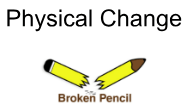
What kind of change is crushing a soda can?
a)
b)
47.

What kind of charge does each electron have?

a)

Positive charge

b)

Negative charge

c)

No charge