
 Worksheets
2nd 9 week Breakout
Total questions: 182
Worksheet time: 2hrs 13mins
What is the best definition for Limited Government?
The government's power is restricted
Powers are separated into 3 branches
Power is shared between the states and federal government
The people have power
Which of the following is the best definition for Consent of the Governed?
People have the power
People must approve of government's actions
Powers are separated between 3 branches of government
Each branch has power over the other
Which of the following is the best definition of Popular Sovereignty
The people hold the power in the government
Powers are divided and shared between the national government and the states
Powers are divided between 3 branches of government
The people must approve of the governments actions
What is the best definition for Rule of Law
People must approve of government's actions
The people have the power
The powers of government are limited
Everyone must follow the law
Which of the following is the best description of Separation of powers?
People have the power
Powers are divided between the national and state governments
Powers are divided among 3 branches of government
Branches have power over each other to keep each other from becoming too powerful
Which of the following is the best definition for Federalism?
Powers separated between 3 branches of government
Powers given only to the Federal Governments
Powers shared between the Federal government and the states
People have the power.
Which of the following is the best definition of Checks and Balances?
Power divided between 3 branches of government
Each branch has power over the other to keep them from becoming too powerful
It has to do with money and scales
Everyone must follow the law
Art.I, sec. 2 says, "the House of Representatives shall be composed of Members chosen every second Year by the People of the several states" what principle is represented in that section?
Federalism
Consent of the Governed
Limited Government
Popular Sovereignty
Art. II, sec. 2 says, "He (the president) shall have Power, by and with the Advice and Consent of the Senate, to make treaties." Which Constitutional Principle is best described in this passage ?
Separation of Powers
Checks and Balances
Consent of the Governed
Rule of Law
Art. VI says the constitution is the "Supreme Law of the Land." Which principle is best represented in this passage?
Popular Sovereignty
Federalism
Limited Government
Checks and Balances
What is the best definition for Limited Government?
The government's power is restricted
Powers are separated into 3 branches
Power is shared between the states and federal government
The people have power
Which of the following is the best definition for Consent of the Governed?
People have the power
People must approve of government's actions
Powers are separated between 3 branches of government
Each branch has power over the other
Which of the following is the best definition of Popular Sovereignty
The people hold the power in the government
Powers are divided and shared between the national government and the states
Powers are divided between 3 branches of government
The people must approve of the governments actions
What is the best definition for Rule of Law
People must approve of government's actions
The people have the power
The powers of government are limited
Everyone must follow the law
Which of the following is the best description of Separation of powers?
People have the power
Powers are divided between the national and state governments
Powers are divided among 3 branches of government
Branches have power over each other to keep each other from becoming too powerful
Which of the following is the best definition for Federalism?
Powers separated between 3 branches of government
Powers given only to the Federal Governments
Powers shared between the Federal government and the states
People have the power.
Which of the following is the best definition of Checks and Balances?
Power divided between 3 branches of government
Each branch has power over the other to keep them from becoming too powerful
It has to do with money and scales
Everyone must follow the law
Art.I, sec. 2 says, "the House of Representatives shall be composed of Members chosen every second Year by the People of the several states" what principle is represented in that section?
Federalism
Consent of the Governed
Limited Government
Popular Sovereignty
Art. II, sec. 2 says, "He (the president) shall have Power, by and with the Advice and Consent of the Senate, to make treaties." Which Constitutional Principle is best described in this passage ?
Separation of Powers
Checks and Balances
Consent of the Governed
Rule of Law
Art. VI says the constitution is the "Supreme Law of the Land." Which principle is best represented in this passage?
Popular Sovereignty
Federalism
Limited Government
Checks and Balances
Prints (or coins) Money
Executive
Legislative
Judicial
Enforces the law
Legislative
Judicial
Executive
Decides what a law means
Executive
Legislative
Judicial
Declares war
Executive
Legislative
Judicial
Includes the president, vice-president and cabinet
Executive
Legislative
Judicial
Divided into the House and Senate
Executive
Legislative
Judicial
Punish Pirates
Executive
Legislative
Judicial
Makes treaties with other countries
Executive
Legislative
Judicial
Can declare laws unconstitutional
Executive
Legislative
Judicial
Selected by the electoral college
Executive
Legislative
Judicial
Selected by popular vote
Executive
Legislative
Judicial
Appoints Supreme Court Justices, Federal judges, ambassadors and cabinet members
Executive
Legislative
Judicial
Establishes Post Offices
Executive
Legislative
Judicial
Makes a State of the Union address each year
Executive
Legislative
Judicial
Collects taxes
Executive
Legislative
Judicial
Match the following
Article I
The Legislative Branch (Congress)
Article II
The Executive Branch (President)
Article III
The Judicial Branch (Supreme Court)
Article IV
Relations among the States
Article V
Provisions for Amendments
Match the following
Article I
The Legislative Branch (Congress)
Article II
The Executive Branch (President)
Article III
The Judicial Branch (Supreme Court)
Article IV
Relations among the States
Article V
Provisions for Amendments
What did the British need after the French and Indian War?
More soldiers
More land
More money
More allies
What was one of the problems under the King mentioned in the document?
King taxed too little
King taxed too much
King was not powerful
King was too lenient
Which of the following was NOT a result of the British attempts to raise money through taxes?
Colonists' anger
Boston Tea Party
Increased British support
Protests
What solution did the Articles of Confederation provide for the problem of the King taxing too much?
New Government could not tax
Each state had 1 vote
No executive branch
No national court
How did the Constitution address the issue of the King being too powerful?
Congress may tax
Congress divided into House and Senate
Legislative, Executive, and Judicial Branches
Supreme Court appointed by Executive and confirmed by Legislative
How did the Articles of Confederation supposedly "fix" the problem of taxes?
How did the Articles of Confederation supposedly "fix" the problem of the king being too powerful?
Set up a system with 3 Presidents
Set up a system with no executive branch at all
Set up a system with a new king with limited power
Set up a system exactly like the one the British had
Select all of the following that were "real" solutions made by the Constitution
Congress had the power to tax
Each state received 1 vote in the new legislature
The government would have 3 branches: Leg, Exec and Judicial
All of the states would have to agree to amend
Signs bills into law
President
Congress
Supreme Court
writes laws
President
Congress
Supreme Court
vetoes bills and returns them to Congress
President
Congress
Supreme Court
hears disputes about laws
President
Congress
Supreme Court
decides whether a law is constitutional
President
Congress
Supreme Court
can override a veto with a large vote
President
Congress
Supreme Court
the legislative branch
President
Congress
Supreme Court
the executive branch
President
Congress
Supreme Court
the judicial branch
President
Congress
Supreme Court
Match the term with the branch of government
Writes laws
Vetoes or signs bills
Hears disputes about laws
What is the best definition for Limited Government?
The government's power is restricted
Powers are separated into 3 branches
Power is shared between the states and federal government
The people have power
Which of the following is the best definition for Consent of the Governed?
People have the power
People must approve of government's actions
Powers are separated between 3 branches of government
Each branch has power over the other
Which of the following is the best definition of Popular Sovereignty
The people hold the power in the government
Powers are divided and shared between the national government and the states
Powers are divided between 3 branches of government
The people must approve of the governments actions
What is the best definition for Rule of Law
People must approve of government's actions
The people have the power
The powers of government are limited
Everyone must follow the law
Which of the following is the best description of Separation of powers?
People have the power
Powers are divided between the national and state governments
Powers are divided among 3 branches of government
Branches have power over each other to keep each other from becoming too powerful
Which of the following is the best definition for Federalism?
Powers separated between 3 branches of government
Powers given only to the Federal Governments
Powers shared between the Federal government and the states
People have the power.
Which of the following is the best definition of Checks and Balances?
Power divided between 3 branches of government
Each branch has power over the other to keep them from becoming too powerful
It has to do with money and scales
Everyone must follow the law
Art.I, sec. 2 says, "the House of Representatives shall be composed of Members chosen every second Year by the People of the several states" what principle is represented in that section?
Federalism
Consent of the Governed
Limited Government
Popular Sovereignty
Art. II, sec. 2 says, "He (the president) shall have Power, by and with the Advice and Consent of the Senate, to make treaties." Which Constitutional Principle is best described in this passage ?
Separation of Powers
Checks and Balances
Consent of the Governed
Rule of Law
Art. VI says the constitution is the "Supreme Law of the Land." Which principle is best represented in this passage?
Popular Sovereignty
Federalism
Limited Government
Checks and Balances
Match the following
Article I
The Legislative Branch (Congress)
Article II
The Executive Branch (President)
Article III
The Judicial Branch (Supreme Court)
Article IV
Relations among the States
Article V
Provisions for Amendments
Prints (or coins) Money
Executive
Legislative
Judicial
Enforces the law
Legislative
Judicial
Executive
Decides what a law means
Executive
Legislative
Judicial
Declares war
Executive
Legislative
Judicial
Includes the president, vice-president and cabinet
Executive
Legislative
Judicial
Divided into the House and Senate
Executive
Legislative
Judicial
Makes treaties with other countries
Executive
Legislative
Judicial
Can declare laws unconstitutional
Executive
Legislative
Judicial
Collects taxes
Executive
Legislative
Judicial
Which of the following is elected through Popular Vote (meaning the people vote on them, the one with the most votes always wins)
Supreme Court
President
Congress
Which of the following keeps their job through good behavior (for life, as long as they do not get into trouble)?
Supreme Court
President
Congress
Which of the following is elected through the electoral college?
Supreme Court
President
Congress
Which law is supreme?
Federal
State
Which of the following is NOT part of the Preamble to the Constitution?
Establish Justice
Ensure Domestic Tranquility
Guarantee the right to vote
Secure the blessings of liberty to ourselves and our posterity
Who is known as a leader of the Federalists?
James Madison
Brutus
Montezuma
Benjamin Franklin
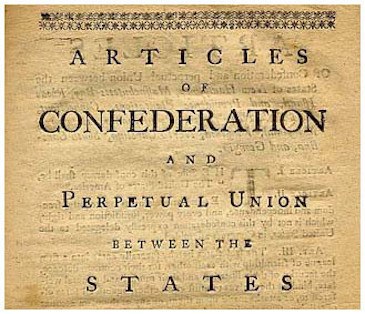
Federalists believed that the Articles of Confederation were a ________ and set up a ________ National Government.
Success, Strong.
Success, Weak.
Failure, Weak.
Failure, Strong.
The ___________ are for the ratification (approval) of the U.S Constitution.
Federalists
Anti-Federalists
Whiggs
Representatives
The ___________ are NOT for the ratification (approval) of the U.S Constitution.
Anti-Federalists.
Federalists.
Whiggs.
Supreme Court Justices.
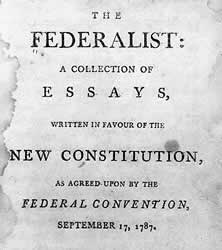
The "Federalist Papers" were written to:
Explain and convince the people into supporting the new U.S Constitution.
spark a new revolution among the American people against their government.
oppose a strong centralized government.
create a new monarchy.
Anti-Federalists were in favor of:
States Rights and the protection of individual rights.
A strong Central Government.
A Monarchy (King & Queen) to rule over the country.
a powerful National Government
How did the Federalists and Anti-Federalists "compromise" to ratify (approve) the U.S Constitution?
The added the Bill of Rights (First 10 Amendments)
They outlawed cruel and unusual punishment.
Ensured due process of the law.
The Federalists threatened the Anti-Federalists to war.
The Anti-Federalists wanted to:
ratify the new constitution and establish a powerful central government.
fix the Articles of Confederation.
Replace the Articles of Confederation.
get rid of strong State governments.
Which group wanted a strong president?
Federalists
Anti-Federalists
Who said, "the Constitution already contains a Bill of Rights"
Federalists
Anti-Federalists
Who said, "the Constitution is the Supreme Law of the Land, so the states will completely lose control?"
Federalists
Anti-Federalists
All of the following are parts of the Constitution that the Anti-Federalists disagreed with EXCEPT:
Elastic Clause
Supremacy Clause
Power to build a big army
Allowing the states to pick the President and the Senate
Allowing Congress to pass all laws necessary and proper to fulfill their duties is known as the
Supremacy Clause
Elastic Clause
Taxing Power
Electoral College
The part of the Constitution that forbids the states from passing laws that contradict with the federal government is called the
Supremacy Clause
Elastic Clause
Taxing Power
Electoral College
The states are, and should remain, the core of our republic. It is there that the people can be properly represented. When states have to bend to the central government's will, the people will pay with their liberty.
Whose argument is it? (a)
Anti-Federalist
Federalist
The supporters of the Constitution do not believe a listing of the rights of the people is necessary. They are wrong. We need a Bill of Rights to make sure the government doesn't take away our liberties.
Whose argument was it? (a)
Anti-Federalist
Federalist
The Constitution forbids creating titles of nobility like “Duke” or “King,” so the government will always belong to the people.
Federalist
Anti-Federalist
It will not be possible for the federal government to overpower the states because the states are a necessary part of the federal government.
Federalist
Anti-Federalist
The Federalist Papers, written by Alexander
Hamilton, John Jay, and James Madison, were
intended to
promote independence from Great Britain
persuade voters to keep the Articles of
Confederation
win support for ratification of the Constitution
endorse candidates running for Congress
What does, "with malice towards none, with charity for all", show us about Abraham Lincoln's plan for reconstruction?
He wanted to punish the Confederates.
He wanted to show forgiveness to Confederates.
He wanted to make it difficult for the south to rejoin.
Which amendment abolished slavery?
13th amendment
14th amendment
15th amendment
16th amendment
Which TWO describe the 14th amendment?
Everyone given equal protection
Granted former slaves the right to vote
Gave citizenship to former slaves
Abolished slavery
What does the "equal protection clause" in the 14th amendment ensure?
The right to self-defense.
Citizens given same rights no matter the race, no discrimination.
Immigrants are able to become citizens.
Women and men have the chance to vote
According to the 14th amendment, how does someone become a citizen of the United States?
Born in the United States.
Naturalized through a process.
Live in U.S. for 10 years.
Have a family member who is a citizen.
Which Reconstruction plan wanted to punish the South?
Abraham Lincoln's Plan
Andrew Johnson's Plan
Radical Republican's Plan
What was president Lincoln's plans for the South after the Civil War?
He wanted white men to have all the power in the south
He wanted to punish the south.
He wanted to help freedman by creating the Freedman's Bureau.
He wanted to heal, forgive, and rebuild the south.
Johnson's Plan was based on
The Constitution mention of governing new territories
The Constitutional power of pardoning those involved in war
The 13th Amendment's power to guarantee freedom
Why was Johnson unable to challenge Congress's plan in court?
Because Congress overrode his veto
Because Congress was able to propose and the states ratified the 14th Amendment
Because Congress passed the 1867 Reconstruction acts
Because the Supreme Court was not in session
What was part of the motivation for Congress to propose and ratify the 15th Amendment?
Black voters would help Republicans keep a majority
Women were pressuring Congress for voting rights
It would prevent the passage of Jim Crow Laws
According to Lincoln's plan, what was the status of the Southern states?
They were considered foreign nations
They had never really left the US
They were independent territories
They were under military occupation
What does the term "override" mean in the context of Congress and a presidential veto?
To accept the veto.
To ignore the veto.
To reverse the veto.
To send the veto to the Supreme Court.
What was the purpose of the 1867 Reconstruction Acts?
To support the Confederacy
To punish people that supported the Confederacy
To abolish slavery
To expand the Union
Which principle allows each branch of government to monitor and limit the functions of the other branches?
Separation of Powers
Checks and Balances
Federalism
Popular Sovereignty
What phrase did Lincoln use to describe his attitude towards the defeated states?
"With anger toward all"
"With malice toward none"
"With justice for all"
"With peace and harmony"
What was the significance of ratifying the 13th amendment in Johnson's Plan?
It abolished slavery
It increased state taxes
It expanded state borders
It reduced federal power
What principle was demonstrated when Johnson's veto was overridden?
Separation of Powers
Judicial Review
Checks and Balances
Federalism
Which amendment is used in court to defend against unfair treatment by law?
13th Amendment
14th Amendment
15th Amendment
19th Amendment
What did the 15th Amendment prohibit?
Denying the right to vote based on race
Denying the right to vote based on income
Denying the right to vote based on gender
Denying the right to vote based on age
What was a common method used by southern states to prevent Black voters from registering?
Offering free transportation to polls
Providing free meals on election day
Imposing poll taxes and literacy tests
Encouraging early voting
Which amendment banned racial discrimination in voting?
17th Amendment
15th Amendment
14th Amendment
12th Amendment
Which amendment provides for the popular election of U.S. senators, changing the original constitutional design?
15th Amendment
17th Amendment
19th Amendment
23rd Amendment
Which amendment banned poll taxes in national elections?
19th Amendment
23rd Amendment
24th Amendment
26th Amendment
Which amendment abolished slavery?
15th Amendment
17th Amendment
13th Amendment
14th Amendment
Who wanted to be easiest on the South after the Civil War?
Abraham Lincoln
Ulysses S. Grant
Andrew Johnson
Jefferson Davis
Who are considered citizens of the United States according to Section 1 of the 14th Amendment?
Only those born in the United States
Only those naturalized in the United States
All persons born or naturalized in the United States
Only those who have lived in the United States for over 10 years
What must not be deprived from any person without due process of law?
Freedom of speech
Life, liberty, or property
The right to bear arms
The right to privacy
What does the term "persons born in US" refer to in the 14th Amendment?
Only children of US citizens
All individuals born on US soil
Only children of immigrants
Only children of former slaves
Which group was specifically intended to gain citizenship under the 14th Amendment?
Native Americans
Former slaves
Women
Minors
What does the 14th Amendment ensure for former slaves?
Employment
Citizenship
Education
Housing
How are each states electoral numbers determined?
number of senators it has
number of representatives it has
assigned by Congress
number of representatives and senators it has
President and Vice President are elected through the process of the electoral college. Which amendment to the Constitution adresses is this?
12th
10th
14th
16th
What is the least number of electoral votes that a state may have.
1
2
3
What is the number needed to be elected President?
260
270
269
538
This amendment moved the presidential inauguration from March to January 20th
18th Amendment
20th Amendment
22nd Amendment
25th Amendment
Presidential succession and disability is dealt with in the ______ Amendment
24th
26th
25th
27th
Approved in 1971, the 26th Amendment did this
Allowed Congress to set their own pay scale
Handled presidential succession
Allowed DC a chance to vote in presidential elections
Allowed 18 year olds the right to vote
Which Constitutional Amendment sets the President's terms?
21st Amendment
18th Amendment
19th Amendment
22nd Amendment
It is because of this president that the 22nd Amendment was ratified
Washington
Roosevelt
Eisenhower
Trump
This president's example of running for two terms was followed for over 100 years
Washington
Roosevelt
Eisenhower
Trump
Lame Duck refers to
A president-elect that has just been elected and waiting to take office
A senator that is running for re-election
A president that is running for re-election
A president that is not running for re-election and whose term is almost over
Which amendment is called the "lame duck" amendment?
12th
20th
22nd
25th
Double Jeopardy
The protection from being tried twice for the same crime
Due Process
Fair treatment under the law
Indictment
Having charges brought against a person
Grand Jury
Decides if there is enough evidence for a trial
Petition
To ask the government for changes
The right to call witnesses and cross examine witness against you is part of which amendment?
(a)
The protection from cruel and unusual punishment is part of which amendment?
(a)
Which of the following is NOT necessary if the government wants to search someone's house?
Approval from a judge
Neutral witness to be sure police follow law
Specific place to be searched
Specific items to be searched for
A subpoena is an order to testify, it is possible thanks to which amendment?
4th
5th
6th
7th
All of the following are part of the 6th Amendment EXCEPT
Right to a lawyer
Right to confront witnesses against you
Right to Not testify against yourself
Right to call witnesses to testify for you
Just Compensation
The amount of money the government must pay if they take your land
Eminent Domain
The principle that the government owns all land
Grand Jury
Decides if there is enough evidence to go to trial
Self-Incrimination
To testify against yourself