
 Worksheets
GOV | The Judicial Branch Worksheet Extraction
Total questions: 20
Worksheet time: 11mins
Matching – match the description that identifies the key term (Set 1). Terms: Appeal; Civil Trial; Criminal Trial; Dual-Court System; Interpret the Law. Descriptions: To ask a higher court to overturn a trial court decision; A court case between individuals over damages; A court case where a law has been broken; Our system of national and state courts; The main job of the judicial branch.
Appeal
To ask a higher court to overturn a trial court decision
Civil Trial
A court case between individuals over damages
Criminal Trial
A court case where a law has been broken
Dual-Court System
Our system of national and state courts
Interpret the Law
The main job of the judicial branch
Matching – match the description that identifies the key term (Set 2). Terms: Judicial Branch; Judicial Review; Jurisdiction; Supreme Court; Verdict. Descriptions: Our nations court system; The power to declare laws unconstitutional; The power to hear a court case; The only court listed in the US Constitution; The decision reached by a jury.
Judicial Branch
Our nations court system
Judicial Review
The power to declare laws unconstitutional
Jurisdiction
The power to hear a court case
Supreme Court
The only court listed in the US Constitution
Verdict
The decision reached by a jury
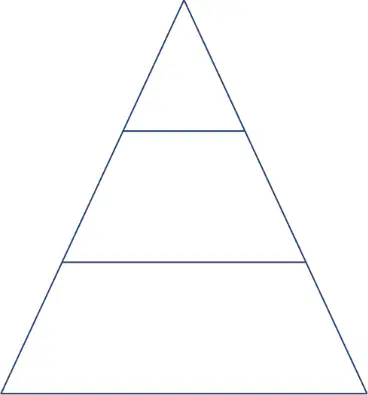
Using the three-tier triangle diagram of the federal courts, match each level to the correct court name. Levels: Top level; Middle level; Bottom level.
Top level
Supreme Court
Middle level
Courts of Appeals
Bottom level
District Courts
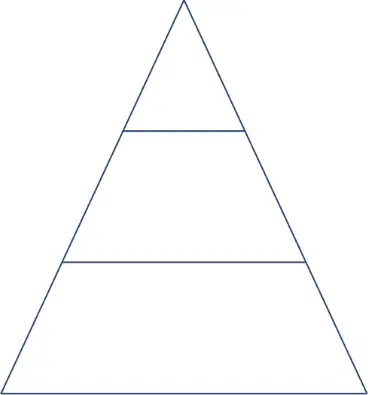
Match each federal court level to the typical number of judges hearing a case at that level.
Supreme Court
9 justices on the case
Courts of Appeals
Panel of 3 judges
District Courts
1 judge presiding
Which court levels primarily exercise appellate jurisdiction? Select all that apply.
Supreme Court
Courts of Appeals
District Courts
Small Claims Courts
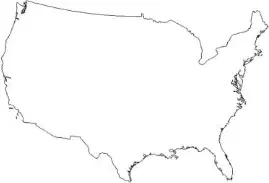
What title best labels a chart that shows Federal Courts on a map of the United States and State Courts on a map of Florida?
Dual-court system
Separation of powers
Bill of Rights
Due process

What “check” does the Judicial Branch have on the other two branches, and what court case established this check?
The power of judicial review; Marbury v. Madison (1803)
The power to veto laws; McCulloch v. Maryland (1819)
The power to impeach officials; United States v. Nixon (1974)
The power to approve appointments; Plessy v. Ferguson (1896)
What is the primary function of the Supreme Court in the United States?
To create laws
To interpret the Constitution
To enforce laws
To manage state courts
The Supreme Court has the power of Judicial Review. What is Judicial Review?
when the Supreme Court enforces the laws of the Legislative Branch
when the Supreme Court decides if a law or executive action is constitutional or not
when the Supreme Court vetoes a Bill from Congress
when the Supreme Court creates a new law
What is one way the judicial branch checks the power of the executive branch?
By appointing the President
By declaring executive actions unconstitutional
By controlling the military
By writing executive orders
The power of the Supreme Court to decide whether laws follow the constitution or not
Opinion
Appellate Jurisdiction
Judicial Review
Trail Court
Can the Georgia Supreme Court rule that a Georgia law is unconstitutional?
Yes
No
Article III of the Constitution covers what Branch
Legislative
Executive
Judicial
Loecial
Which judges serve unlimited terms?
federal
municipal
state
appellate
The members of the Supreme Court in the (a) serve a lifetime term and interpret the laws.

How many justices are on the Supreme Court?
6
9
12
15
Which branch of government do 9 justices lead?
Legislative
Executive
Judicial
What is the judicial branch?
It is comprised of the Supreme Court AND other Federal Courts
It's only the Supreme Court.
It's the judges.
The Senate and the House of Representative
How long may Supreme Court Justices serve?
for terms varying from four to eight years.
for 15-year terms.
for 12-year terms.
for life unless impeached, retire or die.

