
 Worksheets
Umbelliferae (Apiaceae) Family
Total questions: 98
Worksheet time: 49mins
What is another name for the Umbelliferae family?
Rosaceae
Apiaceae
Fabaceae
Poaceae
How many genera are included in the Umbelliferae family?
100
250
434
600
How many species are included in the Umbelliferae family?
1200
2500
3700
5000
The plants in the Umbelliferae family are (a) , biennial or perennial herbs.
Plants in the Umbelliferae family are mostly aromatic with (a) stems.
The flowers of the Umbelliferae family are nearly always aggregated in terminal (a) , the defining characteristics of this family.
The fruit of the Umbelliferae family is called (a) .
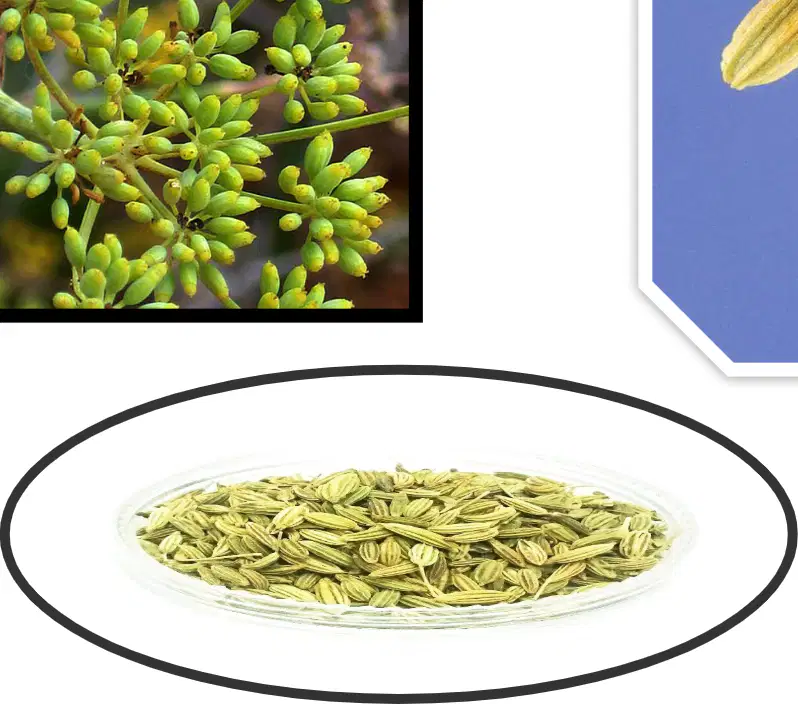
What is the family name of the plant shown in the images?
Umbelliferae
Solanaceae
Fabaceae
Poaceae
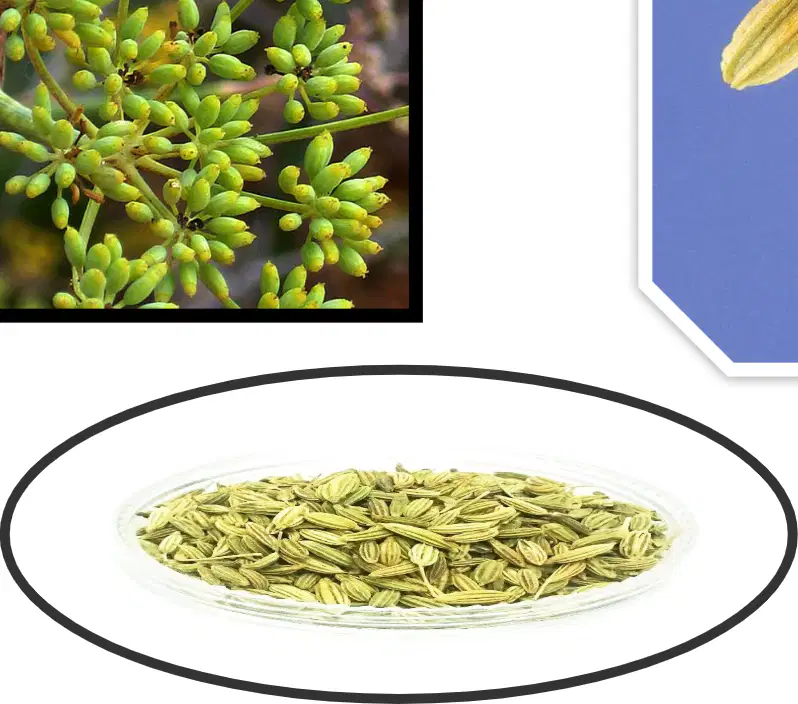
What is the common name of the plant shown in the images?
Fennel
Cumin
Coriander
Mustard
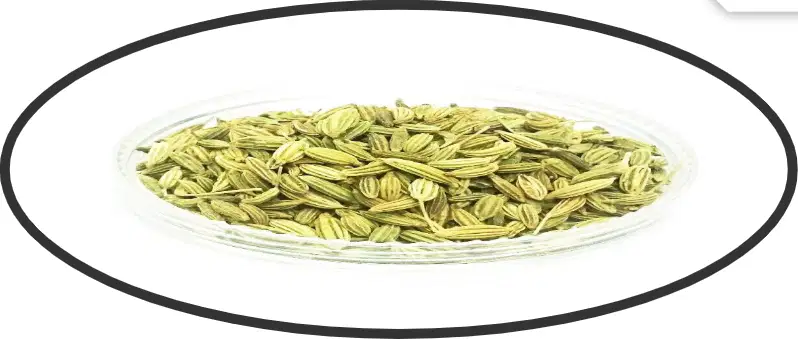
Fill in the blank: The seeds shown in the close-up image are (a) seeds.
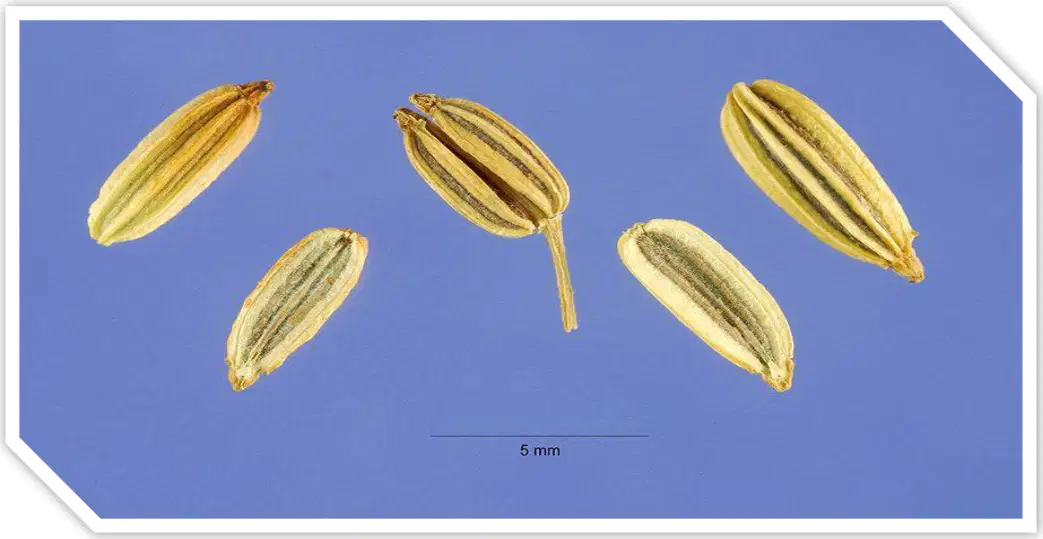
Fill in the blank: The scale shown in the close-up image is (a) mm.
What are the synonyms of Fennel?
Fennel fruit, Saunf, Sweet fennel
Cumin, Coriander, Dill
Basil, Thyme, Oregano
Cardamom, Clove, Cinnamon
What is the botanical origin of Fennel?
Foeniculum vulgare
Cuminum cyminum
Coriandrum sativum
Anethum graveolens
Fennel belongs to which family?
Umbelliferae
Lamiaceae
Solanaceae
Poaceae
Which part of Fennel is used?
Dried ripe fruits
Leaves
Roots
Flowers
Fennel mainly contains 4-5% of volatile oils such as (a) , Fenchone and phenolic ester.
Fennel also contains Fixed oil ______% and Proteins ______%.
(a)
Which of the following is NOT a use of Fennel?
Stomachic
Aromatic
Diuretic
Antibiotic
Fennel can increase production of bile, treat infant colic, and has antimicrobial & anti-inflammatory properties.
True
False
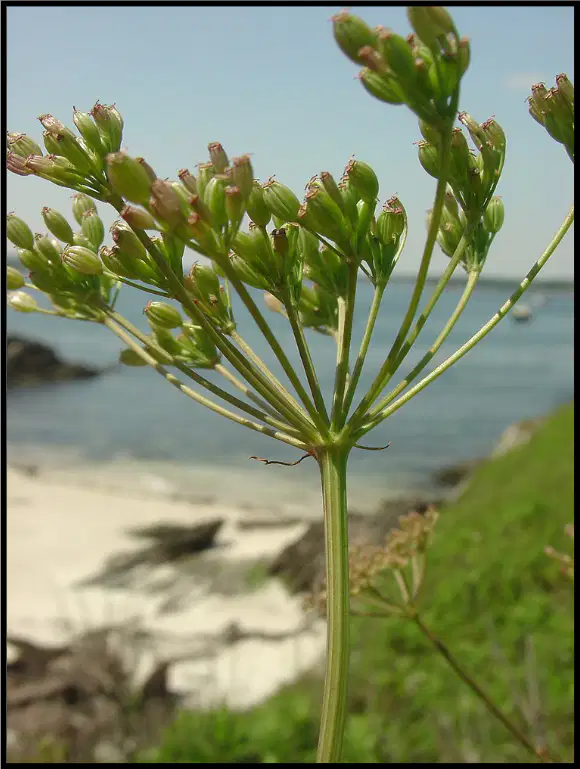
Look at the image of the plant shown. What is the name of this plant?
Carum
Basil
Mint
Thyme
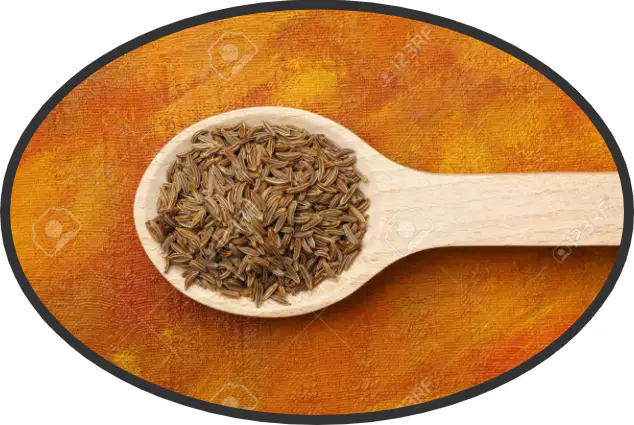
Look at the image of the seeds shown in the wooden spoon. What are these seeds called?
Carum seeds
Sunflower seeds
Pumpkin seeds
Sesame seeds
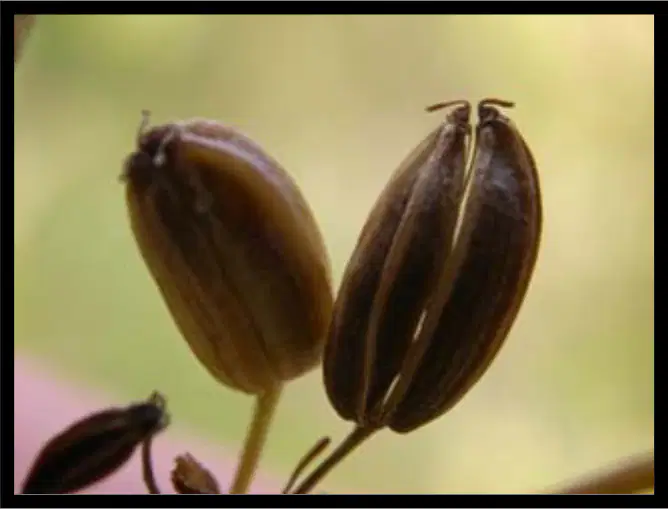
Fill in the blank: The image shows the (a) of the Carum plant.
What are the synonyms of Carum/Caraway?
(a)
What is the botanical origin of Carum/Caraway?
(a)
To which family does Carum/Caraway belong?
(a)
Which part of Carum/Caraway is used?
(a)
Which of the following is NOT a constituent of Carum/Caraway?
Carvone
Dihydrocarvone
Limonene
Glucose
Carum/Caraway also contains which of the following?
Fixed oils
Proteins
Calcium oxalate
All of the above
What are the uses of Carum/Caraway fruit and oil?
(a)
Carum/Caraway is recommended in which conditions?
(a)
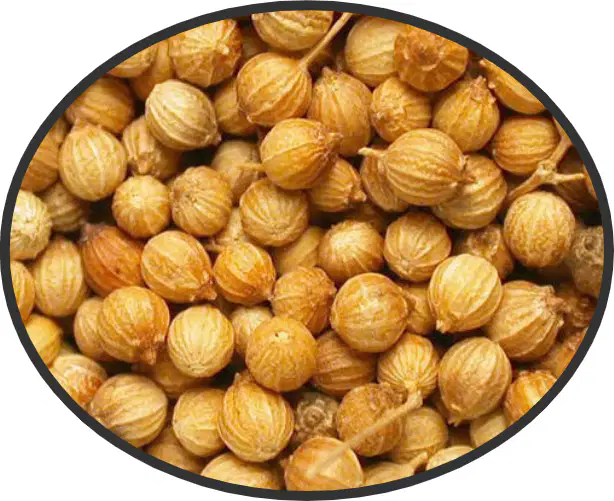
Look at the image of the seeds on the right. What are these seeds called?
Mustard seeds
Coriander seeds
Cumin seeds
Fennel seeds
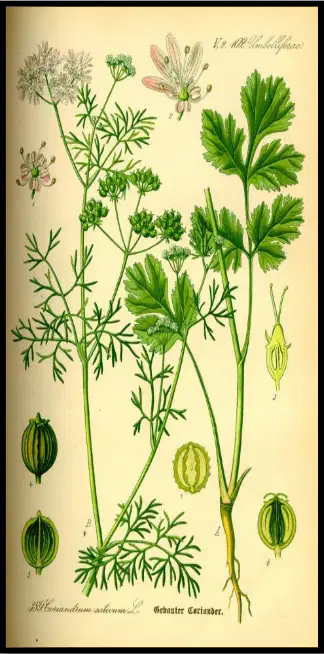
Observe the plant shown in the center image. What is the name of this plant?
Parsley
Coriander
Mint
Basil
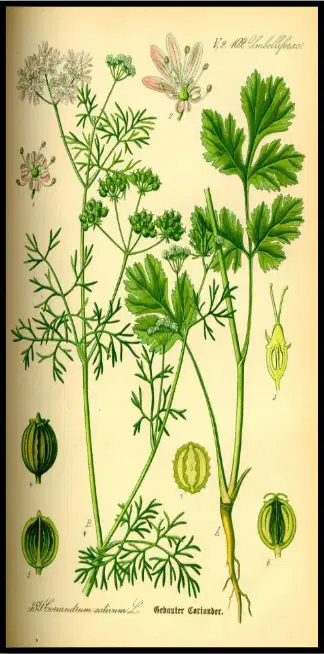
Fill in the blank: The plant shown in the images is called (a) .
What are the synonyms for Coriander?
Coriender fruit, Dhaniya
Mint, Pudina
Basil, Tulsi
Fennel, Saunf
What is the botanical origin of Coriander?
Corianderum sativum
Mentha piperita
Ocimum basilicum
Foeniculum vulgare
Fill in the blank: The family of Coriander is (a) .
Which part of the Coriander plant is used?
Leaves
Dried ripe fruit
Roots
Flowers
Coriander fruit contains which volatile oils?
Linalool (Coriandrol), borneol, and pinene
Menthol, thymol, and eugenol
Citral, limonene, and camphor
Anethole, carvone, and cineole
Fill in the blank: Coriander also contains fixed oils, (a) , tannins and mucilages etc.
Coriander is also used as refrigerant, tonic, appetizer, diuretic and stomachic.
True
False
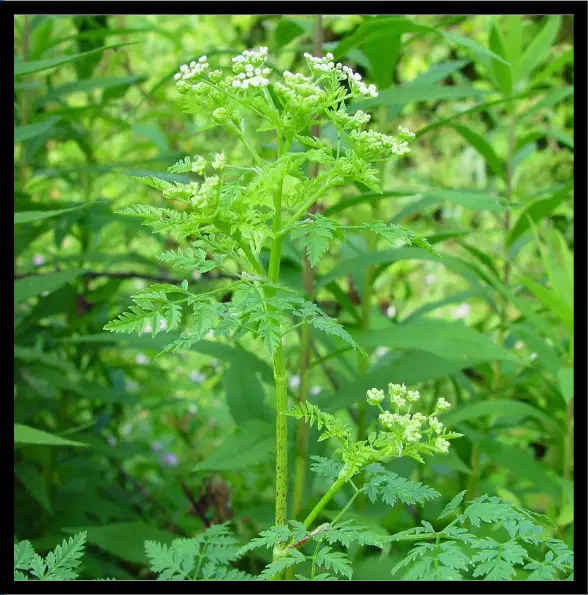
What is the name of the plant shown in the images?
Conium
Dandelion
Mint
Basil
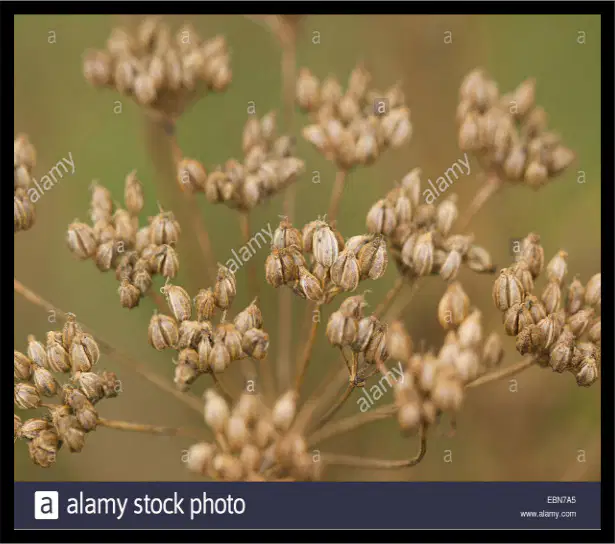
Fill in the blank: The seeds shown in the top middle and right images belong to the plant called (a) .
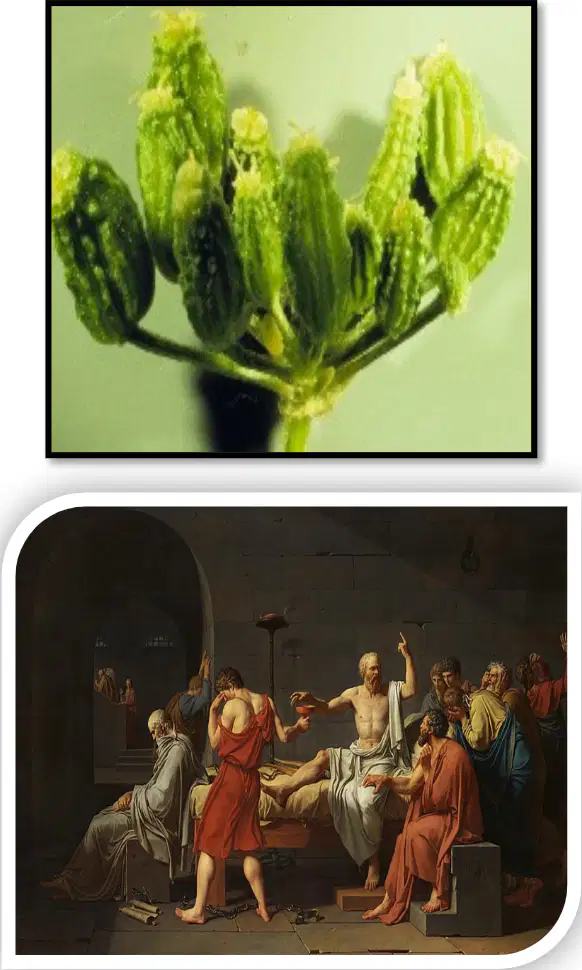
Which plant is historically known for its use as a poison, as depicted in the bottom left painting?
Conium
Rose
Sunflower
Lavender
Fill in the blank: The main topic of this worksheet is (a) .
What are the synonyms of Conium?
Poison hemlock, Shekran/Shekran zahar
Nightshade, Belladonna
Foxglove, Digitalis
Henbane, Hyoscyamus
What is the botanical origin of Conium?
Conium maculatum
Atropa belladonna
Digitalis purpurea
Hyoscyamus niger
Which family does Conium belong to?
Umbelliferae
Solanaceae
Lamiaceae
Fabaceae
Fill in the blank: The part used of Conium is (a) .
Which alkaloids are present in Conium?
Coniine, methyl coniine
Atropine, scopolamine
Digitoxin, digoxin
Hyoscyamine, scopolamine
Conium is used as ________ (select all that apply):
Antispasmodic
Antidepressant
Anodyne in tetanus and convulsions
All of the above
Conium can be used as an anticancer agent because it causes apoptosis of cancerous cells.
True
False
What is the toxicity of Conium due to? Choose the correct option.
Coniine
Atropine
Digitoxin
Hyoscyamine
Fill in the blank: Due to high potency, the ingestion of small doses of Conium can easily result in (a) and death.
For an adult, ingestion of more than _______ of coniine may be fatal.
10mg
50mg
100mg (0.1mg)
500mg

Which of the following is a benefit of Asafoetida?
Gut health & Relaxant effect
Causes headaches
Increases blood sugar
Reduces memory

Asafoetida is known for its (a) activity related to digestion.

Asafoetida has antimicrobial and anticancer activity.
True
False

Which of the following is NOT a benefit of Asafoetida?
Neuroprotective effect
Memory enhancing activity
Causes liver damage
Hepatoprotective effect

Fill in the blank: Asafoetida has a (a) effect on memory.

Asafoetida is used for its neuroprotective effect.
True
False
What are the synonyms of Asafoetida?
Devil’s drug, Food of god, Hing
Garlic, Onion, Ginger
Turmeric, Saffron, Cardamom
Pepper, Clove, Cinnamon
What is the botanical origin of Asafoetida?
Ferula foetida
Curcuma longa
Piper nigrum
Zingiber officinale
To which family does Asafoetida belong?
Umbelliferae
Solanaceae
Lamiaceae
Poaceae
Fill in the blank: The part used of Asafoetida is (a) obtained by incision from living rhizomes.
Which of the following are constituents of Asafoetida?
Volatile oils (4-5%), resins (40-65%), gums (25%)
Starch, protein, fat
Water, sugar, salt
Alkaloids, tannins, flavonoids
What is the main constituent of oil in Asafoetida?
Isobutylpropyldisulphide
Eugenol
Menthol
Limonene
Fill in the blank: Resin of Asafoetida consists of esters of (a) , ferulic acid and free ferulic acid.
Asafoetida contains sulphur compounds responsible for garlic-like odor.
True
False
Which of the following are uses of Asafoetida?
Carminative, expectorant, antispasmodic, laxative, and flavoring agent
Antipyretic, analgesic, antibiotic
Antifungal, antiviral, antiseptic
Sedative, hypnotic, anesthetic
Asafoetida is used in chronic bronchitis and whooping cough.
True
False
Apocynaceae: This family includes about how many genera and species?
100 genera and 500 species
250 genera and 2000 species
50 genera and 100 species
500 genera and 2500 species
Apocynaceae: Which of the following is a distinguishing feature of plants in this family?
Only aquatic plants
Twiners, woody climbers, erect herbs, shrubs, and trees
Only desert plants
Only annual herbs
Apocynaceae: The flowers in this family are (a)
Apocynaceae: The fruit in this family is a (a) ?
The plants in this family can be twiners, woody climbers, erect herbs, shrubs, and trees.
True
False
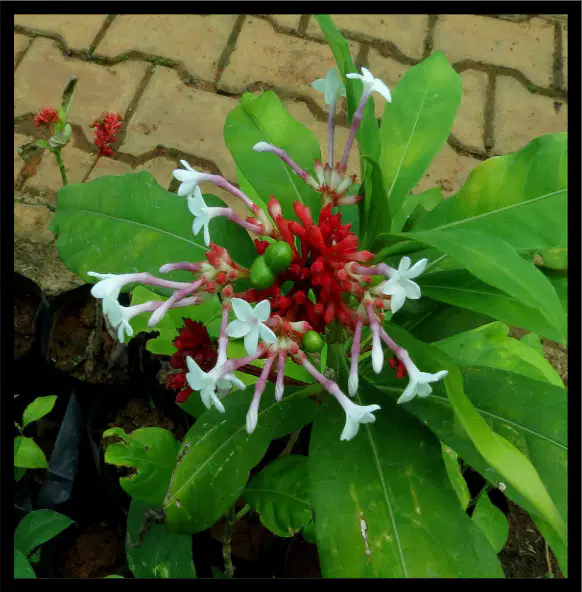
What is the name of the plant shown in the image?
Rauwolfia
Tulsi
Neem
Aloe Vera
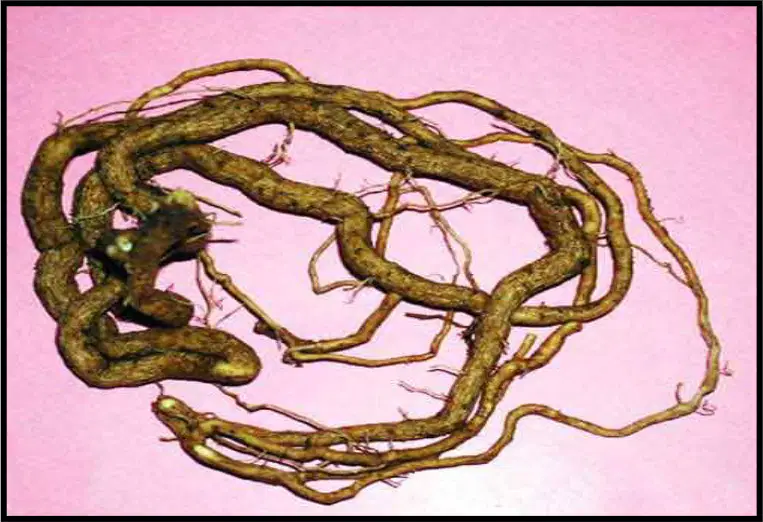
What part of the Rauwolfia plant is shown in the image?
Leaf
Root
Flower
Stem
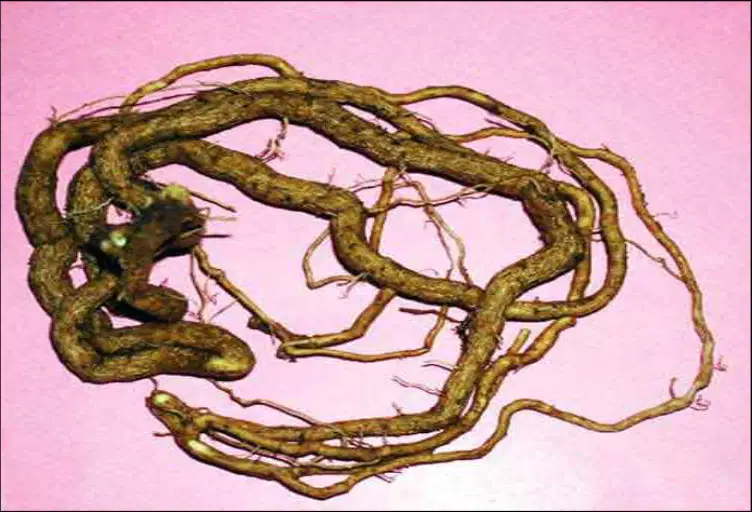
Fill in the blank: The product shown in the image is made from (a) .
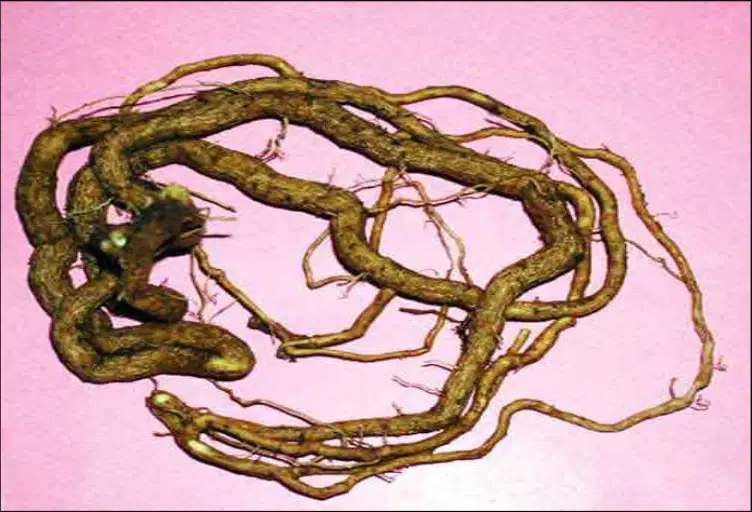
What is one medicinal use of Indian Snake Root (Sarpagandha) as shown in the image?
A) Blood pressure control
B) Pain relief
C) Skin care
D) Digestion
What are the synonyms of Rauwolfia?
Indian snake roots, Choota chand
Dried roots, Ajmaline
Apocynaceae, Yohimbine
Reserpine, Serpentine
What is the botanical origin of Rauwolfia?
Rauwolfia serpentina
Apocynaceae
Reserpine
Yohimbine
Which family does Rauwolfia belong to?
Apocynaceae
Dried roots
Serpentine
Choota chand
Which part of Rauwolfia is used?
Dried roots
Leaves
Flowers
Seeds
Fill in the blank: More than 80 (a) have been isolated from Rauwolfia.
Name any two prominent alkaloids found in Rauwolfia.
Reserpine and Ajmaline
Morphine and Codeine
Quinine and Atropine
Caffeine and Nicotine
What are the uses of Rauwolfia?
Hypnotic, sedative, and anti hypertensive drug
Pain relief only
Antibiotic
Antifungal
Rauwolfia is specific for insanity, reduces blood pressure, and cures pain due to affections of the bowels.
True
False
Rauwolfia is employed in certain neuropsychiatric disorders.
True
False
Fill in the blank: (a) is antihypertensive and tranquilizer.
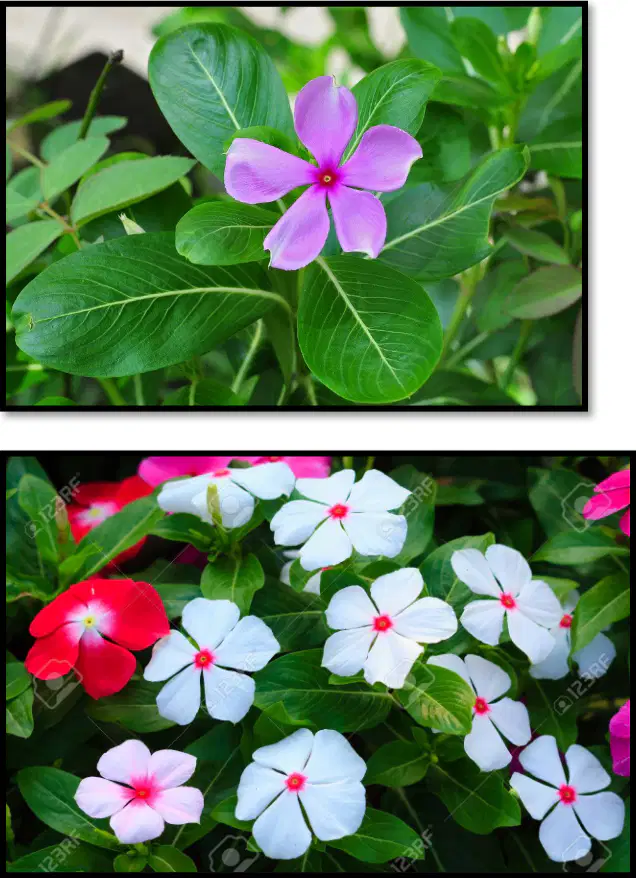
What is the name of the plant shown in all the images?
(a)
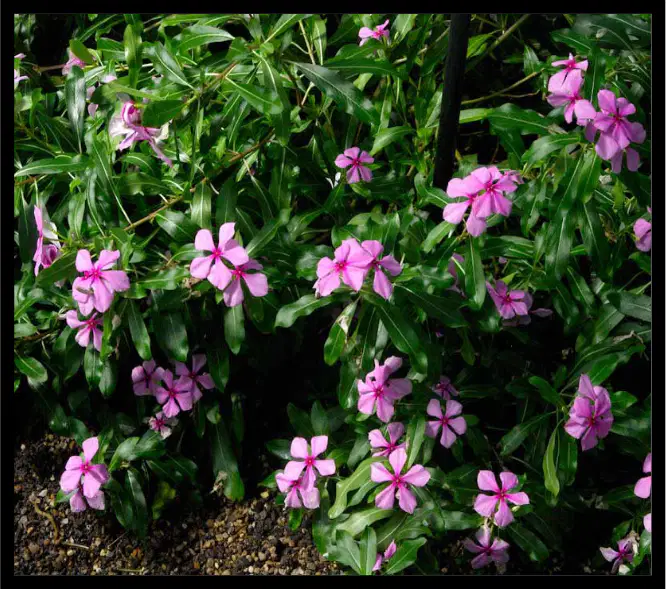
What is the scientific name of the plant shown in the bottom right diagram?
A) Catharanthus roseus
B) Rosa indica
C) Hibiscus rosa-sinensis
D) Nelumbo nucifera
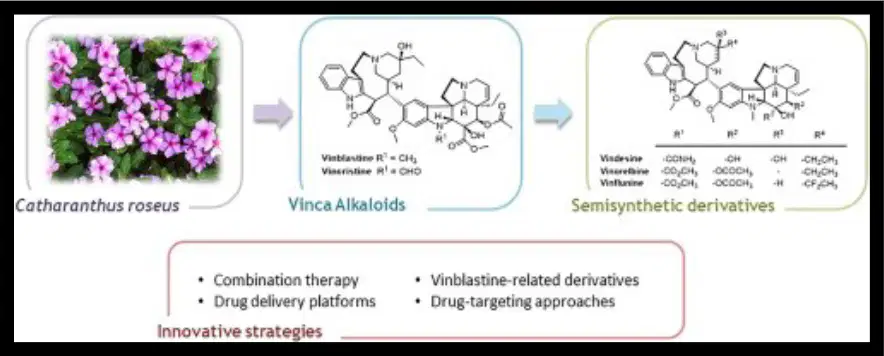
Which type of alkaloids are derived from Catharanthus roseus as shown in the diagram?
Vinca Alkaloids
Morphine Alkaloids
Quinine Alkaloids
Atropine Alkaloids
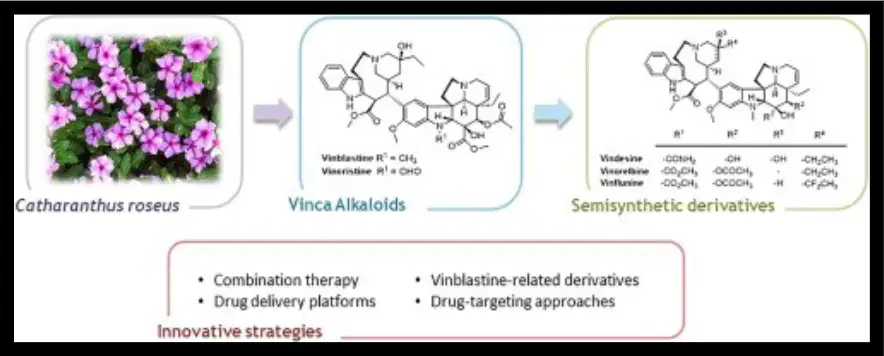
Fill in the blank: Vinblastine and Vincristine are examples of (a) alkaloids derived from Catharanthus roseus.
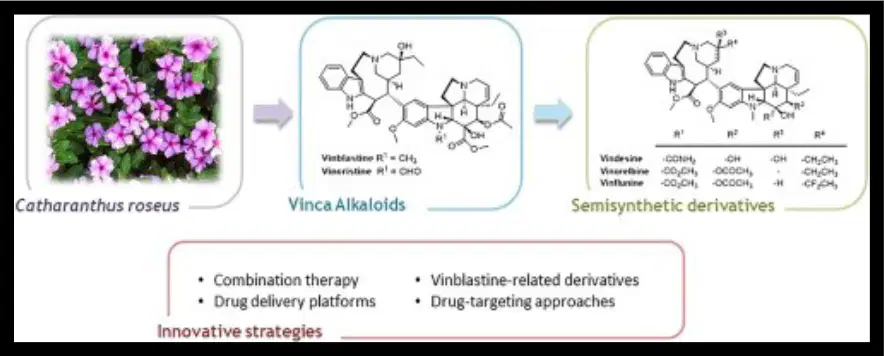
Which of the following is NOT listed as an innovative strategy in the diagram?
Combination therapy
Drug delivery platforms
Drug-targeting approaches
Genetic modification
What are the synonyms of Catharanthus / Vinca?
Vinca, Madagascar, Seda bahar
Rose, Lily, Jasmine
Mint, Basil, Thyme
Sunflower, Daisy, Tulip
What is the botanical origin of Catharanthus / Vinca?
Catharanthus roseus, Vinca rosea
Rosa indica, Hibiscus rosa-sinensis
Ocimum sanctum, Mentha piperita
Azadirachta indica, Curcuma longa
Which family does Catharanthus / Vinca belong to?
Apocynaceae
Fabaceae
Solanaceae
Lamiaceae
Fill in the blank: The part used of Catharanthus / Vinca is (a) .

