
 Worksheets
Labiatae/Volatile Oil Containing Family Introduction
Total questions: 18
Worksheet time: 9mins
A botanist examines flowers of a mint plant and records symmetry and sex. Which combination aligns with typical Labiatae characteristics?
Zygomorphic and hermaphrodite flowers
Actinomorphic and unisexual flowers
Zygomorphic and unisexual flowers
Actinomorphic and hermaphrodite flowers
Which botanical name correctly corresponds to peppermint shown in the images?
Mentha piperita
Mentha arvensis
Ocimum basilicum
Salvia officinalis
Which constituent is predominant in peppermint volatile oil?
Menthol between fifty and ninety percent
Linalool around ten to twenty percent
Thymol nearly forty to sixty percent
Eugenol approximately thirty percent
A patient reports nausea and flatulence. Which peppermint-related use aligns with this presentation?
Antimicrobial broad-spectrum therapy
Carminative and stomachic actions
Hemostatic and astringent effects
Sedative and hypnotic properties
Which botanical name correctly identifies the plant commonly known as thyme?
Thymus citriodorus
Thymus serpyllum
Thymus albus
Thymus vulgaris
Which major volatile oil constituent most closely accounts for thyme’s antiseptic activity?
Cymene mainly
Pinene primarily
Tannins chiefly
Thymol predominantly
A clinician seeks a herbal agent useful against hookworm while also acting as a carminative. Which choice best fits these criteria?
Ginger rhizome
Chamomile flowers
Peppermint leaves
Thyme dried tops
Identify the principal volatile constituent responsible for the characteristic aroma in spearmint leaves shown in the images.
Eucalyptol predominance
Menthol in high proportion
Thymol dominance
Carvone as major component
Which set correctly matches spearmint with its botanical origin, plant family, and primary part used?
Mentha spicata, Labiatae, dried leaves
Mentha piperita, Rutaceae, whole plant
Mentha spicata, Apiaceae, fresh stems
Rosmarinus officinalis, Lamiaceae, flowers
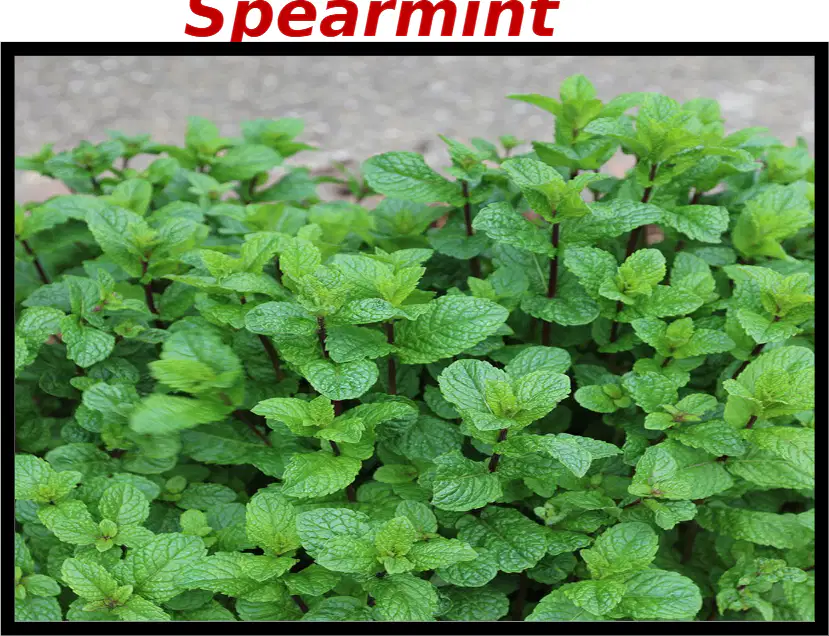
A product developer wants a natural ingredient that is both carminative and suitable as a flavoring agent in teas. Which option best fits these needs as depicted?
Ginger for antiemetic activity
Clove owing to strong analgesia
Camphor because it is antiseptic
Spearmint due to carminative uses
Which botanical name correctly identifies the plant commonly called garden sage and meadow sage?
Salvia officinalis
Salvia divinorum
Salvia sclarea
Salvia miltiorrhiza
Which pair lists major volatile oil constituents found in Salvia’s dried leaves?
Linalool and camphor
Pinene and thujone
Menthol and eugenol
Cineole and safrole

A pharmacist plans to formulate an herbal mouth rinse and a fatigue-relief tea. Which single herb from the images best fits both uses?
Salvia officinalis dried leaves
Matricaria chamomilla flowers
Mentha piperita leaves
Zingiber officinale rhizome
Identify the primary volatile oil constituent in Ocimum sanctum that contributes most to its pharmacological activity.
Eugenol predominates in Ocimum sanctum oil
Citral predominates in Ocimum sanctum oil
Thymol predominates in Ocimum sanctum oil
Menthol predominates in Ocimum sanctum oil
Which plant part of Ocimum is most commonly processed for medicinal and flavoring purposes?
Fresh flowers are primarily processed
Dried leaves are primarily processed
Root rhizomes are primarily processed
Green stems are primarily processed
A herbalist plans a blend for cough, cold, and gastric discomfort using Ocimum. Which combination best aligns with its documented actions?
Anthelmintic, laxative, nephroprotective, vesicant
Hemostatic, sedative, cardiotonic, emetic
Expectorant, antiseptic, diaphoretic, spasmolytic
Photosensitizer, depurative, antidiabetic, rubefacient

Which visual trait best helps identify Ocimum basilicum (Neyazboo) in the left diagram?
Round, woody stems with solitary flowers
Flattened, silver stems with spiky flowers
Hollow, green stems with pendant flowers
Square, purplish stems with clustered flowers
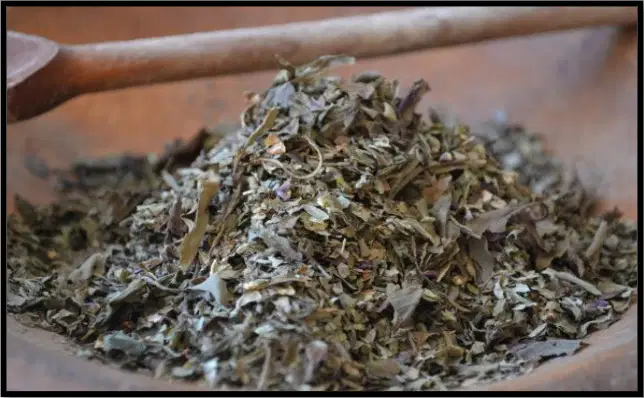
In the right diagram, what processing state of Neyazboo is depicted and how might that affect identification?
Dried leaves and flowers, reduces color cues
Fresh whole plant, enhances leaf gloss
Pressed specimen, preserves stem shape
Frozen sprigs, increases trichome visibility