
 Worksheets
Science Worksheet 1 — Grade 3
Total questions: 84
Worksheet time: 42mins
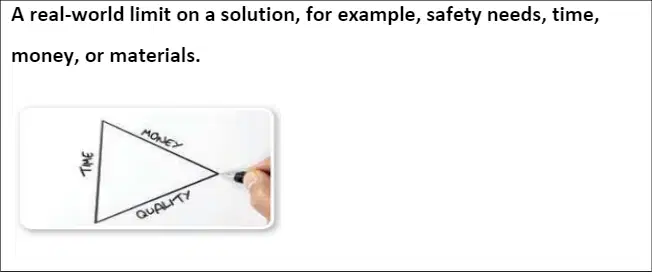
A real-world limit on a solution, for example, safety needs, time, money, or materials.
Engineer
Technology
Criteria
Constraint
The desirable features of a solution.
Engineer
Technology
Criteria
Constraint
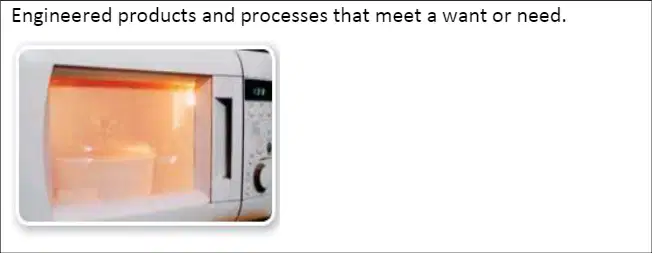
Engineered products and processes that meet a want or need.
Engineer
Technology
Criteria
Constraint
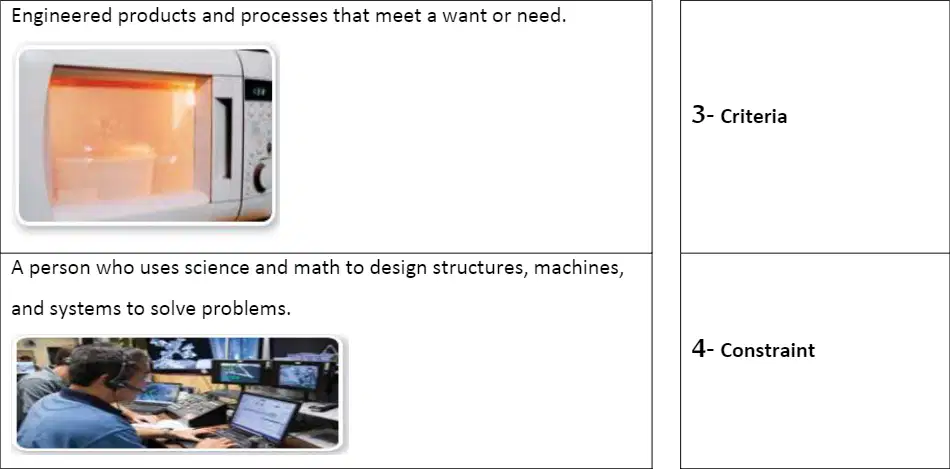
A person who uses science and math to design structures, machines, and systems to solve problems.
Engineer
Technology
Criteria
Constraint
What do engineers do?
Build houses
Design solutions to problems
Cook food
What is a backpack used for?
To hold water
To carry things
To play games
What do we call the features we want in a solution?
Constraints
Criteria
Problems
What is a constraint?
Something you want
A limit on resources
A type of game
What can help keep plants watered?
A blanket
An irrigation system
A toy
What is technology?
A type of plant
A human-made tool or system
A kind of food
What do you need to do before designing a solution?
Define (identify) the problem
Start building
Go outside
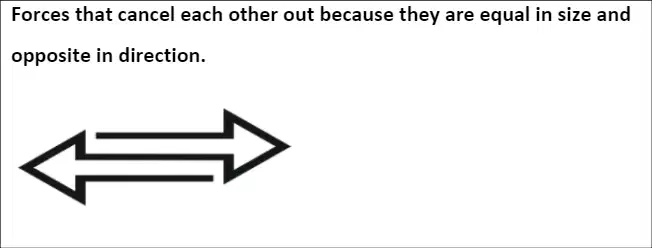
Match the following by choosing the correct term: Forces that cancel each other out because they are equal in size and opposite in direction.
Balanced Forces
Unbalanced Forces
Net Force
Gravity
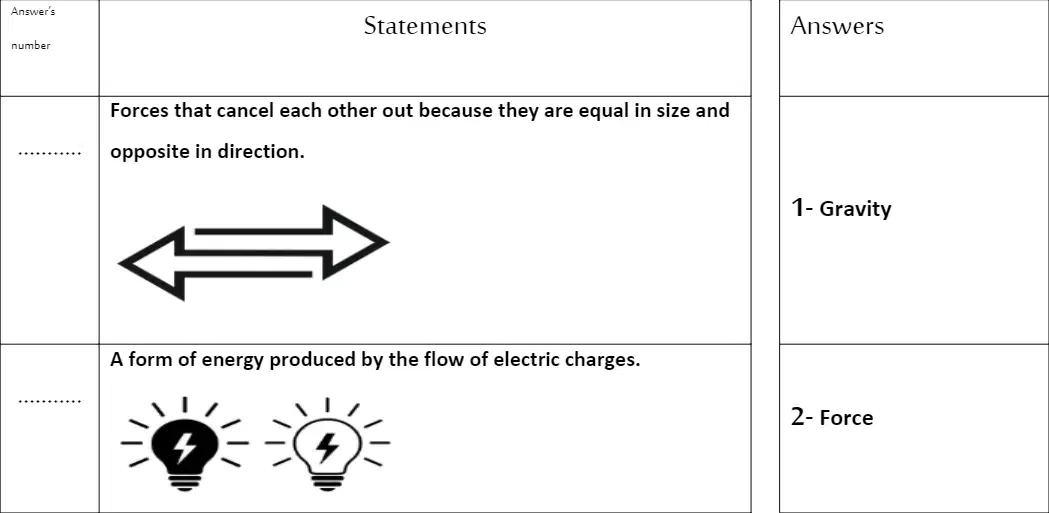
Match the following by choosing the correct term: A form of energy produced by the flow of electric charges.
Electricity
Static Electricity
Magnet
Force
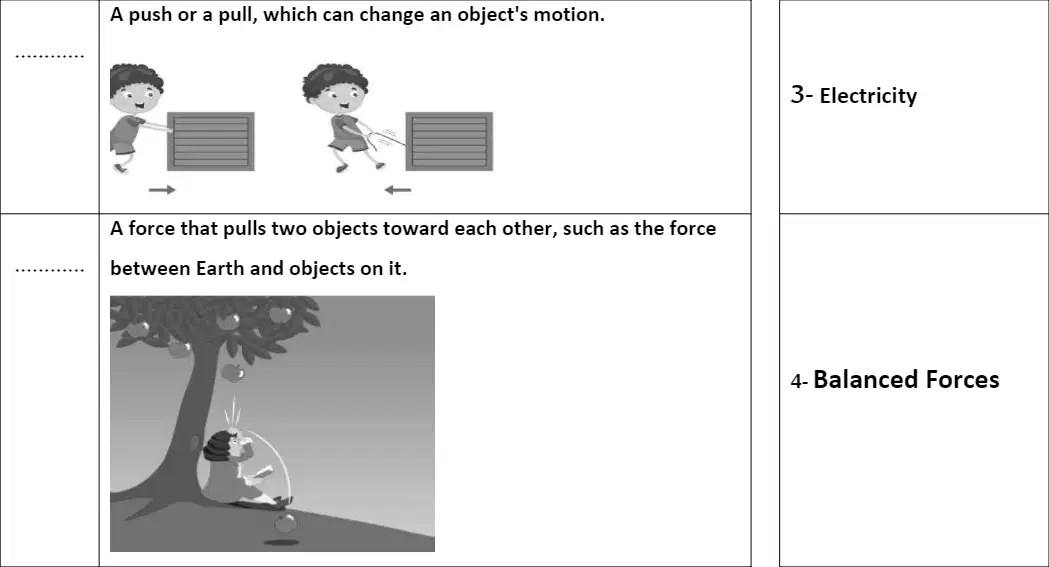
Match the following by choosing the correct term: A push or a pull, which can change an object's motion.
Force
Gravity
Net Force
Balanced Forces
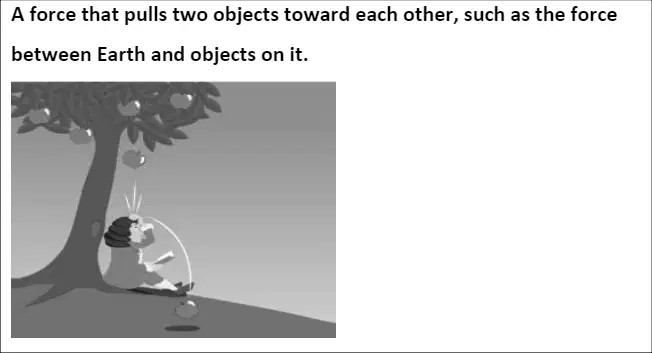
Match the following by choosing the correct term: A force that pulls two objects toward each other, such as the force between Earth and objects on it.
Gravity
Magnet
Electricity
Force
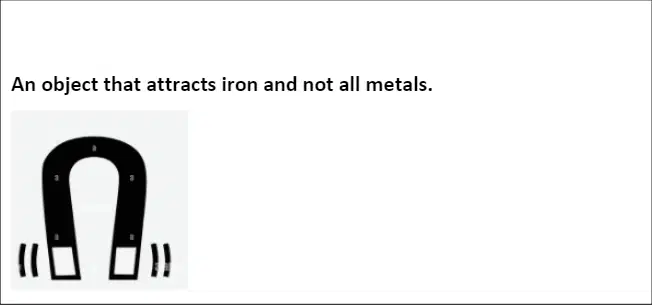
Match the following by choosing the correct term: An object that attracts iron and not all metals.
Magnet
Electricity
Gravity
Static Electricity
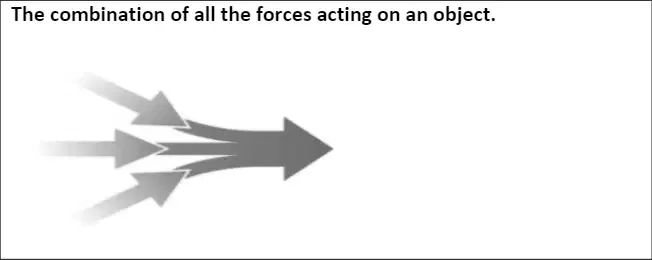
Match the following by choosing the correct term: The combination of all the forces acting on an object.
Net Force
Balanced Forces
Electricity
Force
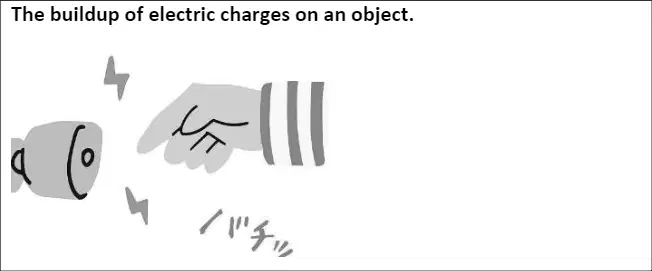
Match the following by choosing the correct term: The buildup of electric charges on an object.
Static Electricity
Electricity
Magnet
Gravity
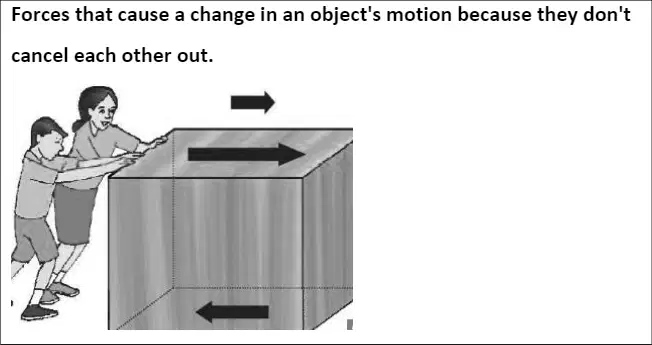
Match the following by choosing the correct term: Forces that cause a change in an object's motion because they don't cancel each other out.
Unbalanced Forces
Balanced Forces
Net Force
Gravity
What is a force?
A type of energy
A push or a pull
A kind of motion
What does gravity do?
Pushes objects away
Pulls objects toward each other
Makes objects float
Which of these is an example of a push?
Pulling a door open
Kicking a ball
Lifting a box
What happens when you pull a toy wagon?
It moves toward you
It moves away from you
It stays still
What do you call forces that are equal and opposite?
Unbalanced forces
Balanced forces
Strong forces
What can magnets do?
Attract or repel certain metals
Create light
Produce sound
How do you make a swing move?
By pushing it
By pulling it
By sitting still
What happens when two like poles of magnets are close?
They attract each other
They repel each other
They stay still
What type of force keeps you on the ground?
Friction
Gravity
Magnetism
Which of these is a type of contact force?
Gravity
Magnetism
Pushing a shopping cart
What happens when you push a heavy box?
It moves easily
It might not move at all
It flies away
What do you call the force that opposes motion?
Gravity
Friction
Magnetism
Which item has the most friction?
A ball on grass
A sled on ice
A box on a smooth table
What do you need to overcome friction?
More weight
More force
Less speed
Which of these describes static electricity?
Electricity that flows through wires
A charge that builds up on an object
Electricity that makes things hot
What happens to an object when unbalanced forces act on it?
It stays still
It moves
It disappears
What type of force acts at a distance?
Contact force
Magnetic force
Frictional force
How can you change the direction of a moving object?
By pushing it
By ignoring it
By throwing it away
What do you call the total of all forces acting on an object?
Net force
Static force
Contact force
How do you describe a stronger force?
It moves things slower
It can move heavier objects
It is always a push
A force is a push or a pull that can change an object's motion.
True
False
Gravity pulls objects away from each other.
True
False
Friction is a force that opposes motion between two surfaces.
True
False
Magnets can attract all types of metals.
True
False
Balanced forces cause an object to move.
True
False
Static electricity is a type of energy that flows through wires.
True
False
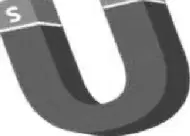
Look at the picture of a magnet and nearby objects: a paper clip, a metal nail, a metal key, a wooden cube, a crayon, a pencil, a rubber eraser, a ball of yarn, and small metal brackets. Which objects will the magnet attract? Choose all that apply.
Paper clip
Metal key
Metal nail
Wooden cube
Crayon
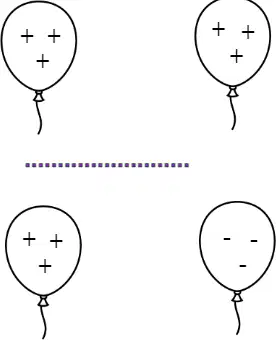
Two balloons are shown: the left balloon is negatively charged (marked with − signs) and the right balloon is positively charged (marked with + signs). What will happen between the balloons?
Attract
Repel
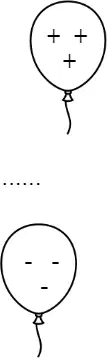
Two balloons are shown: the left balloon is neutral (no charge marks) and the right balloon is positively charged (marked with + signs). What will happen between the balloons?
Attract
Repel
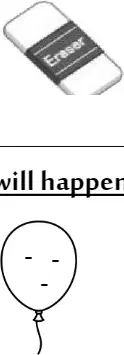
Two balloons are shown: both balloons are negatively charged (each marked with − signs). What will happen between the balloons?
Attract
Repel
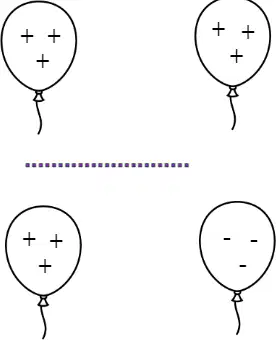
Two balloons are shown: the left balloon is positively charged (marked with + signs) and the right balloon is negatively charged (marked with − signs). What will happen between the balloons?
Attract
Repel
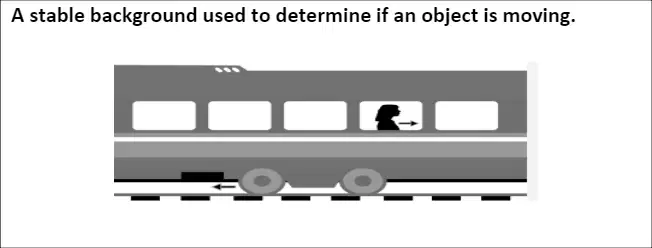
Match the following by choosing the correct term: A stable background used to determine if an object is moving.
Motion
Frame of Reference
Speed
Position
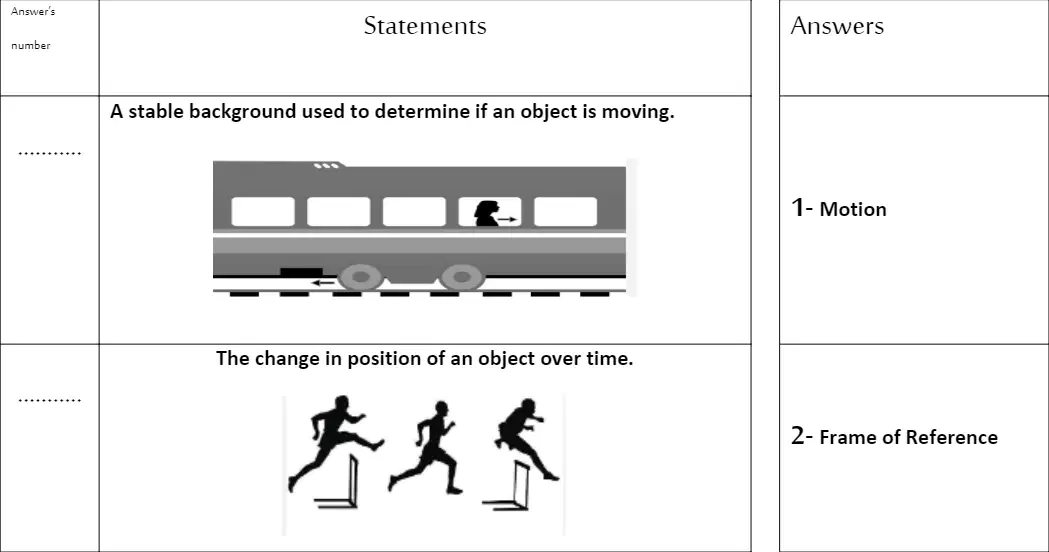
Match the following by choosing the correct term: The change in position of an object over time.
Motion
Frame of Reference
Speed
Position
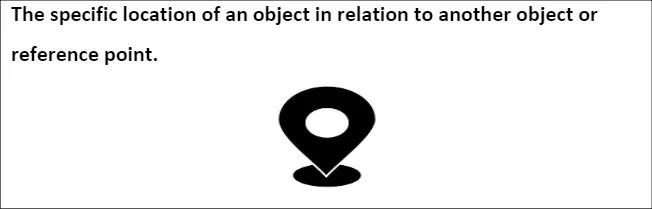
Match the following by choosing the correct term: The specific location of an object in relation to another object or reference point.
Motion
Frame of Reference
Speed
Position
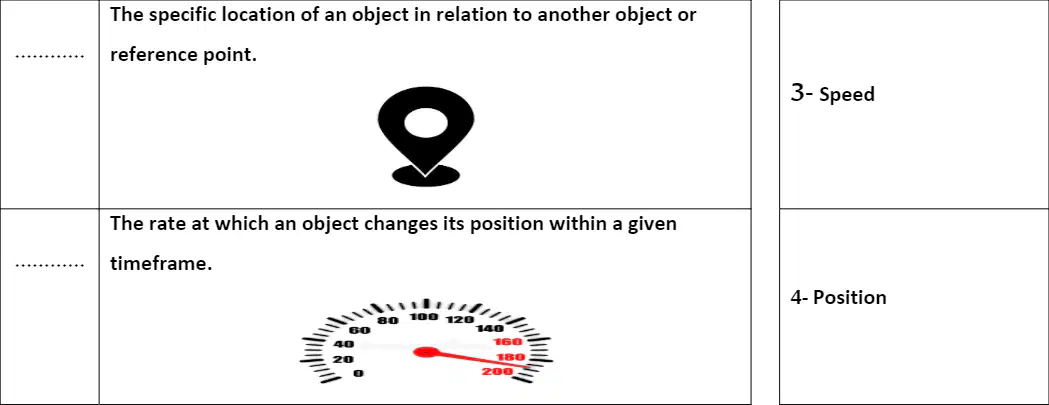
Match the following by choosing the correct term: The rate at which an object changes its position within a given timeframe.
Motion
Frame of Reference
Speed
Position
What is the definition of motion?
The speed of an object
A change of position of an object
The force acting on an object
The distance traveled by an object
Which term describes the location of an object in relation to a nearby object?
Speed
Position
Motion
Frame of Reference
What does speed measure?
The amount of force applied
The distance an object moves in a certain time
The direction of an object's motion
The weight of an object
What is a frame of reference?
An object that is moving
A stationary background used to observe motion
The speed of an object
The force acting on an object
In the context of motion, what is an unbalanced force?
Forces that cancel each other out
Forces that cause a change in motion
Forces applied in the same direction
Forces that have no effect on an object's motion
What might you observe if a shark is in motion?
Its position remains the same
Its position changes over time
It does not move at all
It moves in a circle
Which animal is known as the fastest on land?
Cheetah
Lion
Antelope
Horse
What is an example of a motion that occurs in a pattern?
A car driving randomly
A swing moving back and forth
A bird flying in different directions
A person walking in a zigzag
What type of motion does a merry-go-round exhibit?
Linear motion
Circular motion
Zigzag motion
Back and forth motion
How can speed be calculated?
Distance divided by time
Time divided by force
Force divided by distance
Distance multiplied by time
What happens when balanced forces act on an object?
The object moves
The object accelerates
The object remains at rest or continues moving at constant speed
The object changes direction
Which of the following actions affects both speed and direction?
Applying brakes
Turning the steering wheel
Stepping on the accelerator
All of the above
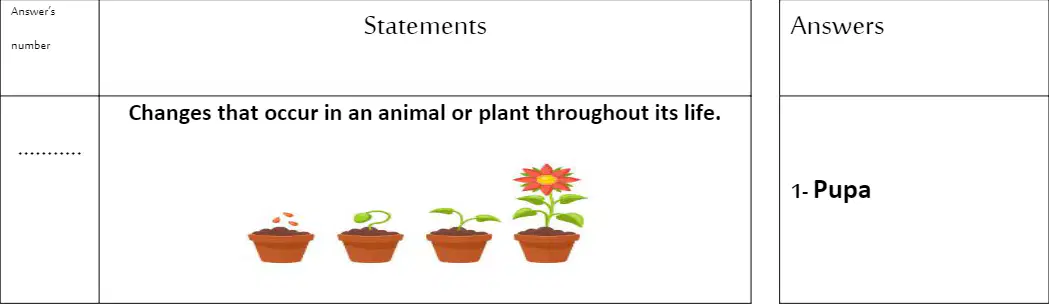
Match the following by choosing the correct term: Changes that occur in an animal or plant throughout its life.
Pupa
Trait
Life cycle
Metamorphosis

Match the following by choosing the correct term: A sequence of transformations experienced by certain animals during their development.
Pupa
Trait
Life cycle
Metamorphosis
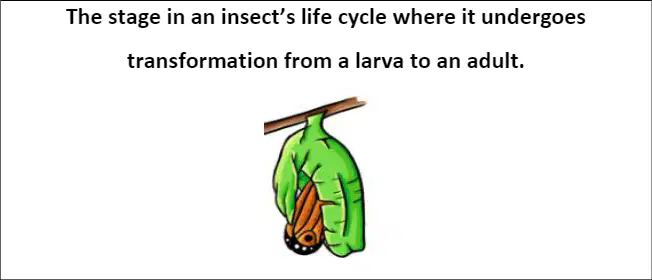
Match the following by choosing the correct term: The stage in an insect’s life cycle where it undergoes transformation from a larva to an adult.
Pupa
Trait
Life cycle
Metamorphosis
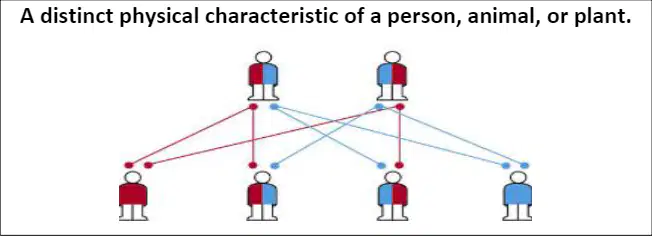
Match the following by choosing the correct term: A distinct physical characteristic of a person, animal, or plant.
Pupa
Trait
Life cycle
Metamorphosis
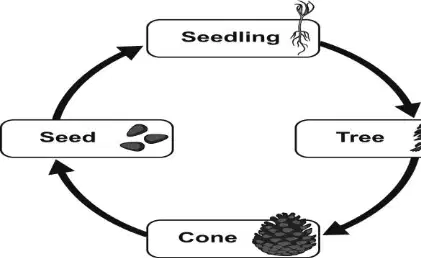
The picture shows the life cycle of a pine tree. Which part of the plant’s life cycle comes before the young plant?
tree
cone
seed
seedling
Farmers and other growers are concerned about the drop in the number of honeybees. Why is this a concern for people working with plants?
They use honey from the bees to feed their crops.
The bees pollinate the plants to help form seeds.
The bees keep predators away from the plants.
The bees keep the plants watered.
What part of the plant’s life cycle most depends on flowers and cones?
reproduction
growing larger
dying
becoming a young adult
What part do some non-flowering plants have that flowering plants do not?
pollen
flowers
seeds
cones
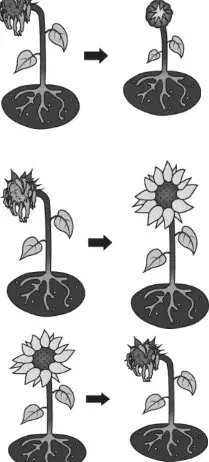
Which picture shows the stages of a sunflower’s life in the correct order?
A
B
C
D
What is the first stage in plant reproduction?
egg
seed
growth
pollination
How do insects reproduce?
by growing
by developing
by laying eggs
by giving birth
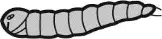
The picture shows the life cycle of a fly. An arrow is pointing to one stage of life. What is the name of the stage?
adult
larva
nymph
pupa
The life-cycle diagrams Ramon found are not labeled. Write the letter of the life cycle stage in the correct box for the Turtle Life Cycle. For box 1, which stage letter matches the picture of eggs in a nest?
A. adulthood
B. birth
C. growth
The life-cycle diagrams Ramon found are not labeled. Write the letter of the life cycle stage in the correct box for the Turtle Life Cycle. For box 2, which stage letter matches the picture of a small turtle?
A. adulthood
B. birth
C. growth
The life-cycle diagrams Ramon found are not labeled. Write the letter of the life cycle stage in the correct box for the Turtle Life Cycle. For box 3, which stage letter matches the picture of an adult turtle?
A. adulthood
B. birth
C. growth
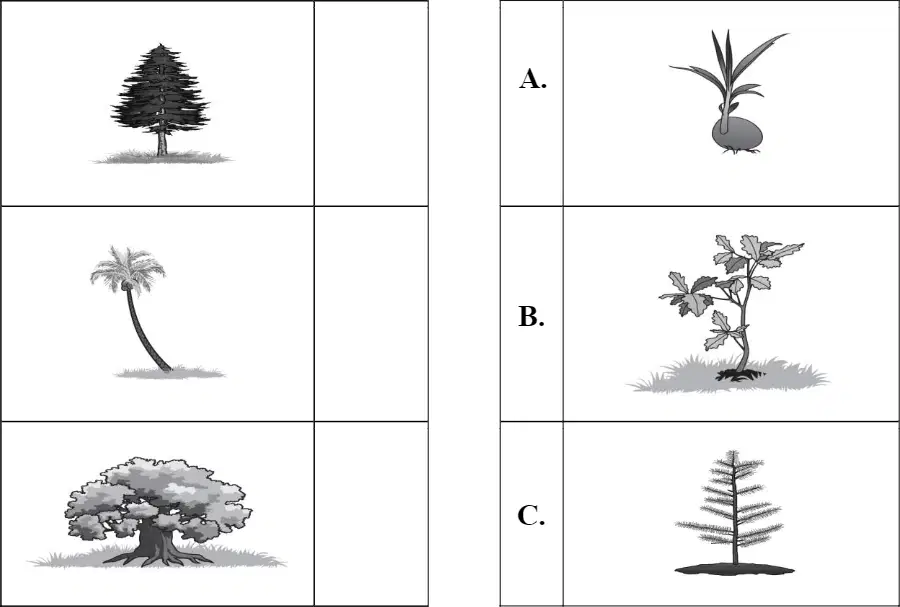
Match the offspring to the parent tree by looking at inherited traits. Write the letter of the offspring in the box next to the correct parent tree. For the parent tree that looks like a tall conifer, which offspring letter matches?
A
B
C
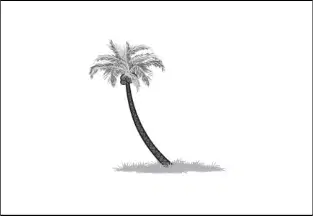
Match the offspring to the parent tree by looking at inherited traits. Write the letter of the offspring in the box next to the correct parent tree. For the parent tree that looks like a curved-trunk palm, which offspring letter matches?
A
B
C
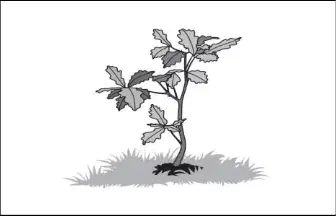
Match the offspring to the parent tree by looking at inherited traits. Write the letter of the offspring in the box next to the correct parent tree. For the parent tree that looks like a broad leafy tree, which offspring letter matches?
A
B
C

