
 Worksheets
I. BASIC ROBOTICS CONCEPTS & Light Sensor Introduction
Total questions: 61
Worksheet time: 31mins
Which statement best defines a robot in this context?
A tool that measures light without acting
A computer for human data processing tasks
A device only executing manual commands
A machine that senses and decides autonomously
In the IPO model, which component performs decision-making computations?
Motors in the output stage
LEDs in the output stage
Sensors in the input stage
Microcontroller in the process stage
Which list correctly orders the IPO stages for a robot?
Input, Process, Output
Process, Input, Output
Process, Output, Input
Output, Input, Process
Which device category does a light sensor belong to within a robot?
Power module supplying voltage
Input device collecting environmental data
Output device producing physical actions
Processing unit running control algorithms
What physical quantity does a light sensor measure?
Light intensity measured in lux
Sound pressure measured in dB
Electrical current measured in A
Temperature measured in °C
Which statement about light sensor values is accurate?
Darker areas yield higher readings
Values are measured only in volts
Brighter areas yield higher readings
Readings are constant regardless of light
Select all actions characteristic of robots as presented.
Require constant manual control
Perform actions automatically
Make decisions internally
Sense their environment
Which pair correctly matches IPO elements to examples shown?
Input: motors; Output: sensors
Output: LEDs and speaker; Process: microcontroller
Process: microcontroller; Input: sensors
Input: sensors; Output: motors
A light sensor converts incident photons into what electrical carriers?
Protons used for bonding
Ions used for energy storage
Electrons used for signaling
Neutrons used for timing
Where does the light sensor send its measured data for processing?
Directly to LEDs for display
To the power jack connector
To the motors and actuators
To the robot’s microcontroller
Which outcome aligns with the bottom diagram for robot behavior when no light is detected?
Robot drives straight ahead
Robot turns toward right side
Robot does not move or act
Robot turns toward left side
According to the behavior diagram, how does the robot respond when light is detected directly ahead?
It drives straight forward
It spins clockwise slowly
It reverses and stops
It turns left sharply
Which statements about lux are correct?
Unit for light intensity measurement
Higher lux indicates brighter light
Lux measures electrical voltage
Lower lux indicates darker areas
Identify all components listed as outputs in the IPO examples.
LEDs providing light signals
Motors moving the robot
Speaker generating sounds
Sensors reading the environment
Which statement best describes a sound sensor in a robotics system?
A power module regulating voltage
An input device using a microphone
A storage device saving waveforms
An output device driving a speaker
What quantity does a typical sound sensor primarily measure?
Sound intensity or loudness
Frequency spectrum of notes
Ambient temperature around mic
Audio phase differences
A sound sensor converts sound waves into which type of signals for processing?
Hydraulic pressure changes
Optical pulses for LEDs
Electrical signals for circuits
Magnetic flux variations
In a simple threshold program, which condition would correctly trigger an LED using a light sensor?
If ultrasonic distance is 300
If sound value exceeds 300
If voltage always equals 5V
If light value is less than 300
Which events are typical detections for a sound sensor in projects?
Continuous DC motor rotation
Sudden loud knock on table
Clapping near the microphone
Whispering in a quiet room
How do sensor readings generally relate to loudness in a calibrated sound sensor?
Loud sound produces lower value
Loud sound produces higher value
Loud sound produces no value
Loud sound produces random value
Which pairing correctly matches device category with example?
Output device: ultrasonic sensor
Output device: light sensor
Input device: sound sensor
Input device: buzzer module
A processing unit on a controller board primarily performs which role with sensor data?
Physically amplifies sound waves
Stores long‑term audio recordings
Supplies mains power to sensors
Receives inputs and executes decisions
Which comparison between light, sound, and ultrasonic sensors is accurate?
Ultrasonic sensors measure distance
Sound sensors respond to loudness
Sound sensors measure temperature
Light sensors respond to brightness
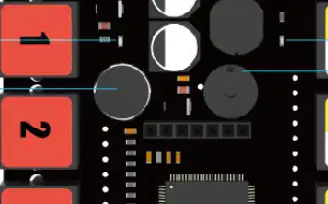
On the controller image, which labeled component type would host the microphone for sound measurement?
Sound sensor port module
Encoder motor port
USB connector socket
5V LED indicator
Which scenario best illustrates using a sound sensor to control an actuator?
Turn on LED when clap detected
Increase speed when light bright
Stop robot when distance far
Power board when switch flipped
Why might ultrasonic sensors be preferred over sound sensors for measuring distance?
They emit timed ultrasonic pulses
They measure ambient loudness
They use visible light levels
They rely on manual calibration only
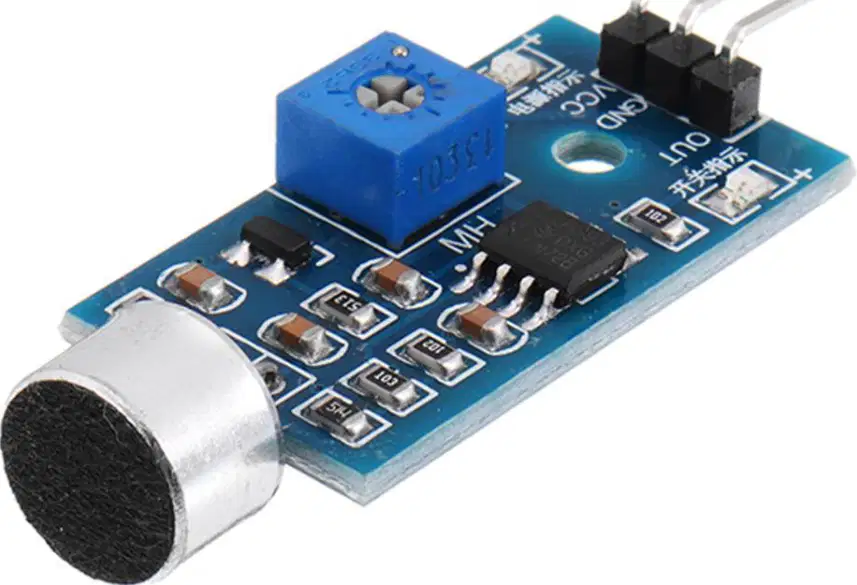
Which adjustment is commonly available on many sound sensor modules shown?
Dial to select LED colors
Switch to choose USB mode
Toggle to change voltage range
Potentiometer to set threshold
If a quiet environment yields lower sensor values, what programming action aligns with this behavior for clap detection?
Trigger when value equals zero
Trigger when value is below threshold
Trigger when value exceeds threshold
Trigger regardless of value
Which statement best describes the microcontroller’s role in a robot?
Only supplies electrical power
Stores long-term data only
Just converts sensor units
Acts as the robot’s brain
Which tasks are performed by the processing unit in a robot?
Generating external noise
Receiving sensor data
Executing program logic
Controlling output devices
An LED connected to a robot is primarily used to do what?
Indicate status visually
Provide mechanical motion
Amplify audio signals
Measure light intensity
Which device is an output that produces sound?
Light sensor module
Buzzer or speaker
Ultrasonic sensor
RJ25 communication port
A motor connected to the microcontroller is an output device because it primarily does what?
Calculates numeric results
Stores program variables
Senses distance values
Creates rotational motion
If the microcontroller receives a high sound intensity value, which output could reasonably respond?
Read another sensor
Turn on a status LED
Disable the USB port
Increase memory size
Match each component to its typical role.
Microcontroller: executes logic
Speaker: emits audible signals
Motor: produces motion
LED: provides visual feedback
Which statement is a misconception about ultrasonic sensors when considering outputs?
They measure sound loudness
They inform the controller
They sense distance values
They are not output devices
Which block must be placed at the very top so the program begins when the robot powers on?
Start-Up block at the top
Forever block at program start
Wait block before commands
Display block above sensors
A robot needs to continuously read a sensor and react in real time. Which block ensures the code keeps running without stopping?
Wait block timed pause
Forever block continuous loop
Start-Up block initialization
LED block light control
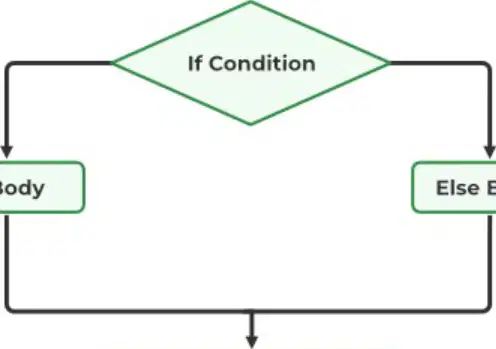
In an If–Then–Else structure, what happens when the condition evaluates to FALSE?
Program restarts from start
Else branch executes actions
Then branch executes actions
Wait block adds a delay
Select all blocks that primarily control program flow rather than output devices.
Start-Up block sequencing
Forever block looping
LED block lighting
If–Then–Else decision
Display block showing values
Which statement best describes the Wait block?
Displays sensor values for testing
Adds a delay to control timing
Lights up the robot LEDs
Starts the program when powered
A program needs to show a sensor’s distance reading during debugging. Which block is appropriate?
LED block indicates color
Display block shows numbers
Forever block repeats code
Start-Up block begins run
Which pair correctly contrasts Display and LED blocks?
LED repeats code continuously
Display controls timing delay
Display shows values; LED lights
Both light LEDs for feedback
Identify all cases where Forever is essential.
One-time startup message
Setting LED color once
Real-time reactive behavior
Single evaluation of condition
Continuous sensing loop
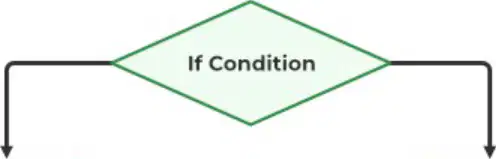
In an If–Then–Else block, which part runs when the condition is TRUE?
Then body executes actions
Wait block pauses code
Forever block restarts loop
Else body executes actions
Which block directly controls hardware light output on the robot?
Forever block repeats code
Start-Up block initializes
Display block shows text
LED block sets lights
A developer wants the robot to wait two seconds before moving. Which block should be used?
Start-Up for initial delay
Wait with specified seconds
If–Else to pause logic
Display to show countdown
Choose all statements that are true about the Start-Up block.
Placed at the program top
Controls LED color
Runs when powered on
Used for debugging output
Adds timed delays
Which misconception about Display and LED blocks is incorrect?
Display used for testing
LED lights up robot LEDs
Display is the same as LED
Display shows sensor values
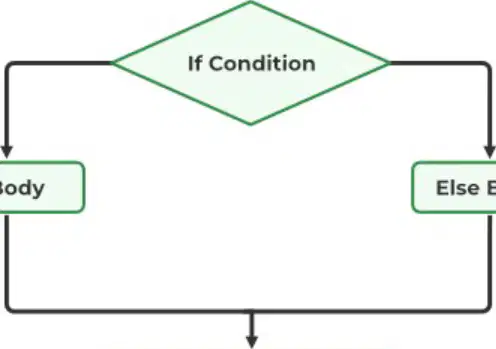
A decision must be made: if obstacle detected, stop; otherwise, move. Which block implements this logic directly?
Wait timing delay block
If–Then–Else decision block
Forever continuous loop
Start-Up initialization block
Which combination best achieves continuous sensing with timed reactions?
Start-Up for LED output
Wait for controlled timing
Forever for looped sensing
LED for decision logic
Display for movement control
A light sensor reading of 100 is observed. Which condition is true for the logic IF (Light Sensor < 300)?
Condition is true; set LED WHITE
Condition is true; turn off lights
Condition is false; set LED RED
Condition is false; play sound
In the given example, what action occurs in the ELSE branch when the light sensor value is 450?
Motor starts and speaker plays
Display shows numbers and colors
LED set to RED and lights off
LED set to WHITE and play sound
Match each sensor value interpretation correctly.
High sound value means quiet
Low light value means bright
Low sound value means quiet
High light value means bright
Which devices are inputs in a typical robotics setup?
Speaker and display
Light sensor and sound sensor
LED and motor
Ultrasonic sensor and microphone
Choose the correct pairing of input to output from the table.
Ultrasonic sensor to motor
Microphone to LED
Sound sensor to display
Light sensor to LED
Which statement best distinguishes the Display Block from the LED Block?
Display controls lighting; LED shows values
LED reads numbers; Display senses colors
Both show colors and values
Display shows numbers; LED shows colors
Select all that describe the Sound Sensor versus the Ultrasonic Sensor.
Ultrasonic measures loudness via microphone
Sound measures distance via waves
Ultrasonic measures distance via waves
Sound measures loudness via microphone
Which scenario correctly applies If–Then–Else logic to sensor thresholds?
If light > 300 then LED WHITE; else speaker off
If ultrasonic < 300 then play sound; else display numbers
If sound < 300 then LED RED; else motor on
If light < 300 then LED WHITE; else LED RED
A student confuses input and output. Which correction is accurate?
Motor is input; ultrasonic sensor is output
Display is input; microphone is output
LED is input; speaker is output
LED is output; light sensor is input
Which block would you use to present measured numeric values from sensors?
LED Block for numbers
Display Block for numbers
Speaker Block for numbers
Motor Block for numbers

