
 Worksheets
IDSA cUTI IV to Oral switch Guidelines
Total questions: 5
Worksheet time: 3mins
Q1. Which statement best reflects the certainty of evidence supporting IV-to-oral switch in cUTI?
A. High certainty, based on large multicentre RCTs
B. Moderate certainty, with consistent mortality benefit
C. Low certainty, due to small trials and risk of bias
D. Very low certainty, with conflicting outcomes

Q2. In the trials informing this guideline, which patient group was largely excluded, limiting generalizability?
A. Women with acute pyelonephritis
B. Patients with Gram-negative bacteremia
C. Patients infected with ESBL-producing organisms
D. Patients with sepsis, immunocompromise, or indwelling urinary catheters
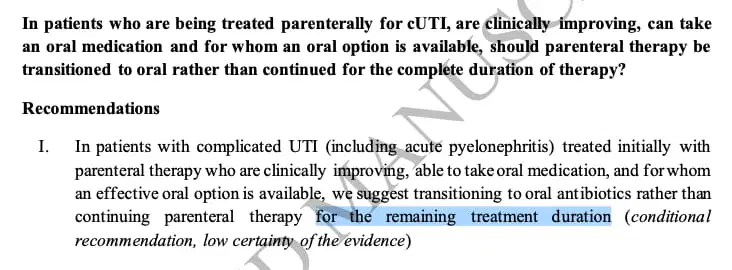
Q3. The guideline allows IV-to-oral switch in bacteremic cUTI provided the oral agent:
A. Achieves high urinary concentrations only
B. Achieves therapeutic levels in blood, urine, and relevant tissue
C. Has >90% oral bioavailability regardless of serum levels
D. Is a fluoroquinolone or carbapenem
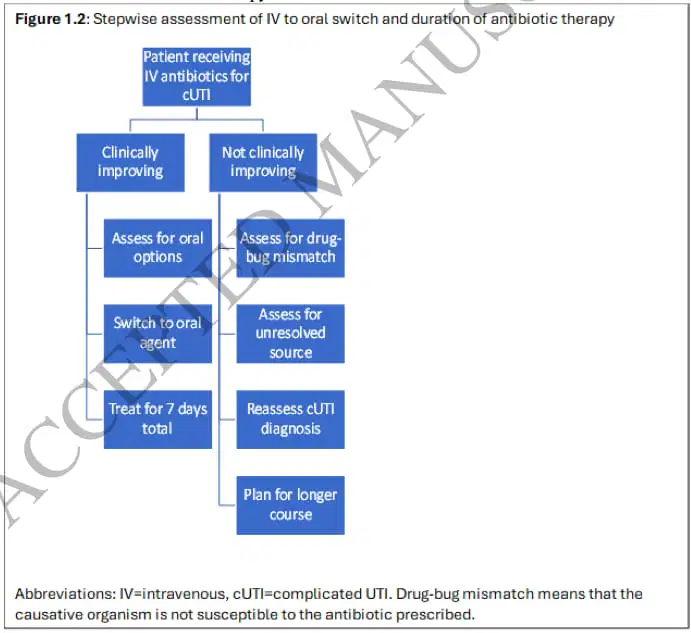
Q4. Which outcome showed a possible benefit with IV-to-oral switch but with very low certainty of evidence?
A. Reduced recurrence of infection
B. Improved clinical cure
C. Shorter length of hospital stay
D. Lower all-cause mortality
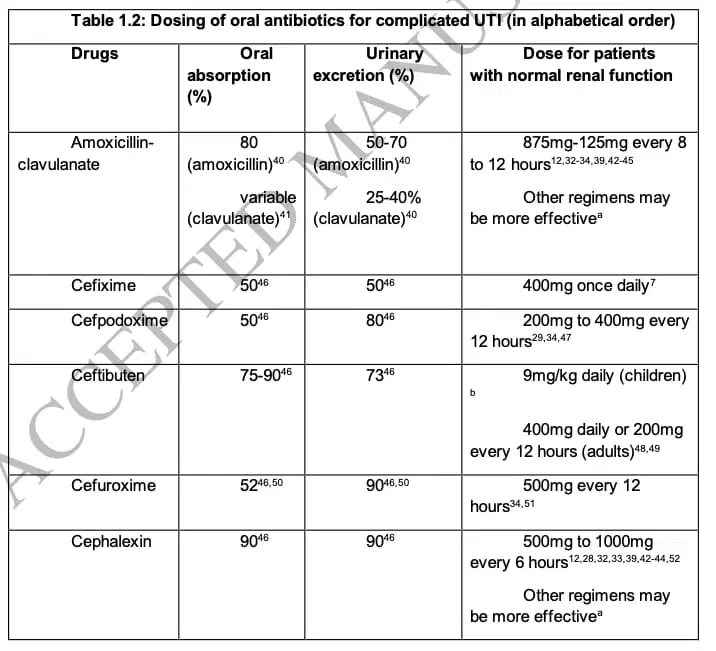
Q5. Which oral step-down choice is least aligned with the guideline’s pharmacologic principles for cUTI?
A. Nitrofurantoin after IV therapy for pyelonephritis
B. Levofloxacin for susceptible E. coli bacteremia
C. High-dose oral third-generation cephalosporin (when susceptible)
D. Trimethoprim–sulfamethoxazole with confirmed susceptibility

