
 Worksheets
Unit 1 study guide
Total questions: 24
Worksheet time: 12mins
Name
Class
Date
1.
Two groups of students were tested to compare their speed working math problems. Each group was given the same problems. One group used calculators and the other group computed without calculators. In this experiment, the Independent Variable is...
a)
the speed of the students
b)
the calculators
c)
the same math problems the students worked on
d)
the room the students worked in
2.
Two groups of students were tested to compare their speed working math problems. Each group was given the same problems. One group used calculators and the other group computed without calculators. In this experiment, the Dependent Variable is...
a)
the speed of the students
b)
the calculators
c)
the same math problems the students worked on
d)
the room the students worked in
3.
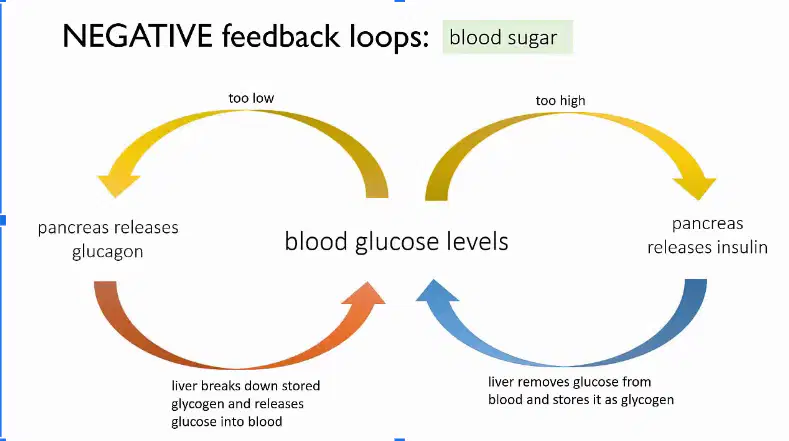
In the image below... why would the release of insulin from the pancreas be an example of a NEGATIVE feedback loop
a)
Because the release of insulin counteracts the increase the blood glucose
b)
Because the release of insulin amplifies the increase the blood glucose
c)
Because the release of glucagon counteracts the increase the blood glucose
d)
Because the liver distributes oxygen to the body
4.
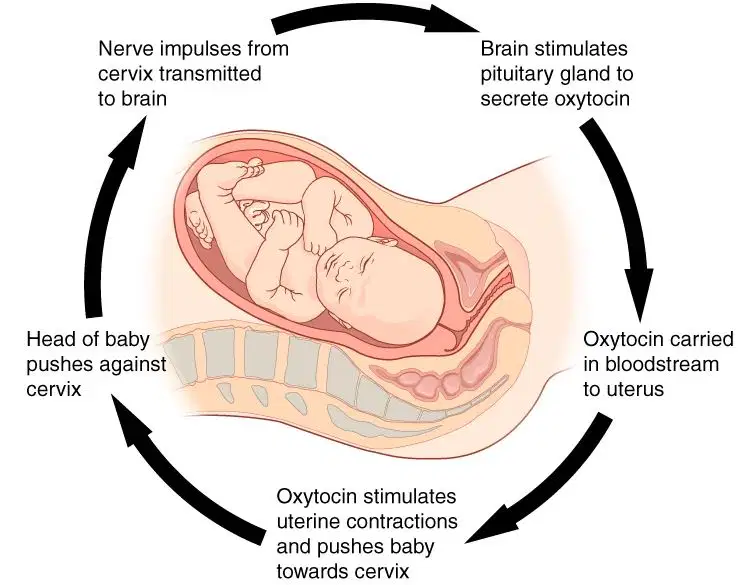
What type of feedback loop occurs during childbirth, and is shown below?
a)
negative
b)
neutral
c)
positive
5.
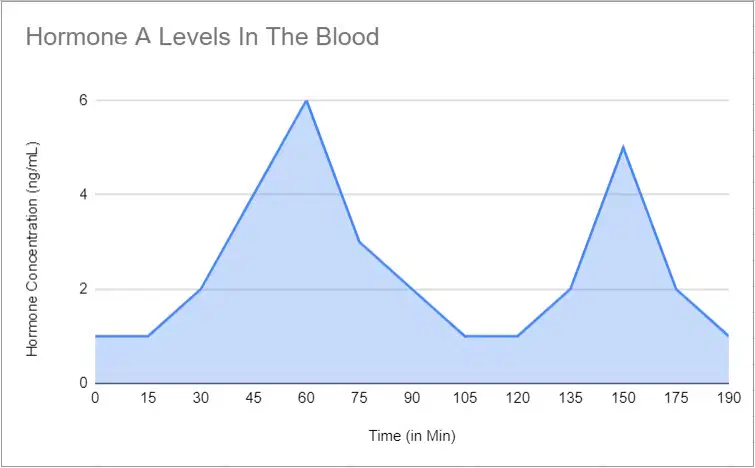
Is this graph an example of positive or negative feedback?
a)
Positive feedback
b)
Negative feedback
6.
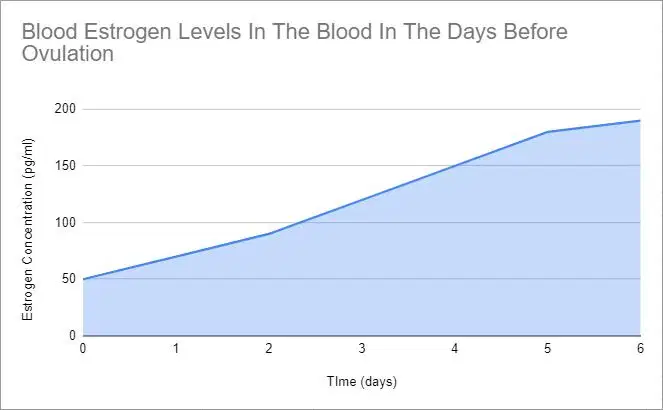
Is this graph an example of positive or negative feedback?
a)
Positive feedback
b)
Negative feedback
7.
On a hot day, which of these is an outward sign that thermoregulation is taking place to maintain homeostasis?
a)
sunburn
b)
sweating
c)
itchy skin
d)
shivering
8.
The process of fruit ripening is an example of:
a)
negative feedback loop
b)
positive feedback loop
9.
The maintenance of constant internal conditions is
a)
Metabolism
b)
Evolution
c)
Genetics
d)
Homeostasis
10.
Your body shivers when you are cold. This is because of the concept of...
a)
homeostasis
b)
heredity
c)
energy metabolism
d)
cellular organization
11.
When a baby kitten becomes an adult cat, this is an example of...
a)
energy metabolism
b)
growth and development
c)
response to stimuli
d)
having cells
12.
Which of the following is NOT a characteristic of life?
a)
Respond to Environment
b)
Grow and Develop
c)
Maintains homeostasis
d)
Has at least 5 senses
13.
Identify the characteristic: green plants produce their own food through the process of photosynthesis.
a)
All living things obtain and use energy
b)
All living things contain cells
c)
All living things maintain homeostasis
d)
All living things grow and develop
14.
True or False: All living things have more than one cell.
a)
True
b)
False
15.
Which characteristics do animal and plant cells share?
a)
mitochondria
b)
cell membrane
c)
Nucleus
d)
Membrane bound organelles
e)
All listed
16.
Fungi, Plants, and Animals are all
a)
Unicellular
b)
Multicellular
17.
Which of the following is NOT an abiotic factor in an ecosystem?
a)
Rocks
b)
Air
c)
Lions
d)
Water
18.
The two kinds of cells are Prokaryotes and Eukaryotes. How are they different?
a)
Prokaryotes have a nucleus.
b)
Prokaryotes are plant cells.
c)
There is no difference.
d)
Eukaryotes have a nucleus
19.
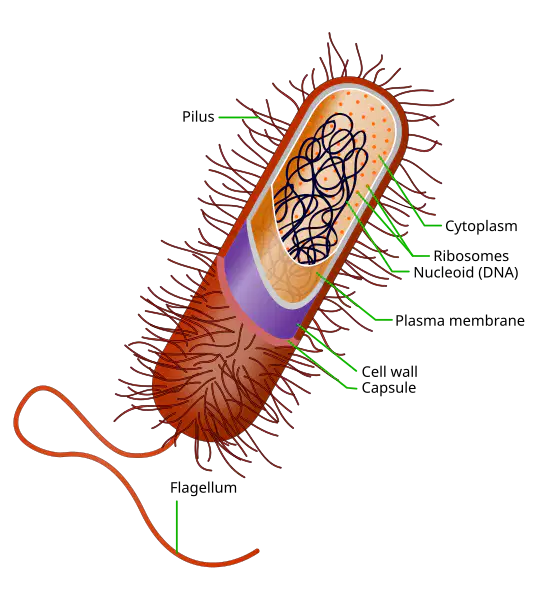
This is a picture of:
a)
Prokaryotic Cell
b)
Eukaryotic Cell
c)
Jelly Bean
20.

This is a picture of a:
a)
Prokaryotic Cell
b)
Eukaryotic Cell
c)
Jelly Bean
21.
Which of the following pairs is MOST closely related?
a)
Rattus rattus and Bos taurus
b)
Aha ha and Canis lupis
c)
Zea mays and Ovis aries
d)
Panthera tigris and Panthera leo
22.
Which of the following groups would contain the largest number of organisms?
a)
class
b)
order
c)
phylum
d)
family
23.
A scientific name contains:
a)
family and species
b)
genus and species
c)
phylum and order
d)
class and family
24.
If two organism are in the same phylum, they must also be in the same:
a)
class
b)
species
c)
family
d)
kingdom
100 %

