
Font size
 Worksheets
Movement Across the Membrane Quiz Review 25-26
Total questions: 23
Worksheet time: 19mins
The cell membrane is semipermeable because
It lets everything in
it only lets certain things in and out
It keeps everything out
it is not semipermeable
Which is true?
Passive = no energy
Active = energy
Passive = energy
Active = no energy
Passive = energy
Active = energy
Passive = no energy
Active = no energy
Match the terms correctly:
"heads"
hydrophilic
"tails"
hydrophobic
phospholipid bilayer
Cell membrane
Categorize the options:
Cell membrane is inner layer
Cell membrane is outer layer


Which is true of diffusion, osmosis and facilitated diffusion?
Molecules move from low to high concentration
They all use energy
All move water
Molecules high to low concentration
__________ moves small molecules and ___________ moves large molecules like glucose.
diffusion, osmosis
diffusion, facilitated diffusion
osmosis, diffusion
facilitated diffusion, diffusion
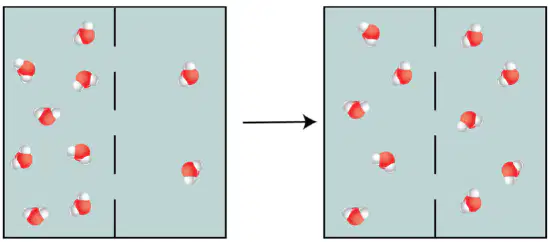
Why have the particles stopped diffusing?
They are too heavy to move
The molecules are unequal
they reached equilibrium
It has been 4hours
Mrs. Ardiri placed a cell in bottled water and it swelled (got bigger). Why?
The water entered due to osmosis
Mrs. Riolo placed a cell in salt water for a day and it shrank. Why did this occur?
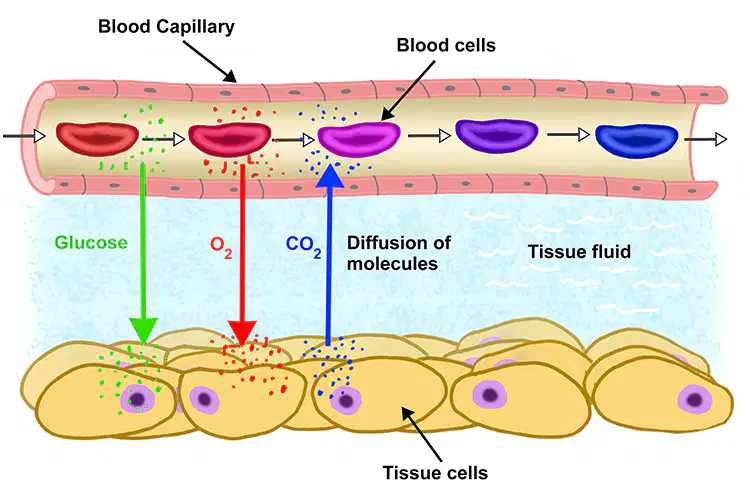
Which molecules diffuse into the tissue in the picture?
glucose, oxygen and carbon dioxide
oxygen and glucose
oxygen and carbon dioxide
glucose and carbon dioxide
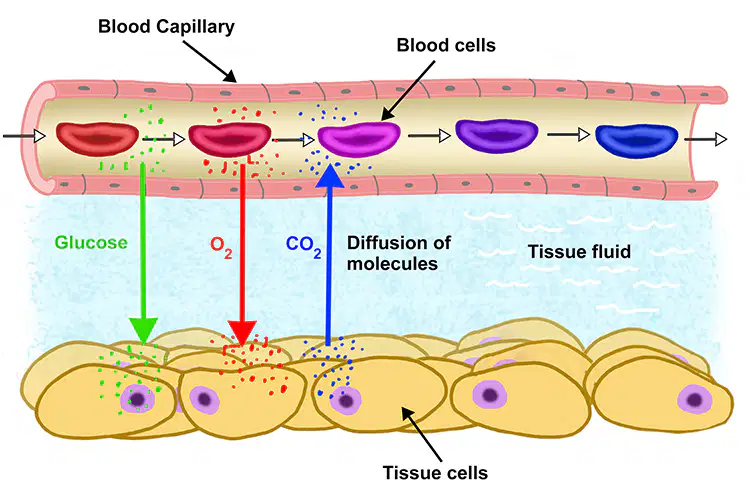
Carbon dioxide moves by the from of passive transport called diffusion. Why would carbon dioxide move out of the tissue cells?
There is too much carbon dioxide in the blood
The carbon dioxide moves from H to L concentration
The carbon dioxide moves from L to H concentration
All of these answers
What process makes energy (ATP) for a cell?
Cellular Respiration in the nucleus
Cellular respiration in the vacuole
How do you know movement across the membrane is active transport?
it moves through the nucleus
particles move from high to low
it does not use energy
it uses energy
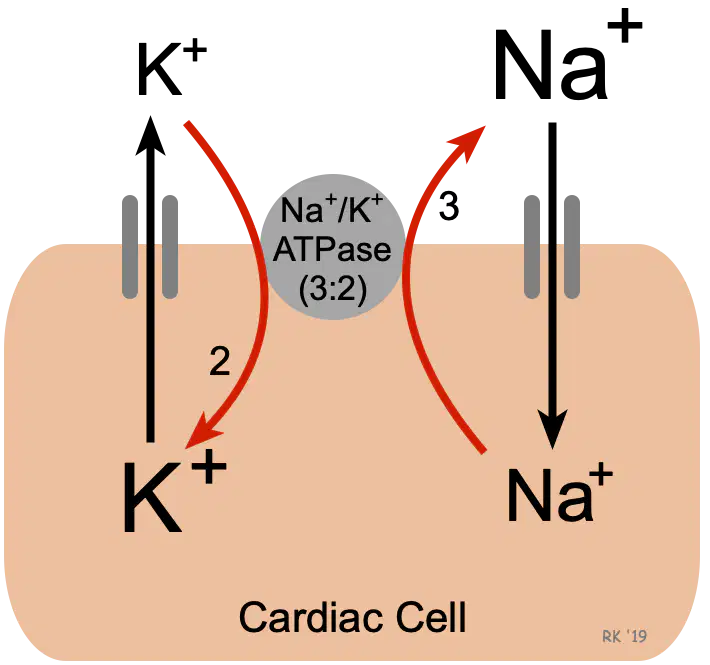
Which molecule moves outside of the cell?
Cardiac cell
K
Na
ATP
A fish that lives in salt water will have somewhat salty water inside itself. Put it in the freshwater, and the freshwater will enter the fish cells, causing its cells to swell, and the fish will die. This is an example of a(n)..
isotonic solution
hypotonic solution
hypertonic solution
IV fluids that have a similar concentration of dissolved particles as blood. This is done so that too much water doesn't enter or leave our cells. This is an example of a(n) ..
hypotonic solution
hypertonic solution
isotonic solution

Using energy to move molecules IN
Exocytosis
Diffusion
Osmosis
Endocytosis

Using energy to move molecules OUT
Exocytosis
Diffusion
Osmosis
Endocytosis
Cell eating
pinocytosis
cytoplasm
phagocytosis
diffusion
Cell drinking
pinocytosis
cytoplasm
phagocytosis
osmosis
Place these options in the right category
Diffusion
Osmosis
Facilitated Diffusion
Endocytosis
Exocytosis
Pinocytosis
Phagocytosis

