
 Worksheets
World History Midterm Exam Review
Total questions: 53
Worksheet time: 27mins

What is the purpose of the CRAAP Test?
To determine the quality and credibility of a source
To help keep your notes organized
To decide what topic to research
To create a list of websites you want to explore

You should always verify information with other trusted sources
True
False
biographies
Primary Source
Secondary Source
Diaries
Primary Source
Secondary Source
What does it mean to be biased?
to have an opinion on everything
to favor one side over the other
to see everything as equal
to be aware of the truth
According to Enlightenment ideas, governments exist to...
serve the ruler
serve the constituents / governed
serve the monarchy / royal family
serve the church
John Locke believed a government should not deprive citizens of their natural rights of...
freedom of religion
life, liberty, and property
owning a weapon
a fair and speedy trial
What is a social contract?
a form of government where power is concentrated in the hands of a few people.
a religious document that governs social interactions.
a legal agreement between individuals in a society.
an agreement among the people to cooperate for social benefits.
What are natural rights as advocated by John Locke?
Name for the Intellectual movement in Europe that stressed reason, thought and the power of the individual to solve problems which creates a challenge to existing traditions & governments; also known as the Age of Reason
Scientific Revolution
Enlightenment
Renaissance
Christian Humanism
Idea posed by an enlightenment thinker that government should be divided into parts (or branches) and each part or branch had its own purpose/role.
General Will
Centralization of Power
Direct Voting
Seperation of Powers
What is an example of a limited government?
North Korea
China
Soviet Union
United States of America
How did the Enlightenment philosophies, such as the separation of powers, influence the political revolutions of the eighteenth century?
The ideas became the focus of debates between monarchs and parliaments.
The ideas were used to create a series of slogans and mottos to rally the troops.
The ideas were used by monarchs to argue against the changes made by revolutionary leaders.
The ideas became incorporated into constitutional documents produced during the revolutions.
In what way did the Enlightenment further the development of democratic-republican government?
Many Enlightenment philosophers argued for violent revolutions.
Enlightenment thinkers supported the advances made by absolute monarchs.
New ideas about individual rights were introduced during the Enlightenment.
The power of the Catholic Church was strengthened in response to Enlightenment ideas.
How was Simón Bolívar influenced by the American and French Revolutions?
He wrote a Declaration of Rights for Latin American countries ruled by France.
He observed the American Revolution's successes and brought democracy to Cuba.
He adopted Enlightenment ideals and began revolutions against Spanish authority.
He fought in the French Revolution and returned to Mexico to lead a revolution himself.
What is popular sovereignty?
rule by consent of the governed
Rule by a monarch
Rule by an elected official
Rule by church leaders
What was the purpose of the Reign of Terror?
to get rid of the Bourgeoisie
to squelch any opposition to the Revolution
to silence the church
To stop the peasants from attacking the nobles
What was the most common method of execution during the French Revolution?
electric chair
drowning chamber
guillotine
sword
Who was the leader of the Reign of Terror who was eventually overthrown and executed with the guillotine?
Robespierre
Danton
Jacques Cartier
Louis XVI
What was the American colonists’ main disagreement with Britain?
they did not want to pay any taxes
They were upset they had no representation in Parliament
They wanted to settle past the Appalachian mountains
They wanted more tea
What was the name of France’s legislative body that King Louis XVI called into session to raise taxes?
Parliament
Congress
Estates General
National Convention
What does the Third Estate rename themselves?
National Assembly
Congress of Vienna
Estates General
Parliament

_______ = on July 14th, 1789, this building falls and becomes a symbol of the French Revolution
Bastille
Notre Dame
Eiffel Tower
Arc de Triomphe

Which of the following is an outcome of the French Revolution?
End of Absolute Monarchy of Louis XVI
Foundations of the Industrial Revolution
France is controlled by England
30 Years War
__________________= granted Frenchman basic rights.
Declaration of the Rights of Man
Declaration of Independence
English Bill of Rights
Geneva Convention

What was the encomienda system?
A system of mandatory education for the indigenous people
A form of autonomous government in the Spanish colonies
A barter system between settlers and Native Americans
A system of forced labor during the Spanish colonization of America.
What was the main purpose of the encomienda system?
Encourage the education of the indigenous population.
Exploitation of indigenous labor for the benefit of the colonizers.
Promote equality of rights between colonizers and indigenous people.
Establish a barter system between colonizers and indigenous people.
Which three problems did labor unions organizing attempt to solve?
Shorter working days
Severance pay
Better wages
Better living conditions
Improved working conditions

Which of the following is the reason people moved to cities?
for the job opportunities
to catch a smelly pole cat
that is where the transcontinental railroad stopped
to get away from the free farmland out west
People moving to the cities to try and attain the many factory jobs available is known as what?
Industrialization
Urbanization
Ruralization
Communism
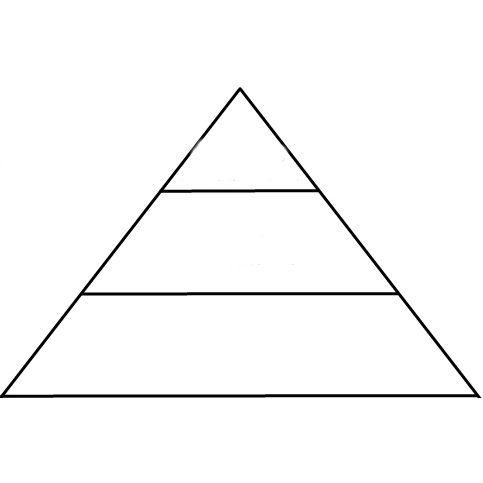
Why did the Third Estate break off from the Estates General to create the National Assembly?
Because the Third Estate wasn't getting fair representation in the Estates General
Because the Second Estate had the most votes
Because the First Estate was too religious
What were the reasons for Japan imperialism?
Desire of the Meiji Reformers to resist domination by Western Powers
Japan realised that an imperial power needed an empire of its own to survive
Japan believed that it had a right and duty to use force to make China and Korea adopt the path of progress before they were taken by the West.
All the above
We must build railways and infrastructure to transport our products so that we can make lots of money.
Colonized
Colonizer

