
Font size
 Worksheets
7th WG Economic Geography Review
Total questions: 15
Worksheet time: 8mins
A country has a government that makes all major economic decisions, owns all the land, and controls the factories. Citizens have very little choice in what jobs they do or what goods they can buy. Based on these characteristics, which economic system is this country operating under?
Market Economy
Command Economy
Traditional Economy
Mixed Economy
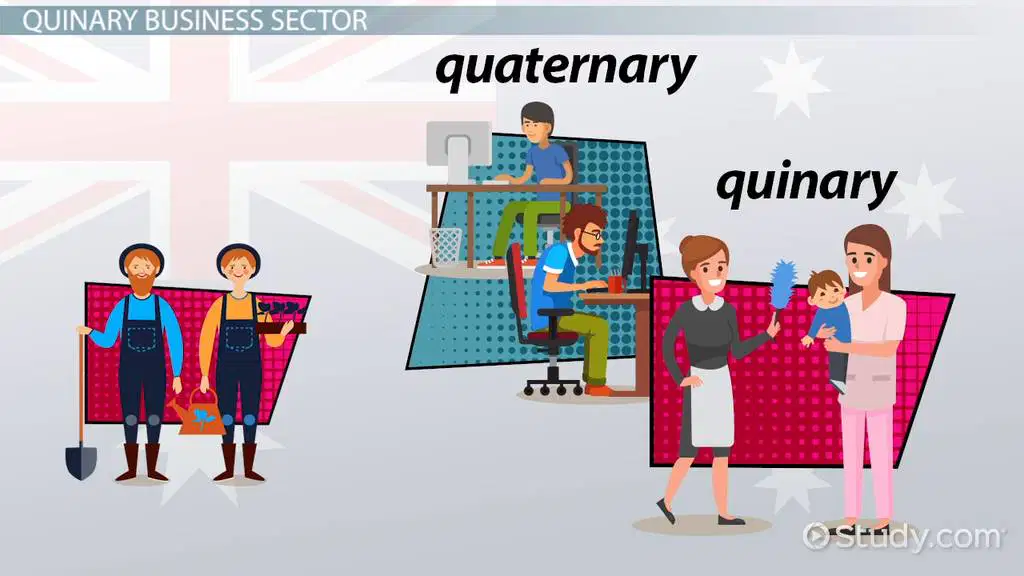
If a geography class is studying the "Quaternary Sector" of economic activity, which of the following professions would they most likely be analyzing?
A farmer harvesting corn in the Midwest
A factory worker assembling automobiles
A researcher analyzing data to improve medical technology
A truck driver transporting goods across the country

Which of the following are considered the four main "Factors of Production" required to produce goods and services?
Land (Natural Resources)
Labor (Human Resources)
Capital (Machinery and Money)
Entrepreneurship
Imports

When analyzing More Developed Countries (MDCs) compared to Less Developed Countries (LDCs), which of the following characteristics are typically found in More Developed Countries?
A high percentage of the workforce involved in subsistence farming
High literacy rates and longer life expectancies
Low Gross Domestic Product (GDP) per capita
Advanced infrastructure and technology
The fundamental economic problem that occurs because human wants are unlimited but the resources available to meet those wants are limited is known as _____________________.
Scarcity
Inflation
Opportunity Cost
Supply

When a country focuses on producing the goods that it can make more efficiently and at a lower cost than other countries, it is utilizing its ____________________ advantage.
Comparative
Absolute
Competitive
Monopolistic

The value of the next best alternative that is given up when an economic choice is made (for example, choosing to study instead of going to the movies) is called the ____________________ cost.
Opportunity
Marginal
Fixed
Sunk
In a Market Economy and a Command Economy, who answers the three basic economic questions (What to produce? How to produce? For whom to produce?)?
In a Market Economy, individuals and businesses answer the questions; in a Command Economy, the government answers them.
In both Market and Command Economies, the government answers the questions.
In a Market Economy, the government answers the questions; in a Command Economy, individuals and businesses answer them.
In both Market and Command Economies, individuals and businesses answer the questions.

Analyze the concept of "interdependence" in the modern global economy. How can a disruption in one part of the world (such as a natural disaster or war) affect the economy of a country on the other side of the world?
It can cause economic effects in distant countries due to interconnected trade and supply chains.
It only affects the local economy and has no impact elsewhere.
It leads to immediate economic growth in unaffected countries.
It results in complete isolation of the affected country from the global economy.
Explain the relationship between a country's investment in "Human Capital" (education and training) and its standard of living. Why do countries with higher literacy rates generally have stronger economies?
Countries with higher investment in human capital tend to have higher standards of living and stronger economies due to a more skilled and productive workforce.
Countries with higher investment in human capital tend to have lower standards of living and weaker economies due to increased government spending.
Countries with higher literacy rates generally have weaker economies because educated people do not contribute to economic growth.
Investment in human capital has no impact on a country's standard of living or economy.
Which of the following best describes the role of entrepreneurs in an economy?
They focus solely on agricultural production.
They are responsible for setting government policies.
They only work for large corporations and do not impact the economy.
They create new businesses and drive innovation, contributing to economic growth.
What is the main purpose of specialization in economic production?
To limit trade between countries.
To ensure every worker performs all tasks equally.
To reduce the number of available jobs in the economy.
To increase efficiency and output by allowing workers or countries to focus on tasks they perform best.
Which economic system allows individuals the most freedom to choose their occupation and own private property?
Market Economy
Command Economy
Traditional Economy
Subsistence Economy
Which of the following is an example of opportunity cost?
Buying a new phone instead of saving money for a vacation.
Receiving a paycheck for working overtime.
Finding a lost wallet on the street.
Paying taxes to the government.
What is the primary function of the market in a Market Economy?
To set prices and allocate resources through supply and demand.
To eliminate competition among businesses.
To control all production decisions by the government.
To ensure all citizens receive equal amounts of goods.

