
 Worksheets
25-26 Periodic Table Test Review
Total questions: 152
Worksheet time: 4hrs 45mins
Which two characteristics are associated with metals?
low first ionization energy and low electronegativity
low first ionization energy and high electronegativity
high first ionization energy and low electronegativity
high first ionization energy and high electronegativity
Which element has the most similar chemical properties to oxygen?
Fr
Ar
F
S
Which grouping of circles, when considered in order from the top to the bottom, best represents the relative size of the atoms of Li, Na, K, and Rb, respectively? Select the diagram that shows the circles increasing in size from the first to the fourth circle.


At STP, which element is brittle and not a conductor of electricity?
S
K
Na
Ar
The elements in the modern Periodic Table are arranged according to their
atomic number
oxidation number
atomic mass
nuclear mass
Which element is classified as a nonmetal?
Be
Al
Si
Cl
Lithium and potassium have similar chemical properties because the atoms of both elements have the same
mass number
atomic number
number of electron shells
number of valence electrons
At STP, O2(g) and O3(g) are two forms of the same element that have
the same molecular structure and the same properties
the same molecular structure and different properties
different molecular structures and the same properties
different molecular structures and different properties
Which Period 4 element has the most metallic properties?
As
Br
Ge
Sc
Element X is a solid that is brittle, lacks luster, and has six valence electrons. In which group on the Periodic Table would element X be found?
1
2
15
16
Which element has chemical properties that are NOT most similar to calcium?
Sr
Se
Mg
Be
Which element is malleable and can conduct electricity in the solid phase?
iodine
phosphorus
sulfur
tin
Which element has atoms with the greatest attraction for electrons in a chemical bond?
beryllium
fluorine
lithium
oxygen
Which trends are observed as each of the elements within Group 15 on the Periodic Table is considered in order from top to bottom?
Their metallic properties decrease and their atomic radii decrease.
Their metallic properties decrease and their atomic radii increase.
Their metallic properties increase and their atomic radii decrease.
Their metallic properties increase and their atomic radii increase.
The element in Group 14, Period 3 on the Periodic Table is classified as a
metal
noble gas
metalloid
nonmetal
A horizontal row of elements in the periodic table is known as a(n)
series
period
octet
group
The highly mobile electrons in the valence shell of metals results in metals being
dull
brittle
good conductors
poor conductors
Which substance contains particles held together by metallic bonds?
Ne
Ni
N
I
An atom in the ground state contains a total of 5 electrons, 5 protons, and 5 neutrons.
The electron configuration of this atom is 2-3.
Which Lewis electron-dot diagram represents this atom?




Which Lewis electron-dot diagram is correct for a S2− ion?
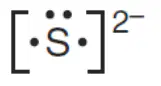
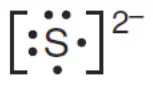
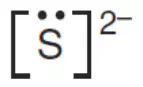
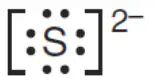
Graphite and diamond are both solid forms of the element carbon. Which statement explains the different properties of these two forms of carbon?
Diamond has ionic bonding and graphite has metallic bonding.
Diamond has metallic bonding and graphite has ionic bonding.
Diamond has a different crystal structure from graphite.
Diamond has carbon atoms with more valence electrons than graphite.
Which atom, in the ground state, has a stable valence electron configuration?
Bi
Cs
Pb
Rn
Which list of elements includes a metal, a metalloid, and a noble gas?
Rb, Cl, Ne
Sr, Si, Rn
Rn, Cl, Ne
Si, Rb, Sr
How many valence electrons does Oxygen have?
8
16
6
7
What is the number of electrons MOST atoms want in their valence orbital?
2
6
8
16

Is this the correct Lewis Dot Structure for Boron?
Yes
No, missing electrons
No, too many electrons
No, dots are in wrong place.


Which two elements have properties in common?
Nitrogen and Phosphorous
Oxygen and Nitrogen
Sulfur and Nitrogen

Mendeleev noticed that a (a) of (b) appeared when he arranged the elements in order of increasing (c) He found that the properties (d) regularly.
Please choose the atom with the larger atomic radius. (a)
Please choose the atom with the larger atomic radius. (a)
Most elements in a group have the same number of (a) in the outer energy level and tend to have similar (b)
Match the following
Alkali Metals
Group 1
Alkaline Earth Metals
Group 2
Halogens
Group 17
Noble Gases
Group 18
Increasing the number of protons in an atom within a row (a) the atomic number and (b) the radius of the atom.
Please choose the atom with the larger atomic radius. (a) L
Match the following metals with their family name.
Krypton (Kr)
Noble Gas
Oxygen
Non-metal
Arsenic
Semi Metal
Which periodic group (aka family) has the highest electronegativity? Click the spot on that group.

As you move from down a group on the Periodic Table...
The atomic radius (a) .
As you move from down a group on the Periodic Table...
The number of occupied energy levels (a) .
Which element is a good conductor of electricity and is malleable?
Si
Na
S
Cl
Which element has atoms with a complete octet in their valence shell in the ground state?
Si
Mg
Al
Ne
Which element is most likely to form a negative ion by gaining one electron?
Mg
Al
F
Na
As you look down a group, ionization energy and electronegativity
increases
decreases

Which element has the greater ionization energy?
Magnesium (Mg)
Phosphorus (P)

What is Ionization energy?
The energy used in a chemical reaction
Potential energy
The energy it takes to remove one electron from an atom or ion in its gaseous state
Explain why ionization energy decreases as you go down a group.
Outer electrons are further away from the nucleus you go down a group
Electrons feel less pull from the nucleus as you go down a group
Electrons are easier to remove as you go down a group
All of the above
Select all that explain the ionization energy trend within periods
electrons are closer to the nucleus
their is a weak pull between electrons from the nucleus, making them easily moveable
feel more of a pull from nucleus, making them harder to move
electrons are further from the nucleus

Which of the following lists the atoms in order of increasing Ionization energy?
calcium, iron, copper
copper, iron, calcium
calcium, copper, iron
iron, copper, calcium
Which element would you expect to have a higher ionization energy, sulfur (S) or chlorine (Cl), and why?
Sulfur, because it has a larger atomic radius
Chlorine, because it has a higher nuclear charge
Sulfur, because it has a lower nuclear charge
Chlorine, because it has a smaller atomic radius
What is the primary reason for the increase in ionization energy across a period?
Increase in atomic radius
Increase in nuclear charge
Decrease in electron shielding
Decrease in atomic mass
Why does ionization energy decrease as atomic radius increases?
Because electrons are closer to the nucleus
Because electrons are further from the nucleus
Because nuclear charge decreases
Because electron shielding decreases

Which element has a higher electronegativity value?
Niobium
Tin
Cadmium
Iodine
Electronegativity (a) as you go down a group.
Electronegativity trends are the same as:
Atomic radius trends
Ionization energy trends
Both of these
None of these
What does electronegativity do as you go across a period?
decrease
no pattern
stay the same
increase
As you move across a period, the outer electrons are ________ to the nucleus, so the nucleus of the atom is ________ to attract electrons in a bond.
closer, more able
closer, less able
further, less able
further, more able
Why does electronegativity decrease as you go down a group?
As you go down a group, the outer electrons are further away from the nucleus
As you go down a group, the nucleus is less able to attract electrons in a bond
Both of these
None of these
Electronegativity is the ability of an atom to attract electrons in a physical bond.
false
true
Match the following

Group

Period
1969 Periodic Table was organized by:
Atomic Mass
Modern Periodic Table is organized by:
Atomic Number
P or P-3
Which is larger
Na
Na+
Which is larger
I
I-
Which ion is larger
Cu+
Cu2+
H or F?

What is a positively-charged ion which forms when an atom loses electrons?
atom
ion
cation
anion

What is a negatively-charged ion which forms when an atom gains electrons?
cation
anion
electron
ion

What is a vertical (up and down) column in the periodic table?
group or family
period
periodic law
octet rule
Identify the number of valence electrons in each group
Know the valence electron trend
Why are certain elements not chemically active?
They have incomplete energy levels
They have complete energy levels
They are too heavy
They are too light
The main reason noble gases are found in nature as single atoms is because they (a) .
What is a key property of inert gases like helium?
Highly reactive
Non-reactive
Very dense
Very colorful
Which one of these is not a property of noble gases?
Colorless
Odorless
Flammable
Gas at room temperature
Name group 18 on the periodic table.
alkali metals
transition metals
alkaline earth metals
noble gases
The majority of elements on the periodic table are
man made
nonmetals
metals
gases
Which group have properties similar to both metals and nonmetals?
Halogens
Metalloids
Alkaline Earth Metals
Noble Gases

What is the name of this group?
Nonmetals
Alkali Metals
Transition Melals
Halogens
Match the following

Period 6
Group 6

Period 5
Group 3

Period 7
Group 8

Period 1
Group 18

Period 4
Group 3
Match the following

Group 1

Group 2

Group 13

Group 14

Group 15
Which is not a property of metals?
malleable
shiny
good conductors
brittle
Which is a chemical property
melting point
reactivity
boiling point
malleability
Which is a property of metals?
gas at room temperature
good conductors of electricity
brittle
Which particle is responsible for the reactivity of an element?
proton
neutron
electron
Which is true of the noble gases?
They do not react with other elements.
They are solid at room temperature.
They are reactive.
They are all heavy.
Which element has 2 valence electrons in its 2nd energy level?
beryllium
helium
magnesium
calcium
carbon
Which of the following elements has the 3rd energy level as its outermost level of electrons?
magnesium
lithium
potassium
neon
oxygen
Which of the following elements has 5 valence electrons?
boron
phosphorus
magnesium
chlorine
How are elements grouped on the periodic table?
Physical appearance
Number of protons
Number of valence electrons
Number of valence neutrons

This could be the dot diagram of
Mg
Cl
C
O
Which 3 elements have 3 valence electrons? (a) (b) (c)
B
Al
Ga
Be
Ge
Elements that have atoms with full valence shells in the ground state are in
Group 1
Group 2
Group 17
Group 18
Which elements have the most similar chemical properties?
boron and carbon
oxygen and sulfur
aluminum and bromine
argon and silicon
A chemist is looking for an element that reacts similarly to the element
lithium (Li). Which would be the best choice?
gold (Au)
neon (Ne)
fluorine (F)
sodium (Na)
Which best describes elements found in a column of the periodic table?
The elements have the same-size atoms.
The elements have the same atomic number.
The elements have similar chemical properties.
The elements are all found naturally in the same physical state.
Which best describes how the current periodic table is arranged?
by atomic mass
by atomic number
in alphabetical order by element symbol
in numerical order by number of neutrons in the nucleus
Which best describes the reactivity of metals when moving from left to
right on the periodic table?
They become less reactive.
They become more reactive.
The reactivity remains the same.
The reactivity decreases, then increases.
Which property would be most useful in placing a newly discovered
element in Group 18 (VIIIA) on the periodic table?
reactivity
malleability
conductivity
nonreactivity
Where would a new highly reactive metal most likely be placed on the
periodic table?
right side
left side
middle
top

Nonmetals break easily. They are ....
brittle
semiconductors
shiny

Which one is a semiconductor?
metals
nonmetals
metalloids
What are some general properties of nonmetals?
Shiny, good conductors of heat and electricity
Dull, poor conductors of heat and electricity
Malleable and ductile
High density and high melting points
What is the most reactive nonmetal?
Fluorine
Iodine
Chlorine
Bromine
Why do metallic compounds conduct electricity as solids?
core electrons are mobile, allowing electricity to flow through the metal
valence electrons are mobile, allowing electricity to flow through the metal
protons are mobile, allowing electricity to flow through the metal
the metal cations are mobile, allowing electricity to flow through the metal

Name one chemical property of nonmetals.
Tendency to gain electrons
Shiny appearance
Tendency to lose electrons
High thermal conductivity
Metalloids have the same properties as
metals.
nonmetals.
neither, they are a combination of both.
Classify the elements
Cu
N
Ge
B
Si
As
Sb
Na
Al
I
P
Se
H
Sn
Ni
Te
He
Ga
What are diatomic elements?
Elements that form two-atom molecules when not combined in a compound.
Two elements that combine with one atom from each element.
Elements that are always in pairs no matter what.
What are the seven diatomic elements?
H2, Cl2, Br2, O2, N2, I2, F2
H2, Cl2, I2, F2, Hg2, Br2, Fe2
H2, Cu2, Ni2, B2, O2, I2, Fe2
H
Diatomic
Monatomic
I
Diatomic
Monatomic
N
Diatomic
Monatomic
F
Diatomic
Monatomic
O
Diatomic
Monatomic
Cl
Diatomic
Monatomic
Br
Diatomic
Monatomic
B
Diatomic
Monatomic
Be
Diatomic
Monatomic
C
Diatomic
Monatomic
Ca
Diatomic
Monatomic
Na
Diatomic
Monatomic
Ne
Diatomic
Monatomic
Fe
Diatomic
Monatomic
P
Diatomic
Monatomic
Which element has the most metallic character in the Periodic table?
SODIUM
POTASSIUM
CEASIUM
RUBIDIUM
If an element has a low ionization energy, then it is likely to be …………….
NON-METALLIC
METALLIC
METALLOID
NOTA
As you move down a group in the periodic table, metallic character:
Decreases
Stays the same
First increases, then decreases
Increases
As you move across a period from left to right, nonmetallic character:
Increases
Stays the same
First decreases, then increases
Decreases
Why does metallic character increase down a group?
Atomic size decreases
Outer electrons are closer to the nucleus
Outer electrons are farther from the nucleus and easily lost
Nuclear charge increases
Across a period, metallic character:
Increases
Decreases
Varies randomly
Explain, in terms of atomic structure and coulombic attraction, why argon has a greater first
ionization energy than sulfur.
Explain, in terms of atomic structure and coulombic attraction, why barium has a lower first ionization energy than magnesium.
Explain why atomic radius increases down a group but decreases across a period.
Down a group electronegativity (a)
Because the atomic radius (b) which (c) the distance between the electrons and nucleus.
Leading to (d) attraction between the nucleus and the electrons.
Across a period electronegativity (a)
Because the atomic radius (b) which (c) the distance between the electrons and nucleus.
Leading to (d) attraction between the nucleus and the electrons.

