
 Worksheets
LO1: The Effective Communication Cycle
Total questions: 20
Worksheet time: 10mins
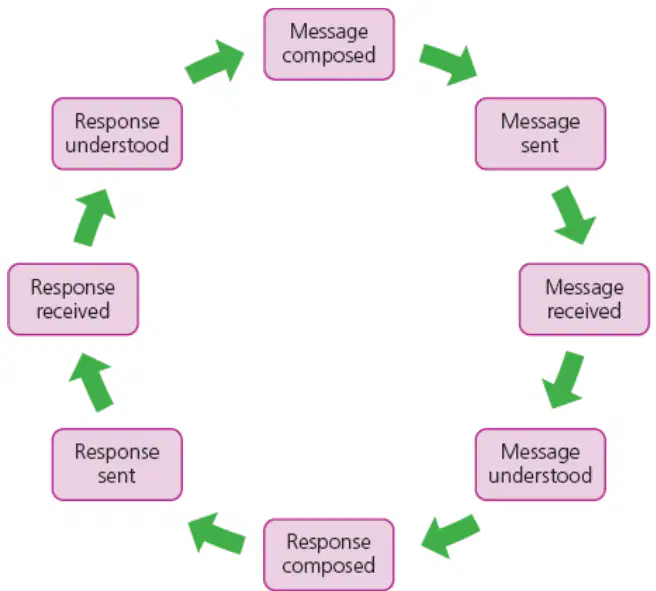
A patient asks a receptionist for directions to the outpatient department. Which sequence best applies the effective communication cycle to this scenario?
Question composed, message sent, message received, response composed
Question sent, message misunderstood, response received, response understood
Question asked, response sent, message composed, message understood
Message received, message understood, response sent, response composed
Which option best matches a medium with a situation that reduces a specific barrier to understanding in health settings?
Phone call to someone with severe hearing loss during clinic
Braille letter to a person with a visual impairment at home
Spoken Welsh to a receptionist who speaks only English
Shouted instructions in a noisy waiting room crowd
Which statement accurately distinguishes verbal from non‑verbal communication in health and social care practice?
Verbal includes body language, written and electronic forms
Non‑verbal cannot be misread when patients feel unwelcome
Non‑verbal always guarantees accurate understanding of intent
Verbal relies on shared language and dialect for clarity
A paramedic tells a patient with chest pain, “We’ll perform an ECG.” Which action best reduces the risk of miscommunication in this situation?
Use the full medical term then proceed quickly
Repeat the jargon more loudly to ensure hearing
Explain ECG in plain terms and its purpose
Avoid mentioning any procedure to reduce anxiety
Two people speak English but struggle to understand each other due to regional word choices like “snap” for ‘food’. What is the most accurate explanation for the difficulty?
Use of excessive medical abbreviations
Hearing loss causing background noise issues
Presence of strong emotional body posture
Differences in dialect affecting shared meanings
In a dimly lit ward, a person who relies on lip reading finds conversation harder than usual. Which environmental adjustment would most directly improve understanding?
Ask the person to sit farther away
Reduce use of regional vocabulary
Direct light toward the speaker’s face
Increase general volume in the whole room
A practitioner observes a client pacing the waiting room with arms tightly crossed and eyes down. What is the most appropriate interpretation to guide next steps?
Pacing shows boredom so reduce appointment time
Eye contact avoidance proves language misunderstanding
Crossed arms and downcast eyes suggest defensiveness or anxiety
Arms crossed indicate agreement with proposed care
A teenager reports spending many hours on social media and little time meeting friends in person. Which impact is most consistent with research trends on electronic communication among adolescents?
Lower loneliness regardless of interaction style
Higher loneliness with reduced face-to-face contact
Stronger eye contact from frequent texting
Improved body-language skills over time
A stroke survivor has severe speech difficulties but can indicate choices by looking at items. Which approach best supports functional communication in this case?
Regular verbal practice without any aids
Eye-gaze AAC using symbol-to-speech devices
Written notes without visual supports
Lip-reading training as sole intervention
Which smartphone feature is best matched to users with visual impairments needing access to on‑screen text while multitasking?
Built-in screen readers with gesture control
Night mode reducing blue light levels
Large on‑screen keyboard for typing fast
Bluetooth music streaming to earbuds
A support worker wants to show active listening while a client talks about feeling stressed. Which action best applies the skill?
Stand close and nod without speaking
Sit directly opposite, use closed questions
Look at notes while saying reassuring phrases
Sit angled at 90 degrees, use open questions
During a home visit, a practitioner notices the client backing away as they converse. What is the most appropriate adjustment to maintain effective communication?
Increase distance to respect personal space
Step closer to show strong interest
Sit directly opposite to gain control
Raise voice to ensure clear understanding
A nurse finds a patient stops listening when she speaks rapidly, but becomes impatient when she speaks very slowly. What should the nurse do to improve effectiveness?
Match her speaking pace to the patient
Keep a fixed medium pace always
Rely on notes instead of speaking
Focus only on intonation patterns
A support worker is invited to a service user’s birthday party on her day off. Which response best maintains a professional boundary while supporting rapport?
Politely decline and note the invitation in records
Attend briefly and bring a small personal gift
Attend fully and share personal contact number
Decline and stop friendly conversation at work
Which feature most clearly distinguishes a professional relationship from a personal one in health and social care?
Time-limited contact with defined purpose
Unrestricted socialising outside scheduled hours
Minimal reliance on formal policies
Shared interests beyond the workplace
A practitioner plans a patient’s discharge and then hands over to the community team. What policy-driven rationale best explains this handover?
Ensures role clarity and continuity of care
Reduces paperwork for the hospital staff
Allows practitioners to build friendships
Avoids professional accountability entirely
A colleague asks when confidentiality can be broken. Which action aligns with professional codes while remaining person-centred?
Keep all information secret in every circumstance
Reveal personal opinions to build quick rapport
Disclose details when a friend is curious
Share information if a person’s life is in danger
You are planning care for a new client from a different cultural background. Which approach best applies health and social care values?
Work with interpreters and advocates to support voice
Limit choices to avoid overwhelming the person
Share your personal life to build familiarity
Prioritise organisational targets over individual needs
A mental health practitioner needs to share a service user’s identifiable information with a school and police. Which action best aligns with HCPC confidentiality principles before disclosure?
Obtain written consent unless a clear safety risk exists
Share full records because multi-agency teams need context
Ask a colleague to disclose information on their behalf
Inform the media to raise community safeguarding awareness
Which grouping correctly identifies partners a health and social care practitioner regularly works with to support an individual?
Private insurers, laboratory machines, estates staff, volunteers
Pharmacists, diet trends, hospital buildings, digital kiosks
Pharmaceutical brands, equipment suppliers, research journals
Individuals, parents or carers, colleagues, external partners

