
 Worksheets
Electricity warm up
Total questions: 177
Worksheet time: 3hrs 53mins
What is the best definition for current.
the flow of charge.
how much charge flows past a point in a unit of time.
how much charge there is around the circuit.
the energy used by charge as it flows.
A current of 1.5 A flows for a time and a total of 15 C of charge flows past each point in a circuit. How long does the current flow?
22.5 s
10 s
0.1 s
16.5 s
How should an ammeter be connected to measure the current through a bulb?
In series with the bulb.
In parallel with the bulb.
It doesn't matter, you'll always get the same reading.
potential difference (Voltage) can be calculate from...
Voltage = Energy x Charge
Voltage = Energy x Current
Voltage = Energy / Charge
Voltage = Energy / Current
What is the voltage across a light bulb if it uses 100 J of energy per second and 0.5 coulombs of charge per second.
(a)
What is the relationship between potential difference, current and resistance across a component.
V = I/R
I = V x R
V = R/I
V = I x R

What is the resistance of the R2 resistor if the current is 0.8 A in ohms? (value only needed, no units.
(a)
What is the value of the voltage (V1)? (value only needed, no units.
(a)
Which type of circuit is better in a situation where you need to control several lights individually with different switches, but they all run off the same power supply?
Series
Parallel
Either.
Neither.

What is the unknown current at this wire junction? value and units.
(a)

What is the voltage on the 75 ohm resistor (V1)?
187.5 V
120 V
93.75 V
60 V
What is the current through the 75 ohm resistor (V1)?
(a)

A student measures the current across a component as the voltage is increased. What is this component most likely to be?
A commercial resistor.
A Thermistor.
An LDR.
A light bulb.
A wire in a water bath.
As the gradient of the graph line decreases this shows that the resistance is...
decreasing.
staying constant.
increasing.
the line has nothing to do with resistance.
The formula for electrical power is.
P = I x V
P = V/I
P = V/R
P = I x R
P = I/R
The units for electrical power are? (one word needed)
(a)
A light bulb runs on 12 V and 0.8 A what is the input power? (no unit needed).
(a)

If each cell provides a potential difference of 1.5 volts.What is the total potential difference provided by the four cells in the circuit?
(a)
In the circuit what is the name of the component labelled X?
Variable Resistor
Light-Dependent resistor
Thermistor
Resistor

Varying the voltage across a component and measuring the current a student collected some results.
The results obtained by the student have been plotted on a graph.
Which one of the following is the most likely cause of the anomalous result on this graph?
The resistance of the resistor changed.
The student misread the ammeter.
The Voltmeter had a zero error.
The ammeter had a zero error.
They didn't allow time for charge to build up in the circuit.
Varying the voltage across a component and measuring the current a student collected some results.
The results obtained by the student have been plotted on a graph.
What is the resistance of this component in ohms? (value only needed)
(a)

What is the component with the voltmeter across it?
A resistor
A variable resistor
An LDR
A Thermistor
The current in the circuit is 3.5 mA when the potential difference across the thermistor is 4.2 V
Calculate the resistance of the thermistor in ohms. (value only needed).
(a)

What will happen to the voltage reading if the temperature on the thermistor increases?
it increases
it decreases
it stays the same
Which graph shows the IV graph for a Diode?


The ammeter displays a reading of 0.10 A.Calculate the potential difference across the 45 Ω resistor.
(a)
The ammeter displays a reading of 0.10 A.
Calculate the resistance of the resistor labelled R in ohms. (no units needed)
(a)
State what happens to the total resistance of the circuit and the current through the circuit when switch S is closed.
The resistance decreases and the current decreases
The resistance increases and the current increases
The resistance increases and the current decreases
The resistance decreases and the current increases
If switch S is open (as in the diagram), what is the power used by the 60 ohm resistor? The current in the circuit is 0.1 A.
(a)

If two circuits are constructed both with two 60 ohm light bulbs and a 12 V power supply.
What is true of the total power in each circuit?
The same.
Less in parallel.
Double in parallel.
Four times greater in parallel.
When the light intensity on an LDR increases then its resistance...
Stays the same
Increases
Decreases
How should an ammeter be connected to measure the current through a bulb?
In series with the bulb.
In parallel with the bulb.
It doesn't matter, you'll always get the same reading.
A student measures the current across a component as the voltage is increased. What is this component most likely to be?
A commercial resistor.
A Thermistor.
An LDR.
A light bulb.
A wire in a water bath.
As the gradient of the graph line decreases this shows that the resistance is...
decreasing.
staying constant.
increasing.
the line has nothing to do with resistance.

This is the symbol for a...
Motor
Ammeter
Bulb
Voltmeter

This is the symbol for a...
Light Dependent Resistor
Light Emitting Diode
Thermistor
Cell

This is the symbol for a...
Fuse
Wire
Light Emitting Diode
Heater

Calculate the voltage across the fixed resistor.
0.3 V
3 V
4.8 V
12 V
Which resistor will prevent the most current flow?
1 Ω
100 Ω
1000 Ω
0.5 Ω
What size resistor would produce a 3A current flow if the voltage was 12V?
1 Ohm
3 Ohms
4 Ohms
12 Ohms
How do you calculate current from voltage and resistance?
Current = voltage x resistance
Current = resistance x power
Current = voltage ÷ resistance
Current = resistance ÷ voltage
As the diameter of a wire increases, the resistance of the wire will
increase
decrease
stay the same
As the length of a wire increases, the resistance of the wire will
increase
decrease
stay the same
If the current through a resistor is 2A and the voltage across it is 12V, what is the resistance
12Ω
6Ω
24Ω
0.167Ω
What is the unit of current?
Ohm
Ampere (A)
Joule
Volt
State Ohm's Law.
V = R / I
R = V * I
V = I * R
I = V / R
Calculate the resistance if the potential difference is 12V and the current is 3A.
2 ohms
8 ohms
6 ohms
4 ohms
What happens to the current in a circuit if the resistance is increased?
The current in the circuit becomes negative.
The current in the circuit remains the same.
The current in the circuit decreases.
The current in the circuit increases.
Define potential difference.
The speed of electrons between two points in an electric field
The resistance between two points in an electric field
The amount of charge between two points in an electric field
The difference in electric potential energy between two points in an electric field.
Fill in the blank: Resistance is measured in ________.
Volts
Amps
Ohms
Watts
In a series circuit, how does the total resistance compare to individual resistances?
Total resistance is unrelated to individual resistances.
Total resistance is greater than the sum of individual resistances.
Total resistance is equal to the sum of individual resistances.
Total resistance is less than the sum of individual resistances.
What is the formula to calculate power in a circuit?
P = V + I
P = V * I
P = V / I
P = V ^ I
Explain the relationship between current and resistance in a circuit.
Current and resistance in a circuit are inversely proportional according to Ohm's Law.
Current and resistance in a circuit have no relationship.
Current and resistance in a circuit are directly proportional according to Ohm's Law.
Current and resistance in a circuit are only related in AC circuits.
What is the purpose of a resistor in an electrical circuit?
To limit the flow of current in an electrical circuit.
To store energy in an electrical circuit.
To amplify the signal in an electrical circuit.
To increase the voltage in an electrical circuit.
True or False: Current is the flow of electrons in a circuit.
Absolutely
False
True
Yes
Calculate the current if the resistance is 4 ohms and the potential difference is 8V.
2A
4A
10A
6A
What is the symbol for resistance in a circuit diagram?
zigzag line
straight line
square
circle
How does the resistance of a wire change if its length is doubled?
The resistance will double.
The resistance will halve.
The resistance will decrease.
The resistance will remain the same.
What is the SI unit of resistance?
Ampere
Volt
Ohm (Ω)
Joule
Explain how the potential difference affects the current in a circuit.
The potential difference has no impact on the current in a circuit
Increasing the potential difference decreases the current
The potential difference affects the current in a circuit by increasing or decreasing it proportionally.
Decreasing the potential difference increases the current
Fill in the blank: The potential difference across a component is measured in ________.
volts
ohms
watts
amperes
What is the relationship between potential difference and current in a circuit?
Potential difference is inversely proportional to current.
Potential difference has no effect on current.
Current in a circuit is constant regardless of potential difference.
Current in a circuit is directly proportional to potential difference.
What happens to the current if the potential difference is doubled in a circuit?
The current will double.
The current will halve.
The current will quadruple.
The current will remain the same.
Describe the behavior of current in a parallel circuit.
The behavior of current in a parallel circuit is that it splits up and flows through each branch independently.
The behavior of current in a parallel circuit is that it combines and flows through all branches simultaneously.
Current in a parallel circuit always follows the path of least resistance.
In a parallel circuit, current only flows through one branch at a time.
In a series circuit...
the current is the same everywhere.
the current is split between components.
the voltage is the same everywhere.
the voltage is split between components.
Ammeters should always be connected in (a) .
In parallel circuits...
the current is the same everywhere.
the current splits at a junction.
the voltage is the same everywhere.
the voltage splits at a junction.
In a series circuit, if one component breaks the others will remain on.
True
False

What is the missing value on the voltmeter?
(a)

What is the missing value on the ammeter?
(a)

What is the reading on the labelled ammeter?
(a)
Voltmeters should always be connected in (a) around a component.
Potential difference is another word for (a) .


Y = OFF
Y = OFF
Y = ON
Y = ON

What is the current at point a?
a=0.4A
a=0.2A
a=1.0A
a=0.6A
This is the symbol for a...
Motor
Ammeter
Bulb
Voltmeter

This is the symbol for a...
Thermistor
Bulb
Fixed Resistor
Ammeter
This is the symbol for a...
Light Dependent Resistor
Light Emitting Diode
Thermistor
Cell

This is the symbol for a...
Light Emitting Diode
Fuse
Fixed Resistor
Variable Resistor

This is the symbol for a...
Bulb
Voltmeter
Ammeter
Motor

This is the symbol for a...
Light Emitting Diode
Light Dependent Resistor
Fuse
Cell

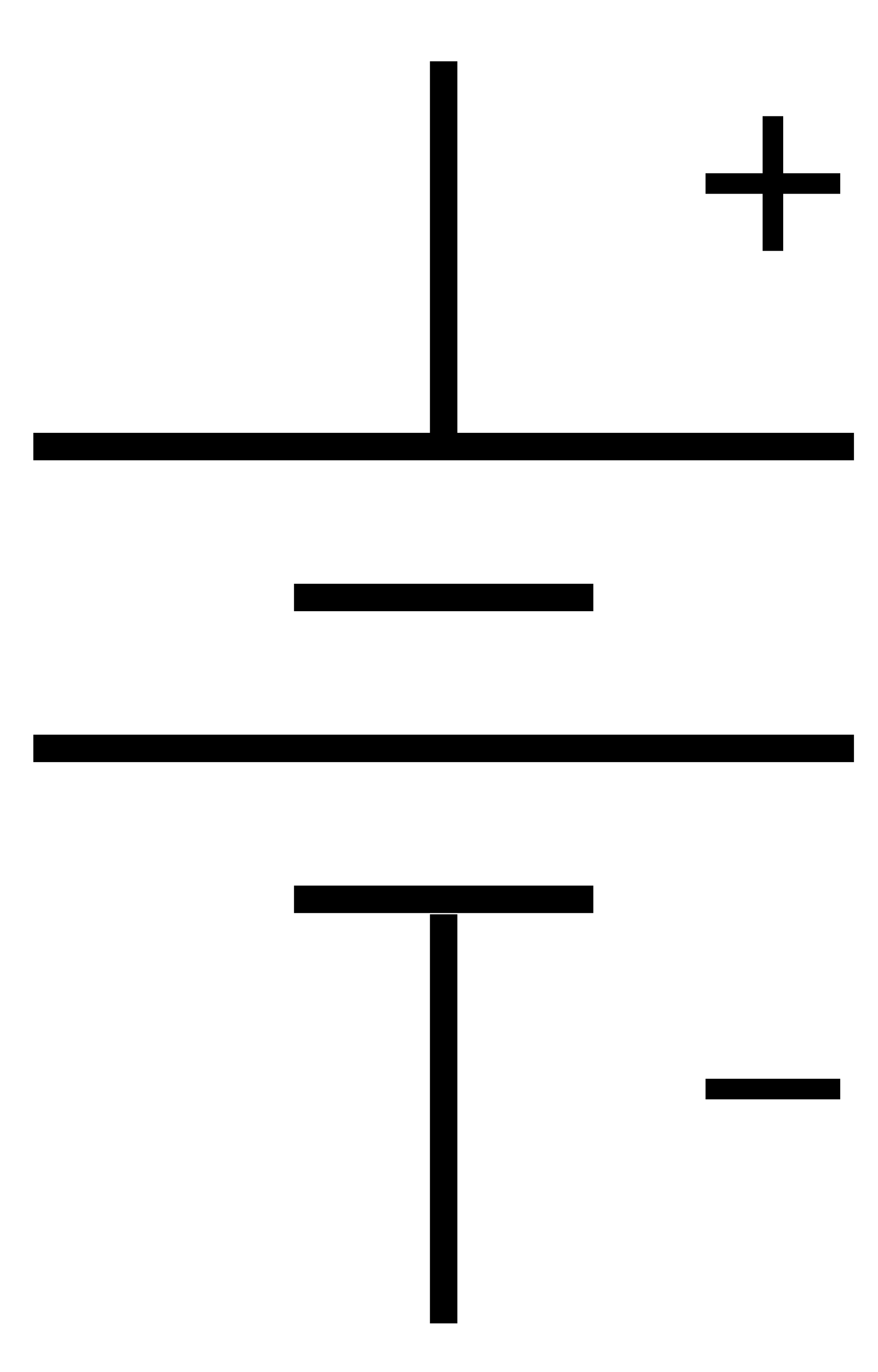
This is the symbol for a...
Fuse
Cell
Fixed Resistor
Variable Resistor
This is the symbol for a...
Fuse
Wire
Light Emitting Diode
Heater

This is the symbol for a...
Wire
Motor
Variable Resistor
Thermistor

This is the symbol for a...
Motor
Thermistor
Fuse
Battery

This is the symbol for a...
Battery
Thermistor
Motor
Fuse

This is the symbol for a...
Thermistor
Fixed Resistor
Variable Resistor
Fuse

This is the symbol for a...
Fixed Resistor
Variable Resistor
Light Dependent Resistor
Fuse

The graph shows the change in current with potential difference for
an LED
a filament lamp
a diode
a thermistor
To calculate the resistance of the component at a particular potential difference you
read the current at that point on the graph and calculate p.d divided by current
draw a tangent to the line at that point and calculate the gradient
draw a tangent to the line at that point and calculate 1/gradient
read the current at that point on the graph and calculate current/p.d
The resistance of the component
is always constant as the p.d. increases
starts high and then decreases as the p.d. increases
starts constant for low values of p.d. and then increases as the p.d. increases
starts constant for low values of p.d. and then decreases as the p.d. increases

Which component has the highest resistance?
1
2
The components 1 and 2 which produced this IV graph are:
Resistors
Filament lamps
Diodes
A combination of the above

Where would you place an ammeter in the circuit?
Green ?
Red ?
Where would you place a voltmeter in the circuit?
Green ?
Red ?

What is the relationship between the readings on Ammeters A1, A2 and A3
A1 = A2 + A3
A3 = A1 + A2
A1 = A2 = A3
A3 = A1-A2
What is the relationship between the readings on Ammeters A1, A2 and A3
A1 = A2 + A3
A3 = A1 + A2
A1 = A2 = A3
A3 = A1-A2

What is the relationship between the readings on Ammeters A1, A2 and A3?
A1 = A2 = A3
A1 = A2 - A3
A3 = A1 + A2
A3 = A1 - A2

This is an example of a _________ circuit
series
parallel
The reading on Voltmeter V1 is
15V
6V
9V
12V
The reading on Voltmeter V2 is
15V
6V
9V
3V

The reading on the voltmeter is
3 V
6 V
12 V
Can not answer as need to know the resistance of the bulb.
What is the unit of measurement for resistance?
Voltage
Ampere
Watts
Ohms
the formula to find current when the values of V and R are known is
I = V2R
I = V/R
I = R/V
I=VR

which component produces an IV graph like this?
resistor
diode
filament bulb
fuse

which component produces an IV graph like this?
resistor
diode
filament bulb
fuse

which component produces an IV graph like this?
resistor
diode
filament bulb
fuse
If a charge flows through a resistor, which of the following happens to the resistor?
It gets colder
It gets hotter
It becomes positively charged
Nothing
In a filament lamp, in what form is most of the energy lost?
Heat
Sound
Kinetic energy
Radio waves
What is power?
The number of repetitions of squats a body-builder can perform
The number of cylinders in a car
The rate at which energy is absorbed
The rate at which energy is transferred
What is the formula for power?
P = E⁄t
P = t⁄E
P = E⁄2t
P = 2E⁄t
Calculate the power of an appliance that uses 1000 joules of energy in 5 seconds.
100 W
200 W
300 W
400 W
Power, potential difference and current are correctly related by which equation?
P = I x V
P = 2I x V
P = I⁄V
P = I⁄2V
What is the voltage of an appliance if it uses 200 J per second when supplied with a current of 5 A?
10 V
20 V
30 V
40 V
Which equation correctly shows the relationship between energy transferred, voltage and charge?
E = V x Q
E = 2V x Q
E = V⁄Q
E = Q⁄V
What is the energy transferred if the voltage is 5 V and the charge is 10 C?
50
25
50 J
25 J
A refrigerator does 1500 J of work in 5 seconds. What is its power?
300 Watts
500 Watts
200 Watts
100 Watts
A heater transfers 1200 J of energy in 3 seconds. What is its power?
400 watts
200 watts
600 watts
800 watts
A heater transfers 1200 J of energy in 3 seconds. What is its power?
400 watts
200 watts
600 watts
800 watts
A fan does 200 J of work in 4 seconds. What is its power?
50 Watts
100 Watts
200 Watts
400 Watts
A light bulb has a power of 60 watts. If it is used for 5 seconds, how much energy does it consume?
12 J
120 J
300 J
600 J
A machine transfers 800 J of energy in 4 seconds. What is its power?
200 watts
100 watts
400 watts
600 watts
A motor does 1000 J of work in 2 seconds. What is its power?
500 Watts
200 Watts
100 Watts
300 Watts

1.4A
1.7A
2.0A
2.4A

A
B
C
D

What does the voltmeter read?
2 V
3 V
10 V
1 V

What is the reading of the ammeter
0.32 A
0.44 A
1 A
0.28 A
A power bank can store 5600 J of energy. When connected to a phone of power rating 2.5 W, how long will it take to charge? (Hint: Assume all energy is transferred to the phone.)
It takes roughly 380 kJ to boil a litre of water. How long will it take a 1.8 kW kettle to boil a litre of water?
A 60 W light bulb is turned on for 4 hours. How much energy does it require?
The mains voltage in the UK is 230 V. What would the current be in a 90 W power cable?
A 60 W bulb is supplied with 36 000 J of energy. How long is the bulb on for?
If a charge flows through a resistor, which of the following happens to the resistor?
It gets colder
It gets hotter
It becomes positively charged
Nothing
In a filament lamp, in what form is most of the energy lost?
Heat
Sound
Kinetic energy
Radio waves
What is power?
The number of repetitions of squats a body-builder can perform
The number of cylinders in a car
The rate at which energy is absorbed
The rate at which energy is transferred
What is the formula for power?
P = E⁄t
P = t⁄E
P = E⁄2t
P = 2E⁄t
Calculate the power of an appliance that uses 1000 joules of energy in 5 seconds.
100 W
200 W
300 W
400 W
Power, potential difference and current are correctly related by which equation?
P = I x V
P = 2I x V
P = I⁄V
P = I⁄2V
What is the voltage of an appliance if it uses 200 J per second when supplied with a current of 5 A?
10 V
20 V
30 V
40 V
Which equation correctly shows the relationship between energy transferred, voltage and charge?
E = V x Q
E = 2V x Q
E = V⁄Q
E = Q⁄V
What is the energy transferred if the voltage is 5 V and the charge is 10 C?
50
25
50 J
25 J
A refrigerator does 1500 J of work in 5 seconds. What is its power?
300 Watts
500 Watts
200 Watts
100 Watts
A heater transfers 1200 J of energy in 3 seconds. What is its power?
400 watts
200 watts
600 watts
800 watts
A heater transfers 1200 J of energy in 3 seconds. What is its power?
400 watts
200 watts
600 watts
800 watts
A fan does 200 J of work in 4 seconds. What is its power?
50 Watts
100 Watts
200 Watts
400 Watts
A light bulb has a power of 60 watts. If it is used for 5 seconds, how much energy does it consume?
12 J
120 J
300 J
600 J
A machine transfers 800 J of energy in 4 seconds. What is its power?
200 watts
100 watts
400 watts
600 watts
A motor does 1000 J of work in 2 seconds. What is its power?
500 Watts
200 Watts
100 Watts
300 Watts
1.4A
1.7A
2.0A
2.4A
A
B
C
D
What does the voltmeter read?
2 V
3 V
10 V
1 V
What is the reading of the ammeter
0.32 A
0.44 A
1 A
0.28 A
A power bank can store 5600 J of energy. When connected to a phone of power rating 2.5 W, how long will it take to charge? (Hint: Assume all energy is transferred to the phone.)
It takes roughly 380 kJ to boil a litre of water. How long will it take a 1.8 kW kettle to boil a litre of water?
A 60 W light bulb is turned on for 4 hours. How much energy does it require?
The mains voltage in the UK is 230 V. What would the current be in a 90 W power cable?
A 60 W bulb is supplied with 36 000 J of energy. How long is the bulb on for?