
 Worksheets
Personal finances
Total questions: 30
Worksheet time: 2hrs 30mins
What is the best definition of savings in personal finance?
All cash kept only for daily expenses
Portion of income not spent on consumption
Money borrowed to buy large purchases
Income not yet earned by a person
Which situation best explains why having an emergency fund is important?
Paying for a planned summer vacation
Planning a routine grocery list each week
Buying more luxury items on sale
Covering unexpected medical bills or repairs
Which factor would most likely reduce how much a person needs to save each month?
Unstable freelance income with big swings
Secure monthly salary with strong benefits
High upcoming costs like a car purchase
Poor health requiring frequent medicines
A student earns $600 monthly from a part‑time job and follows the 10% savings rule. How much should they save each month?
$120 saved each month
$90 saved each month
$60 saved each month
$30 saved each month
Which statement correctly links income, consumption, and saving?
Income equals consumption plus saving
Saving equals income minus taxes only
Consumption equals saving minus income
Income equals saving minus consumption
Someone plans to buy a car within two years. Which strategy aligns with smart saving based on goals?
Save less now since costs are far away
Save more as the goal is valuable
Invest everything with zero cash reserve
Rely only on credit without saving
Which step comes first when creating a family budget?
Formulate and save goals
Prioritize spending categories
Evaluate and adjust plan
Identify income and expenses
Which statement best defines fixed obligatory expenses?
Costs that vary but are necessary
Costs that recur and cannot be reduced
Costs chosen freely and eliminable
Costs that occur only once a year
Which item is most likely a necessary variable expense for a household?
Groceries and cleaning supplies
Monthly mortgage payment
Streaming service subscription
Birthday gifts for friends
A family wants to cut spending quickly without risking missed obligations. Which category should they reduce first?
Discretionary expenses like dining out
Fixed obligatory expenses like rent
Essential utilities like water bills
Debt repayments like loan installments
Which example best illustrates discretionary spending?
Purchasing bus fare for work
Buying essential school materials
Paying annual property taxes
Going to the movies with friends
A household’s electricity bill rises from 60to 90. Which type of variation is this, and why?
Relative increase of 100% because it doubled
Absolute decrease of $30 because usage fell
Relative decrease of 50% because it got smaller
Absolute increase of $30 because dollars changed
Which statement best defines a fixed interest rate on a loan?
It increases only when inflation increases
It decreases automatically as you repay
It stays the same throughout the loan term
It changes each month with market movements
What is the primary difference between fixed and variable interest rates?
Fixed is lower interest, variable is higher interest
Fixed applies to mortgages, variable to credit cards
Fixed depends on credit score, variable does not
Fixed stays constant, variable can fluctuate
The Annual Equivalent Rate (TAE) is most useful for which purpose?
Estimating future salary growth rates
Predicting stock market performance
Comparing the total yearly cost of credit
Calculating only the principal repayment
Which consequence is a realistic risk of not paying debts on time?
Interest converting from variable to fixed
Legal action and possible asset seizure
Automatic loan forgiveness after one year
Credit score increasing due to warnings
A sound budget should include which element as a core component?
Only variable costs without categories
Debt payments ignored until year end
Planned savings treated as fixed expense
Irregular spending without tracking
Your grocery spending fell from €1,770 in Q1 to €1,500 in Q2. What is the relative variation, rounded to the nearest whole percent?
−18% compared with the first quarter
−15% compared with the first quarter
−20% compared with the first quarter
−25% compared with the first quarter
A lender offers Loan A at 12% TAE with €0 fees and Loan B at 10% nominal interest but with €300 upfront fees on a one‑year €3,000 loan. Which option costs less for one year?
Loan A because total annual cost is lower
Loan B because fees do not affect TAE
Loan A because fees raise the nominal rate
Loan B because nominal rate is lower
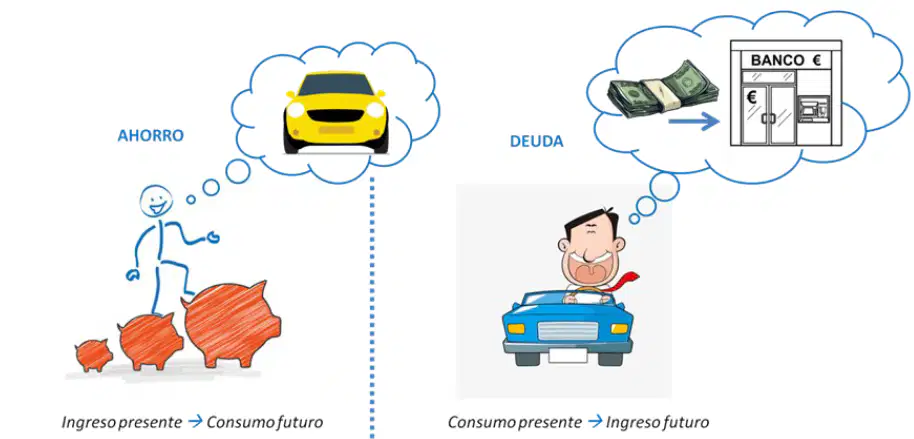
Which statement best distinguishes saving from borrowing in terms of timing of consumption and income?
Borrowing shifts present consumption to future income
Saving shifts present income to future consumption
Saving shifts future income to present consumption
Borrowing shifts future consumption to present income
A loan of €100 at 5% simple interest for one year requires repayment of how much in total?
€110 including compounding
€100 exactly after one year
€102 including small fees
€105 including only interest
Which description matches a fixed interest rate on a loan?
It is waived if payments are on time
It stays the same during the entire loan
It doubles at the end of the loan
It changes weekly with market gossip
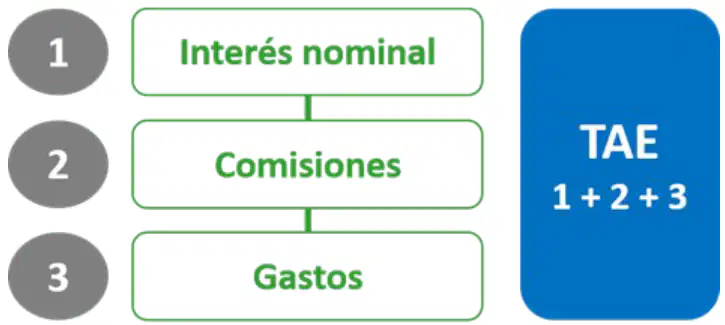
What does APR (TAE) aim to measure when comparing loans of the same term?
Only the nominal interest charged
Only closing costs excluding rates
The global yearly cost including fees
The monthly payment before taxes
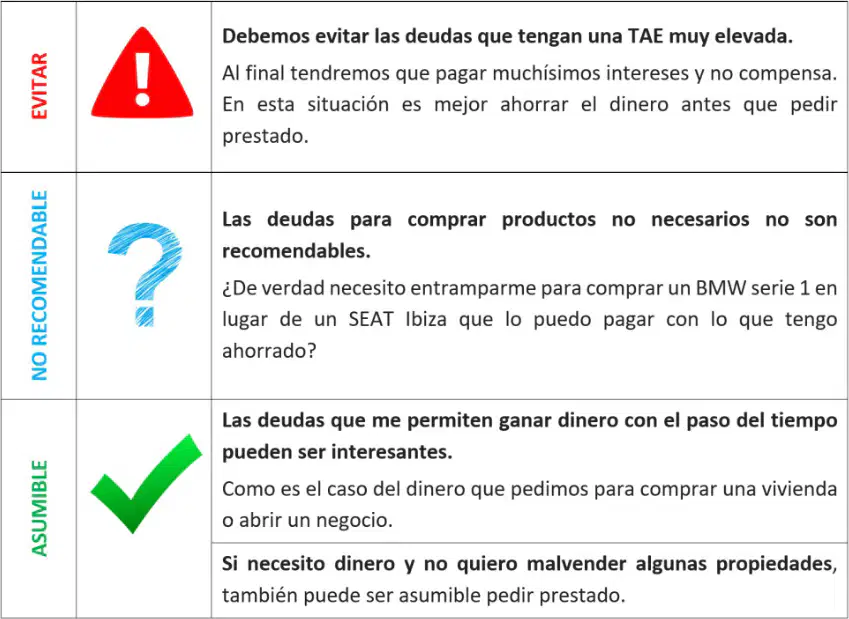
Which debt is generally least advisable based on manageability guidelines shown?
High-APR debt for nonessential items
Mortgage for a primary residence
Loan that helps start a business
Borrowing to avoid selling assets
A family earns €3,000 monthly. To avoid excessive debt, what is the maximum total monthly debt payment suggested by a 40% limit?
€1,500 across all debts
€1,200 across all debts
€900 across all debts
€2,000 across all debts
Which statement best describes a primary benefit of making a simple monthly budget?
It eliminates all unexpected expenses permanently
It removes the need to limit discretionary spending
It guarantees higher income each following month
It helps track income and plan savings regularly
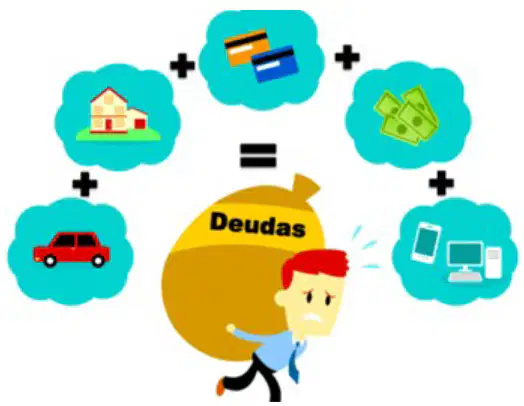
A common rule for safe family debt levels suggests that total monthly debt payments should not exceed what share of monthly income?
About three-fifths of monthly income
About four-fifths of monthly income
About one-fifth of monthly income
About two-fifths of monthly income

Which expense is most likely a want rather than a need for a teenager learning to manage an allowance?
Upgrading to brand-name sneakers
Basic school transportation fare
A modest data plan for schoolwork
Replacing worn-out school supplies

Someone starting a first job wants to avoid overspending. Which plan best applies the advice given?
Spend less than income and save every month
Use credit to buy desired items first
Increase lifestyle quickly with new income
Delay saving until debts appear later
Why is taking a large loan for a new car often riskier than for a house, according to the guidance?
Cars depreciate quickly after purchase
Houses are harder to resell than cars
Cars have lower insurance costs
Houses usually lose value faster

