
 Worksheets
Trade in the Middle Ages
Total questions: 20
Worksheet time: 10mins
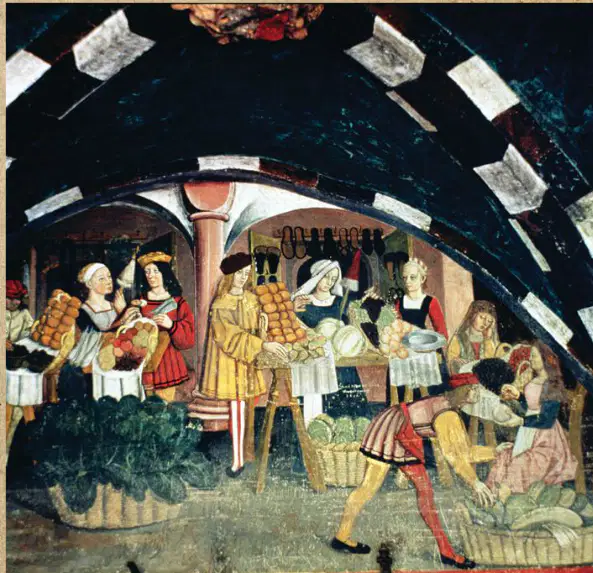
What type of goods were primarily traded at the beginning of the Middle Ages?
Everyday necessities
Luxury goods
Agricultural tools
Handmade crafts
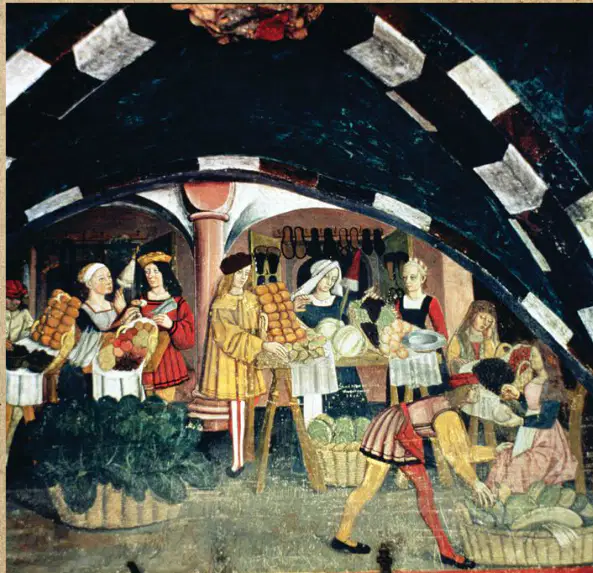
Who could afford the luxury goods traded during the Middle Ages?
Farmers
Wealthy people
Merchants
Everyone
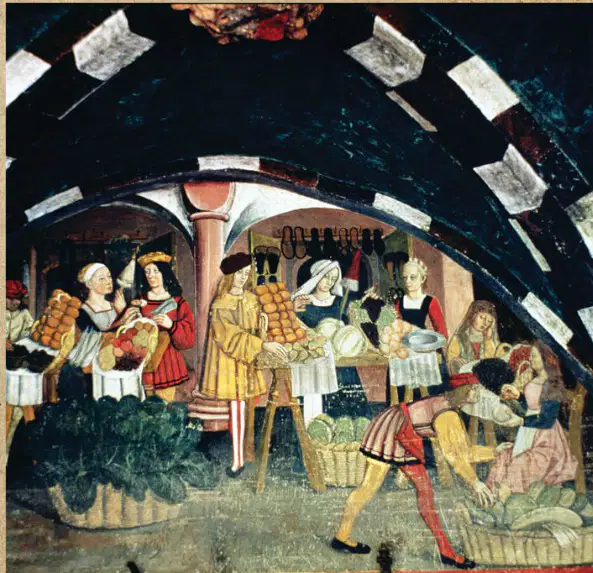
What did people in the Middle Ages make for themselves?
Luxury goods
Everyday necessities
Jewelry
Weapons
What is the difference between trading and selling?
Selling is giving something for goods, while trading is giving something for money.
Selling is giving something for money, while trading is giving something for goods.
Selling and trading both involve giving something for goods.
Selling and trading both involve giving something for money.
What impacts did trade have on people during the Middle Ages?
It led to the decline of cities.
It improved cultural exchange and economic growth.
It caused the end of agriculture.
It had no significant impact on society.
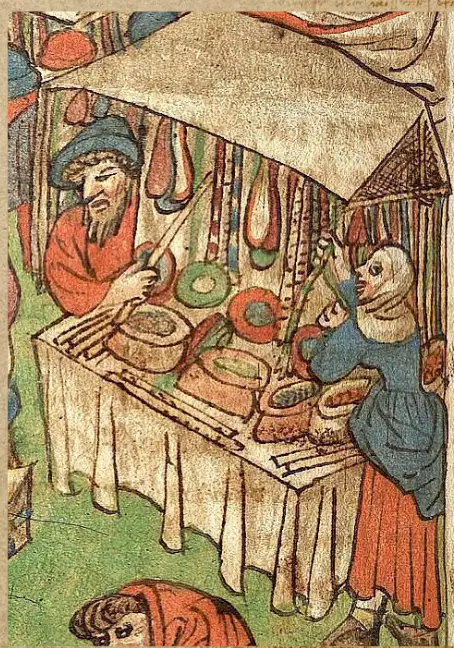
What were local people buying and selling more of during the High Middle Ages?
Everyday products like food, clothing, and household items.
Rare artifacts and treasures.
Weapons and armor.
Exotic animals.
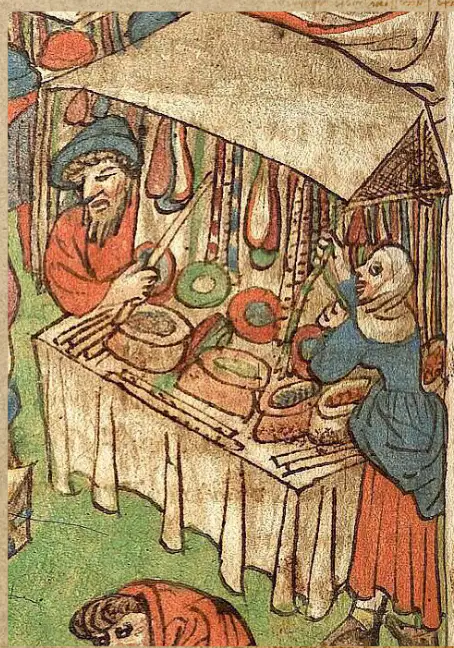
What types of goods did different towns begin specializing in during the High Middle Ages?
Woolen cloth, glass, and silk.
Gold, spices, and jewels.
Furniture, pottery, and tools.
Books, paintings, and sculptures.
What was one impact of trade on people during the Middle Ages?
People stopped buying and selling goods.
People began buying and selling more goods.
Towns became less important.
People stopped specializing in goods.
What did towns in the Middle Ages begin to do as a result of trade?
Towns specialized in certain goods.
Towns stopped trading goods.
Towns became smaller and less important.
Towns focused only on farming.
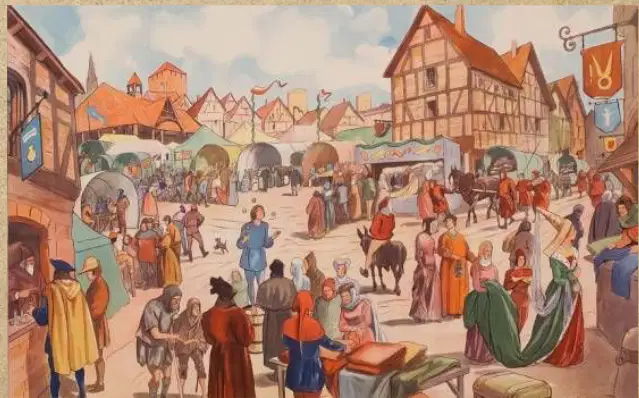
What was the purpose of markets in most towns during the Middle Ages?
To hold festivals and celebrations
To buy and sell food and local goods
To train soldiers for war
To build castles and fortresses
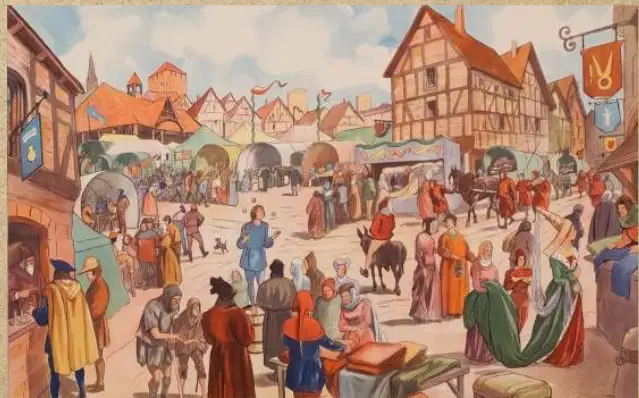
How often were great merchant fairs held in the Middle Ages?
Every day
Once a month
A few times a year
Once a week
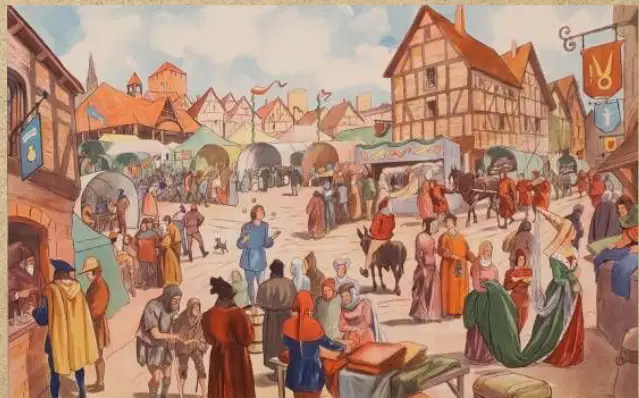
What was one of the main attractions of market fairs in the Middle Ages?
They attracted merchants from many countries who sold goods from all over Europe.
They were used for royal meetings and ceremonies.
They were places to train knights for tournaments.
They were used to store food for the winter.
What was one of the impacts of trade during the Middle Ages?
People began buying and selling more goods
People stopped trading goods altogether
Towns became less important
Markets were banned in towns
What did towns in the Middle Ages specialize in?
Certain goods
Farming only
Building castles
Avoiding trade
How are markets today similar to medieval markets?
People still buy and sell things, but the things have changed.
Markets today only sell food items.
Medieval markets were online, just like today.
Markets today do not involve buying and selling.
What was one of the impacts of trading on languages?
Languages were forgotten due to trade.
Languages were learned through trade.
Trade had no impact on languages.
Languages were replaced by symbols.
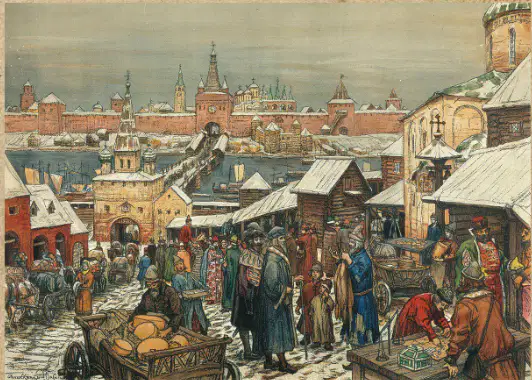
How did merchants benefit from the growth of trade and commerce?
Merchants became increasingly powerful and wealthy.
Merchants lost their wealth due to competition.
Merchants became less influential in society.
Merchants focused only on agriculture.
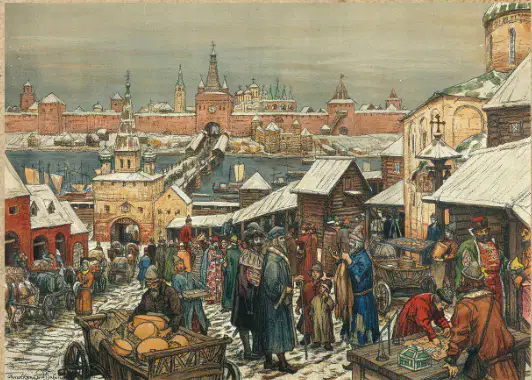
What role did merchant guilds play in towns and cities?
Merchant guilds dominated the business life of towns and cities.
Merchant guilds focused only on farming.
Merchant guilds were not involved in business activities.
Merchant guilds were replaced by royal families.
What was one impact of trading during the Middle Ages?
Languages were learned through trade.
Merchants became poor.
Towns stopped trading.
Markets disappeared.
What are two effects that resulted from trade during the Middle Ages?
Traders got rich; Regular people could buy things they needed.
Traders lost money; Regular people stopped buying goods.
Traders became farmers; Regular people started trading.
Traders moved to rural areas; Regular people became self-sufficient.

