
 Worksheets
Unit 111: Introduction to LCS Pipework
Total questions: 34
Worksheet time: 17mins

Which statement best describes typical applications of low carbon steel (LCS) pipework in commercial settings?
Primarily for central heating circuits
Mainly for decorative trim pieces
Commonly for electrical conduit runs
Mostly for rainwater downpipes outdoors
When LCS pipework is used to carry domestic hot and cold water, what is required to prevent rusting?
Apply galvanised protective coating
Add corrosion inhibitor tablets
Use thicker wall pipe sections
Install plastic insulation sleeves
Why is identifying and using the correct tools important when fabricating LCS pipework?
Eliminates site supervision
Reduces need for permits
Speeds up billing processes
Ensures safe, proper fabrication
What is a key maintenance goal for hand and power tools used on LCS pipework?
Keep tools in good condition
Store tools near heat sources
Use tools without regular checks
Replace tools every six months
Which practice best reduces dermatitis risk when handling low carbon steel (LCS)?
Use cotton overalls to absorb oil
Apply barrier cream or wear gloves
Wash hands only after the shift
Rinse hands briefly with cold water
You have oily hands from working with LCS. What is the correct action?
Wipe hands on overalls to keep clean
Use a rag instead of overalls
Let oil air-dry without wiping
Rub oil into skin for protection
Why does tool selection differ when working on LCS compared with copper or plastic pressure pipe?
LCS is weaker than copper and plastic
LCS is stronger and tougher than them
LCS conducts electricity more efficiently
LCS is lighter and easier to cut
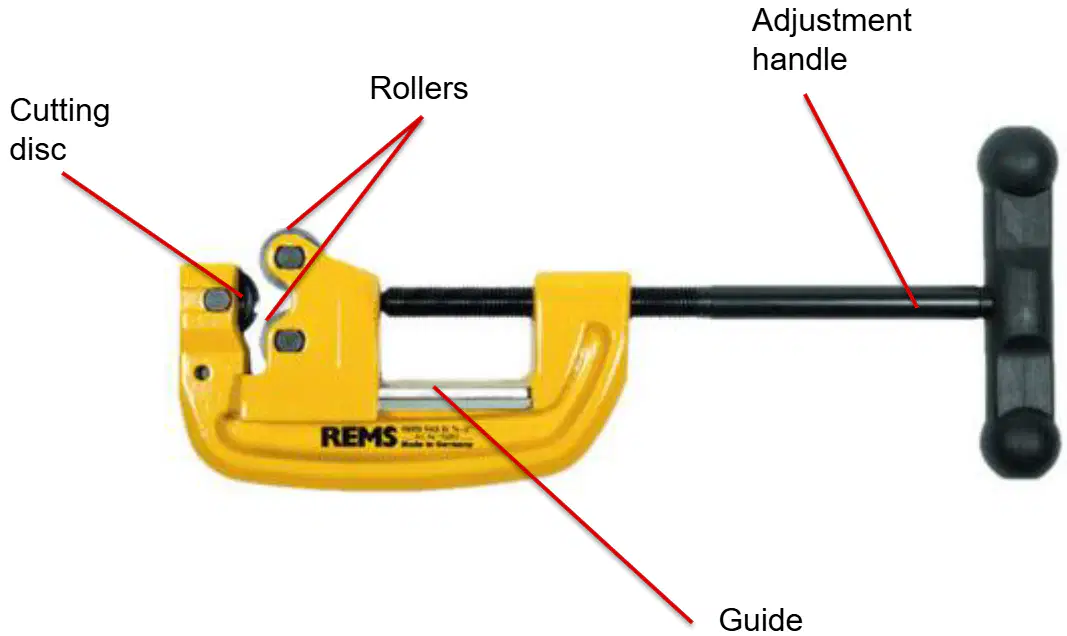
Which component of the LCS pipe cutter provides the cutting action on the pipe?
Hardened cutting disc
Guide bar near the frame
Paired support rollers
Knurled adjustment handle
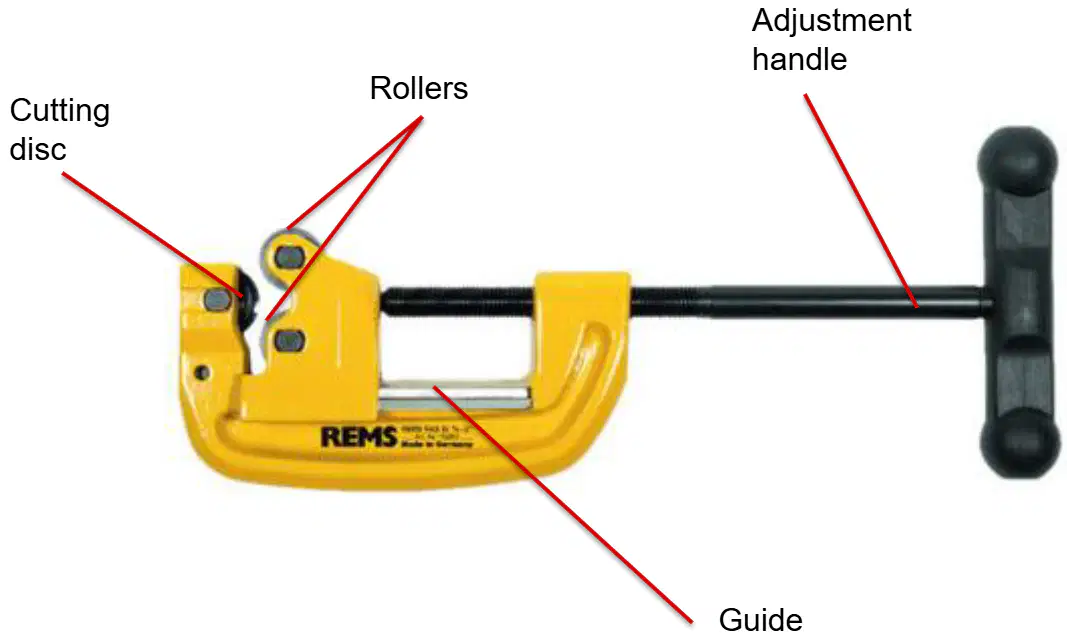
What is the primary role of the rollers on an LCS pipe cutter?
Apply lubricant evenly
Lock the handle position
Drive rotational power
Support and guide the pipe
Which sequence best describes the manual cutting process with an LCS pipe cutter?
Rotate without tension, then file the pipe
Lubricate only, then rotate continuously
Lightly tension, rotate cutter, re‑tension, rotate
Clamp tightly once, then pull sharply
Why are LCS pipe cutters described as heavy and robust?
To store more lubricant
To fit larger interchangeable motors
To resist bending under tension
To increase operator comfort
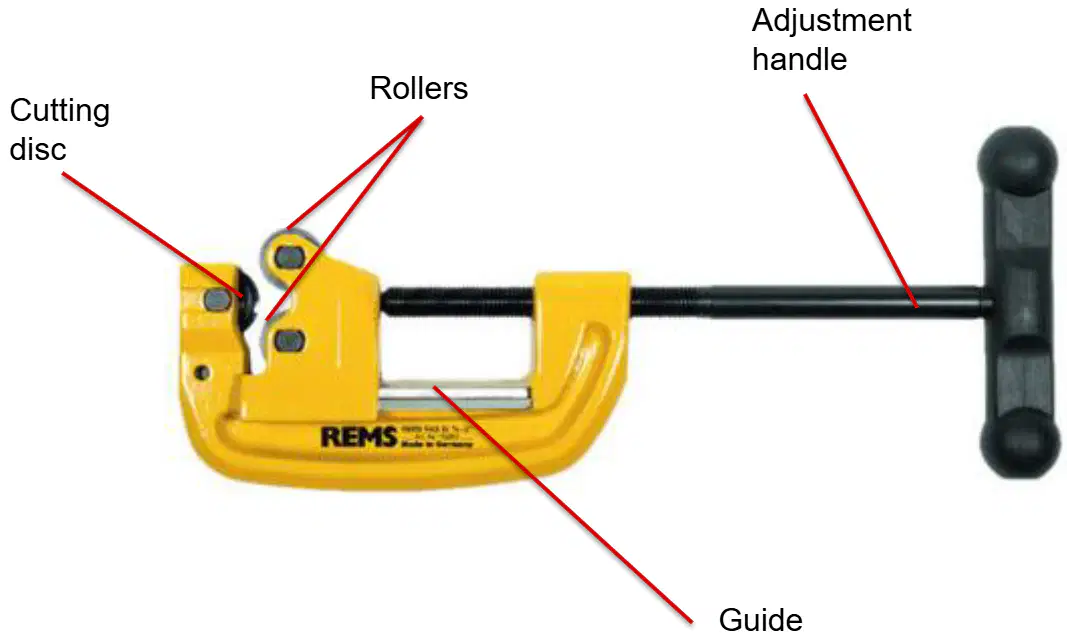
Which practice improves cut quality and tool life during LCS pipe cutting?
Skip tensioning between rotations
Apply suitable cutting lubricant
Over‑tighten the handle immediately
Keep rollers and disc aligned
Maintain steady rotation around pipe
When should the cutting disc on a pipe cutter be replaced to maintain effective cutting?
When the disc shows minor discoloration
When the frame has surface rust
When the rollers feel slightly warm
When the disc becomes blunt or chipped
Why is de-burring essential after cutting or threading pipework?
It reduces tool electricity consumption
It improves pipe visual appearance
It speeds up threading machine setup
It prevents burrs from affecting seals
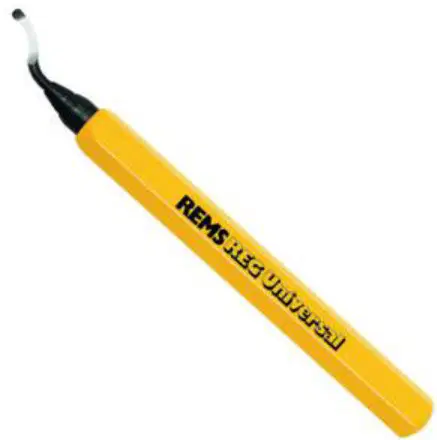
Which combination lists common hand tools for de-burring and finishing pipe edges?
Universal de-burring scraper
Bench grinders with wire wheels
Hardened steel reamers
Half-round and round files
Which hazard is most likely when handling sharp burrs left after cutting pipe?
Chemical burns from pipe coatings
Eye strain from low lighting
Cuts or puncture injuries to hands
Hearing loss from tool vibration
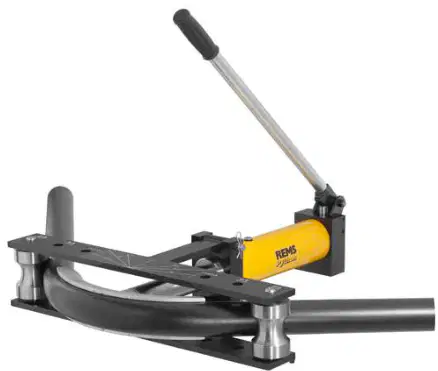
What is the main purpose of a hydraulic bender in working with LCS pipework?
Cutting pipe ends to precise lengths
Fabricating pipework into different shapes
Polishing pipe surfaces to remove rust
Measuring pipe diameter accurately
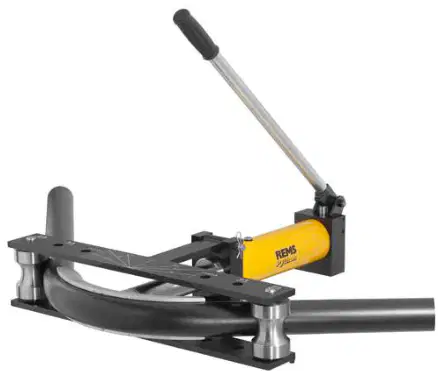
Why does operating a hydraulic bender typically require specialist training?
It is fragile and easily damaged
It is substantial and heavy equipment
It uses electricity and sparks
It is banned without certification
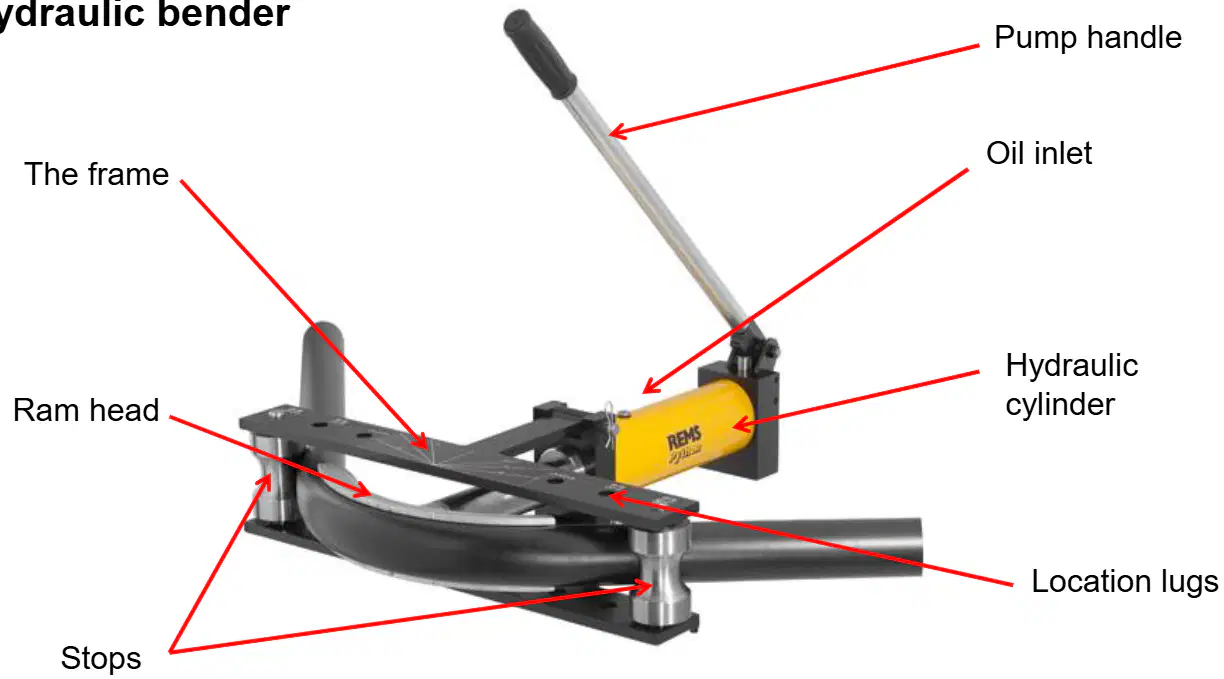
In the diagram of the hydraulic bender, which component transfers force to move the ram head when the handle is pumped?
Hydraulic cylinder body
Location lugs block
Oil inlet fitting
Pump handle lever
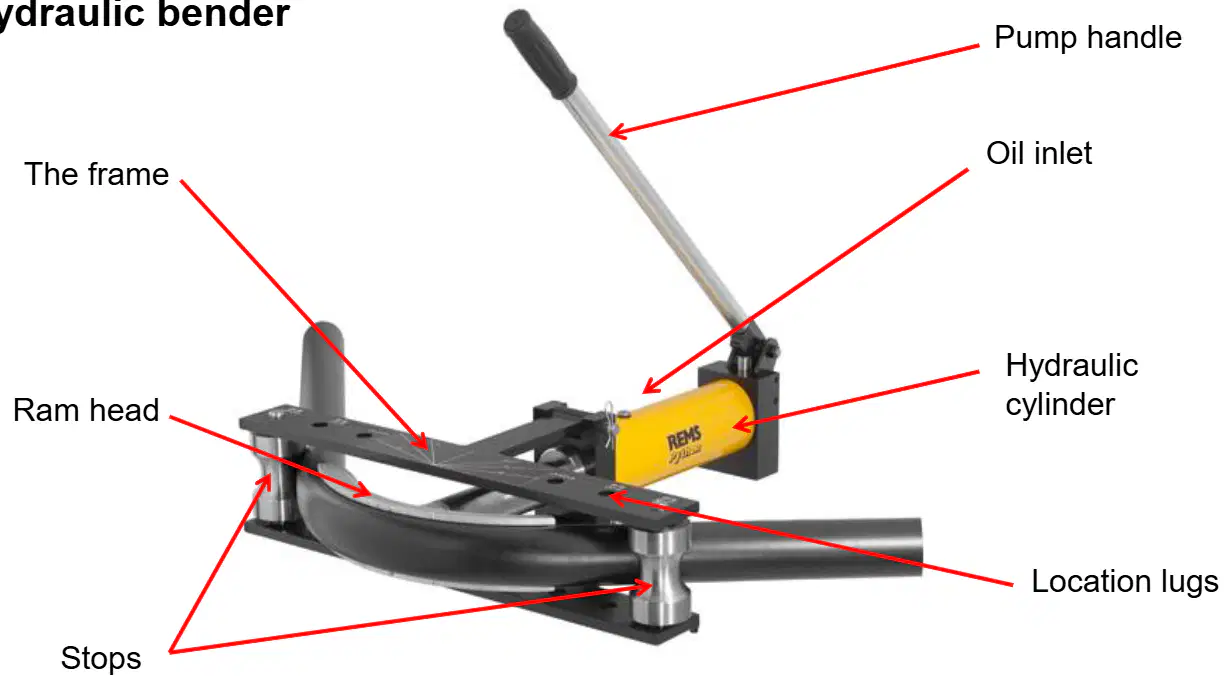
Which labeled parts on the hydraulic bender hold the pipe in place during bending?
Location lugs bracket
Stops at the base
Oil inlet port
Ram head shoe
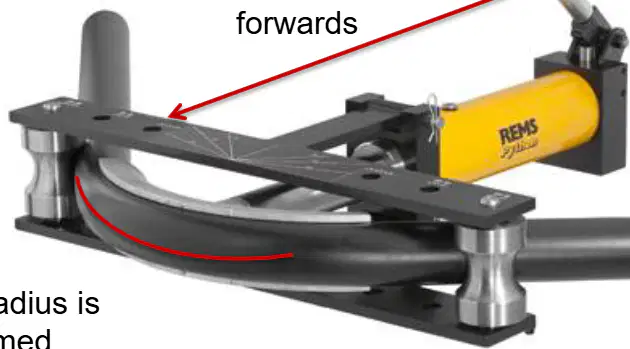
When the ram moves forward against the pipe, what outcome should be observed?
A radius is formed in the pipe
The hydraulic cylinder depressurizes
The location lugs rotate freely
The frame detaches from the base
When preparing a hydraulic bender for storage, what should be done to the ram head and stops?
Greased and left exposed
Left assembled and dusty
Sprayed with water briefly
Cleaned and stored safely
Wrapped with electrical tape
Select all actions that are part of routine care for a hydraulic bender.
Bleed oil after every single bend
Store ram head and stops securely
Remove safety guards to reduce weight
Check hydraulic oil level regularly
Keep components clean and well lubricated
Why is a team lift recommended when positioning a hydraulic bender on a workbench?
It aligns dies more accurately
It avoids scratching the bench surface
It is heavy and poses a safety risk
It prevents hydraulic oil contamination
It saves time compared to solo lifting
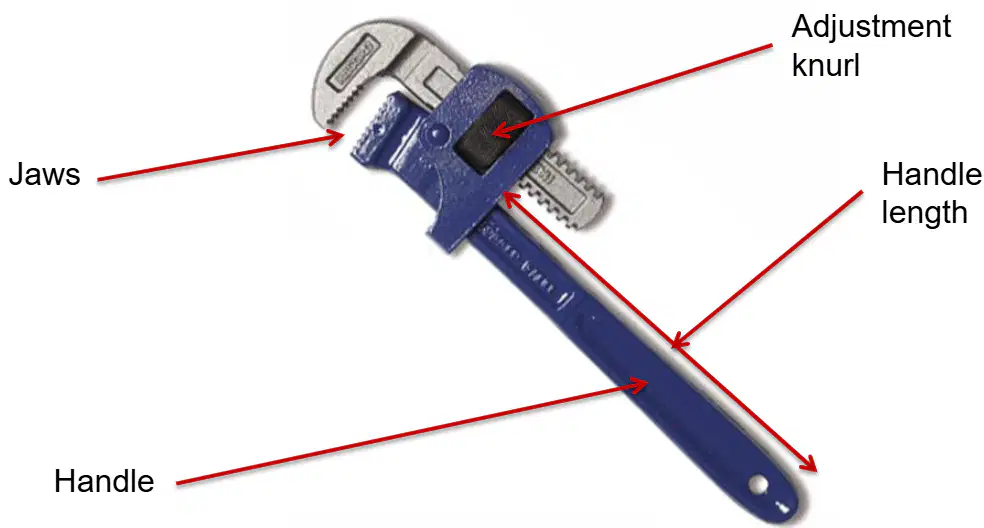
In the diagram of the Stillson pipe wrench, which component is used to change the jaw opening for different pipe diameters?
Fixed jaws without threads
Painted grip section on handle
Adjustment knurl near the head
Handle hole at the tail end
Which statement best explains why Stillson pipe wrenches are restricted to low carbon steel pipework?
Torque is insufficient for plastic piping
Jaws bite and leave teeth marks on softer metals
Knurl cannot tighten enough on hard alloys
Handle length only fits steel conduit sizes
Which materials are most at risk of damage when gripped with a Stillson pipe wrench?
PVC drain pipe
Stainless steel valves
Low carbon steel pipework
Copper pipework and brass fittings
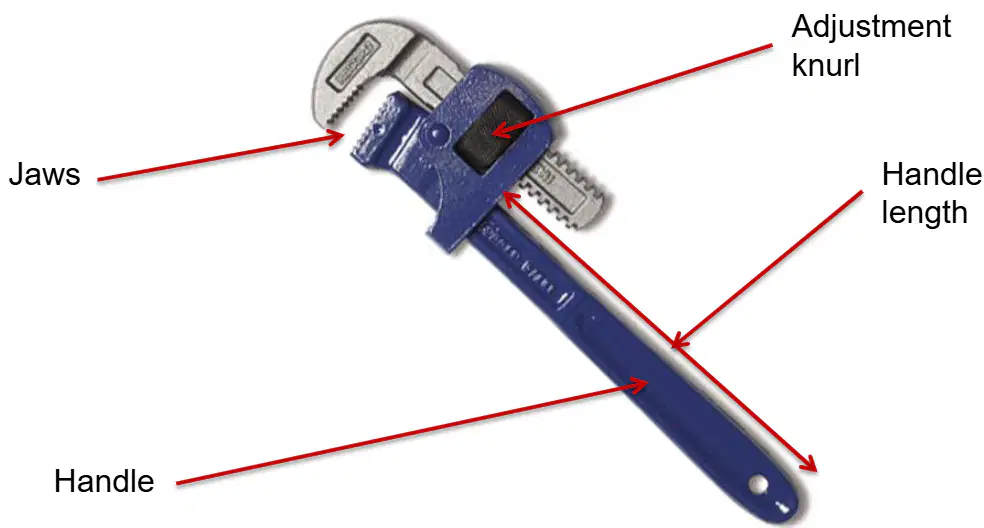
In the labeled diagram, what do the serrated jaws do during use on LCS pipe?
Dig in to bite and hold firmly
Float to prevent marking surfaces
Compress to cushion soft materials
Lock out to limit torque applied
Which maintenance action best prevents rust on a Stillson pipe wrench after completing a wet fitting task?
Wipe dry thoroughly before storage
Leave to air-dry overnight on bench
Store in a sealed toolbox immediately
Apply high-pressure grease to jaws
What is the most common method to make a joint on LCS pipework?
Screwing internal and external threads
Soldering with soft solder
Clamping with compression rings
Bonding with solvent adhesive
Why must cutting oil be applied regularly during thread cutting?
It hardens the die’s teeth
It cleans swarf from the floor
It cools and lubricates the interface
It seals pores in the pipe
Which practice with cutting oil helps prevent a slip hazard in the workspace?
Leave spills to evaporate naturally
Dust oil with sawdust after work
Wipe up any oil spills promptly
Spread oil thinly on the floor
What is a key hazard associated with swarf during thread cutting?
It is highly flammable in air
It dissolves in cutting oil quickly
It is very sharp and can cut hands
It permanently stains overalls
Before removing excess cutting oil after threading, what should be done regarding swarf?
Soak swarf with more oil
Brush away loose swarf first
Vacuum swarf after cleaning
Ignore swarf until inspection