
 Worksheets
Art Class Procedures Slides For Family Feud
Total questions: 74
Worksheet time: 37mins
According to the “At the end of class” poster, who dismisses the class?
The bell
Any student
The teacher
Your parent or guardian
According to the clean‑up instructions, what are the last 5 minutes of class for?
Starting a new assignment
Reset tables and supplies
Free time
Lining up at the door
Before you will be dismissed, which tasks must be completed?
Put work away/on drying racks
Put supplies away
Tidy table and floor
Wash hands first and then clean
Have personal items ready, wait at seat for the bell and a “Bye!”
When are you allowed to wash your hands during clean‑up?
Before putting supplies away
Anytime you want
Only after tidying the table and floor
After leaving the classroom
Which reflective question appears on the “Don’t like your grade?” checklist?
Did you follow directions?
Did you bring snacks to class?
Did you choose your own seat?
Did you ask for extra credit first?
Which items are listed as part of evaluating your work on the “Don’t like your grade?” poster? Select all that apply.
Was it a completed work?
Did you use all the time given to you wisely?
Was your work neat (good craftsmanship)?
Did you improve your skills?
Did you pick the shortest project?
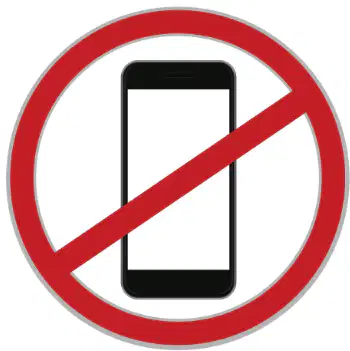
What is the cell phone policy stated on the technology poster?
Cell phones are allowed on silent
No cell phones or AirPods ever
Phones may be used during clean‑up
Phones are allowed with parent permission
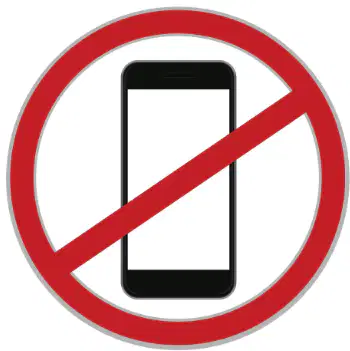
If the teacher sees a phone, what happens?
It is ignored
It is turned into the office
It is kept until the end of class
It earns extra credit
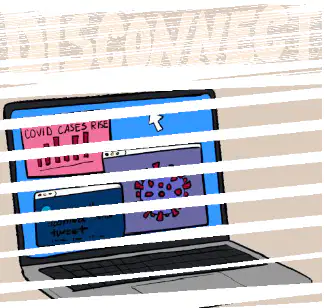
What is the Chromebook policy on most days?
Use Chromebooks all period
No Chromebooks most days
Share Chromebooks with another class
Chromebooks only for music
Being on your Chromebook when you’re not supposed to be results in what consequence?
A tech ticket (office referral)
A homework pass
Extra clean‑up duty
A computer upgrade
When are bathroom breaks allowed according to the bathroom policy?
Before class begins
During any instruction
Only after all class instructions for the day have been given
Only during group work
Which rules about the bathroom pass are stated?
A written pass is required
Carry the pass with you
Bring the pass back
Two people may go at once
Passes are optional during clean‑up
How many people may go to the bathroom at one time?
Two
Three
One
Any number
Which direction should you turn when leaving the classroom for the bathroom?
Right
Left
Straight ahead
Up the stairs

Which behaviors are listed as part of respect on the respect poster? Select all that apply.
Not talking when the teacher is talking
Using a respectful tone of voice
Following directions without complaint
Being kind to each other and to art supplies
Keeping your hands (and your germs) to yourself
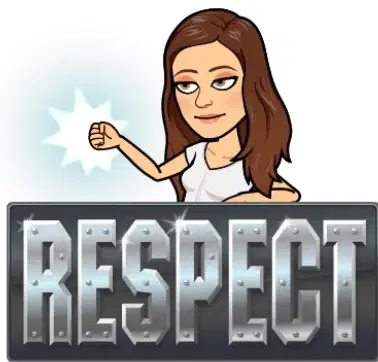
Which actions show respect according to the poster?
Staying in your seat
Taking care of classroom supplies
Cleaning up after yourself and others
Using positive body language
Rolling eyes and lip smacking
Classroom Rules poster states: Do not speak when the teacher is speaking; no trash talk; take care of the classroom and materials; don’t touch the teacher’s belongings or other students; no cell phones ever; keep Chromebooks put away unless the teacher specifies; be kind to guests, substitutes, and new students; don’t use body language to communicate across the room. According to these rules, what should students do with cell phones?
Keep phones in bags but use them during group work
Use phones only for class-related searches without asking
No cell phones ever
Phones are allowed during lunch in the classroom
Based on the Classroom Rules poster, which statement addresses speaking while the teacher is speaking?
Be kind to all guests, substitutes, and new students
Take care of the classroom and materials
Do not speak when the teacher is speaking
Keep Chromebooks put away unless the teacher specifies
According to the Classroom Rules poster, how should Chromebooks be handled?
Keep Chromebooks put away unless the teacher specifies
Leave Chromebooks on desks at all times
Share Chromebooks freely without asking
Use Chromebooks during group work without permission
From the Classroom Rules poster, which behavior is prohibited for communicating across the room?
Using body language to communicate across the room
Raising your hand to speak
Quietly asking the teacher a question
Writing notes to organize your thoughts

Use your time wisely poster lists: pass out folders; put backpacks under the table; Calendar Square Level 3; start your lesson on the board; be seated by the time the bell rings; do not ask to leave—take care of business on your way here; don’t get up when the teacher is talking; have good body language and attitude; read the board. According to this list, what should you do by the time the bell rings?
Start your lesson on the board
Pass out folders
Be seated
Put backpacks under the table
From the Use your time wisely poster, where should backpacks be placed?
On the floor next to your chair
Under the table
On top of desks
In the front of the room
According to the Use your time wisely poster, what should you start on the board?
Your attendance
Your lesson
Your homework from last night
Your personal notes
Which instruction on the Use your time wisely poster discourages asking to leave during class?
Don’t get up when the teacher is talking
Be seated by the time the bell rings
Do not ask to leave—take care of business on your way here
Have good body language and attitude
The poster titled 10 Things That Require Zero Talent lists items such as being on time, making an effort, being high energy, having a positive attitude, being passionate, using good body language, being coachable, doing a little extra, being prepared, and having a strong work ethic. Select all items from this list.
Being on time
Making an effort
Having a strong work ethic
Memorizing facts quickly
Select all items that appear on the 10 Things That Require Zero Talent poster.
Being coachable
Doing a little extra
Winning competitions
Being prepared
The poster titled What Causes Creativity lists confidence (ability to question without fear), observation (seeing problems/ideas), humility (knowing you don’t know everything), mindfulness (thinking on how to think), curiosity (exploring and experimenting), resourcefulness (something to tinker with), energy (to explore and tinker), and action (not just thinking, but doing). Which cause is defined as ability to question without fear?
Observation
Confidence
Humility
Action
On the What Causes Creativity poster, which cause is described as exploring and experimenting?
Curiosity
Mindfulness
Resourcefulness
Energy
According to the What Causes Creativity poster, which cause is defined as not just thinking, but doing?
Energy
Action
Observation
Mindfulness
Art Room: Studio ‘Habits of Mind’ poster defines three levels. Match each label to its description.
Growing
Treats assignments as challenges; shows determination and pushes to improve rather than settling
Coasting
Makes some effort but lacks enthusiasm; feels overwhelmed or bored and gives up too soon
Slacking
Shows little value for the assignment; invests minimal time, energy, or effort

According to the poster, what should your journal be used for in ART class?
ART class notes and info such as warm-ups, sketching, planning, and practice
A personal diary for home use
Math homework from other classes
Random doodles not related to class
Which rule about pages in your ART journal is stated on the poster?
Use the front and back of each page unless you can’t
Skip pages to keep the journal neat
Only write on the front of each page
Leave blank pages for future classes
Before moving on to the next page in your ART journal, what are you expected to do?
Fill up the current page
Tear out the page
Leave half the page blank
Start a new section

What supply is specifically required for notes according to the poster?
A plastic folder with brads and pockets
A spiral-bound math notebook
A three-ring binder without pockets
Loose sheets of printer paper
What does the journal rules poster say about adding your own drawings?
Do not add your own drawings
Add personal drawings on every page
Only add drawings and no notes
Draw only in pencil and never write
What size and type of sketchbook is required for ART?
Full size 5.5 × 8.5 mixed media sketchbook
Mini 3 × 5 watercolor pad
Large 9 × 12 newsprint pad
Digital tablet only
What is the main purpose of the ART sketchbook according to the rules?
Projects and final copy work
Personal journaling unrelated to class
Collecting autographs
Only practicing signatures
What should the sketchbook be by the end of the year?
A piece of art in itself, showing quality
An empty book saved for next year
A scrapbook of stickers only
A folder of loose papers
Which use of the sketchbook is allowed under the rules?
Only assignments for ART class
Notes from other subjects
Random personal doodles every day
Group signatures and messages
If you make a mistake on your work, which actions are suggested on the poster? Select all that apply.
Erase it
Cover it with a piece of paper
Change it into something else
Flip the paper
Throw it away
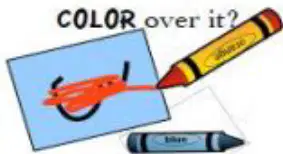
Which strategies are shown as ways to fix work on the poster? Select all that apply.
Color over it
Cut it off
Take a break
Glue it to the wall
What behavior guideline is stated about rewards such as stickers, letters, and prizes?
Do not ask for them or you won’t get them
Ask for them after every class
Collect them by trading with classmates
Request them from the front office
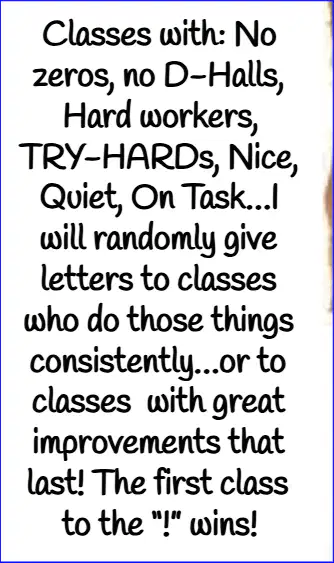
What earns letters toward the class contest according to the poster?
Consistently having no zeros or D-halls, working hard, being nice, quiet, and on task
Bringing snacks for the teacher
Having the most absences
Decorating the classroom every week
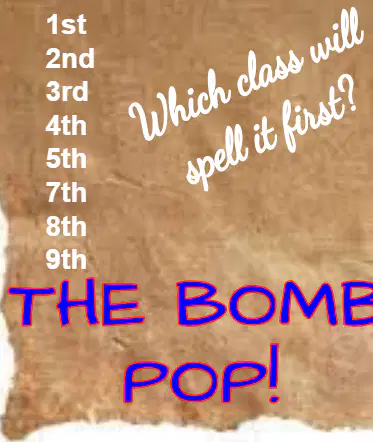
How does a class win the Best in Class contest shown on the poster?
Be the first class to spell the phrase that ends with an exclamation point
Have the loudest cheer
Turn in the most late assignments
Collect the most stickers individually
What is each student expected to do at the end of class according to the cleanup poster?
Clean up their own mess
Leave materials where they are
Hand cleanup to another class
Wait for custodians to do it
What should everyone do to prepare the room for the next class?
Help reset the tables
Close the classroom door
Turn off the lights
Collect attendance sheets
What is the expectation for handling class supplies?
Respect supplies and take care of what we have
Use supplies only if they are new
Bring all supplies from home
Trade supplies between classes
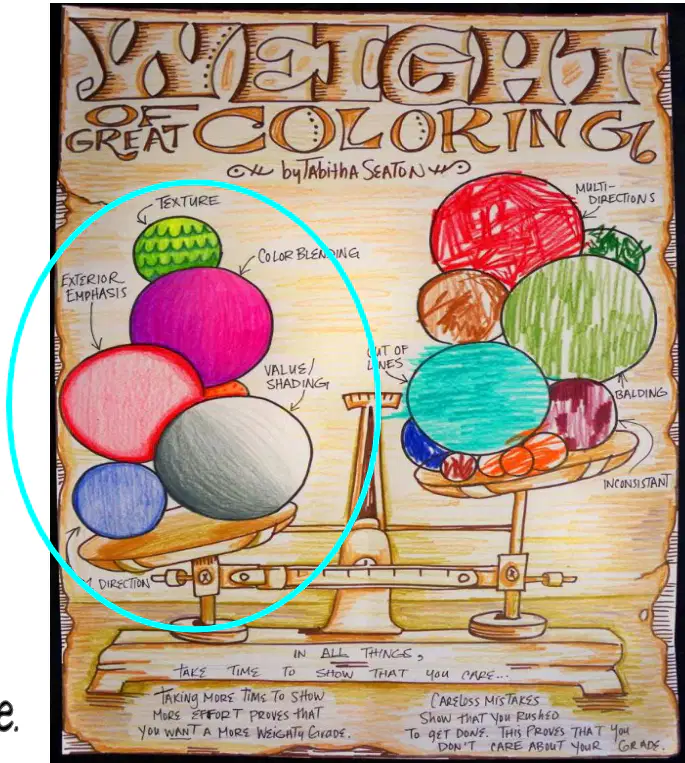
According to the poster, taking time to show more effort proves that you want a more weighted grade.
True
False
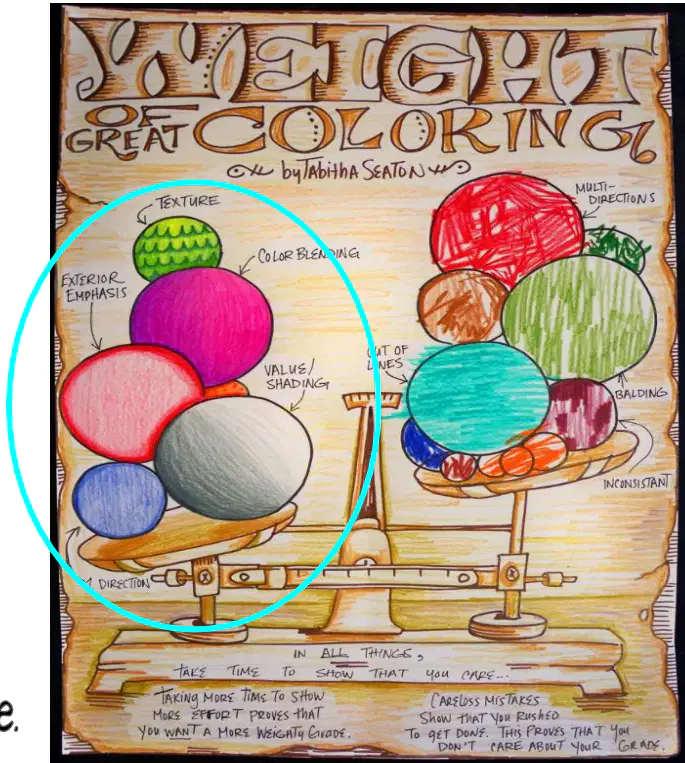
What does the poster say careless mistakes show about your work?
You rushed to get done and show less commitment to your grade
You experimented with advanced techniques
You focused on neatness over creativity
You took extra time to fix problems
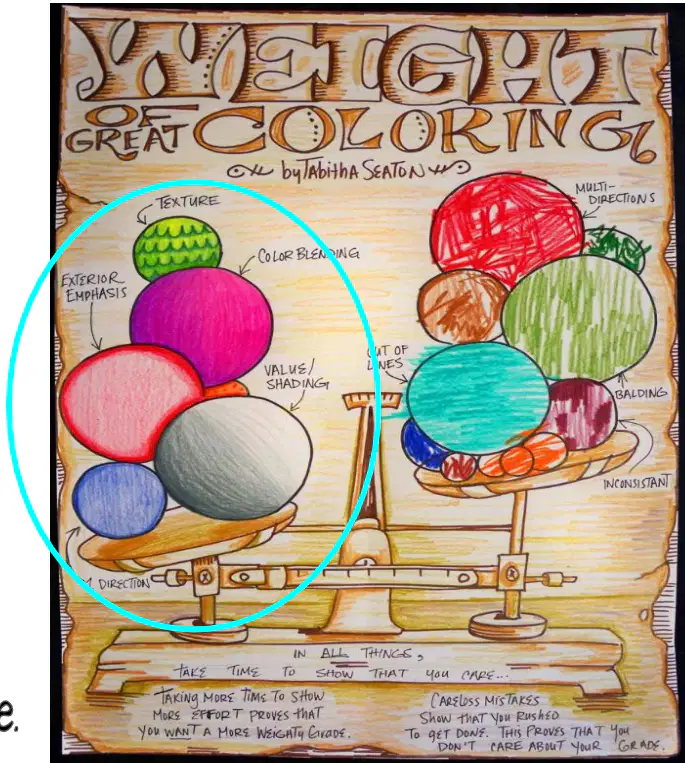
The circled example on the coloring poster represents what is expected of a student in 7th and 8th grade.
True
False
In math, if you are asked 2+2= and you say 5, what happens according to the instructions? In Art, if you do not follow the checklist and techniques learned for the assignment, what happens?
You lose points
You gain extra credit
The answer is accepted if written quickly
You receive full credit without showing work
Which actions cause you to lose points in Art according to the instructions? Select all that apply.
Not applying the skills taught in class
Coloring outside the lines
Scribbling, messy, or folded work
Turning in neat, fully finished work
If you only complete 21 the work, what score will you earn according to the instructions?
50
70
90
100
What is the penalty for day-one late work according to the instructions?
−5 points
−1 point
−10 points
No penalty
According to the "Project Level Ups" checklist, which additions might improve your artwork? Select all that apply.
Add some sharpie
Add some white highlights
Tape any rips
Leave heavy pencil marks
According to the checklist, how many levels of the value scale should be used?
All 5 levels
3 levels
4 levels
2 levels

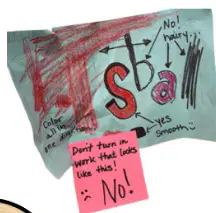
Which behaviors are not allowed according to the "Do NOT!" poster? Select all that apply.
Folding your art
Crumpling or tearing while working
Putting artwork in your backpack
Scribbling
Keeping your art nice and safe in a folder or portfolio
Match each self-score number to its rubric description.
1
Slacking level: did not finish work
2
Coasting: finished requirements but did not put much effort
3
Growing: finished requirements but still need improvement
4
Great job: growing, 90–100
5
True grit: above and beyond requirements, 100+

If you were going to rank your project what score would you give yourself? Answer 1, 2, 3, 4 or 5.
I did not even finish my work. I'm at a "slacking level". 0-50
I finished my requirements but I did not put much effort into the project. I'm "coasting". 50-70
I finished all the requirements, I am happy with my work but I still need improvement. I am working at "growing". 70-90
I did a great job on my project! I surprised myself! I am "GROWING"! 90-100
I passed growing in this assignment and I am showing "TRUE GRIT". I pushed myself above and beyond the requirements and was successful! 100+
Value scales teach us to use the lightest light and darkest dark of the supply we are using like pencil, charcoal, color pencils, crayons. True or False?
True
False
In your opinion what is the most important behavior to work on and use daily in class.
Respect
Not interrupting
Maturity
Listening
What should students do before leaving the art room at the end of class?
Leave their materials on the table
Clean up and organize materials
Wait for the teacher to clean up
Rush out of the room
How should students move around the art room to get supplies?
Run to get the supplies quickly
Walk safely and efficiently
Ask a friend to get the supplies for them
Wait until the end of the class
During a group discussion in class, what is an example of respectful communication with classmates?
Interrupting them while they are speaking
Listening actively and responding politely
Ignoring their ideas
Talking over them
How should Olivia store her artwork to ensure it is preserved?
Leave it on her desk
Properly store and label it
Take it home immediately
Give it to a friend to hold
What should students do before leaving the art room at the end of class?
Leave their materials on the table
Clean up and organize materials
Wait for the teacher to clean up
Rush out of the room
What is the appropriate use of technology in the art room?
Playing games during class
Using tablets and computers for art-related tasks
Browsing social media
Watching unrelated videos
Why is it important to follow hallway expectations?
To avoid getting lost
To ensure safety and minimize disruptions
To impress the teacher
To get to the next class faster
What should students like Isla, Arjun, and Kai do if they have a question during class?
Shout out the question
Raise their hand and wait to be called on
Ask a classmate
Ignore the question
What should Mia do if she accidentally spills paint?
Ignore it and continue working
Clean it up immediately
Wait for the teacher to notice
Ask a friend to clean it
How should students like Olivia and Ethan handle art supplies to ensure they last longer?
Use them carelessly
Share them with everyone
Use them responsibly and put them back properly
Throw them away after use
How can students ensure they are using the correct art supplies for their project?
Guess and use any supplies available
Ask a classmate for advice
Check the project guidelines or ask the teacher
Use the most expensive supplies
What is the first procedure of Art Class?
Paint!
Take a nap
Read the board
Read a book
Throwing materials in the room including garbage is...
Not allowed.
Encouraged.
Is a good way to get an A.
Makes Mr. B happy.

