
 Worksheets
SEMESTER 1 REVIEW
Total questions: 57
Worksheet time: 50mins
Which 3 continents were involved in the Trans-Atlantic Slave trade? Check all that apply. (Go back and review the previous slide if necessary.)
North and South America
Africa
Europe
Asia
What was the name of the part of the journey the enslaved people were forced to take to the Americas?
The Middle Passage
The Long Journey
The Dangerous Route
The Horrible Passage

Which of the following best describes the conditions aboard a slave ship.
cramped
roomy
luxurious
typical

Given the extreme conditions on plantations, what was the life expectancy of a slave?
lower than average
average
higher than average

Some slaves decided to jump overboard and drowned instead of remaining on the slave ship.
True
False
Slaves were imported to the Americas because
they were not needed in Asia
of the lack of labor due to Native Americans dying
Europeans outlawed slavery
American settlers demanded them
Why did so many people die on the Middle Passage?
Slave traders usually purchased unhealthy individuals
Disease and malnutrition
Overloaded ships often sank
Successful rebellions on board ships took many lives
What was the journey of enslaved Africans across the Atlantic Ocean called?
The Middle Passage
The Slave Trade
The Abolition
The Slave Rebellion
What year did the colonist settle in Jamestown?
1607
1706
1608
1886
What was the name of the group of men who were financially investing in the colony?
King James Industries
Captain Smith and Sons
The Virginia Company of London
The Jamestown Initiative
The practice of farming.
brackish
agriculture
palisade
cash crop
A cash crop is
the practice of farming
a crop grown to make money
farming for money
a fort of crops
What happened in 1607?
Jamestown was founded
Plymouth was founded
The Magna Carta was written
The Louisiana Purchase
A person who sold his or her labor in exchange for passage to America.
Pilgrims
Puritans
Indentured Servant
Anne Hutchinson
Jamestown is the first _______________ settlement.
Irish
English
Welsh
Royal
The state where Jamestown is located is the state of ___________.
Maryland
New Jersey
Pennsylvania
Virginia

When the Colonists landed in Jamestown, what Native American tribe was living in the area?
Cahokians
Hohokam
Anasazi
Powhatan

What was stated in the Proclamation of 1763?
Colonists were BANNED from settling west of the Appalachian Mountains.
The Proclamation ended the French and Indian War.
Colonists were ENCOURAGED to begin settling west of the Appalachian Mountains.
The Proclamation proclaimed independence for the American colonists.
what were one of the main events of Jackson's life during the presidency?
(a)
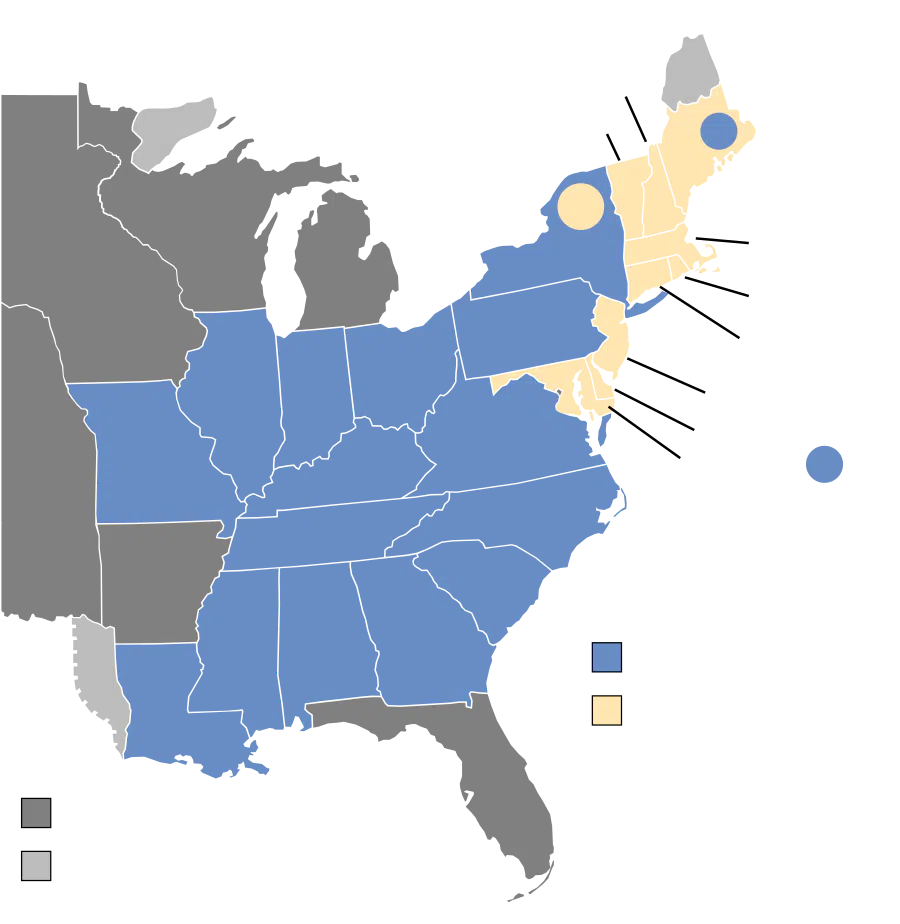
what was the election of 1828 about?
a battle for presidency between Jackson and Adam which led to Jackson's winning presidency.
a battle for money
a battle for presidency between Jackson and Adam which led to Adam winning presidency
a chaotic panic
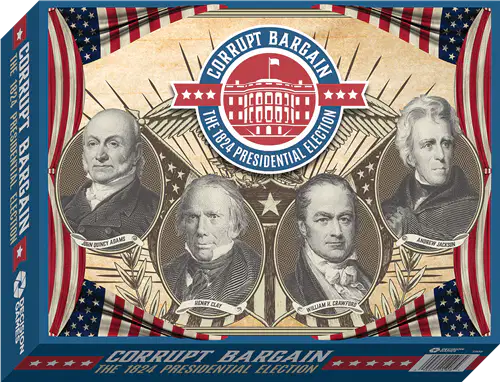
what did Jackson and his followers call what clay and Adams did?
the panic of 1830
democratic party
corrupt bargain
constitution of the US
who was the first president from the west?
(a)

How did Jackson react to South Carolina trying to secede?
He told SC they could do what they wanted
Jackson got rid of the tariffs
Jackson raises tarrifs
He threatened to send the military and use force
What was one of the reasons Andrew Jackson was popular among many Americans during his presidency?
His aristocratic background
His support for the National Bank
His image as a self-made man and a champion of the common people
His policies favoring Native American rights
How did Andrew Jackson change the U.S. political landscape during his presidency?
By establishing the Democratic Party
By introducing the spoils system
By limiting the power of the federal government
Both A and B
What impact did Andrew Jackson's presidency have on the power of the presidency?
It weakened the power of the presidency.
It significantly increased the power of the presidency.
It had no significant impact on the power of the presidency.
It temporarily increased the power of the presidency but was later reversed.
What year did Andrew Jackson begin his first term as President of the United States?
1824
1828
1832
1836

Andrew Jackson's election victory in 1828 depended on support from
the rich and well-born.
Native Americans.
the common people.
states' rights supporters.

Jacksonian Democracy
an informal group of trusted advisers who sometimes met in the White House kitchen
The practice of giving government jobs to political backers
The period of expanding democracy that gave voting rights to all white males
The Court ruled that the national bank was constitutional

The Trail of Tears refers to
Jackson’s angry negotiations with the Five Civilized Tribes.
the movement of Seminole Indians from the West to Florida.
government workers who lost their jobs due to Jackson’s spoils system.
the removal of Cherokee Indians from Georgia to Indian Territory in Oklahoma.

Which bank was Andrew Jackson having a conflict with?
First Bank of the United States
Second Bank of the United States
Pet Banks
State Banks
This was a political party that supported a strong federal government. First led by Alexander Hamilton, the Federalists also favored a government ruled by the upper class and a strong partnership with the British.
Jefferson Party
Federalists
Democratic-Republicans
Populists
What are causes of the War of 1812?
British supporting Native American resistance against the U.S , Impressment of Sailors and British interference of U.S. Maritime Trade.
Interference with US shipping and French embargo
Impressment of sailors and Treaty of Ghent
Increase manufacturing and British supporting US citizens.
Impressment is_____________
The capturing of US sailors and forcing them to work for the British
Selling US sailors
Capturing US sailors
The French capturing US sailors and forcing them to work for them.
Who did the United States go to war with in the War of 1812?
Great Britain
France
Spain
Canada
Which taxes were placed on the colonies in an attempt to pay debt from the French and Indian Wars
Stamp Act
Townshend Acts
Tea Acts
Land Tax
What was the name of the region that the French and British were fighting over?
The Ohio Mountain Region
The Ohio River Valley
Virginia
The Middle Colonies
Benjamin Franklin proposed ___________________ to unite the colonies.
The French War
The Proclamation of 1763
The Albany Plan
What was the name of the order from King George III that said colonists could not move west of the Appalachian Mountains?
Treaty of Paris
Order of Protection of Land
Declaration of British Property
Proclamation of 1763
The French traded ____________, weapons and other important goods with the Native American Tribes.
beads
copper
furs

What was the cause of the conflict between the French and the British that played a part in causing the French and Indian War?
Both sides were trying to create an alliance with the Native Americans.
Both sides claimed the land in the Mississippi River Valley.
Both sides claimed the land in the Ohio River Valley.
The British tried to tax the French for using their land.
The concept of Manifest Destiny was used to justify:
The abolition of slavery
The American Revolution
Westward expansion and territorial acquisition
The establishment of a national bank
The XYZ Affair was a diplomatic incident that almost led the United States to war with:
Britain
France
Spain
Mexico

These colonies were settled by the Pilgrims in 1620 and Puritans in 1630 to escape religious persecution in England
Middle Colonies
New England
Southern Colonies
Canada

What Treaty ended the French and Indian War?
Treaty of British
Treaty of French and Indian War
Treaty of Native Americans
Treaty of Paris
Hamilton's party was the ___________________________.
Democrats
Democratic-Republicans
Federalists
Whigs
Who wrote the influential pamphlet "Common Sense" advocating for American independence?
John Adams
Thomas Paine
Benjamin Franklin
Alexander Hamilton
Which battle is considered the turning point of the American Revolution?
Battle of Bunker Hill
Battle of Saratoga
Battle of Yorktown
Battle of Lexington and Concord
Which group of people primarily wrote the Declaration of Independence?
The Founding Fathers
The Continental Congress
British Parliament
The Sons of Liberty

