
Font size
 Worksheets
Music 6 Summative 2 Dynamics and Major/Minor Scales
Total questions: 96
Worksheet time: 53mins
Which musical term means soft?
Forte
Piano
Mezzo forte
Crescendo
Which term tells the musician to play loud?
Piano
Pianissimo
Forte
Decrescendo
What does crescendo mean?
Getting softer
Suddenly loud
Gradually getting louder
Playing softly
What does decrescendo indicate?
Gradually getting louder
Gradually getting softer
Very loud
Very soft
Which dynamic marking means very soft?
mp
f
pp
mf
Which dynamic marking means moderately loud?
mp
mf
pp
ff
A song starts quietly and slowly becomes loud. What dynamic change is happening?
Decrescendo
Forte
Crescendo
Pianissimo
Why are dynamics important in music?
They control tempo
They add expression and emotion
They change pitch
They determine the key
A lullaby is usually sung in which dynamic?
Forte
Pianissimo
Mezzo forte
Fortissimo
A marching band playing in a parade should mostly use:
Piano
Pianissimo
Forte
pp
Which dynamic marking is the loudest?
f
mf
ff
mp
Why might a composer use sudden loud dynamics in a song?
To calm the listener
To create surprise or excitement
To slow down the music
To change the pitch
When singing the Philippine National Anthem, which dynamic is most appropriate at the climax?
Piano
Mezzo piano
Forte
pp
Which pair shows dynamics from soft to loud?
f → p
pp → f
mf → mp
ff → mp
A choir is instructed to sing gently and quietly. What marking will they likely see?
f
mp
p
ff
Pitch refers to how high or low a sound is.
Fast or slow
Loud or soft
High or low
Long or short
Which sound has a higher pitch?
Bass drum
Thunder
Whistle
Lion’s roar
Which instrument usually produces the lowest pitch?
Violin
Flute
Double bass
Recorder
Singing in a high pitch means singing:
Loudly
Slowly
Softly
With a high tone
Why do children usually sing higher than adults?
They sing louder
Their vocal cords are shorter
They practice more
They breathe faster
Which pitch movement goes from low to high?
Descending
Steady
Ascending
Repeating
A melody that goes from high notes to low notes is:
Ascending
Descending
Constant
Crescendo
Why is pitch important in singing?
It controls volume
It helps singers stay in tune
It controls rhythm
It sets the tempo
Which situation shows incorrect pitch?
Singing in tune with others
Singing too high or too low from the melody
Following the melody correctly
Matching the piano sound
What helps singers maintain correct pitch?
Listening carefully
Singing louder
Moving faster
Clapping hands
Major scales usually sound:
Sad
Mysterious
Happy and bright
Angry
Minor scales usually sound:
Cheerful
Sad or serious
Playful
Funny
Which scale is a major scale?
A
D
C
E
Which scale is a minor scale?
G
F
E
C
Why do composers choose minor scales?
To express sad or serious emotions
To make music louder
To speed up the song
To confuse listeners
A joyful celebration song would most likely use:
Minor scale
Major scale
Chromatic scale
Pentatonic scale
A song about loss or sadness would most likely use:
Major scale
Minor scale
Fast tempo
Loud dynamics
Which scale has no sharps and no flats?
G major
F major
C major
D minor
Which major scale has one flat (B♭)?
C major
G major
F major
D major
Which major scale has one sharp (F♯)?
C major
G major
F major
A major
Which minor scale is the relative minor of C major?
D minor
A minor
E minor
G minor
Which minor scale is the relative minor of G major?
A minor
D minor
E minor
F minor
Which minor scale is the relative minor of F major?
D minor
A minor
E minor
B minor
Relative major and minor scales share the same:
Mood
Tempo
Key signature
Dynamics
Why is learning scales important for musicians?
To memorize lyrics
To improve singing and instrument skills
To play louder
To move faster
A song in C major will most likely sound:
Dark
Sad
Bright
Mysterious
A song in A minor will most likely feel:
Cheerful
Serious
Playful
Loud
If a song uses F major, which note is flat?
F
C
B
E
Which scale pair is correctly matched as relative major and minor?
C major – D minor
G major – A minor
C major – A minor
F major – E minor
A student plays G major but forgets the F♯. What will happen?
The song will sound louder
The song will sound out of key
The tempo will change
The pitch will be higher
Which musical element tells whether a sound is high or low?
Dynamics
Pitch
Tempo
Rhythm
Which combination best expresses excitement in music?
Soft dynamics and low pitch
Loud dynamics and high pitch
Slow tempo and minor scale
Quiet dynamics and descending pitch
A peaceful song played softly in a major scale creates what mood?
Angry
Scary
Calm and happy
Tense
Which scale is best for a sad movie scene?
C major
G major
D minor
F major
A singer struggles to reach high notes. Which element is challenging?
Dynamics
Pitch
Tempo
Rhythm
Why do music teachers start lessons with scales?
To test memory
To warm up and develop pitch accuracy
To change dynamics
To speed up singing
Which scale would sound similar in notes to E minor?
F major
G major
C major
D minor
When music suddenly becomes very loud, what dynamic is used?
Piano
Forte
mp
Decrescendo
Which scale pair has one sharp in both?
C major & A minor
G major & E minor
F major & D minor
C major & E minor
Which musical choice best fits a joyful graduation song?
Minor scale, soft dynamics
Major scale, loud dynamics
Minor scale, slow tempo
Low pitch only
A song that slowly becomes softer uses:
Crescendo
Forte
Decrescendo
Pianissimo
Why is pitch accuracy important in group singing?
To sing louder
To avoid clapping
To blend voices properly
To increase tempo
Which element MOST affects the emotional color of a song?
Pitch only
Dynamics only
Major or minor scale
Tempo only
A composer chooses E minor for a song. What mood is expected?
Happy
Playful
Sad or serious
Excited
Which statement is TRUE?
Major scales always sound sad
Pitch and dynamics are the same
Minor scales often express serious emotions
Dynamics control pitch
It is a symbol at the beginning of the staff to indicate the note’s pitch.
Clef
Staff
accidentals
time signature
It is made of a combination of pitches with specific duration and intervals.
Clef
Staff
Melody
Rhythm
What are the alphabet names that represents the different pitches?
A,B,C,D,E,F,G
E,D,F,G,H,I,J
A,B,C,D,F,G
C,D,E,F,G,H,A
The _______________ is a music symbol that is made up of five lines and four spaces and where we write the notes.
Clef
Staff
Melody
Rhythm

This symbol is called?
Bass clef
Major clef
Treble clef
Baritone Clef
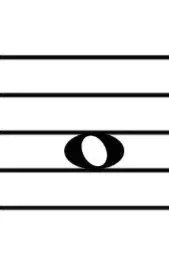
What pitch is this?
A
C
B
D
Why is the bass clef also called an F-clef?
Because its curl encircles the note G on the second line of the staff.
Because the second line from the top is the line for the pitch F, where the two dots are placed on the spaces above and below the line.
Because the pitch starts in F.
It is a short extra line used for pitches that are outside of the staff. Middle C also distinguishes other Cs in a higher or lower pitch.
Musical line
Extended line
Extra line
Ledger line
This symbol, when placed before a note, raises the pitch a half step higher than the original pitch.
Flat
Sharp
Natural
Clef
How many notes make an octave?
7
8
5
4
This symbol, when placed before a note, lowers the pitch a half step lower than the original pitch.
Flat
Sharp
Natural
Clef

Tukuyin ang mga pitch names. Anong salita ang nabuo sa larawan?
FADED
FACADE
FEED
CABBAGE

Isulat ang mga pitch names para makabuo ng salita
(a)

Isulat ang mga pitch names para makabuo ng salita
(a)
The smallest interval used in music.
Seventh interval
Octave
Half step
Unison

What pitch is this?
A
B
C
D

What pitch is this?
A
B
C
D
These are the syllable names of each pitch which are used in singing?
letter names
syllable names
lyrics
sol-fa syllables
These are the notes found on the lines of the staff G-clef?
A, C, E, G
A, B, C, D,
E, G, B, D, F
G, B, D, F,A
Which refers to steady even pulse?
Beat
Rhythm
Pitch

What is the musical name of the symbol next to the treble clef?
hashtag
sharp
number sign
tic tac toe board

How do we read this pattern?
Mi Do Mi
So Mi Do
Do Mi Do
Do Mi So

What are the syllables for this pattern?
So Fa Re Ti
Ti Re Fa
Mi So Do Mi
Fa So Ti Ti

What are the syllables for this pattern?
Ti Re
Do So
Do Mi
So Do
It is the speed of the underlying beat.
Dynamics
Melody
Tempo
Form
It means how quietly or loudly a piece of music should be played.
Form
Ternary
Melody
Dynamics
It is the distance that composed of two half steps.
whole step
half step
scale
interval
It is a musical term for a group of pitches arranged in an ascending and descending manner.
scale
staff
clef
interval

What is the scale of the given staff above?
whole step
half step

What is the scale of the given staff above?
whole step
half step

What is the scale of the given staff above?
whole step
half step

What is the scale of the given staff above?
whole step
half step
The song, “ Ako ay Pilipino” by Kuh Ledesma belongs to what kind of tempo?
Andante
Largo
Presto
Vivace
This comes from Italian word for “quickly.” Officially, this is the second-quickest speed that music can be played after prestissimo.
Andante
Largo
Presto
Vivace
What is the symbol of mezzo piano?


thunder
forte (f)
piano (p)

