
Font size
 Worksheets
NEUROSCIENCE 3.4-3.5
Total questions: 54
Worksheet time: 48mins
Match

Broca's area

Phrenology

Cerebral cortex

Lateral fissure

Central fissure
Match

Parietal lobe

Temporal lobe

Occipital lobe

Frontal lobe
Match
Broca's area
Phrenology
Cerebral cortex
Lateral fissure
Central fissure
Match
Touch, spatial relations
Hearing, memory
Vision
Thought, planning, movement
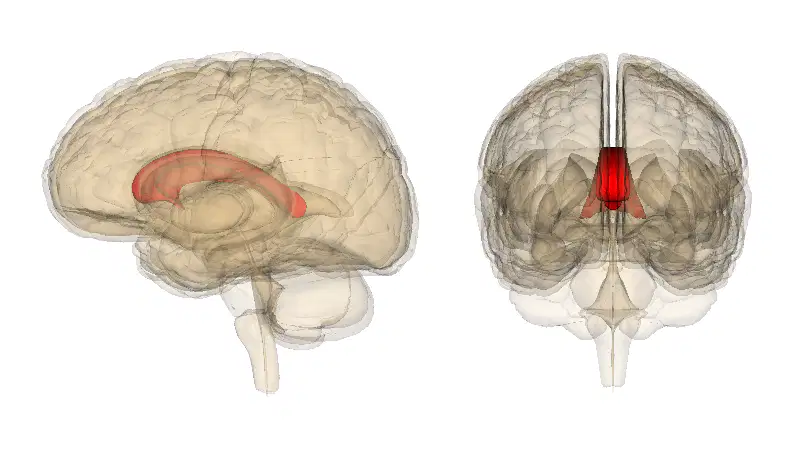
The area in red is the (a) .
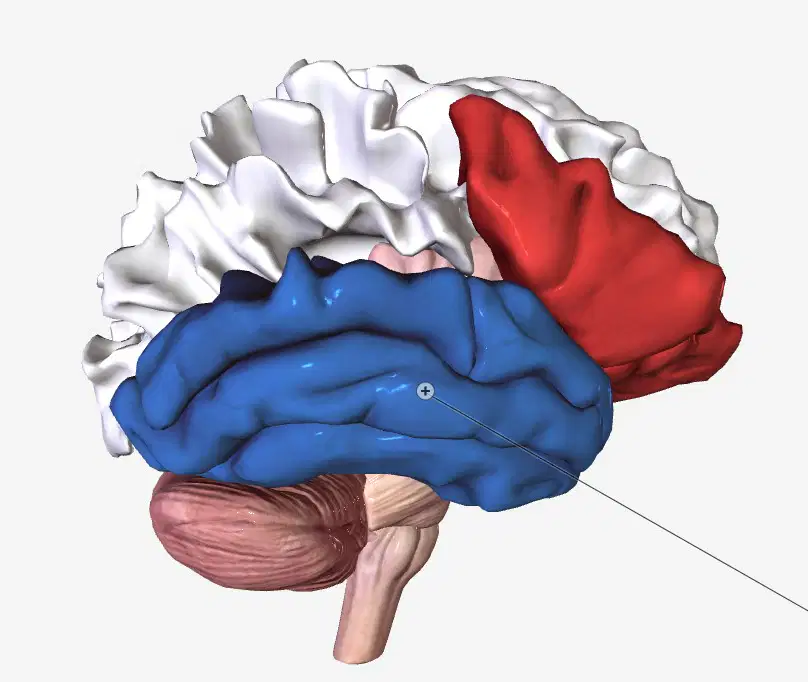
Which lobe is shown in blue?
Frontal
Occipital
Parietal
Temporal


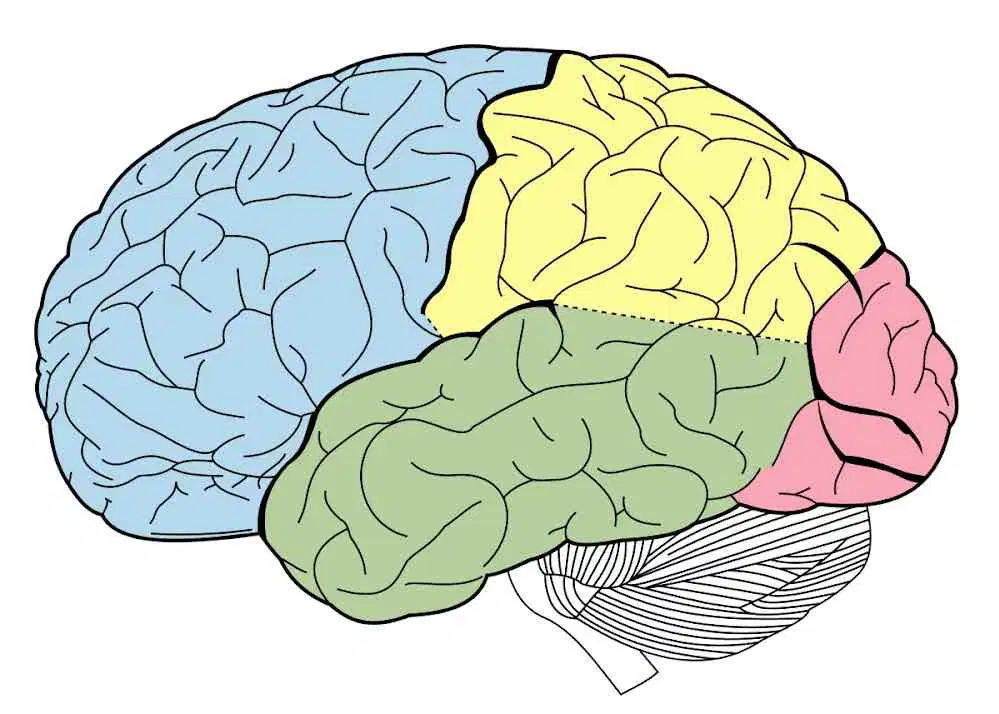
Which color segment of this image is the Temporal Lobe?
Blue
Green
Yellow
Pink
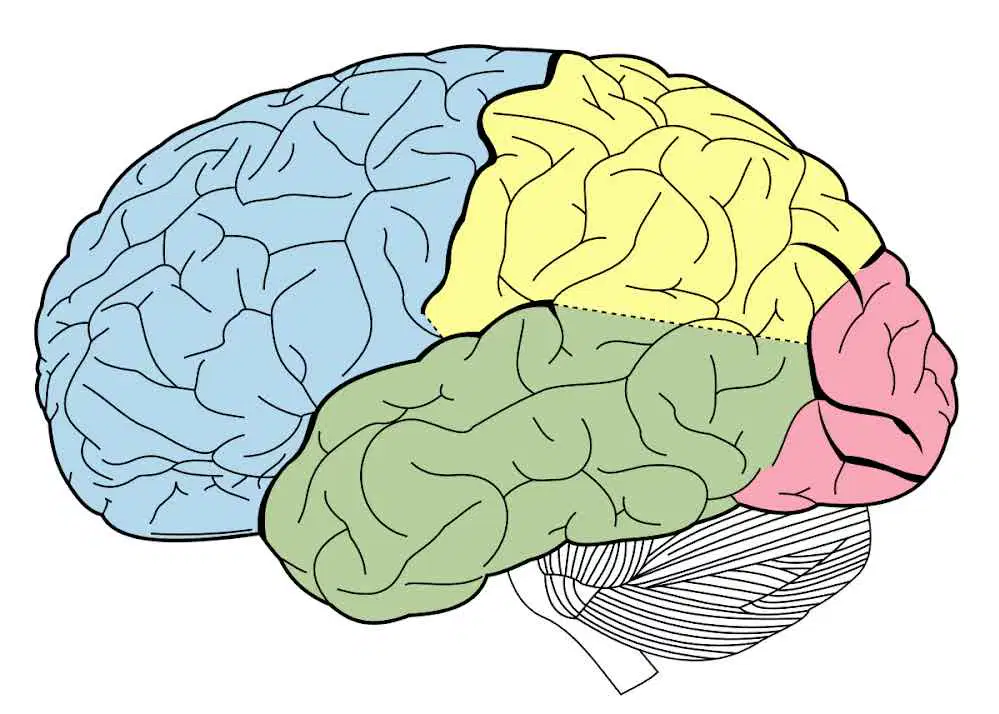
Which color segment of this image is the occipital Lobe?
Pink
Green
Yellow
Blue

These images would be produced by which scan?
CT
MRI
PET
fMRI
EEG
Use radioactive tags to show which brain areas become active when someone performs a task.
CT
MRI
PET
fMRI
EEG
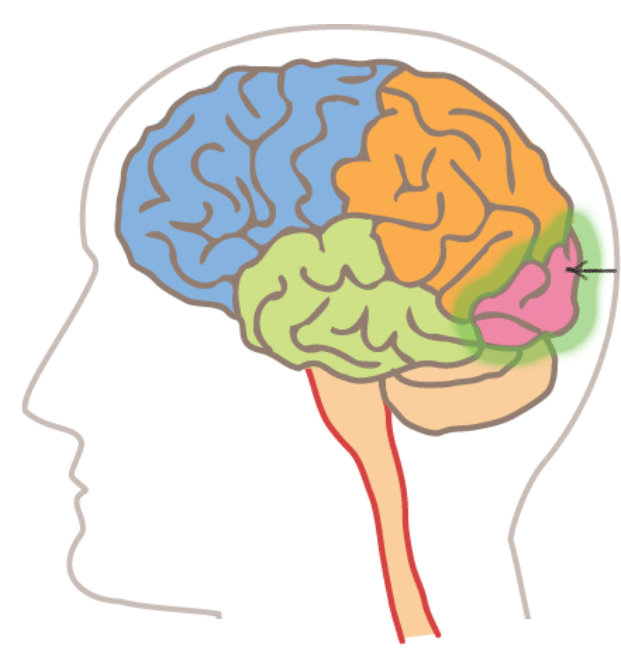
Identify the lobe of the brain highlighted.
Frontal lobe
Parietal lobe
Occipital lobe
Temporal lobe
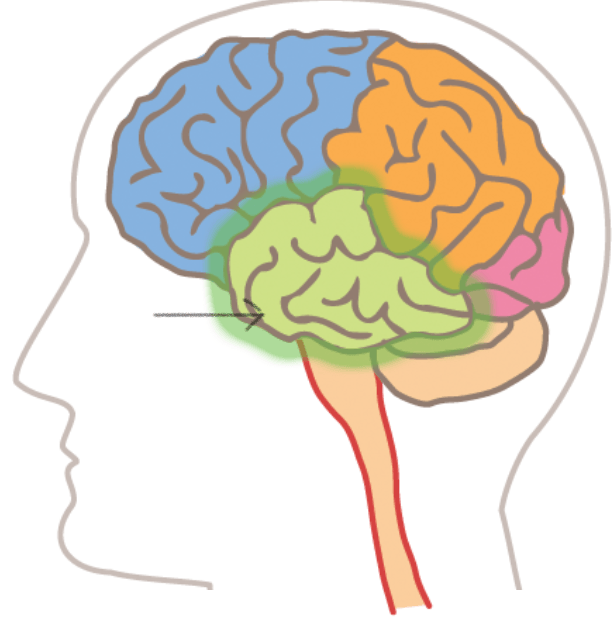
Identify the lobe of the brain highlighted.
Frontal lobe
Parietal lobe
Occipital lobe
Temporal lobe
Responsible for integrating sensory information, including touch, temperature, pressure and pain.
Frontal lobe
Parietal lobe
Occipital lobe
Temporal lobe


This part of the brain is responsible for sight,
A
B
C
D
E

"A"
primary motor cortex
premotor area
primary somatosensory cortex
sensory association area
Broca's Area
"B"
primary motor cortex
premotor area
primary somatosensory cortex
sensory association area
Broca's Area

G
Broca's area
Prefrontal area

F
Auditory association area
Primary auditory cortex

Name the cerebral lobe.
frontal lobe
occipital lobe
parietal lobe
temporal lobe

Name the cerebral lobe.
frontal lobe
occipital lobe
parietal lobe
temporal lobe
Area responsible for planning and movement
Identify the Frontal lobe

Label the area:
(a)
Area responsible for touch and spatial relations
Identify the Occipital lobe
Identify the Temporal lobe
Area responsible for hearing and memory
Label:
Label:

Match the following letter that corresponds to the area that would be most active when you..
distinguish between high-pitched and low-pitched tones in a sound recognition task.
H
try to figure out the steps required to solve a multi-step puzzle
I
move fingers in a precise sequence to play a tune on a piano.
J
identify the texture of objects (e.g., smooth or rough) while blindfolded.
K
identify shapes and colors displayed on a screen during an acuity test.
L

Which lobe controls sensations such as pain, temperature, or touch?
frontal lobe
parietal lobe
occipital lobe
temporal lobes
A researcher wants to know how quickly the brain distinguishes faces from objects. Best method?
PET w/ an EEG
MRI w/ an EEG
EEG w/ an ERP
EEG alone
Which statement about fMRI is most accurate?
Which statement about fMRI is most accurate?
It shows causation
It measures blood oxygen changes
It measures blood oxygen changes
A person survives a head injury and afterward becomes impulsive, struggles to plan ahead, and makes poor social decisions despite normal vision and movement. Damage to which function is most likely responsible for these changes?
Visual processing
Balance and coordination
Impulse control
Basic reflexive responses
After several months of intensive soccer training, a high school athlete shows faster reaction times and smoother coordination, even though brain scans show no increase in neuron count. Which neural change most likely explains this improvement?
Growth of additional neuron cell bodies in the motor cortex
Increased myelination of axons connecting motor and sensory regions
Enlargement of the occipital lobes responsible for visual processing
Greater production of neurotransmitters in the cerebellum
After a mild stroke, a patient can feel a tap on their right hand but cannot voluntarily move that hand. Which explanation best accounts for this pattern?
Damage posterior to the central fissure
Damage anterior to the central fissure
Disrupted communication between hemispheres
Reduced myelination in occipital cortex
A violinist practices daily for years and shows faster, smoother finger movements without gaining new neurons. Which neural change best explains this?
Increased gray matter volume in the cerebellum
Stronger white matter connections between motor regions
Expansion of the parietal lobes
Increased neurotransmitter release at synapses
Which person would most likely struggle with planning, inhibition, and social judgment after brain injury?
A dancer with cerebellar damage
A student with occipital lobe damage
A patient with prefrontal cortex damage
A musician with temporal lobe damage
During brain surgery, stimulation of one small cortical area causes movement only in the patient’s fingers. This best demonstrates that the motor cortex is:
Uniformly organized
Bilaterally redundant
Somatotopically mapped
Functionally undifferentiated
A patient speaks in short, effortful phrases but understands spoken language well and becomes frustrated when trying to talk. Damage is most likely in the:
Right temporal lobe
Left frontal lobe
Left parietal lobe
Right occipital lobe
Which statement best captures the difference between gray and white matter?
Gray matter speeds signals; white matter processes meaning
White matter contains cell bodies; gray matter connects regions
Gray matter processes information; white matter transmits signals
White matter enables reflexes; gray matter enables sensation
A student can feel heat and pressure on their left leg but cannot tell exactly where the sensation occurred. Which area is most likely affected?
Primary motor cortex
Prefrontal cortex
Primary somatosensory cortex
Occipital cortex
After a biking accident, Jordan has difficulty voluntarily moving their right hand and reports reduced sensation in their left arm. Which pattern of brain involvement best explains these symptoms?
Damage to the right primary motor cortex and right somatosensory cortex
Damage to the right primary motor cortex and right somatosensory cortex
Damage to the left primary motor cortex and right somatosensory cortex
Damage to the right primary motor cortex and left somatosensory cortex
After a mild stroke, a patient can feel a tap on their right hand but cannot voluntarily move that hand. Which explanation best accounts for this pattern?
Damage posterior to the central fissure
Damage anterior to the central fissure
Disrupted communication between hemispheres
Reduced myelination in occipital cortex
A violinist practices daily for years and shows faster, smoother finger movements without gaining new neurons. Which neural change best explains this?
Increased gray matter volume in the cerebellum
Stronger white matter connections between motor regions
Expansion of the parietal lobes
Increased neurotransmitter release at synapses
Which person would most likely struggle with planning, inhibition, and social judgment after brain injury?
A dancer with cerebellar damage
A student with occipital lobe damage
A patient with prefrontal cortex damage
A musician with temporal lobe damage
During brain surgery, stimulation of one small cortical area causes movement only in the patient’s fingers. This best demonstrates that the motor cortex is:
Uniformly organized
Bilaterally redundant
Somatotopically mapped
Functionally undifferentiated
A patient speaks in short, effortful phrases but understands spoken language well and becomes frustrated when trying to talk. Damage is most likely in the:
Right temporal lobe
Left frontal lobe
Left parietal lobe
Right occipital lobe
Which statement best captures the difference between gray and white matter?
Gray matter speeds signals; white matter processes meaning
White matter contains cell bodies; gray matter connects regions
Gray matter processes information; white matter transmits signals
White matter enables reflexes; gray matter enables sensation
A student can feel heat and pressure on their left leg but cannot tell exactly where the sensation occurred. Which area is most likely affected?
Primary motor cortex
Prefrontal cortex
Primary somatosensory cortex
Occipital cortex
After a biking accident, Jordan has difficulty voluntarily moving their right hand and reports reduced sensation in their left arm. Which pattern of brain involvement best explains these symptoms?
Damage to the right primary motor cortex and right somatosensory cortex
Damage to the right primary motor cortex and right somatosensory cortex
Damage to the left primary motor cortex and right somatosensory cortex
Damage to the right primary motor cortex and left somatosensory cortex

