
 Worksheets
Genetics and Evolution Quiz
Total questions: 76
Worksheet time: 38mins
What is the term for a heritable trait that improves survival and reproduction in a specific environment?
Fitness
Adaptation
Mutation
Genetic diversity
Which term describes an organism's ability to survive and reproduce?
Natural Selection
Mutation
Fitness
Genetic diversity
What process involves individuals with higher fitness leaving more offspring, increasing favorable allele frequencies over generations?
Genetic diversity
Mutation
Natural Selection
Adaptation
What is the source of genetic diversity in populations?
Adaptation and fitness
Mutations and sexual reproduction
Natural selection and adaptation
Fitness and mutation
What is a change in DNA that can be harmful, beneficial, or neutral, and is a source of new alleles or variation?
Fitness
Mutation
Adaptation
Genetic diversity
What is necessary for natural selection to occur?
Genetic variation within a population
Equal survival and reproduction rates for all individuals
Lack of competition for resources
Absence of environmental changes
Which of the following is a source of genetic diversity?
Mutation
Cloning
Genetic uniformity
Environmental factors
What is divergent evolution?
Evolution of unrelated species with similar traits due to similar environments.
Evolution of related species in different directions from a common point.
Evolution of species with identical traits due to identical environments.
Evolution of unrelated species in the same direction from a common point.
What type of structures are associated with convergent evolution?
Homologous structures
Analogous structures
Vestigial structures
Identical structures

Which of the following is an example of convergent evolution?
Shark and dolphin developing streamlined shapes due to aquatic environments.
Puma and dolphin evolving from a common ancestor.
Shark and puma developing identical skeletal structures.
Dolphin and puma evolving identical traits due to identical environments.
What type of structures are associated with divergent evolution?
Analogous structures
Homologous structures
Vestigial structures
Identical structures
What does divergent evolution refer to?
Two species evolve in the same direction from a common ancestor.
Two species evolve in different directions from a common ancestor.
Two species evolve independently without a common ancestor.
Two species evolve identical traits due to environmental factors.
What are homologous structures characterized by?
Different basic anatomy and no common ancestor.
Same basic anatomy and a common ancestor.
Identical functions but different anatomy.
Independent evolution without shared traits.
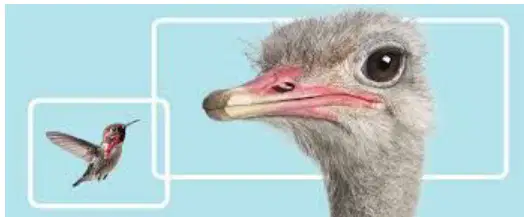
Which of the following is an example of homologous structures?
Wings of hummingbirds and bats.
Wings of hummingbirds and ostriches.
Fins of fish and wings of birds.
Legs of mammals and fins of fish.
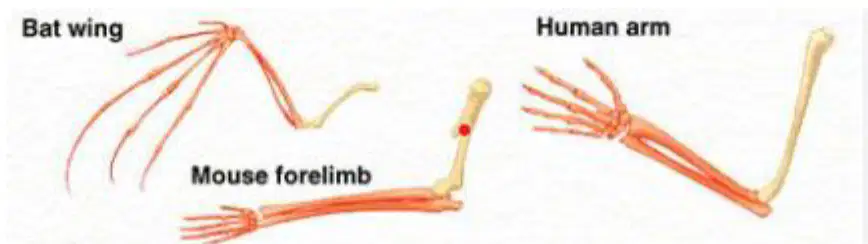
Which of the following structures is an example of a homologous structure?
Bat wing and butterfly wing
Bat wing and bird wing
Bat wing and mouse forelimb
Butterfly wing and bird wing
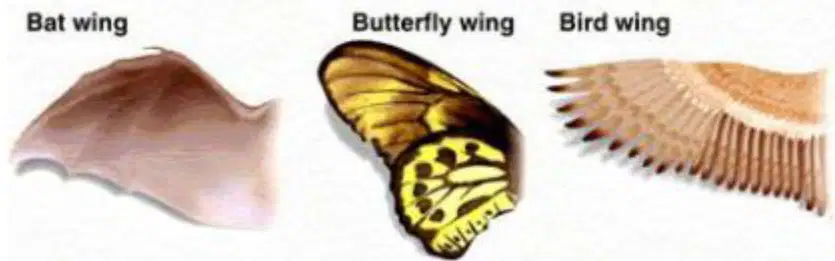
Which of the following structures is an example of an analogous structure?
Bat wing and mouse forelimb
Bat wing and human arm
Bat wing and butterfly wing
Mouse forelimb and human arm
What type of evolution is demonstrated by the transformation of Pakicetus into modern whales, which are fully aquatic and have lost their hind limbs?
Microevolution
Macroevolution
Artificial selection
Genetic drift
What is convergent evolution?
Evolution of related species with similar traits due to shared ancestry
Unrelated species independently evolving similar traits due to similar environmental pressures
Evolution of species with different traits due to environmental pressures
Evolution of species with identical traits due to genetic mutation
What are analogous structures?
Structures with similar function and common ancestry
Structures with different functions and common ancestry
Structures with similar function but no common ancestry
Structures with different functions and no common ancestry
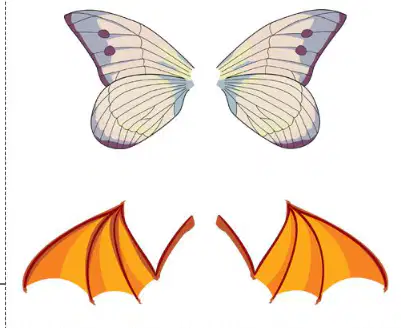
Which of the following is an example of analogous structures?
Wings of bats and birds
Wings of bats and insects
Fins of sharks and dolphins
Flippers of penguins and dolphins
What is microevolution?
Large-scale changes that lead to new species or higher taxonomic groups
Small, gradual genetic changes within a population
Genetic changes that occur over millions of years
Changes in the environment that affect species survival
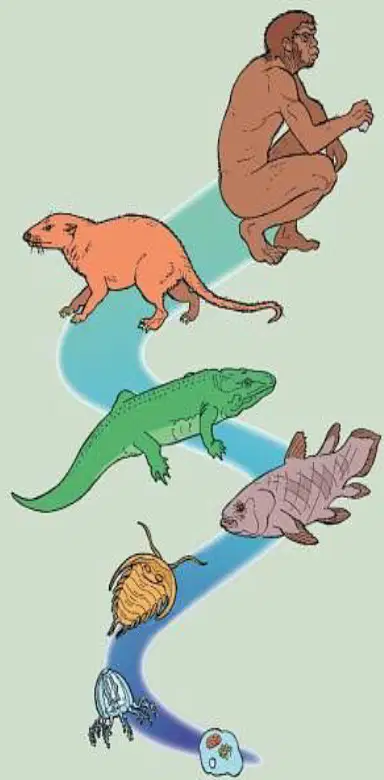
What is macroevolution?
Small, gradual genetic changes within a population
Changes in the environment that affect species survival
Large-scale changes that lead to new species or higher taxonomic groups
Genetic changes that occur within a single generation

During the Industrial Revolution in England, the dark-colored (melanic) form of the peppered moth (Biston betularia) became more common due to soot-covered trees. The dark coloration provided camouflage against predators. After pollution levels decreased, lighter-colored moths regained prevalence. Is this an example of microevolution or macroevolution?
Microevolution
Macroevolution
Speciation
Genetic drift
Bacteria like *Staphylococcus aureus* develop resistance to antibiotics such as penicillin through mutations or gene transfer. These resistant bacteria survive and reproduce, increasing the frequency of resistance genes in the population. Is this an example of microevolution or macroevolution?
Microevolution
Macroevolution
Genetic drift
Speciation
What does evolution refer to in the context of the Hardy-Weinberg Principle?
Change in allele frequencies in a population
Random mating in a population
Infinite population size
No natural selection
What is true about populations in Hardy-Weinberg equilibrium?
They are evolving
They are not evolving
They have constant gene flow
They undergo natural selection
Which of the following is NOT an assumption of the Hardy-Weinberg equilibrium?
No mutations
Random mating
Natural selection
Infinite population size
Which of the following is one of the five assumptions of Hardy-Weinberg equilibrium?
Constant gene flow
No mutations
Limited population size
Evolution occurs
Which of the following is NOT an assumption of the Hardy-Weinberg equilibrium?
No Selection
No Mutation
Small Population
Random Mating
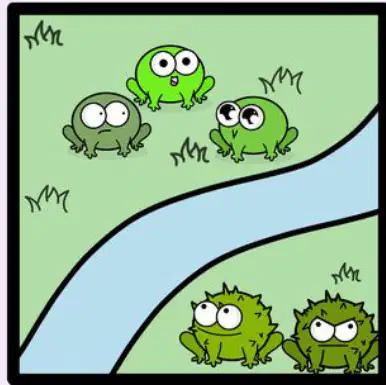
What does the assumption of "No Migration" in the Hardy-Weinberg equilibrium imply?
Individuals can freely move between populations.
There is no movement of individuals into or out of the population.
Migration occurs only during specific seasons.
Migration is limited to certain individuals.
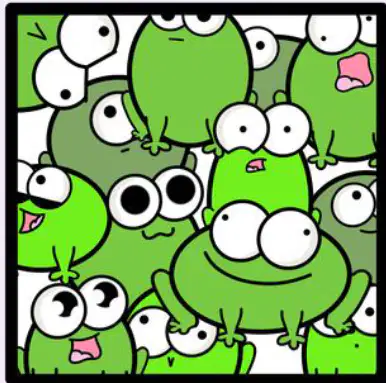
Why is a large population size important for maintaining Hardy-Weinberg equilibrium?
It reduces the impact of genetic drift.
It increases the rate of mutation.
It ensures selective mating.
It promotes migration.
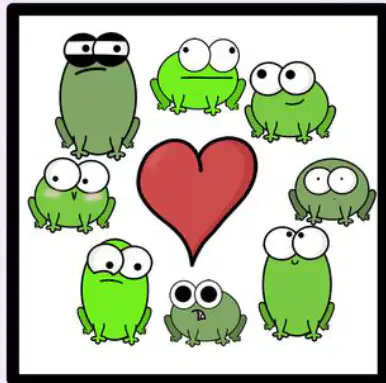
What does "Random Mating" mean in the context of Hardy-Weinberg equilibrium?
Individuals choose mates based on specific traits.
Mating occurs without any preference or selection.
Mating is restricted to certain individuals.
Mating happens only during specific times of the year.
Which of the following is a violation of Hardy-Weinberg equilibrium?
Random mating
Large population size
Mutation
No migration
Which of the following is a mechanism that violates Hardy-Weinberg Equilibrium (HWE)?
Natural Selection
Random Mating
Stable Allele Frequencies
No Mutations
What does "Gene Flow" refer to in the context of mechanisms of evolution?
The transfer of genetic material between populations
The random change in allele frequencies
The process of natural selection
The absence of mutations

Which mechanism of evolution involves random changes in allele frequencies in a population?
Genetic Drift
Gene Flow
Non-random Mating
Natural Selection
What is the term for mating that does not occur randomly within a population?
Non-random Mating
Genetic Drift
Gene Flow
Mutations
What determines whether a phenotype provides an advantage or disadvantage to an individual?
Genetic mutations
Environmental conditions
Random chance
Population size
Which of the following is NOT a type of selection mentioned in the content?
Directional
Disruptive
Stabilizing
Natural
What type of selection favors individuals at both extremes of a trait over the intermediate phenotype?
Directional
Disruptive
Stabilizing
Artificial
Which type of selection involves human intervention to favor specific traits?
Directional
Disruptive
Stabilizing
Artificial
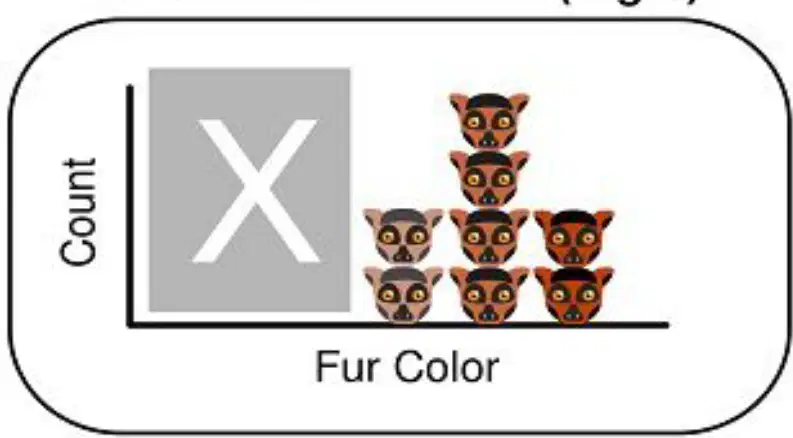
What is directional selection?
A process where multiple phenotypes are equally favored.
A process where a single phenotype is favored, causing allele frequency to shift in one direction.
A process where allele frequency remains constant over time.
A process where environmental changes have no impact on allele frequency.
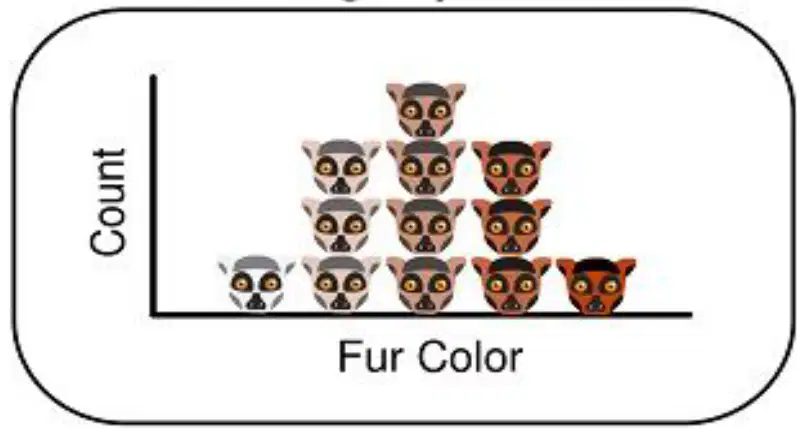
Which example is commonly used to explain directional selection?
Peppered moths
Darwin’s finches
Polar bears
Cacti
What causes the allele frequency to shift in one direction during directional selection?
Random mutations
Environmental changes
Genetic drift
Stabilizing selection
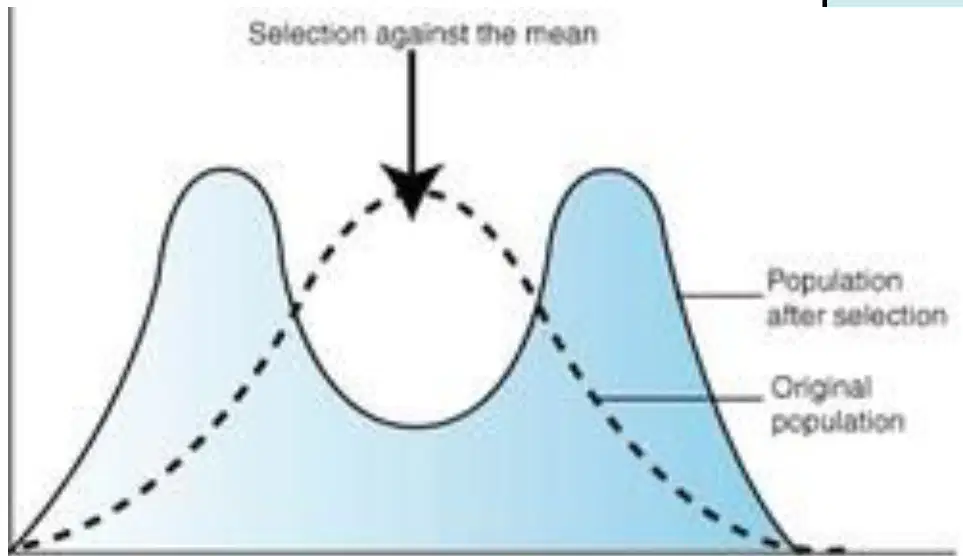
What is the primary characteristic of disruptive selection in natural selection?
Intermediate phenotypes are favored over extremes.
Extreme phenotypes are favored over an intermediate.
Genetic variance decreases over time.
Only one extreme phenotype is selected.
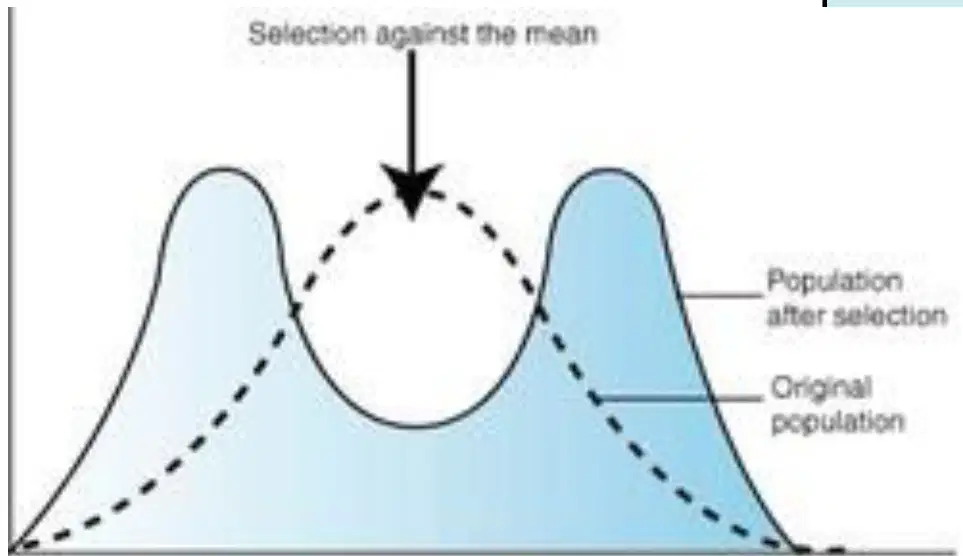
How does disruptive selection affect genetic variance in a population?
It decreases genetic variance.
It eliminates genetic variance.
It increases genetic variance.
It has no effect on genetic variance.

Which of the following is an example of disruptive selection?
Lobsters
Giraffes
Penguins
Elephants
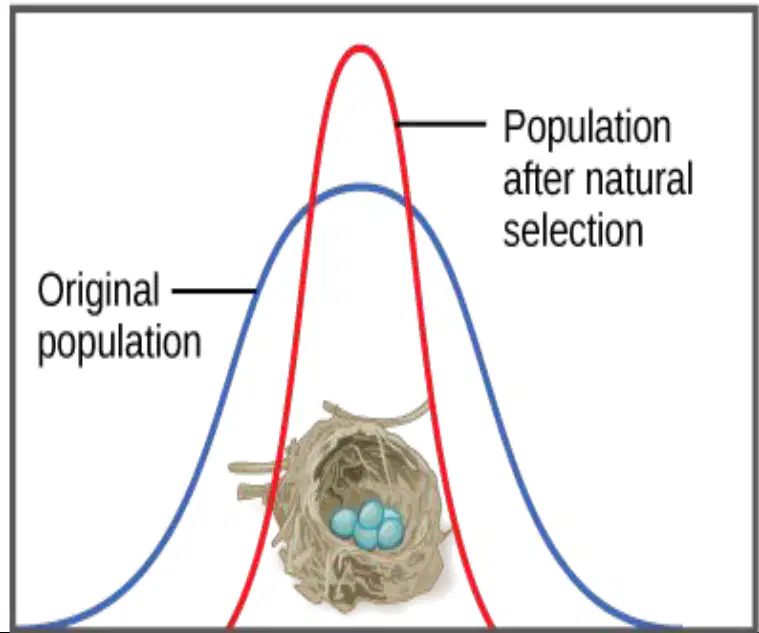
What is the primary characteristic of stabilizing selection in natural selection?
It favors extreme phenotypes and increases genetic variance.
It favors average phenotypes and decreases genetic variance.
It favors rare phenotypes and increases genetic variance.
It favors all phenotypes equally and maintains genetic variance.
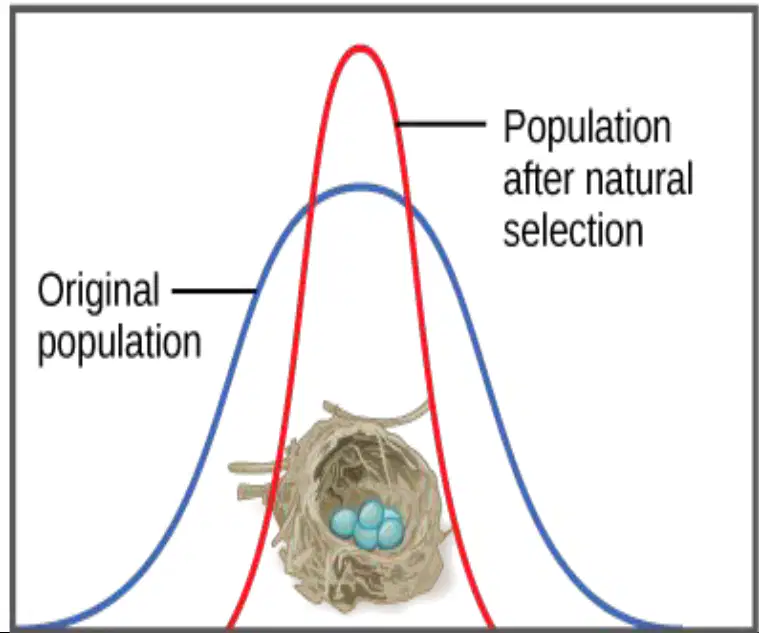
Which of the following is an example of stabilizing selection?
Birth weight or clutch sizes.
Long necks in giraffes.
Bright coloration in peacocks.
Large antlers in deer.
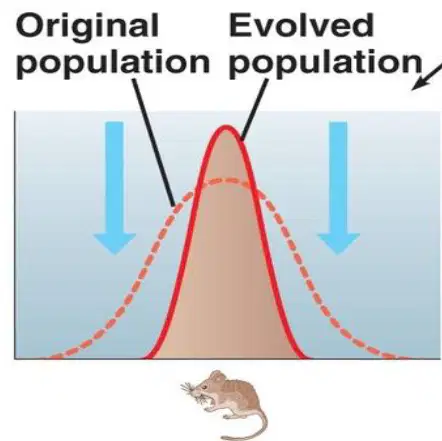
Which type of selection results in the narrowing of phenotypes around the average trait in a population?
Stabilizing selection
Directional selection
Disruptive selection
Random selection
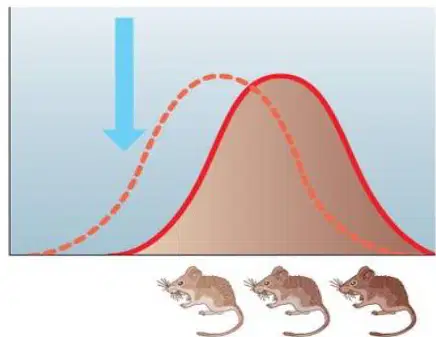
What type of selection shifts the population's phenotypes toward one extreme?
Stabilizing selection
Directional selection
Disruptive selection
Balancing selection
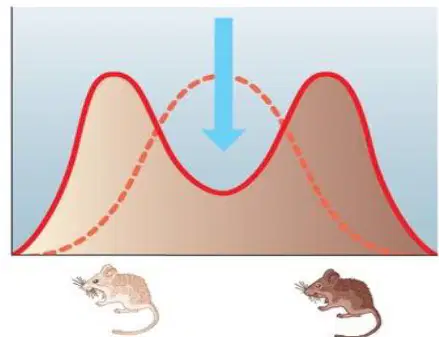
Which type of selection favors individuals at both extremes of a trait, leading to two distinct phenotypes in a population?
Stabilizing selection
Directional selection
Disruptive selection
Artificial selection
What is artificial selection?
The natural process of evolution in plants and animals.
Intentional breeding of plants and animals to produce desirable traits.
Random mutation in plants and animals caused by environmental factors.
The process of plants and animals adapting to their environment without human intervention.
Who are the selectors in artificial selection?
Nature
Animals
Humans
Random chance

Which of the following is an example of artificial selection in plants?
Wild mustard evolving naturally into kale.
Broccoli being developed through suppression of flower development.
Kale growing larger leaves due to natural environmental changes.
Cabbage forming naturally without human intervention.

Farmers breed cows to produce higher milk yields over generations. What mechanism is this an example of?
Natural selection
Artificial selection
Genetic drift
Mutation

When wolves hunt deer, they typically catch slower individuals. Over time, the deer population becomes faster. What type of natural selection is this?
Stabilizing selection
Directional selection
Disruptive selection
Artificial selection
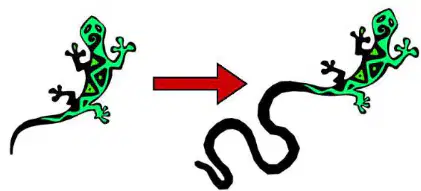
What is the selection type where one extreme trait is favored and the other extreme is against?
Stabilizing selection
Directional selection
Disruptive selection
Balancing selection
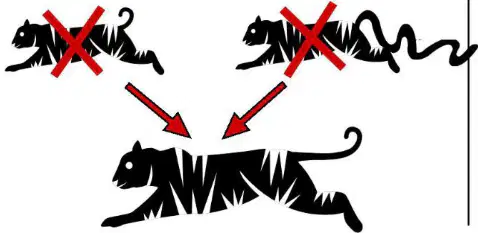
In stabilizing selection, which traits are favored and which are against?
Moderate traits are favored; both extremes are against
Both extremes are favored; moderate traits are against
One extreme trait is favored; the other extreme is against
All traits are equally favored
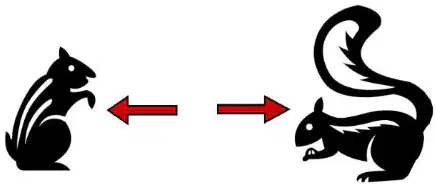
What type of selection favors both extremes and is against moderate traits?
Stabilizing selection
Directional selection
Disruptive selection
Balancing selection
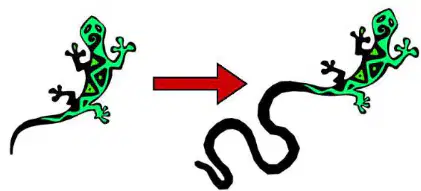
Why are long wiggly tails beneficial for lizards in directional selection?
They help lizards climb trees faster
They scare predators by resembling a snake
They improve the lizard's balance
They make the lizard harder to catch
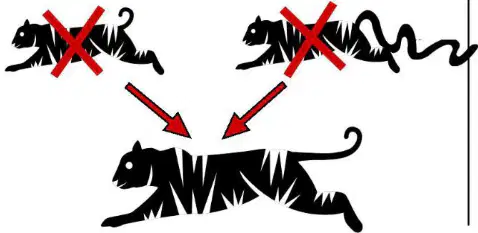
In stabilizing selection, why are medium tails best for cats?
Medium tails help cats climb trees
Medium tails improve balance without dragging on the ground
Medium tails scare predators
Medium tails make cats faster
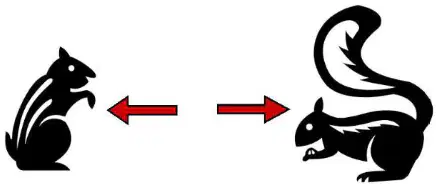
In disruptive selection, why are short tails beneficial for squirrels?
Short tails help squirrels climb trees
Short tails help squirrels escape predators on the ground
Short tails improve balance in trees
Short tails make squirrels faster
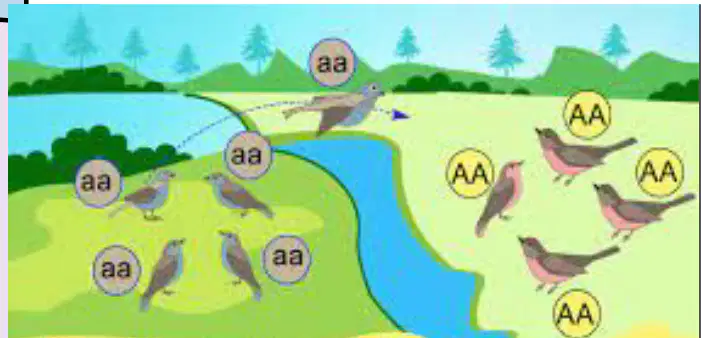
What is gene flow?
The movement of alleles into or out of a population due to migration of individuals or gametes.
The random mutation of alleles within a population.
The process of natural selection favoring certain traits.
The division of a population into smaller groups.
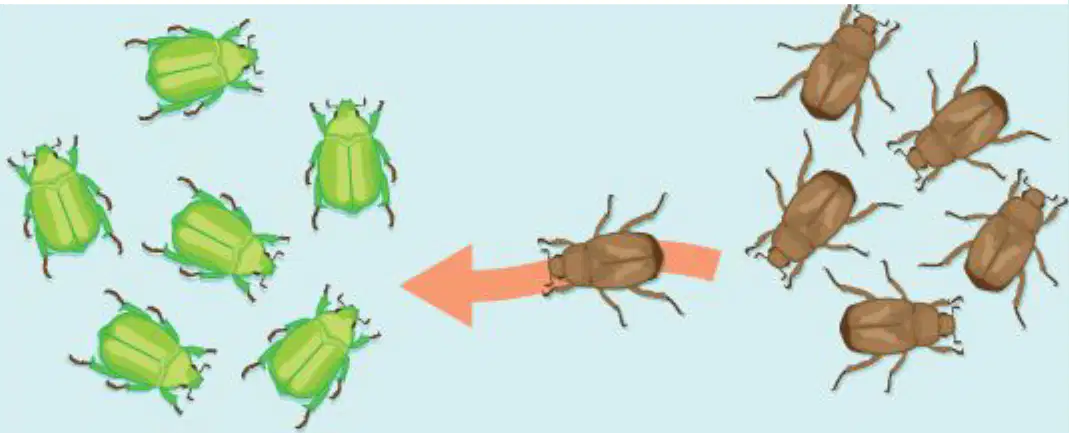
What is one effect of gene flow on a population?
Causes changes in allele frequencies.
Prevents any genetic variation.
Leads to extinction of a population.
Ensures all individuals have identical alleles.
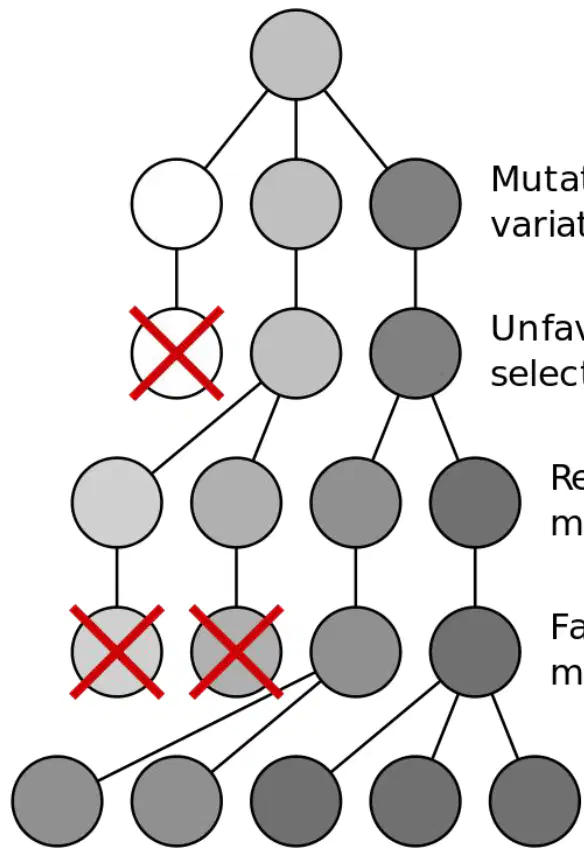
What is the primary result of a mutation in an allele?
Creation of a new allele from an existing one
Elimination of all alleles
Stabilization of allele frequency
Prevention of reproduction
How does mutation affect an allele's frequency over generations?
It changes the frequency by a small, continuous amount
It eliminates the allele completely
It increases the frequency drastically in one generation
It prevents the allele from mutating further
What happens to unfavorable mutations during the process of mutation and reproduction?
They are selected against
They become dominant
They increase in frequency
They create new species
Which mutations are more likely to survive and reproduce?
Favorable mutations
Unfavorable mutations
Neutral mutations
All mutations equally
What is non-random mating based on?
Random selection of mates
Choosing mates based on specific traits
Mating without any selection criteria
Choosing mates based on environmental factors
Which of the following is a type of non-random mating?
Natural selection
Intrasexual selection
Genetic drift
Mutation
What is one possible result of non-random mating?
Decrease in reproductive success
Evolution of striking traits that increase reproductive success
Elimination of harmful traits
Random evolution of traits
What is the primary focus of intra-sexual selection?
Cooperation between males to find food
Competition between males for access to mates
Communication between males to form alliances
Migration of males to new territories
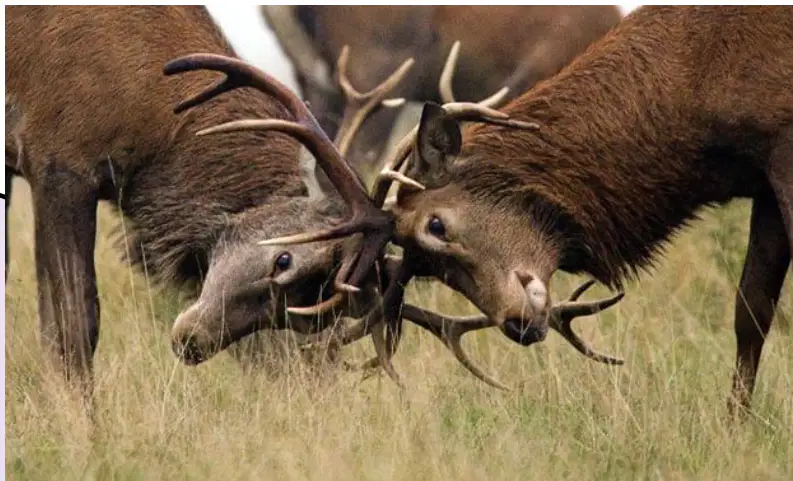
Which of the following is an example of intra-sexual selection behavior?
Sharing resources among males
Fighting or defending territory
Building nests for offspring
Singing to attract mates
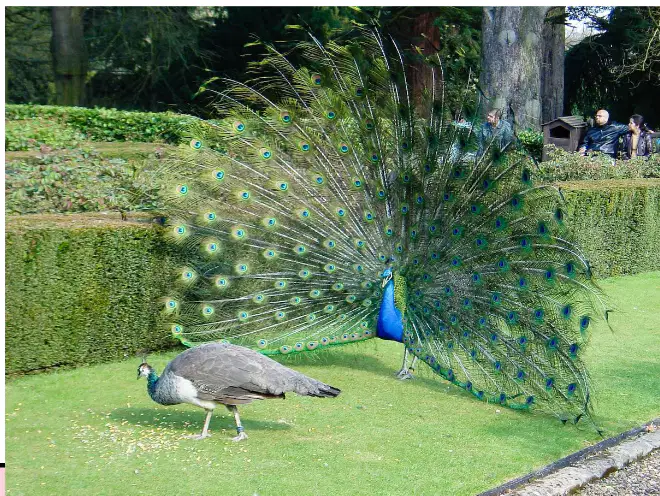
What is intersexual selection?
Selection based on competition between males for access to females.
Selection where females choose mates based on specific traits.
Selection based on survival traits like camouflage.
Selection where males choose mates based on specific traits.
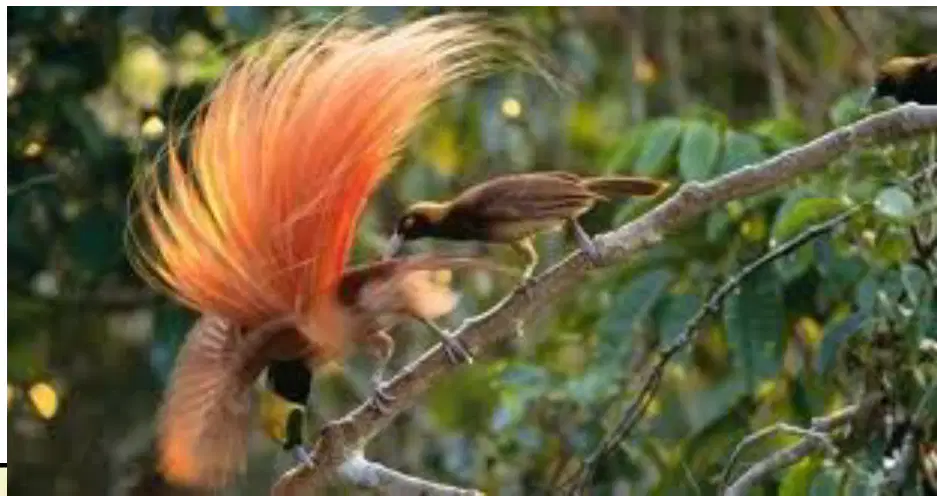
Which of the following is an example of traits used in intersexual selection?
Bright coloration, courtship dances, elaborate structures.
Camouflage, speed, and strength.
Aggressive behavior and territorial defense.
Ability to survive in harsh environments.

