
 Worksheets
World History I Final Exam Review
Total questions: 80
Worksheet time: 1hrs 1mins
True or false: Making pottery was part of the Neolithic society.
true
false
The people of Mesopotamia developed (a) as their form of writing.
Select the benefits of living close to a river (3 answers)
Hunting
Agriculture
Protection
Mountain Views
The people of Egypt developed (a) as their form of writing.
What rivers did the Mesopotamians live by
Cuyahoga and Grand
Yellow and Yang sea
Nile and Mississippi
Tigris and Euphrates
The people of Phoenicia developed a (a) as their form of writing.
Which people spread Mesopotamian writing throughout the Mediterranean Sea?
Hebrews
Phoenicians
Greeks
Persians
Religious belief that only one god exists?
Monotheism
Polytheism
Ziggurat
Monochromia
The Phoenicians were mainly a ___ _______ people.
Desert
Mountain
Paleolithic
Maritime
Why were the Phoenicians known as the "Purple People?"
Because they made purple dye, which was highly valued by royalty.
Their diet turned their skin purple.
Their capitol city of Tyre was painted purple.

The Rosetta Stone is the stone tablet that…
on which the oldest written record is found.
that contains Ramses II’s treaty with the Hittites.
on which the first legal code is written.
that helped to decipher hieroglyphics.
This Mesopotamian ruler is credited with introducing history’s first law code
Gilgamesh
Enkidu
Hammurabi
Cyrus
Which river is most closely associated with the early civilization of China?
Nile River
Yellow River
Tigris River
Indus River
Which country is considered the birthplace of Buddhism?
China
India
Japan
Korea
Which ancient civilization developed along the Indus River?
Mesopotamia
Egypt
India
China
__________________was born out of the jatis and required people to stay within their varnas, making some social classes better than others.
Varnas
Jatis
Caste System
Vedas
According to Hinduism, everything that is in the world is a part of ______________, including the human soul.
Karma
Monism
Brahman
Coffee

The Shang dynasty started in what region of China?
Yangtze River Valley
Huang He River Valley
Gobi Desert
Tibetan Plateau
...is the name of a supreme power, or divine (holy) force.
Shudras
Brahman
Varnas
Vedas
What was the Mandate of Heaven?
a belief that the gods only allowed the emperor to rule if they maintained harmony and order in society
a system of taxation
a type of art unique to the Shang Dynasty
a religious text containing wisdom and guidance
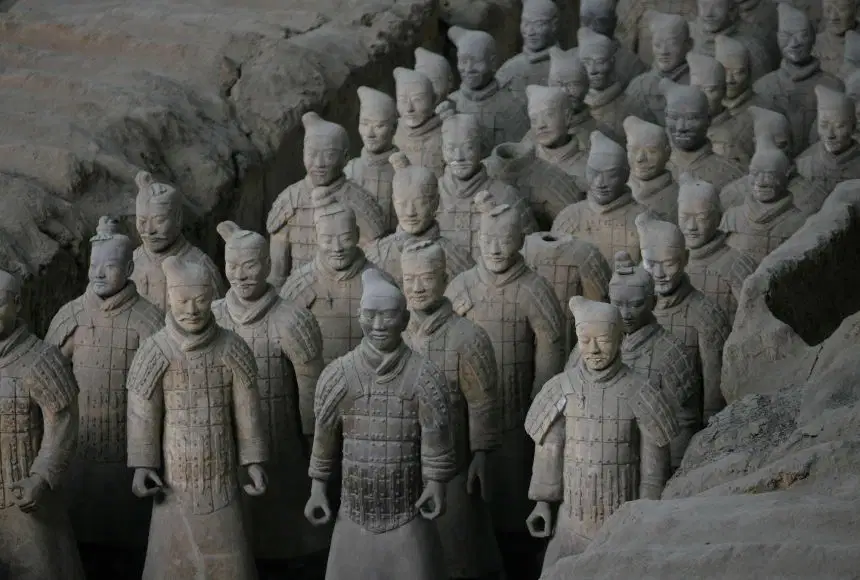
How are Chinese periods of history divided?
Dynasties
Periods
States
Lunar years

Which of the following helped spread Greek culture?
Trade
Colonization
Mountain barriers
Isolation
What was a polis in ancient Greece?
A god or goddess
A type of temple
A city-state with its own government
A kind of ship used in trade
Which statement best describes life in Sparta?
Education and art were most important
Trade was more important than farming
Military service was the main focus for men
Only women were citizens
What caused the Persian Wars?
Persia tried to conquer Greece
Greek colonies rebelled against Persia
Sparta attacked Athens
The Phoenicians wanted Greek land
Why did the Peloponnesian War begin?
Athens and Sparta both wanted to control Greece
Persia invaded again
The Minoans and Mycenaeans fought
Athenian democracy failed
What were two effects of the Peloponnesian War?
Sparta defeated Athens
Athens became stronger
Greek city-states became weak
Macedonia invaded later
Which cultures blended together during the Hellenistic Age?
Greek
Persian
Chinese
Egyptian
What type of government was created in Athens?
Monarchy
Dictatorship
Democracy
Theocracy
What was the main reason for the Punic Wars?
Control of Mediterranean trade
Disagreement about religion
Conflict over the Alps
Slave revolts
Who was the Carthaginian general who invaded Italy?
Hannibal
Caesar
Augustus
Romulus
Select the benefits of Pax Romana.
Peace and stability
Uniform currency
Better roads for trade
Frequent invasions
Which event ended the Republic and started the Empire?
Assassination of Julius Caesar
End of the Punic Wars
Invention of Roman roads
Building the Colosseum
Who became the first emperor of Rome?
Augustus Caesar
Julius Caesar
Hannibal
Diocletian
What type of government did Rome have before becoming an empire?
Democracy
Monarchy
Republic
Dictatorship
Which event was held in the Colosseum?
Plays
Gladiator fights
Speeches
Senate meetings
The Roman religion was influenced most by which civilization?
Egyptians
Greeks
Persians
Chinese
Which type of religion did the Romans practice before Christianity?
Monotheistic
Polytheistic
Buddhism
Judaism
What was the main language spoken in Ancient Rome?
Latin
Greek
Hebrew
Aramaic
Which of the following were Roman achievements?
Roads
Arches
Concrete
All of the above
What helped the Romans control their large empire?
Strong roads and armies
Isolation and mountains
Local independence
Lack of trade
What were some causes of the fall of Rome?
Weak leaders
Invasions
Economic problems
All of the above
What was the main cause of the Great Schism in 1054 CE?
Conflict over trade routes
Political and religious disagreements between Eastern and Western Churches
Disputes over territory in Asia
The Crusades
What was the capital of the Byzantine Empire until 1453 CE?
Rome
Athens
Constantinople
Alexandria
Who was the greatest Byzantine Emperor known for expanding trade and reconquering Roman lands?
Constantine
Julius Caesar
Justinian
Charlemagne
Which statements correctly describe the Byzantine Empire’s culture? (Select all that apply)
Preserved Greco-Roman knowledge
Rejected Christianity
Created the Hagia Sophia
Used Latin as their main language
Who was the head of the Eastern Orthodox Church?
The Pope
The Patriarch
The Bishop of Rome
The Emperor of the West
Who conquered Constantinople in 1453 CE?
The Mongols
The Franks
The Ottoman Turks
The Persians
Which of the following are part of the Five Pillars of Islam? (Select all that apply)
Declaration of faith
Daily prayer
Giving alms
Fasting during Ramadan
Crusades

What is the main conflict between Shi'a and Sunni Muslims?
Choice of Holy Text
Grave site of Muhammad
Choice of Caliph
Location of the Capital
What was the outcome of the Hundred Years War?
France won
England won
It ended in a stalemate
Gascony became independent
Who was the first Norman king of England?
William the Conqueror
King Harold
Charlemagne
Hugh Capet
Joan of Arc led the armies of the
French
English
Spanish
Dutch
Portuguese
Ferdinand and Isabella were king and queen in
Spain
England
Germany
Italy
France
These two countries fought during the Hundred Years' War
England and France
Italy and Germany
France and Germany
England and Spain
Spain and Portugal
Select the two groups that were expelled from Spain under the rule of Ferdinand and Isabella
Muslim Moors
Jews
Christians
Incans
Followers of Shinto
What countries did the Vikings settle during the Viking Age?
France and Russia
England and Scotland
Germany and Iceland
All of the above
What was Ivan III's legacy in terms of the Russian state?
He weakened the state
He laid the foundations for a centralized state
He ignored state affairs
He divided the state
How is Ivan IV remembered?
A benevolent ruler
A visionary leader
A ruthless tyrant
A religious reformer
What was the purpose of the Spanish Inquisition?
To spread the Protestant Reformation
To identify and punish heretics
To establish a new government in Spain
To promote humanism
The Mongol Empire collapsed because of...
Poor leadership of Genghis Khan's descendants
Spread of new diseases
A serious drought
The decrease of trade in the Mongol Empire
What is the merit system?
It is a test that poor men took to get jobs.
it is a test that wealthy men would take to demonstrate their skills and work with the emperor.
It is a test that showed men's skills and would get access to work in a higher position.
It is a test that both men and women would take to get a job with their skill levels.

Lady Murasaki wrote . . . .
The Tale of the Samurai
The Samurai's Tale
A Japanese Tale
The Tale of Genji

Who was the military general that ruled in Japan in the Emperor's name?
Emperor
Shogun
Daimyo
Samurai
Peasants

How were European and Japanese societies similar in the Middle Ages?
They created a system of feudalism in which land was exchanged for service and protection
They created representative democracies in which common citizens elected leaders
They created direct democracies in which citizens had the power to vote on specific laws
They created forms of government in which religion determined the law
How did the black death spread over the oceans
By Birds
Over trade routes
Missionary work
Captured fighters

What was the original goal of the Crusades?
To make sure that kings no longer ruled over peasants.
To recapture the Holy Land from the Muslims.
To end Feudalism
To open new trade routes to the East.

An object, written document, or first-hand (witness) account of an historical event is called a _____________________________________.
hint: it was created DURING that same time period
primary source
secondary source
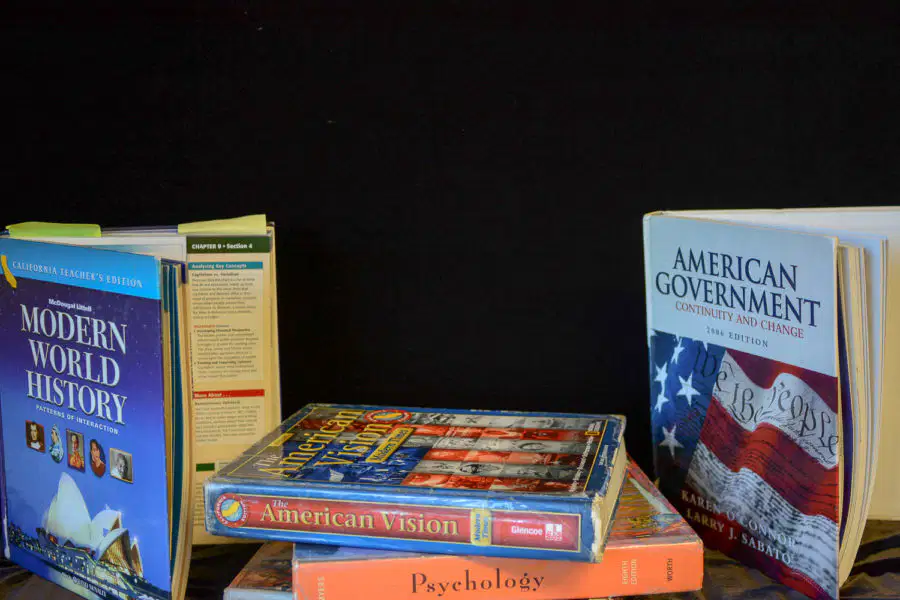
Sources written by individuals who did NOT experience a historical event first hand are called.....
hint: it was created "after the fact" & NOT during that same time period
Primary sources
Secondary sources

Studying history helps us to better understand ____________________.
our world
our country
our ancestors (family history)
all of the above

Carson finds an old Native American arrowhead (shown in this picture) in his backyard and brings it to school.
This manmade object from the past is called ______________________________.
an artifact
a souvenir
a re-creation
a tool

