
 Worksheets
Unit 5 Quiz: Feudalism — Extracted Questions
Total questions: 16
Worksheet time: 9mins
Answer using the quote and your knowledge of history: “The Petition exhibited to his Majesty by the lords Spiritual and Temporal, and Commons, in this present Parliament assembled, concerning divers Rights and Liberties of the Subjects, with the king’s Majesty’s royal answer thereunto in full Parliament… Your subjects have inherited this freedom, that they should not be compelled to contribute to any tax, tallage, aid, or other like charge not set by common consent, in parliament… No man, of what estate or conduction that he be, should be put out of his land or tenements, nor taken, nor imprisoned, nor disinherited nor put to death without being brought to answer by due process of law.” — The Petition of Right (1628) Which two documents helped to limit the power of monarchs like the Petition of Right did?
95 Theses and 10 Commandments
Hammurabi’s Code and 12 Tables
Magna Carta and English Bill of Rights
Mandate of Heaven and Divine Right
Answer using the quote and your knowledge of history: “The Petition exhibited to his Majesty by the lords Spiritual and Temporal, and Commons… Your subjects have inherited this freedom… No man… should be imprisoned or put to death without due process of law.” — The Petition of Right (1628) Which statement expresses the purpose of the Petition of Right?
The king cannot tax or imprison anyone without cause.
The Spiritual right of kings is absolute.
Due process of law does not apply to the people.
The king can do whatever they want to do.
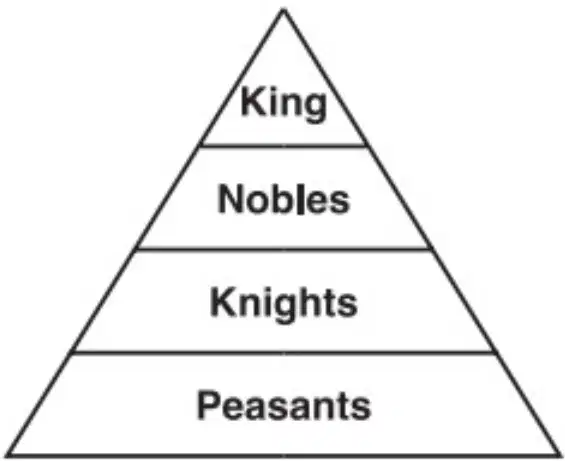
Base your answer on the illustration and your knowledge of history: European Feudal System pyramid labeled King at the top, then Nobles, Knights, and Peasants at the base. Which statement is accurate about feudalism in Europe?
Serfs were allowed to own land.
Feudalism led to major class differences in society.
The basic unit of feudalism landholding was the village church.
It was discontinued by the 700s C.E.
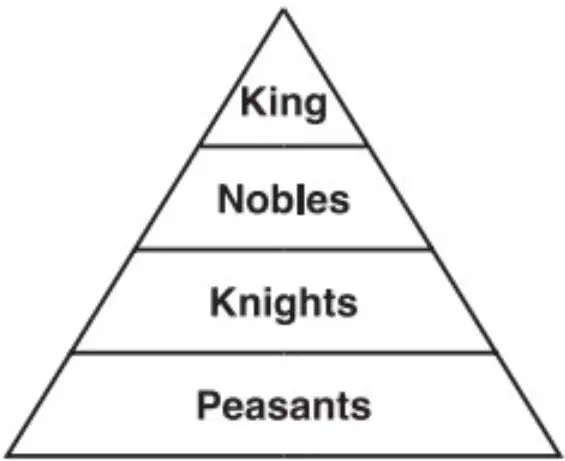
Base your answer on the illustration and your knowledge of history: European Feudal System pyramid labeled King, Nobles, Knights, Peasants. What was the turning point in Global History that led to the development of the European Feudal System?
Peasants took control of European kingdoms
The Fall of the Roman Empire
Hinduism was adopted by European monarchs
Invasion by the Mongols
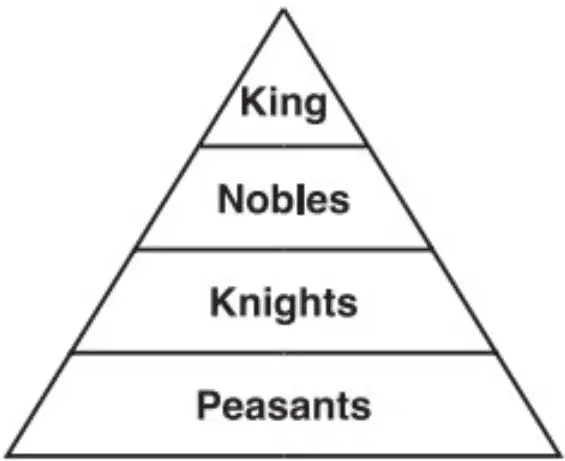
Base your answer on the illustration and your knowledge of history: European Feudal System pyramid labeled King, Nobles, Knights, Peasants. Medieval life in Europe was characterized by
a strong central government
a thriving system of international trade
limited social mobility
rejection of the teachings of the Christian church
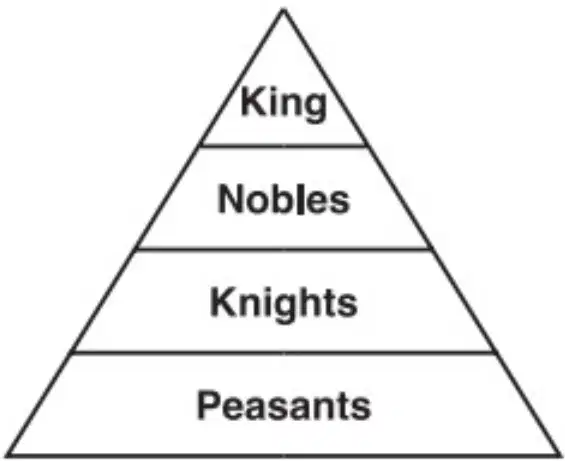
Base your answer on the illustration and your knowledge of history: European Feudal System pyramid labeled King, Nobles, Knights, Peasants. The illustration suggests that the European feudal system was
designed to promote political and economic equality
controlled by a powerful middle class
intended to provide opportunities for social mobility
supported by the labor of the peasants

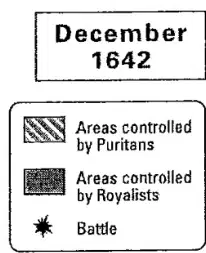
Answer using the maps and your knowledge of history: The English Civil War from 1642 to 1645 shown on four maps (December 1642, December 1643, December 1644, December 1645) with shaded regions for areas controlled by Puritans and by Royalists and stars marking battles. Which event led to the Civil War shown in the maps?
The Glorious Revolution
The Battle of Hastings
The disbanding of Parliament
The ascension of William and Mary
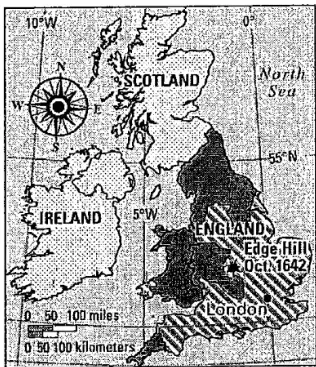
Answer using the maps and your knowledge of history: The English Civil War from 1642 to 1645 shown on four maps (December 1642, December 1643, December 1644, December 1645). What monarch was beheaded at the end of the Civil War by Oliver Cromwell?
Henry VIII
Charles I
Elizabeth I
Louis XIV
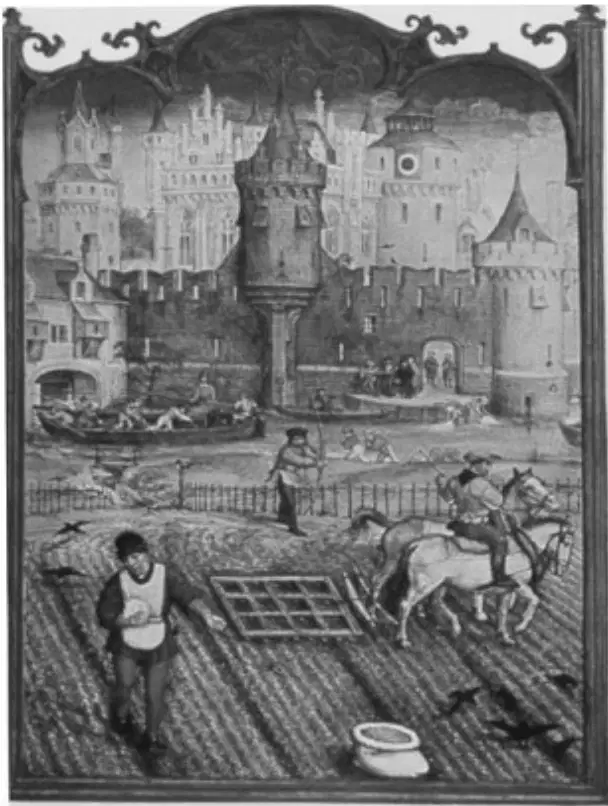
Base your answers on the artwork and your knowledge of history: a medieval scene showing a fortified town, castle towers, workers and riders, and rural activity in the foreground. Which economic system is most closely associated with the activities shown in this artwork?
Communism
Manorialism
Socialism
Capitalism
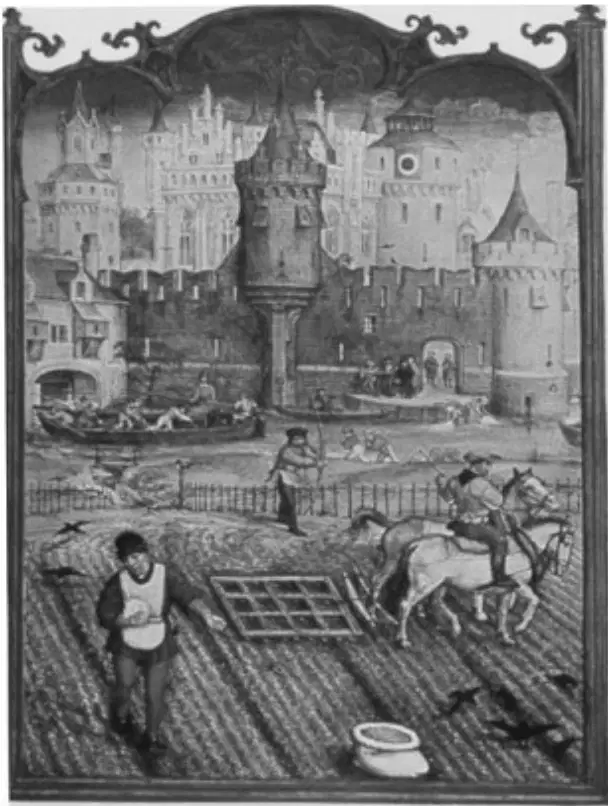
Base your answers on the artwork and your knowledge of history: a medieval scene with castle architecture and rural labor near a town. With which historical setting is this artwork most closely associated?
Western Europe — Middle Ages
India — Mughal Empire
Japan — Tokugawa Shogunate
Middle East — Abbasid Dynasty

The primary characteristic of feudal society in Medieval Europe was (a)
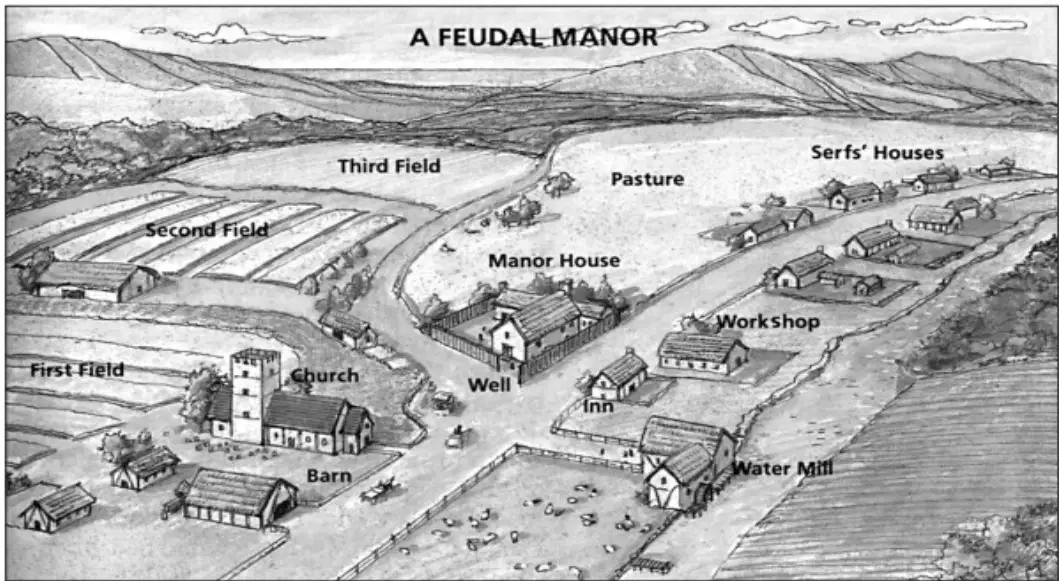
Base your answers on the diagram and your knowledge of history: A FEUDAL MANOR labeled with First Field, Second Field, Third Field, Pasture, Manor House, Serfs’ Houses, Workshop, Barn, Church, Inn, Water Mill, and Well. What inference can be drawn from the location of the church in this drawing?
Religion played a significant role in the lives of the residents.
The church played a limited role in education.
The church controlled trade within the manor.
The mill was managed by the church.
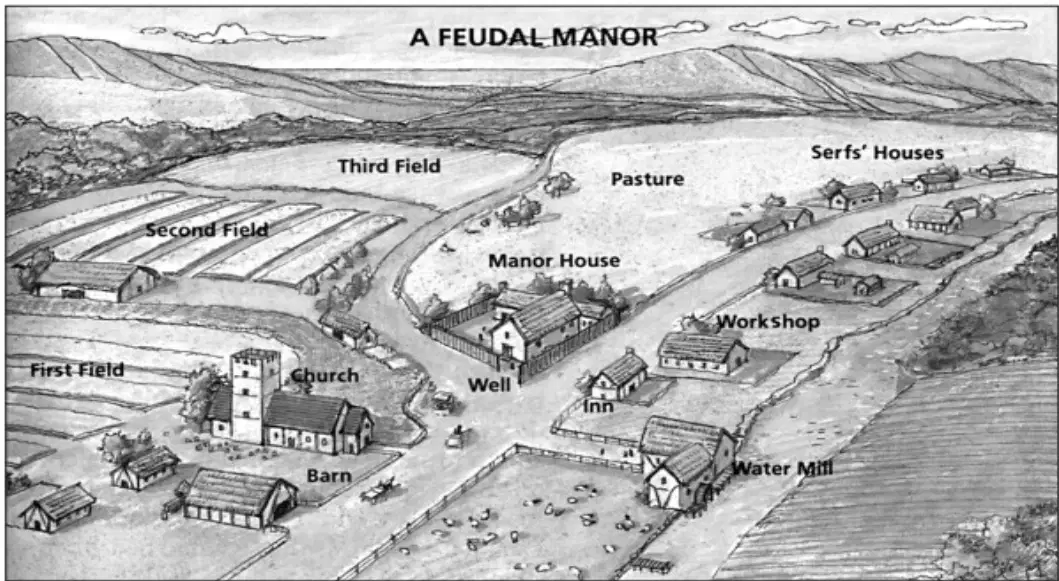
Base your answers on the diagram and your knowledge of history: A FEUDAL MANOR labeled with fields, pasture, manor house, serfs’ houses, workshop, barn, church, inn, water mill, and well. Which economic concept can be inferred from this diagram?
Self-Sufficiency
Inflation
Trade Embargo
Competition
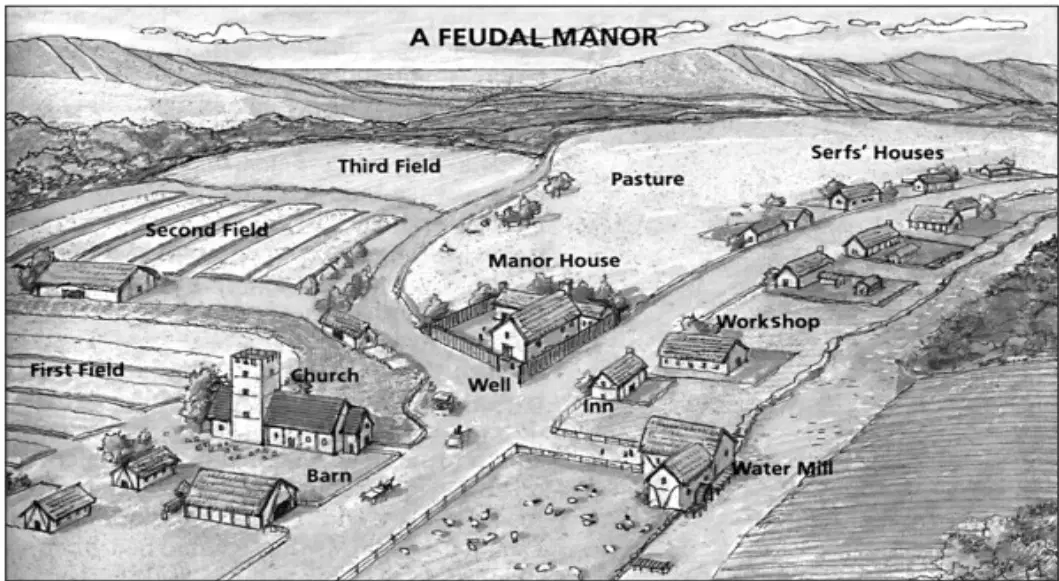
Base your answers on the diagram and your knowledge of history: A FEUDAL MANOR with labeled agricultural areas and buildings. What does this illustration show about a typical manor?
People depended on agricultural production.
There were a large number of factories.
All residents were treated equally.
Secular values in society were stressed.
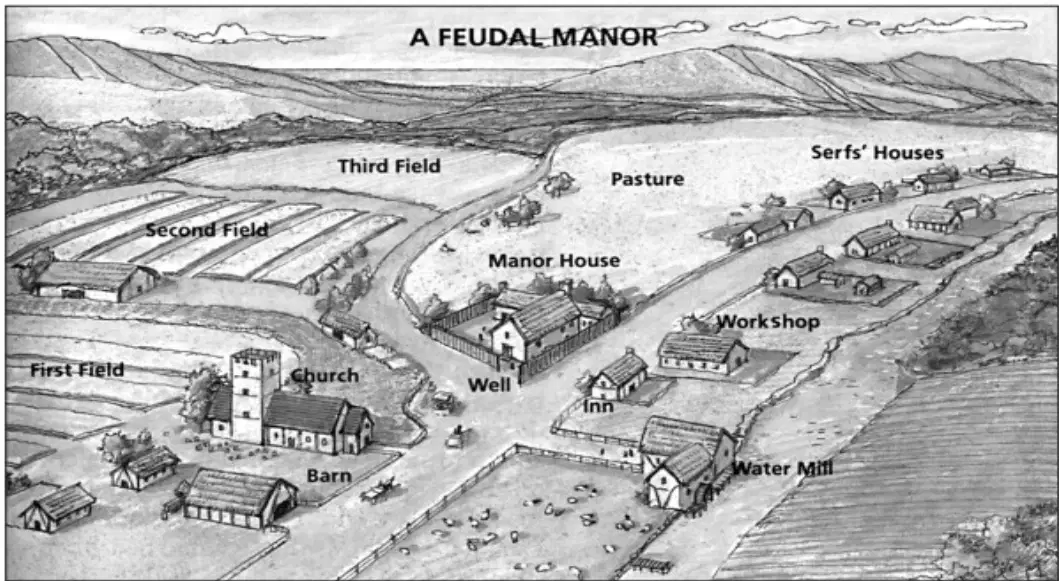
Base your answers on the diagram and your knowledge of history: A FEUDAL MANOR with fields and production sites such as a workshop and water mill. Most economic activities on this feudal manor were related to
guilds
banking
industry
food production

