
 Worksheets
Outcome 2 — Scientific properties and principles of water
Total questions: 66
Worksheet time: 33mins
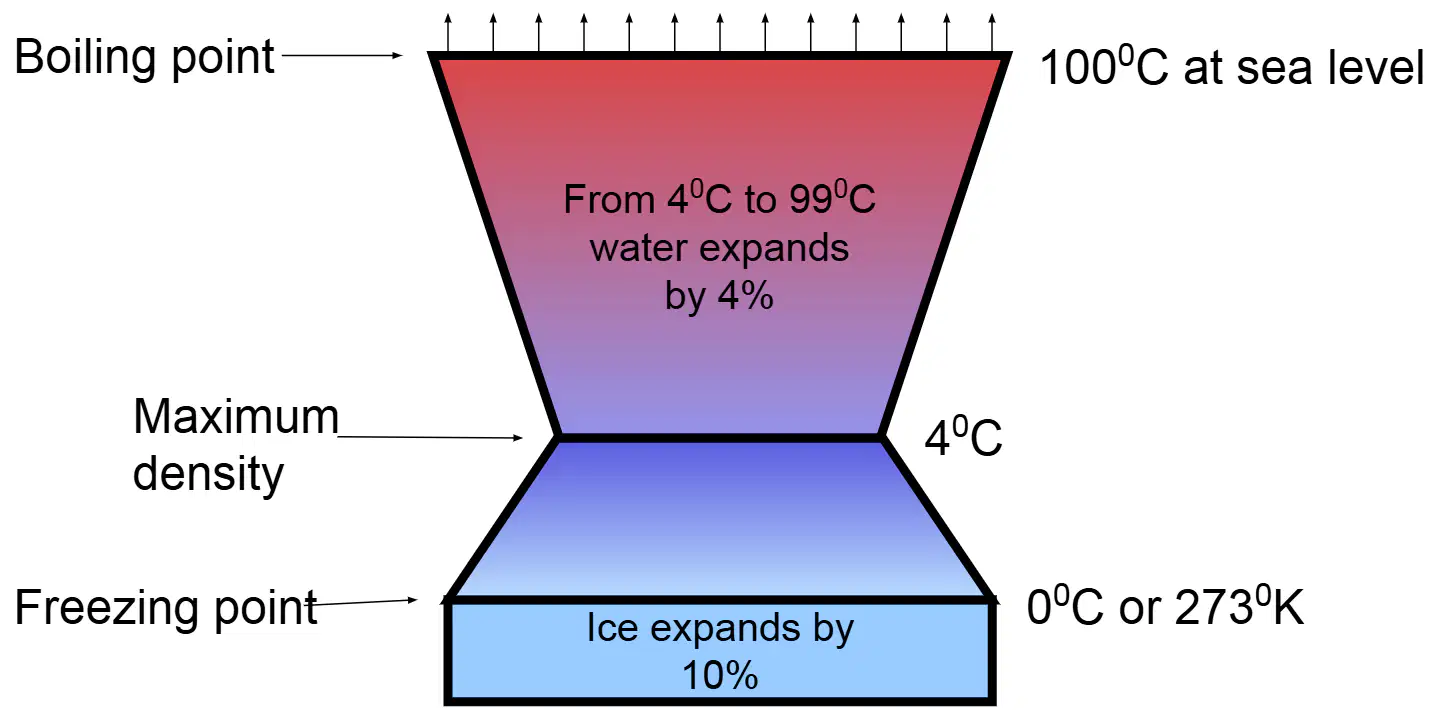
According to the diagram of water properties, at what temperature does water reach its maximum density at sea level?
0°C
4°C
50°C
100°C
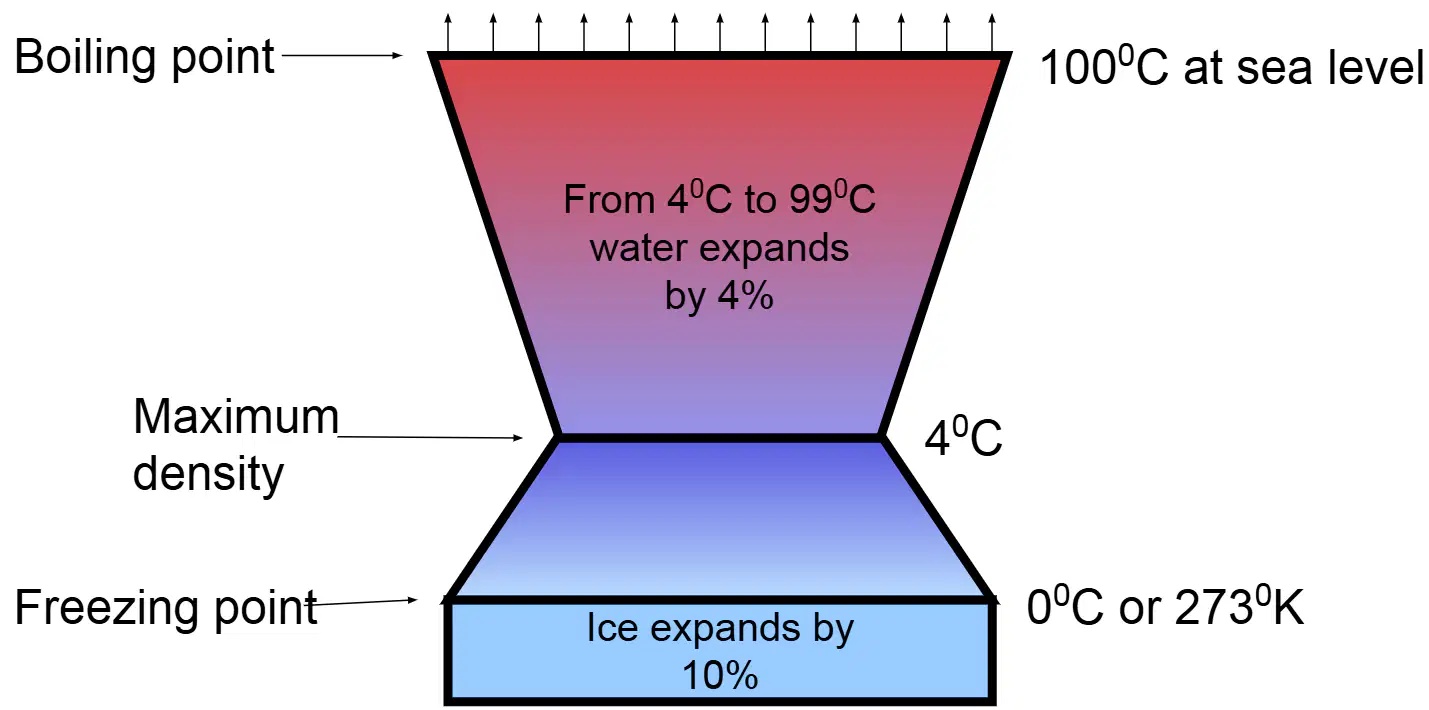
According to the diagram, what is the boiling point of water at sea level?
90°C
95°C
100°C
110°C

Between 4°C and 99°C, how much does water expand according to the diagram?
About 1%
About 4%
About 10%
About 40%
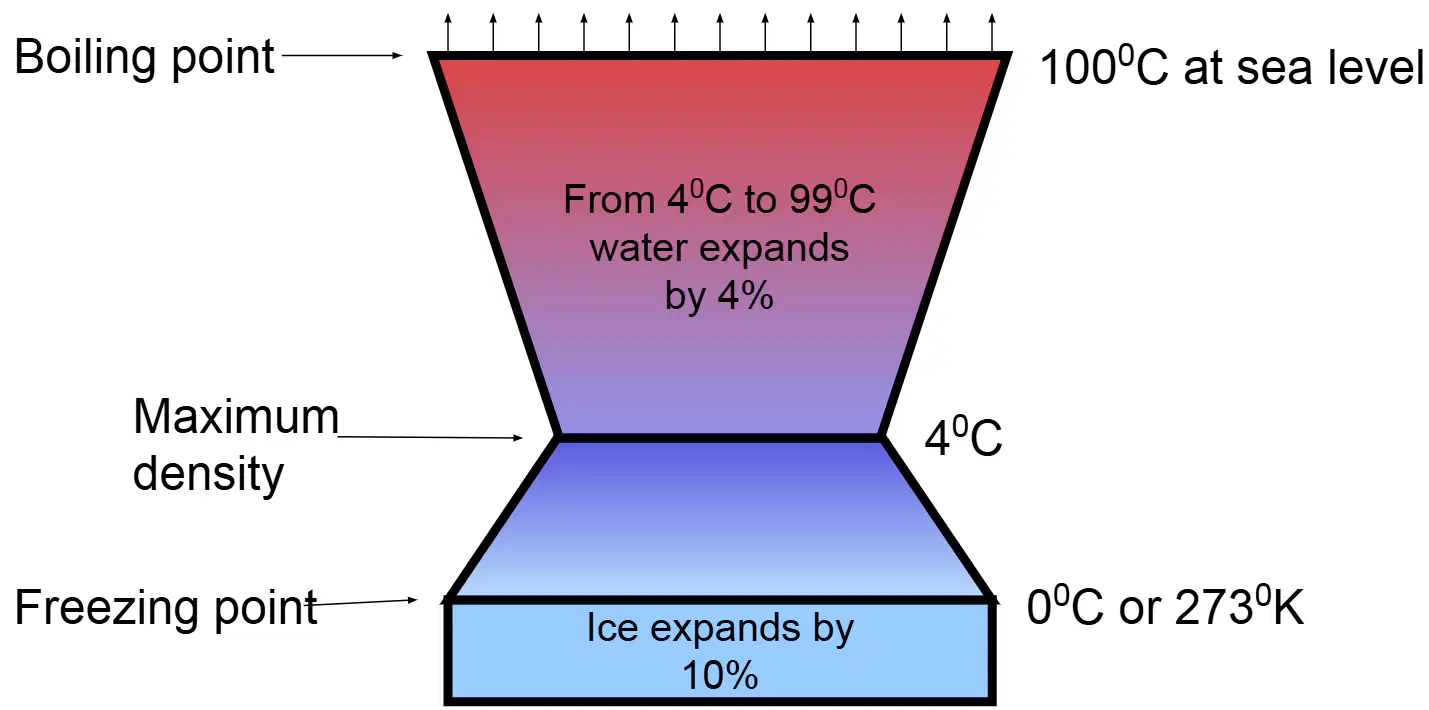
When water freezes, what change in volume is shown on the diagram?
Contracts by 10%
Expands by 10%
Expands by 4%
Remains unchanged

When water exceeds 100°C and turns to steam, by approximately how much does it expand compared with its original volume?
About 4%
About 10%
About 1,600 times
About 16 times
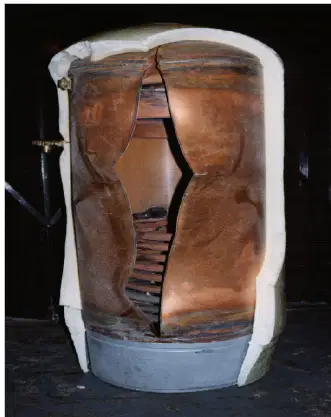
Up to 100°C, how does heated water typically behave in a closed system at cold start?
Contracts by up to 4%
Expands by up to 4%
Remains unchanged
Vaporizes completely
What is the chemical formula of water?
H2O
CO2
H2
O2
The slide states that pure water is rare because water is a very powerful what?
Oxidizer
Solvent
Insulator
Acid
Given enough time, which actions will water perform on materials according to the slide? Select all that apply.
Erode materials
Corrode metals
Absorb substances
Sterilize environments
Depending on where water collects, what will it absorb and contain according to the slide?
Only dissolved oxygen
Only mineral salts
A number of substances
Nothing unless heated
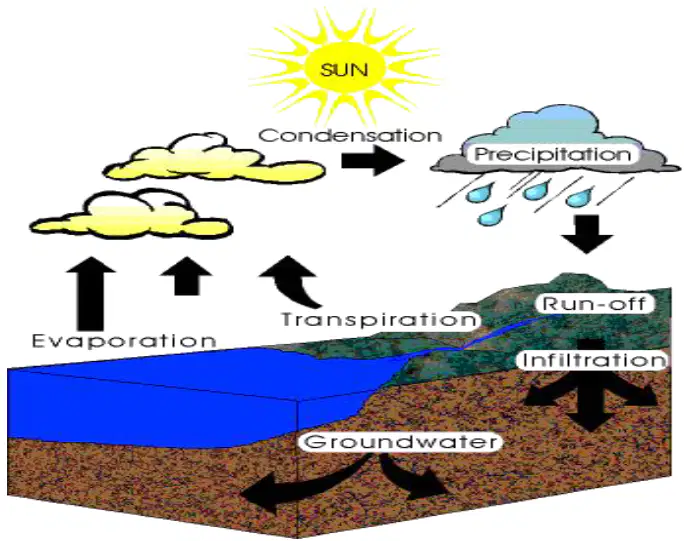
Which characteristics can absorbed substances give to water according to the slide? Select all that apply.
Hardness or softness
Acid or alkaline
Viscosity or elasticity
Salinity or turbidity
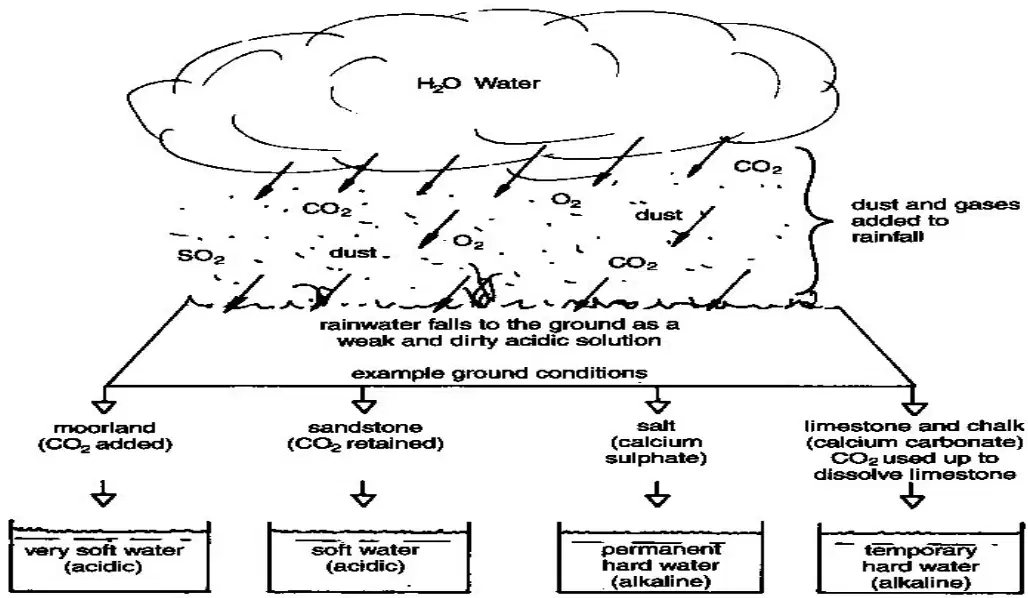
Based on the diagram of rainwater falling through different ground conditions, which ground type leads to temporary hard water (alkaline)?
Limestone and chalk
Salt (calcium sulphate)
Moorland
Sandstone
Temporary hard water, when heated above 65°C, forms which deposit that causes problems for appliances?
Calcium carbonate (limescale)
Calcium sulphate
Sodium chloride
Magnesium oxide
According to the material, what effect does limescale have on appliances?
Reduces efficiency and causes problems
Improves heat transfer
Increases water softness
Prevents corrosion entirely
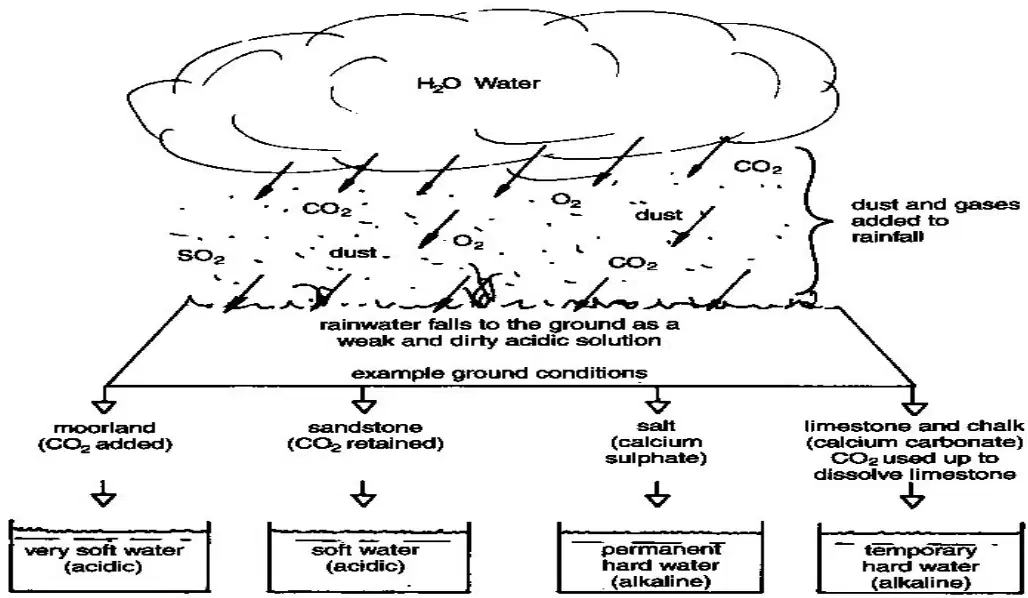
From the diagram, which waters are identified as acidic? Select all that apply.
Very soft water
Soft water
Permanent hard water
Temporary hard water
Hardness in water is referred to as which factor affecting soap use?
Soap destroying factor
Corrosion factor
pH factor
Scaling efficiency factor
Which compounds are primarily responsible for permanent hardness in water?
Calcium sulphates
Calcium carbonates
Sodium chlorides
Magnesium nitrates
What is the stated method for removing temporary hardness from water?
Heating the water above 65°C
Base exchange using a water softener
Filtration through sand
Chlorination
Permanent hardness can only be removed by which method mentioned?
Base exchange (water softener) – zeolite material
Boiling the water
Adding acid
Distillation
When temporary hardness is removed, what is released according to the notes?
Scale
Rust
Chlorine
Foam
According to the statement on total hardness, what contributes to the total hardness of water?
Both temporary and permanent hardness
Only temporary hardness
Only permanent hardness
Neutral pH alone
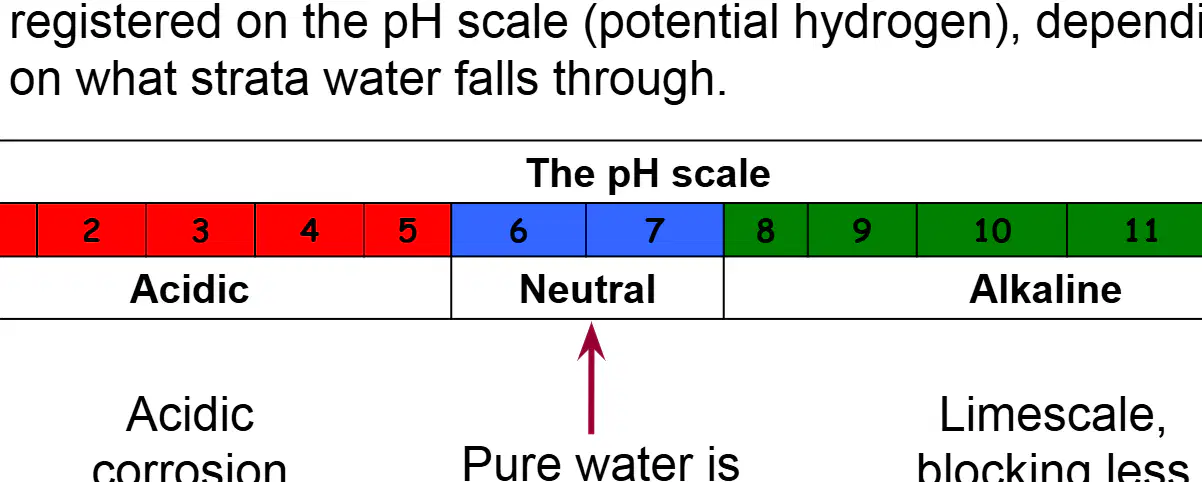
On the pH scale shown, what value is neutral?
7
6
8
5
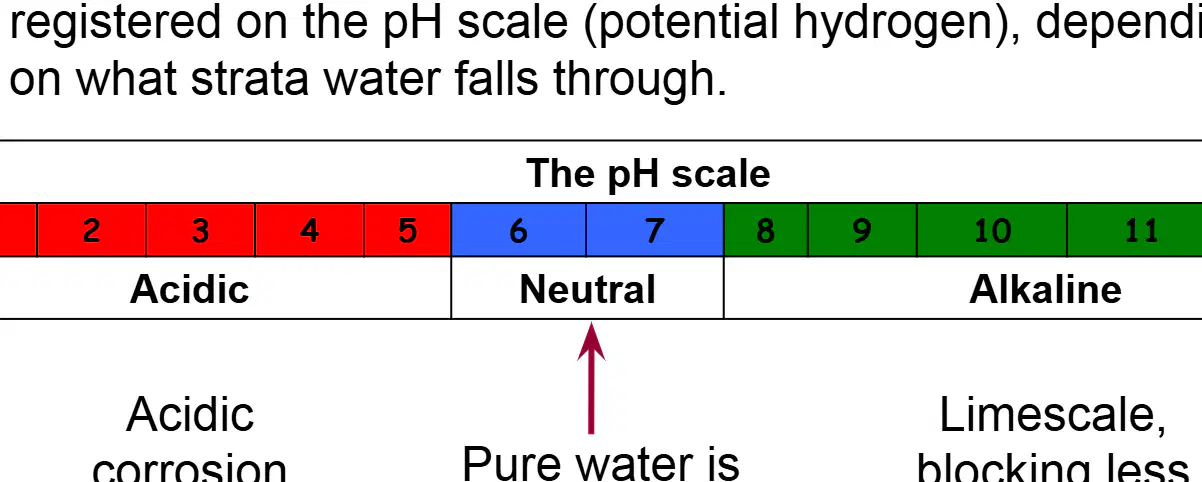
Which pH range is indicated as alkaline on the depicted scale?
8–12
1–5
7
6–7
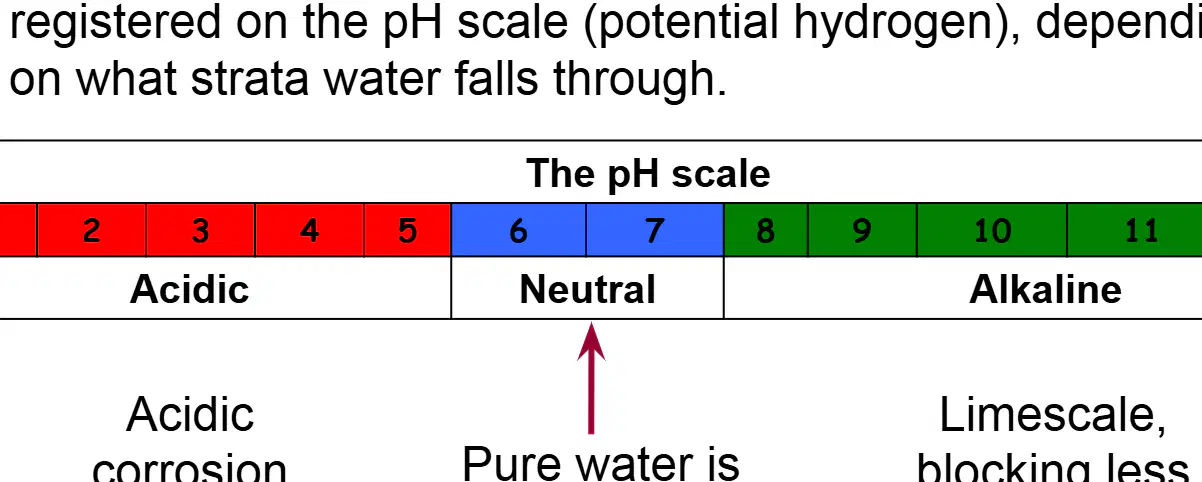
What effect is associated with acidic water in the illustration?
Corrosion and pitting
Limescale causing less efficient flow
Enhanced soap lather
Increased neutrality
Water that has the ability to dissolve lead is called what?
Plumbosolvent
Cuprosolvent
Hydrosolvent
Ferric solvent
Water that is aggressive towards copper is called what?
Cuprosolvent
Plumbosolvent
Ferrosolvent
Zinc-solvent
In unprotected areas, water rapidly forms which substance on ferrous (iron) metals?
Ferrous oxide (rust)
Limescale
Copper sulphate
Hydrogen gas
How should iron pipework be protected according to the guidance?
Paint with red oxide, zinc galvanising or denso
Increase pH to neutral with additives
Replace with plastic pipework
Add sodium chloride to the system
Ferrous oxide buildup inside radiators results in which maintenance action?
Bleeding of hydrogen
Complete radiator replacement
Adding soap to the water
Lowering operating temperature
What can be used to protect central heating pipework and components?
A chemical inhibitor
A base exchange softener
Boiling the system water
Exterior paint only
Which definition describes evaporation?
A liquid turns into a gas
A gas turns into a liquid
A liquid turns solid
A solid turns directly into a gas
Which definition describes freezing?
A liquid turns solid
A liquid turns into a gas
A gas turns into a liquid
A solid turns directly into a gas
Which definition describes condensation?
A gas turns into a liquid
A liquid turns into a gas
A liquid turns solid
A solid turns directly into a gas
Capillary action of water is when water can be drawn sideways or upwards between two close-fitting surfaces against gravity. Which statement best describes this?
Water is drawn sideways or upwards between two close-fitting surfaces against gravity.
Water evaporates from open surfaces when exposed to sunlight.
Water flows downward through large gaps due to gravity.
Water boils and turns to vapor when heated.
According to the statement "The wider the gap, the less capillary action there is," what happens to capillary action as the gap between two close-fitting surfaces increases?
It increases.
It decreases.
It stays the same.
It reverses direction.
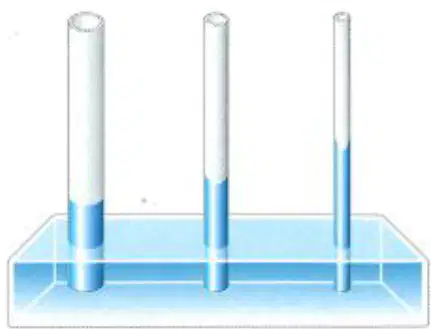
In the diagram showing three vertical tubes of different diameters standing in water, which tube displays the greatest capillary action (highest rise of water)?
Left tube (widest gap)
Middle tube
Right tube (narrowest gap)
Capillary action of water causes water to be drawn up underneath lead weathering on tiles, resulting in leakage inside the property. Which measure is most effective to overcome this problem by breaking the capillary path at the flashing-to-tile interface?
Form a deliberate capillary break/drip edge in the lead flashing at the tile interface
Increase the fastening pressure so the lead flashing is pressed tightly onto the tiles
Extend the overlap length of the lead flashing over the tiles without changing the joint detail
Apply a general-purpose sealant along the entire overlap to glue the surfaces together
Water can be drawn up between lead weathering surfaces by capillary action. Which detailing best prevents this by introducing an anti-capillary feature within the joint?
Form welts or upstands in the lead to create an anti-capillary break within the joint
Clamp the lead sheets together as tightly as possible to eliminate any gap
Paint the jointed area with bituminous coating to "seal" the surfaces
Add absorbent underlay between the lead sheets to take up moisture
Capillary action can contribute to loss of trap seal in an S trap under an appliance. What is the most appropriate measure to minimise seal loss and maintain the water seal?
Use a vented/anti-siphon trap or deeper-seal trap and ensure smooth, non-absorbent outlet connections
Pack the trap with fibrous material to reduce water movement
Reduce the trap seal depth to speed up flow through the appliance
Leave the appliance discharge hose resting in the water to keep the trap wet
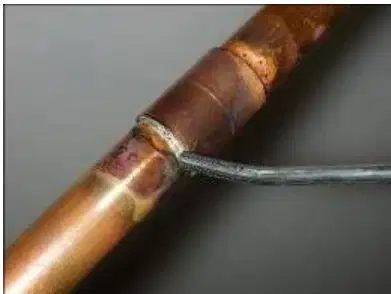
Capillary action of water — Conversely plumbers can use this to their advantage: To make soldered joints on fittings, the solder can be drawn between the two close‑fitting surfaces of the copper tube and fitting. Which phenomenon enables solder to be drawn into the joint between the copper tube and fitting?
Capillary action
Convection currents
Molecular diffusion
Electrolysis
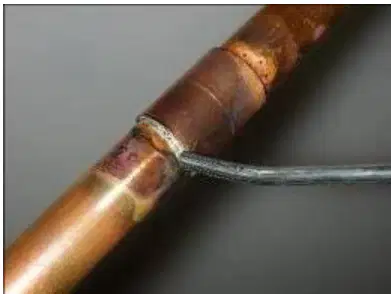
Capillary action of water — Conversely plumbers can use this to their advantage: To make soldered joints on fittings, the solder can be drawn between the two close‑fitting surfaces of the copper tube and fitting. Between which surfaces is the solder drawn when making the joint?
The two close‑fitting surfaces of the copper tube and fitting
The outer surface of the tube and ambient air
The inner surface of the tube and flowing water
The fitting threads and sealing tape
Properties of water — The water molecules have a cohesive nature in the way they stick together. This creates the surface tension on top of water. Which property of water is responsible for surface tension?
Cohesion between water molecules
Adhesion to container walls
Thermal expansion
Ionization
Properties of water — The water molecules also have an adhesive nature and tend to stick to other materials they come into contact with. This gives the water a curved appearance. What name is given to the curved surface formed by water due to adhesion?
Meniscus
Vortex
Shock front
Laminar sheet
Properties of water — In a manometer, we have to read the water level from the bottom of the meniscus or curve. Where should the water level be read in a manometer?
From the bottom of the meniscus
From the top of the meniscus
At the midpoint of the curve
At the highest visible point
Solid (ice) – liquid (water) – gas (steam). What is the chemical symbol for water?
H2O
HO2
H3O
OH−
Boiling point of water = 100∘C (at sea level). What is the boiling point of water at sea level?
100∘C
90∘C
120∘C
0∘C
Increase the pressure = increase the boiling point of water. What effect does increasing pressure have on the boiling point of water?
It increases the boiling point
It decreases the boiling point
It has no effect
It freezes the water
When boiling it expands by = 1,600 times. By approximately how many times does water expand when it boils to form steam?
About 1,600 times
About 160 times
About 16 times
About 10 times
Maximum density of water = 4∘C . At what temperature is the density of water at its maximum?
4∘C
0∘C
25∘C
100∘C
Water freezes at = 0∘C or 273K . At which temperature does pure water freeze?
0∘C (or 273K )
4∘C (or 277K )
−10∘C (or 263K )
100∘C (or 373K )
Add glycol (antifreeze) to water = reduces freezing point. What is the effect of adding glycol (antifreeze) to water?
It reduces the freezing point
It raises the boiling point to infinity
It increases the freezing point
It removes dissolved gases only
When frozen, water expands by = 10%. Approximately how much does water expand when it freezes?
About 10%
About 1%
About 50%
It does not expand
Relative density of water = 1. What is the relative density of water taken as?
1
0.1
10
100
Water heating from 10 – 90∘C expands by = 4%. Approximately how much does water expand when heated from 10∘C to 90∘C ?
About 4%
About 0.4%
About 14%
About 40%
Sensible heat — When heat is applied to water the temperature will rise, but it remains water. It can then be cooled (a change in temperature without a change in state). Which term describes heat that raises the temperature of water without changing its state?
Sensible heat
Latent heat
Radiant heat
Chemical heat
Latent heat — If you keep heating water, it will change from water to steam; this is a change in state. Which term describes the heat required to keep water boiling (change of state)?
Latent heat
Sensible heat
Conductive heat
Specific heat
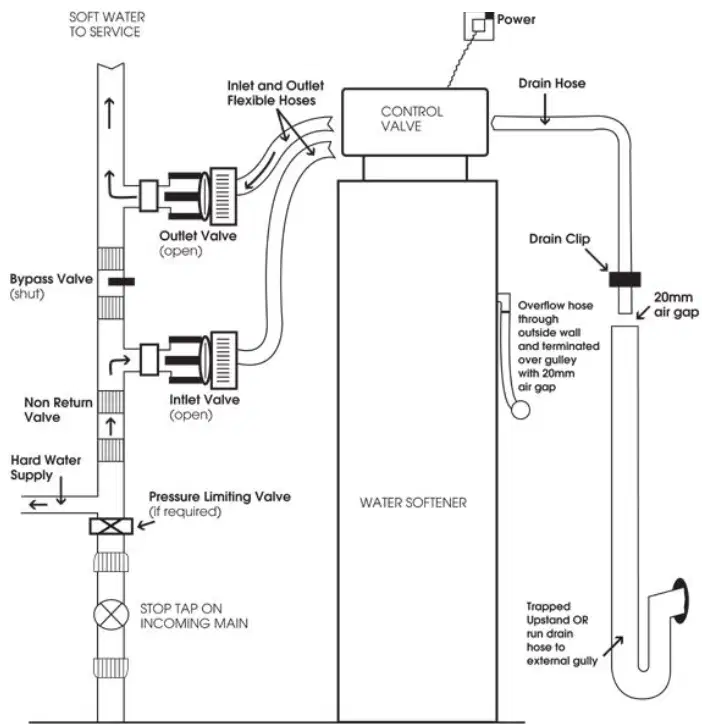
Water softener — The only way to fully remove hard water and prevent scale, scum and tide marks is to fit a water softener. What is fitted to fully remove hard water and prevent scale, scum and tide marks?
A water softener
A chlorination unit
An ultraviolet sterilizer
A sand filter
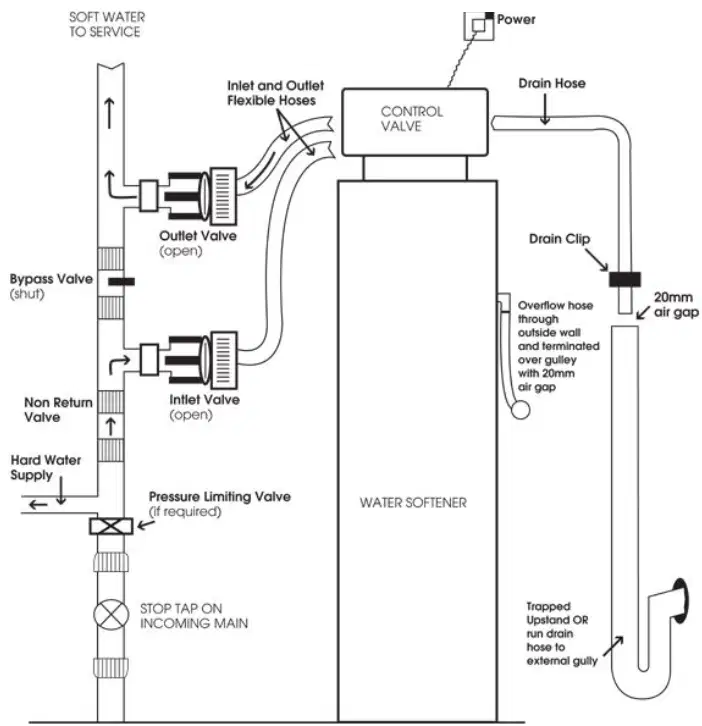
Water softener — Water is taken through a zeolite or resin bed then flows out of the top of the vessel to the tap. The resin holds the calcium and magnesium in the filter. Which ions are held by the resin in a water softener?
Calcium and magnesium
Sodium and chloride
Iron and manganese
Hydrogen and oxygen
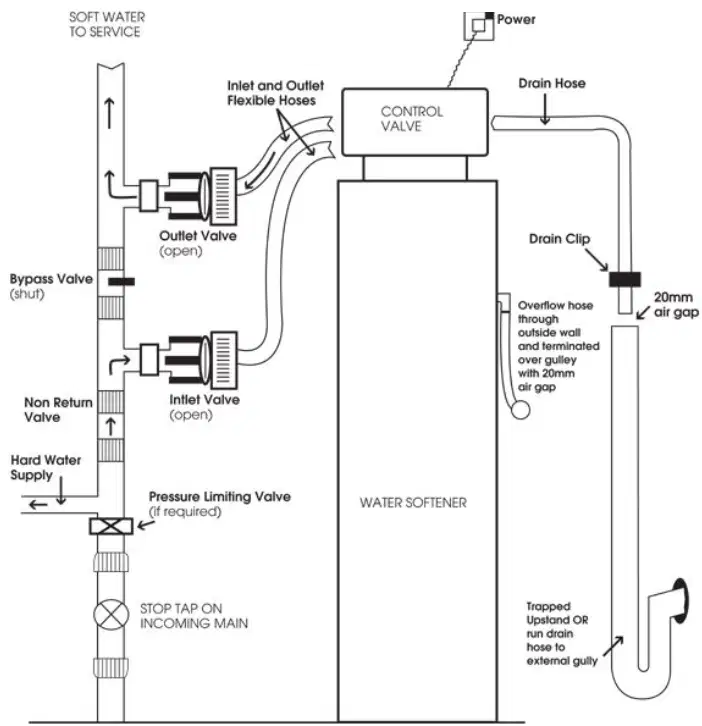
Water softener — The unit is then back‑washed by a brine solution (salt or sodium chloride). What solution is used to back‑wash a water softener unit?
A brine solution (salt or sodium chloride)
Distilled water only
Acidic vinegar solution
Liquid ammonia
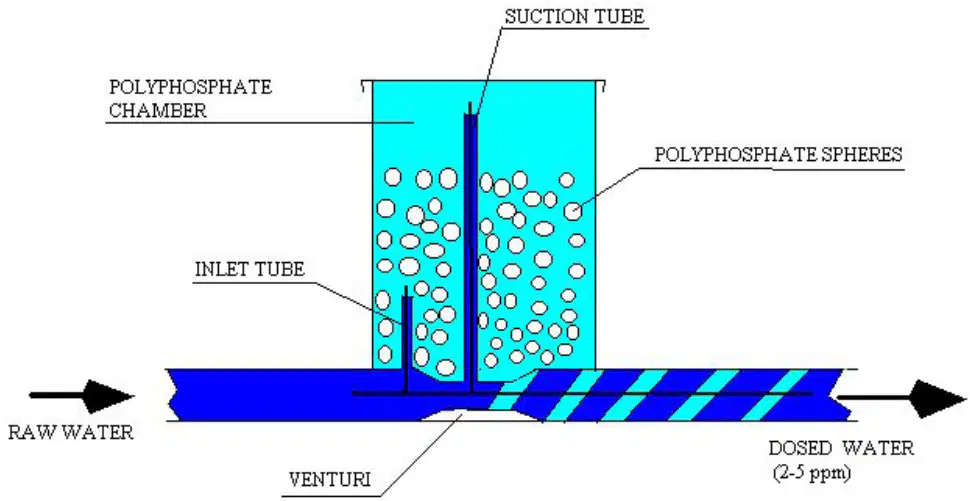
Chemicals used for scale control in domestic systems do not soften the water; they stabilise salts to prevent scale forming. Based on the description, what is the primary role of polyphosphate chemicals on salt crystals?
They dissolve the salt crystals to remove hardness
They form on salt crystals, preventing them sticking together and becoming hard scale
They increase the size of salt crystals so filters can catch them
They neutralise all dissolved minerals to produce pure water
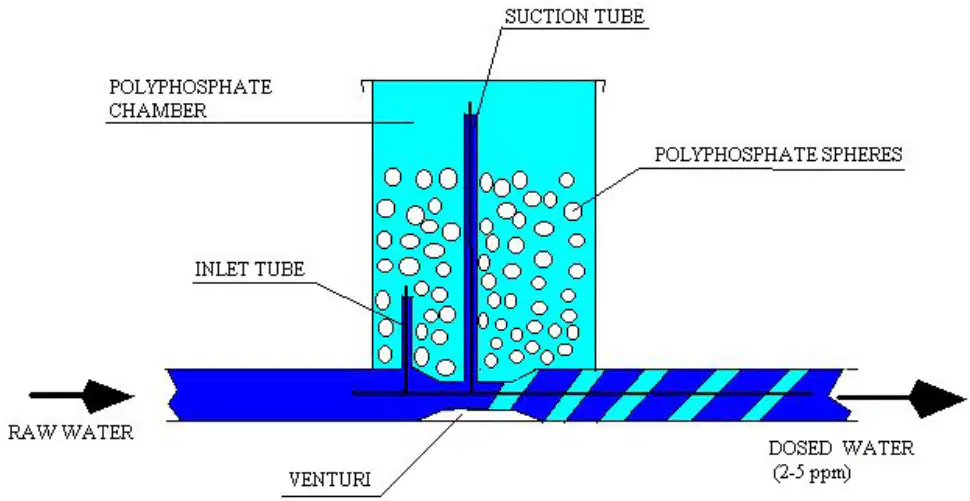
According to the description, are the chemicals used for scale control considered water softeners?
Yes, they soften the water
No, they stabilise salts to prevent scale without softening
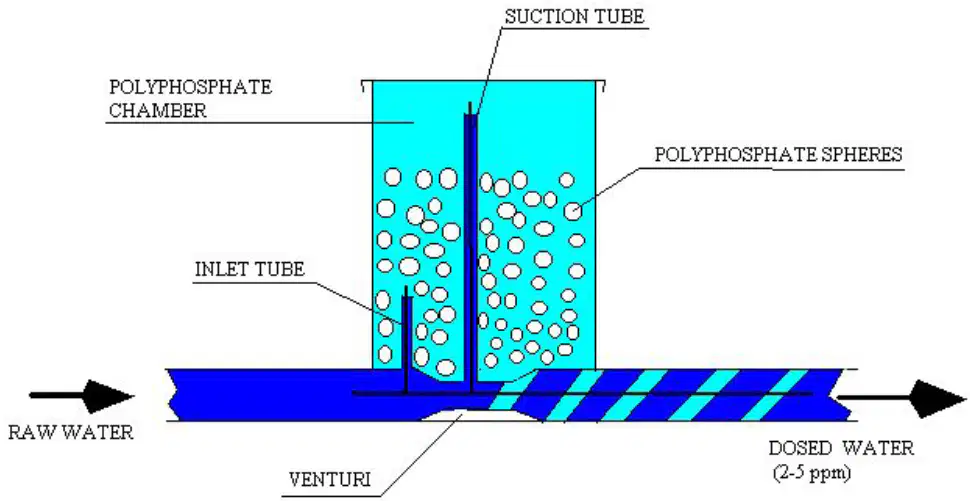
Where are the described chemical scale treatments commonly used?
Combination boilers
Gravity hot-water cylinders
Swimming pool chlorination systems
Rainwater harvesting storage tanks
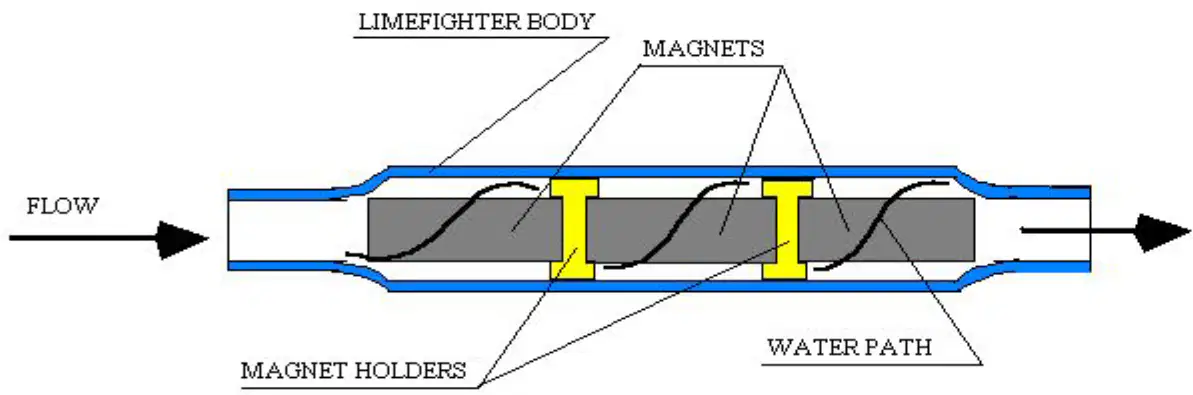
In a magnetic scale inhibitor, water passes through a strong magnetic field running across the flow. What effect does this have on the salt crystals?
It dissolves the salts completely
It breaks the salt crystals into small pieces so they cannot stick together
It fuses the salt crystals into larger aggregates
It converts the salts into harmless gases
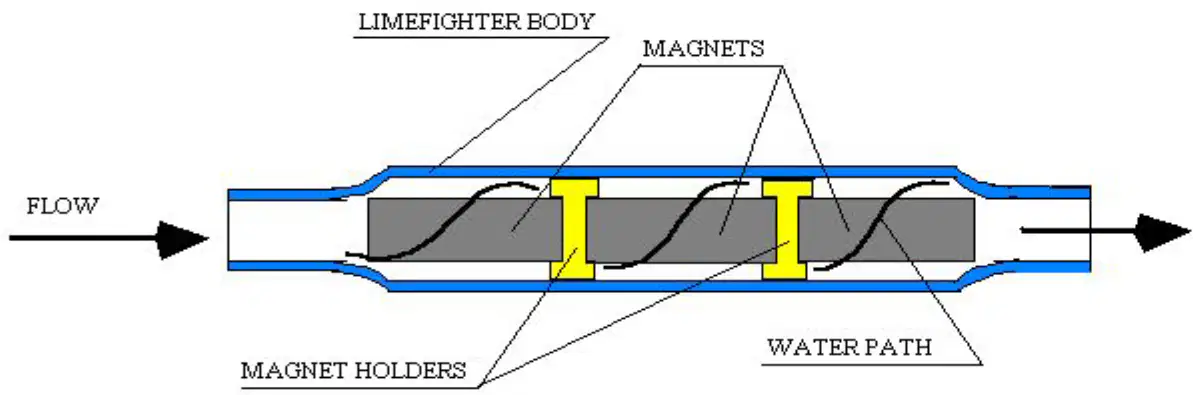
What is altered by the magnetic scale inhibitor as water flows through the magnetic field?
The chemical composition of dissolved minerals
The physical nature of the water
The temperature of the water
The pH of the water
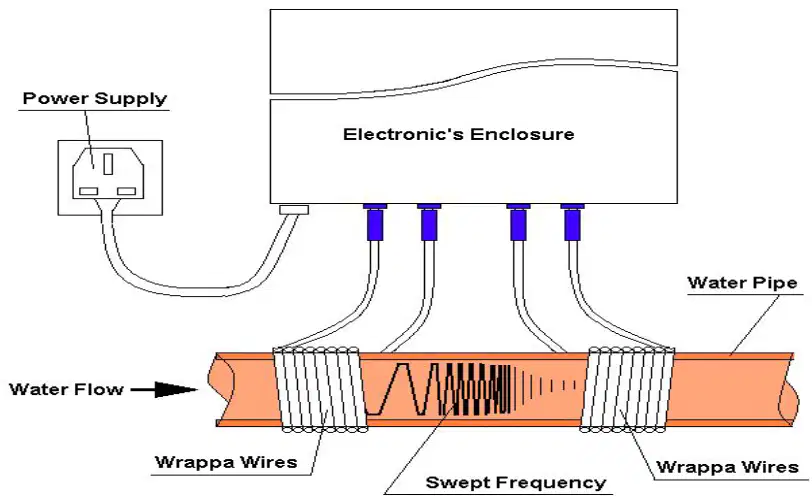
An electrical scale inhibitor works similarly to the magnetic type but uses a magnetic field to produce low-level radio waves that pass through the water. What distinguishes the electrical inhibitor from the purely magnetic one?
It adds chemicals to the water
It relies on low-level radio waves generated by a magnetic field
It heats the water to reduce hardness
It filters salts through a cartridge
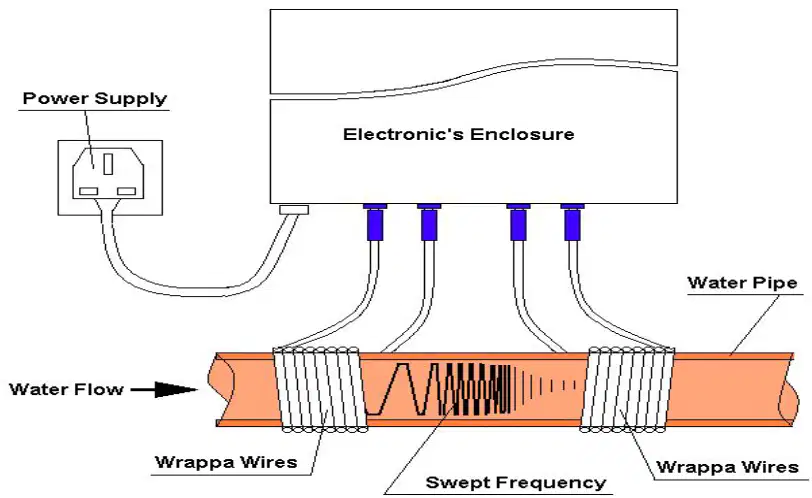
In the illustrated electrical scale inhibitor setup, which component provides energy to the electronic enclosure that drives the wrapped wires around the pipe?
Manual crank
Solar panel
Power supply
Battery-less capacitor

