
Font size
 Worksheets
Week 16 — Introduction to Recording (Worksheet Questions)
Total questions: 26
Worksheet time: 13mins
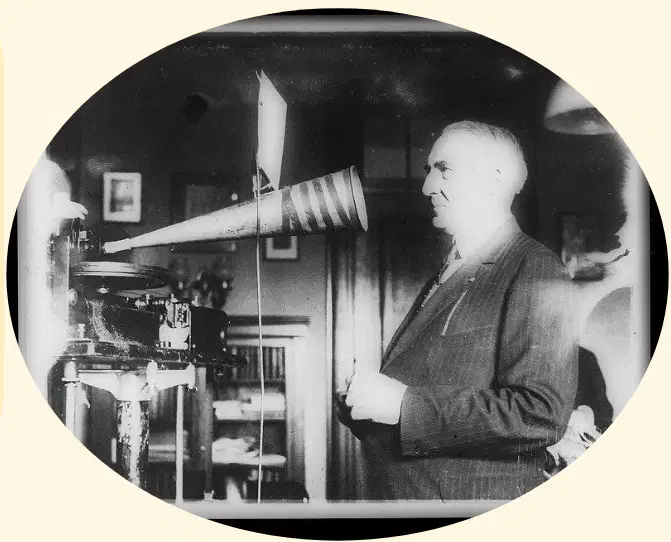
Do now task: Why do we record music?
To preserve performances for future listening and sharing
To ensure music can only be heard live and never repeated
To stop people from listening outside of concert halls
To replace musicians with computers
Do now task: What did we do before we could record music?
Music was a live experience passed on through traditions, sheet music, and live performances
People streamed songs over the internet
Listeners bought compact discs to hear music at home
Audiences downloaded digital files to share songs
Before recording technology, which methods were commonly used to pass on music? Select all that apply.
Traditions
Sheet music
Live performances
Radio broadcasts
Online streaming

Before recording technology, where were live performances commonly heard? Select all that apply.
Events
Churches
Private homes with pianos
Movie theaters
Television studios

The phonograph was the first device to do which of the following?
Amplify live music only
Transmit radio signals over distance
Record and playback sound
Synthesize electronic tones
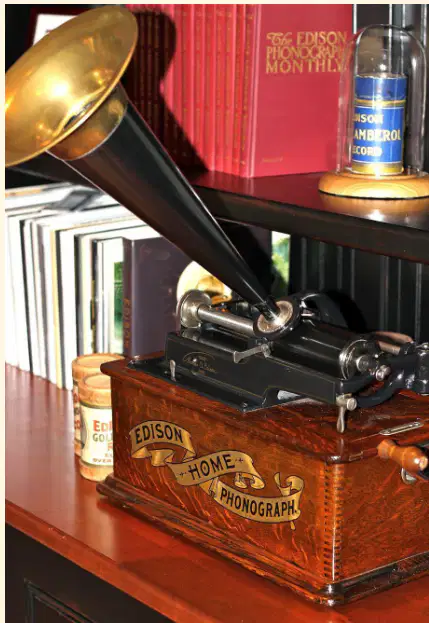
Which medium did the first phonograph use to physically capture sound vibrations?
Rotating cylinders with grooves
Magnetic tape reels
Compact discs
Digital audio files
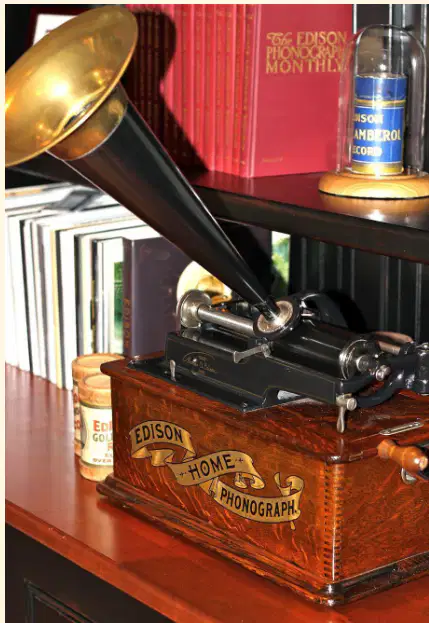
In what year was the phonograph introduced?
1877
1895
1912
1930
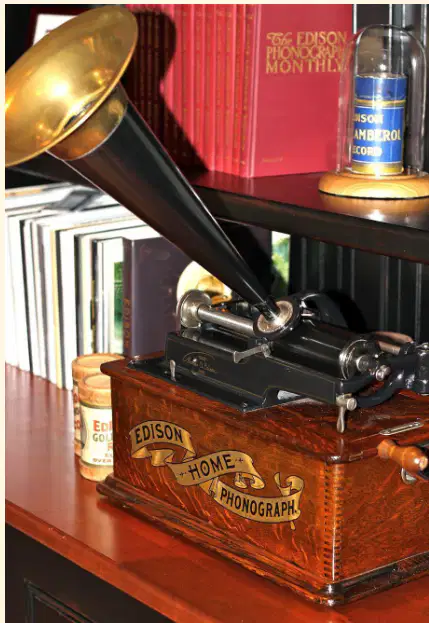
How did the phonograph change music?
Performances could be heard again without being re‑played live
Musicians stopped composing new works
Live concerts became illegal
Music could only be experienced in churches
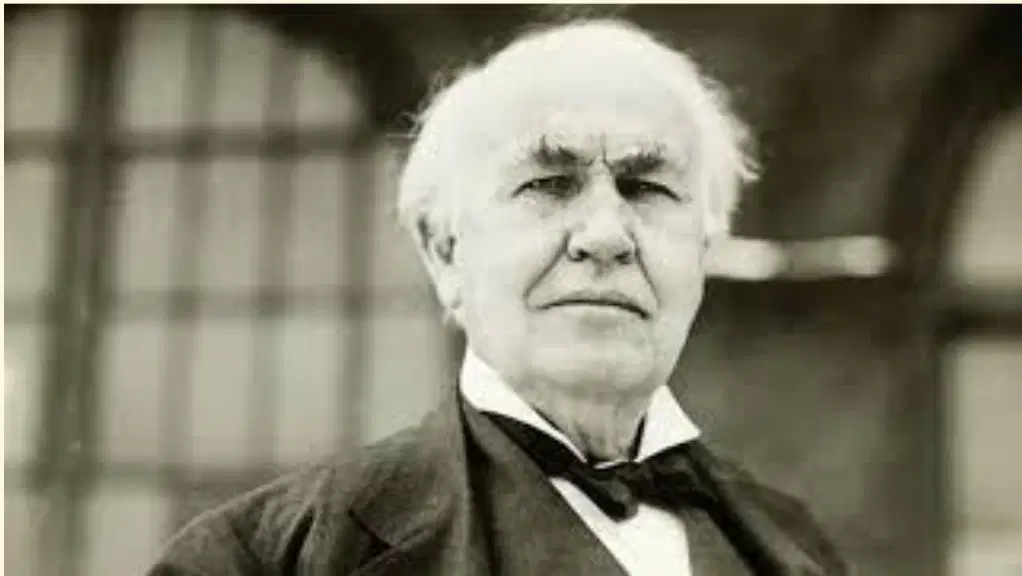
Which was the first audio recording technology that you could listen to?
Phonautogram
Phonograph cylinder
Gramophone record
Reel-to-reel tape
How did that early recording process work using the phonograph shown?
Sound waves collected by a horn moved a diaphragm and stylus to inscribe grooves on a rotating wax cylinder.
Electrical microphones converted sound to current that magnetized tape on reels.
A laser etched digital pits onto a spinning disc directly from sound.
Software sampled sound and saved it to a solid-state player.
Match each sound recording technology to the year shown on the timeline.
Phonautogram
1857
Phonograph cylinder
1877
Gramophone record
1894
Compact cassette
1963
Compact disc
1982
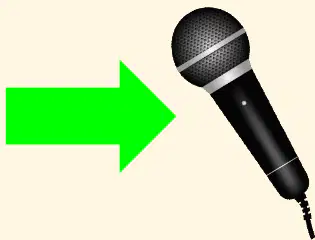
Microphones convert sound waves into what, according to the worksheet?
mechanical vibrations
electrical signals
light pulses
radio waves
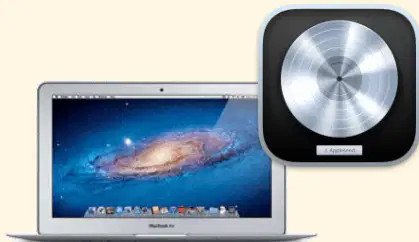
According to the worksheet, microphone output signals are used for which purposes? Select all that apply.
recording on a computer
listening on speakers
charging a battery
displaying video
Will refers to microphones with a "posh word." Which term is used?
transducers
amplifiers
oscillators
resistors
What are the different types of microphone names we covered in class? Select all that apply.
Dynamic
Condenser
Ribbon
Laptop
Guitar pick

What is microphone feedback, as defined on the worksheet?
amplified sound being picked up again by the same microphone in a loop
a microphone that cancels background noise
the audience’s opinions after a performance
a preset on the mixer that boosts treble
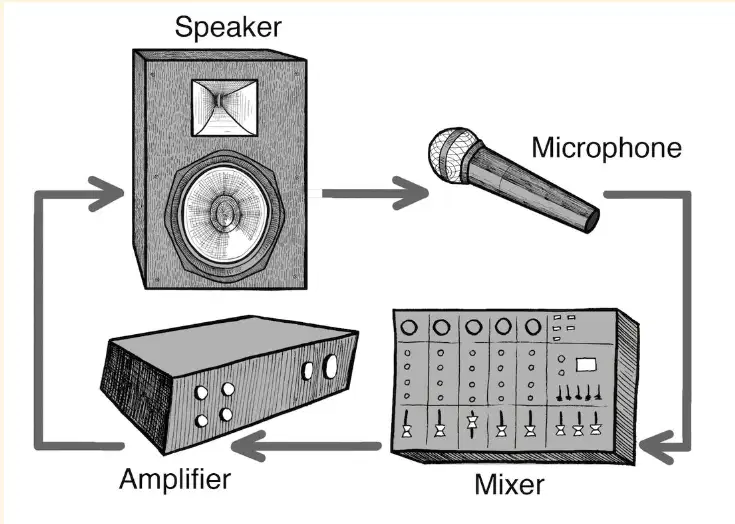
Which devices form the feedback loop shown in the diagram? Select all that apply.
Speaker
Microphone
Mixer
Amplifier
Camera
Which actions help stop microphone feedback according to the slide? Select all that apply.
Keep the microphone pointing away from the speakers.
Keep the volume and gain of the microphone at a suitable level.
Aim the microphone directly at the speakers.
Turn the gain all the way up to capture more detail.
What are polar patterns?
The directional sensitivity of a microphone, showing how it picks up sound from different angles.
The arrangement of ice formations at Earth’s poles.
The pattern of light emitted by stage spotlights.
The waveform created when sound is recorded digitally.
How does this microphone pick up sound? The polar pattern shown has two large lobes opposite each other, indicating sensitivity in two opposite directions with side rejection.
Omnidirectional
Cardioid
Supercardioid
Bidirectional (figure‑8)
Where did Will go on holiday over the February break?
The Lake District
The moon
Mars
He didn't go on holiday
What colour hair does Ellis have at the moment?
Blue
Red
Pink
Green
Who is Basson's fave artist?
Ozzy Osbourne
Taylor Swift
Ess Dee Kid
Bruno Mars
What colour coat does John usually wear?
Blue
Red
Green
Yellow
What's Bailey's fave xbox game?
GTA
Fallout
Minecraft
Crew - moterfest
What is the lady with the hoop earrings called?
Louise
Jan
Jared
Dakota

