
 Worksheets
Earth's Systems - Part 3 (Rocks & Fossils)
Total questions: 16
Worksheet time: 8mins
Name
Class
Date
1.
_________________________ is the process of breaking down or dissolving the Earth's rocks and soil, and other parts of the geosphere.
a)
physical
b)
chemical
c)
weathering
d)
biological
2.
What are the three types of weathering? Choose THREE.
a)
mechanical
b)
chemical
c)
biological
d)
erosion
e)
rain
3.
TRUE or FALSE: Rocks are not affected by temperature.
a)
true
b)
false
4.
_____________________________ is the change in a rock's composition (shape or color) from a substance.
a)
weathering
b)
chemical weathering
c)
oxidation
d)
carbonation
5.
After pieces of the Earth are broken down through _________________, those pieces are moved through ____________________.
a)
weathering, erosion
b)
erosion, weathering
c)
deposition, erosion
d)
erosion, deposition
6.
After pieces of the earth are carried by __________________, they are _________________ somewhere new.
a)
weathering, erosion
b)
erosion, weathering
c)
deposited, erosion
d)
erosion, deposited
7.
What natural forces can cause erosion? Choose FOUR.
a)
water
b)
gravity
c)
sun
d)
wind
e)
ice
8.
What type of force formed the Grand Canyon?
a)
water
b)
gravity
c)
sun
d)
wind
e)
ice
9.
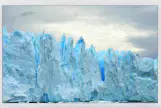
What type of erosion is shown in this photograph?
a)
water
b)
wind
c)
ice
d)
gravity
10.
__________________ is a solid made up of a mixture of minerals that are pressed tightly together.
a)
rock
b)
fossils
c)
water
d)
weathering
11.
What are the three types of rocks? Choose THREE.
a)
sedimentary
b)
plastic
c)
igneous
d)
metamorphic
12.
____________ are remains of plants and animals.
a)
Fossils
b)
Stripes
c)
Minerals
d)
Arthropod
13.
What is the process called any hard body organism dies and very soon after is buried?
a)
earthquakes
b)
dissolved
c)
fossilization
d)
eroded
14.
What can scientists learn about from fossils? Choose TWO.
a)
how old a rock is
b)
what types of conditions an area of land has experienced
c)
that the remains are from rocks
d)
newer fossils are found in layers towards the bottom
15.
True or false: The fossils on the top layer are the oldest fossils that have been exposed through erosion.
a)
true
b)
false
16.
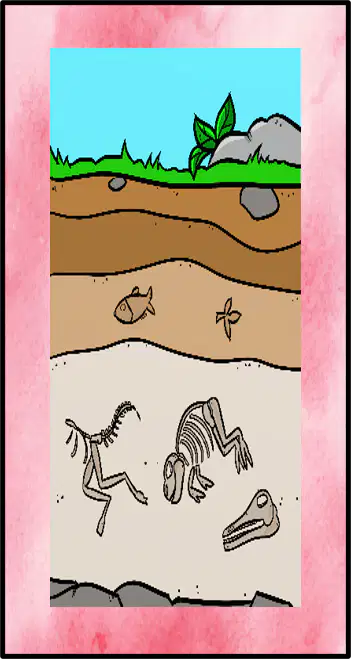
Look at the picture below. What can you learn from the rock layers and fossils? Choose TWO.
a)
There was a body of water here once.
b)
There was never water in the area.
c)
The fish is older than the other fossils found.
d)
The dinosaur fossils are older than the plant fossil found.
100 %

