
 Worksheets
History Challenge and Math
Total questions: 278
Worksheet time: 5hrs 56mins
Who was the first President of the United States?
George Washington
Thomas Jefferson
Abraham Lincoln
Theodore Roosevelt
In what year did the signing of the Declaration of Independence occur?
1776
1789
1791
1765
Who was the first President of the United States?
George Washington
Thomas Jefferson
Abraham Lincoln
Theodore Roosevelt
Analyze the following primary source: a letter from George Washington. What key themes are present?
honor, loyalty, complacency
Leadership, unity, perseverance
strategy, division, retreat
conflict, isolation, surrender
What does the graph showing population growth from 1800 to 1900 indicate about urbanization?
The graph indicates that rural populations remained stable during this period.
The graph suggests that urbanization declined as cities became less populated.
The graph shows that urbanization had no significant impact on population distribution.
The graph shows that urbanization increased as more people migrated to cities between 1800 and 1900.
Who was the first President of the United States?
George Washington
Abraham Lincoln
Thomas Jefferson
John Adams
Who was the first President of the United States?
George Washington
Thomas Jefferson
Abraham Lincoln
John Adams
What significant event happened in 1066 in England?
The establishment of the English Parliament.
The Norman Conquest of England.
The signing of the Magna Carta.
The Battle of Hastings in 1215.
What was the primary cause of the American Civil War?
Slavery
Taxation
Territorial Expansion
Trade Disputes
Analyze the historical trends in book reading among students over the past decade. What patterns can you identify?
Reading habits have remained stable over the years with no notable changes.
The number of books read has declined during summer vacations, reflecting a decrease in reading interest.
There has been an increase in the number of books read during school holidays and special reading events, indicating a positive shift in reading engagement.
Students tend to read more during exam periods, focusing primarily on academic texts.
Identify the key figure associated with the Civil Rights Movement in the 1960s.
Rosa Parks
Malcolm X
Martin Luther King Jr.
John Lewis
What is the significance of the Magna Carta in history?
It established the principle of due process
It ended the English Civil War
It was the first constitution of the United States
It granted women the right to vote
When did World War I begin?
August 1, 1914
September 5, 1914
July 28, 1914
June 28, 1914
What was the main cause of the fall of the Roman Empire?
Economic troubles and overreliance on slave labor
Military overspending and invasions
Political corruption and instability
All of the above
Analyze the primary source: a speech by Martin Luther King Jr. What was the main message?
The main message was to promote economic growth and prosperity.
The main message was the call for equality and justice for all people.
The main message emphasized the need for stricter immigration policies.
The main message focused on the importance of military strength.
What does the graph of temperature changes over a decade suggest about climate change?
The graph shows no significant changes in temperature trends.
The graph suggests that climate change is unrelated to temperature variations.
The graph suggests that climate change is leading to rising global temperatures.
The graph indicates a decrease in global temperatures over time.
Who was the main author of the Federalist Papers?
Alexander Hamilton
John Adams
Thomas Jefferson
James Madison
Who was the first President of the United States?
George Washington
Thomas Jefferson
Abraham Lincoln
John Adams
What year did the Berlin Wall fall?
1989
1990
1987
1992
If a population of 1,000 increases by 15%, what is the new population?
1300
1200
1150
1000
What was the primary reason for the fall of the Berlin Wall in 1989?
Economic reforms in East Germany
Increased military presence in West Germany
Political unrest in Eastern Europe
Pressure from the United States
Which ancient civilization is known for developing the first writing system?
Indus Valley Civilization
Chinese
Mesopotamians
Egyptians
What was the main outcome of the Treaty of Versailles in 1919?
It resulted in the division of the Ottoman Empire.
It led to the rise of fascism in Europe.
It established the League of Nations to promote peace.
It ended World War I and imposed heavy reparations on Germany.
An exchange of goods or services for other goods or services
bartering
fiat money
representative money
coins
An exchange of goods or services for other goods or services
bartering
fiat money
representative money
coins
Bartering can be difficult because it is need based
true
false
This was the first common item currency and it was made out of barley
Mesopotamia Shekel
Egyptian Silk
Chinese sea shell
Arabian Knuckle
The earliest known money mints were found in
China
Taiwan
Europe
India
Coins were popular for hundreds of years and were usually made of
lead, copper, silver, gold
gold, tungsten, silver, lead
steel, silver, iron, copper
iron, gold, silver, tungsten
coins were easy to
lose
transport
hide
forget
The first paper money was used by __________, starting in 700 B.C.
China
India
Eygpt
Greece
Most European nations used coins until the ___________ century.
16th
15th
14th
17th
Representative money was backed by ___________.
precious metals
belief
hard work
agreement
Fiat money's value was tied to the __________________.
Government that created it
precious metals
bartering
coins
The correct order of the history of money goes;
livestock, bartering, common item currency, coins, representative paper money, fiat paper money
bartering, coins, representative paper money, livestock, fiat paper money, common item currency
Fiat paper money, representative paper money, coins, common item currency, bartering, livestock
coins, livestock, fiat paper money, bartering, common item currency, repetitive paper money
Everyone has to agree that fiat money has value
True
false
Credit cards were invented in the __________.
1950's
1960's
1940's
1970's
Debit cards were invented in ________.
1966
1956
1976
1965
_____________________ was the first Cyrpto currency, started in 2009.
Bit Coin
Doge Coin
Eleryrium
Triciptium
Father of computer
Steve Jobs
Sir john naiper
Howard aiken
Charles babbage
When did the people use counters to aid calculations
18th-19th Century
3rd-6th Century
15th-16th Century
7th-8th Century
The father of modern computer science
Charles babbage
Harvard Mark
Alan Turing
Grace Hopper
Which one is not true about fourth generation computers?
They are cheaper
They are compact
They are reliable
They use transistors

Name the device
Transistor
Artificial intelligence
Micro processor
CPU
The first manual computing device
Stones and pebbles
Counting clock
Abacus
Transistor
Abacus was invented by indians
True
False
Name the latest intel processor technology
(a)
Name the first phone with color display
(a)
Name the first waterproof smartphone
(a)
The first animal domesticated by humans
Horse
Cow
Sheep
Dog
The first domesticated food animals were ruminants called
Cattle
Dog
Sheep
Goats
This animal was domesticated to dispose of table scraps
Goat
Dog
Pig
Cow
These animals were domesticated for use in transportation
Dogs
Oxen
Horses
Cattle
An animal is considered domesticated when it depends on humans for survival
True
False
Which livestock animal was domesticated first?
Goat
Chicken
Sheep
Horse
In the beginning, this animal was mainly used for meat, milk, and labor.
Horse
Cattle
Pig
Chicken
This animal eventually became useful as a pack and draft animal.
Cattle
Turkey
Horse
Goat
The only North American domestic animal
Chicken
Turkey
Cow
Sheep
Animals can be used for
Food
Clothing
Weapons
Tools

when was Nehru Report published?
August, 1929
August, 1928
April, 1928
April, 1929

When did Quaid-e-Azam presented his famous 14 points?
April, 1929
March, 1929
July, 1929
September, 1929
What was the original capital of Pakistan?

Lahore

Karachi

Peshawar

Quetta
Who was the 1st president of Pakistan?

Ayub Khan

Iskandar Mirza

Fazal Ilahi Chaudhary

Zulfiqar Ali Bhutto
What is the national flavour of Pakistan?

Rose

Jasmine

Lily

Marigold

In which year, Pakistan became a member of United Nations?

1951

1947

1949

1948

When did Pakistan became a member of SAARC (The South Asian Association for Regional Cooperation)?

1991

1982

1985

1988

Who was the last viceroy of subcontinent?

Lord Louise Mountbatten

Lord Wavell

Lord Linlithgow

Lord Canning

When pakistan became member of OIC (ORGANISATION OF ISLAMIC COOPERATION)?

1951

1947

1969

1971

When was the Lahore Resolution passed?
23rd March, 1943
23rd August, 1947
23rd March, 1940
23rd August, 1943

When was the 1st constitution of Pakistan was adopted?

1948

1956

1947

1958
Who was the 1st military ruler of Pakistan?

Iskandar Mirza

Yahya Khan

Ayub Khan

Zia Ul Haq

Who was the President of Pakistan during the 1965 war?

Yahya Khan

Ayub Khan

Zulfiqar Ali Bhutto

Farooq Laghari

Which leader led to the creation of Bangladesh?

Sheikh Mujibur Rahman

Sheikh Munibur Rahman

Zulfiqar Ali Bhutto

Yahya Khan

When did Pakistan conduct its first nuclear tests?
29 May 1998
28 May 1998
28 May 1988
29 May 1988
Taj Mehal was built by (a) for his wife Mumtaz Mehal.

The area within the yellow lined boundary was conquered by:
Aurangzeb
Babar
Humayun
Akbar
Ali brothers were raised by their mother (a)
The non-cooperation movement was started by Mr. Gandhi to support Muslims on the cause of (a)
Hijrat Movement started in;
1988
1912
1920
1937
The term 'Dar-ul-Harb translates into:
(a)
Jallianwala bagh tragedy took place at:
Bengal
Delhi
Amritsar
Bombay
What is meant by Diarchy? Why did it upset congress? (2 marks)
Muhammad Ali Jinnah joined Muslim League in the year:
1912
1913
1914
1915
______ believed that Muslims had lost their position in the Indian subcontinent because they don't understand and practice their religion at a deeper level.
Syed Ahmed Khan
Shaheed Ahmad Barelvi
Muhammad Ali Jinnah
Shah Wali Ullah
The bill passed on by Lord Ripon was called (a)
List down the 3 main objectives of the first meeting of Indian National Congress held in Bombay. (3 marks)
The partitioning of Bengal was proposed by:
Lord Curzon
Lord Ripon
Lord Wellesley
General Dyer
All Indian Muslim League was formed in
1905
1906
1907
1908
Sir Syed served the British for _______ years.
33
43
45
30
What were the main objectives of Mohammadan Educational Conference? (5 marks)
EIC first landed in (a)
When British finally left India, the literacy rate in areas making up Pakistan was:
12%
10%
15%
08%
Pakistan has been declared a federal state in the _______ constitution.
1956
1962
1973
The federation of Pakistan consists of ______ provinces.
three
four
five
A _________ majority of the Parliament (National Assembly and Senate) is required to make an amendment in the constitution.
one-thirds
two-thirds
three-thirds
The Prime Minister is elected by a majority in the ____________.
Parliament
National Assembly
Provincial Assemblies
The National Assembly comprises of _______ members.
342
344
346
The government passed Shariat Ordinance in ______.
1977
1978
1979
The study of Islamiat and Pakistan Studies were made compulsory up to _____ in all the educational institutions.
F.A
B.A
M.A
The International Islamic University in _________ was started in 1981 for Islamic learning and law research.
Islamabad
Lahore
Karachi
A shariat faculty was set up in the _______ University in Islamabad
Punjab
Quaid-e-Azam
NUML
_______ ushr deduction from the annual agricultural produce was started in 1983.
10%
20%
30%
Zulfiqar Ali Bhutto was the civilian Chief Martial Law Administrator of the country.
First
Second
Third
fourth
The International Islamic University in Islamabad was started in:
1980
1981
1982
1983
Rate of reduction of Zakat in banks is:
3.5 %
2.5 %
3 %
4 %
The Habib Bank was sold for only _______ billion
Rs. 20
Rs. 21
Rs. 22
Rs. 23
In South Asia, through an Act , the Viceroy Lord Rippon implemented the system of
local governments in:
1854
1864
1874
1884
When did Pakistan get freedom?
1946
1947
1948
who is the national poet of Pakistan?
Liaqat Ali Khan
Allama Iqbal
Muhammad Ali Jinnah
Which is the national flower of pakistan?
Roses
Jasmine
Lilies
Daisies
Who was the first Mughal emperor
aurangzeb
humayun
babur
noor jahan
by whom and why was Taj Mahal made?
babur, for him.
Shah jahan, for his wife.
aurangzeb,To say sorry to his brothers.
none of the above.
Who was the Last Mughal emperor
shah Suleman
Maratha
Bahadur Shah
nawaz sharif
True or False:Shah Jahan was Aurangzeb's son
true
false
True or False: Maths was established by a Muslim
False
True
Where did Mughal empire start from which place
Pakistan
America
Bangaldesh
India
Which was the Battle Sher Shah Suri fought?
2nd Batel of Panipat
Battle of Khanwa
Battle of Chausa
Battle of ghagra
Who fought in 2nd Battle of Panipat
Akbar,Hemu
Akbar, Humayun
Akbar, Dara Sikoh
Akbar, Aurangzeb
After the Second-Anglo Maratha War, Who became the ruler
The indians
THE Sikhs
The British
The Muslims
1. Arrival of Islam was marked as the beginning of a new era for the people of Subcontinent in the year
712
812
612
853
After the war of Independence, who was blamed for the war?
British
Sikh
Muslims
Hindus
Muhammadan Anglo Oriental College later changed into
Sir Syed University
Aligarh University
Madras University
Osmania University
In 1911, which event took place.
establishment of Indian National Congress
foundation of Muslim League
Bengal Partition
Lahore resolution was passed
British formed to raise the concerns of local people.
Muslim League
Indian National Congress
Aligarh University
Cripps Mission
Allama Iqbal presented the idea in the Annual meeting of Muslim League in
Delhi
Lahore
Lucknow
Allahabad
"Muslima are a Nation not a Minority". Who said these words?
Liaquat Ali Khan
Allama Iqbal
Muhammad Ali Jinnah
Sir Syed Ahmed Khan
Liaquat Ali Khan studied law and political Science from
England
MAO College
Bombay
Karachi
the first religious leader to realise the downfall of Muslims was
Liaquat Ali Khan
Shah Wali Ullah
Chaudhry Rehmat Ali
Allama Iqbal
The title of Shaheed-e- Millat was awarded to
Sir Syed Ahmed Khan
Liaquat Ali Khan
Quaid-e-Azam
sardar abdur Rab Nishtar
Shah Wali Ullah wrote books in
Arabic and English
Arabic and Persian
Arabic and Urdu
Persian and Urdu
Sub continent was invaded by foreigners but the first invasion was made by
Persians
Aryans
Greeks
British
Who felt that Muslims gain modern education?
Sir Syed Ahmad Khan
Allama Iqbal
In which year Allama Iqbal gave the idea of a separate home land ?
9301
1950
1960
Who was the first Governor General of Pakistan ?
Muhammad Ali Jinnah
Allama Iqbal
Who was the first Prime Minister of Pakistan ?
Liaquat Ali Khan
Allama Iqbal
Who hosted the flag of Pakistan for the first time ?
Fatima Sughra
Fatima Ali Jinnah
When Pakistan Resolution was adopted?
1940
1930
1960
When partition of Bengal was announced?
1908
1905
1910
When Indian National Congress was established?
1885
1990
1999
When war of independence was fought ?
1857
1957
When All India Muslim league was founded?
1906
1907
1908
When did India and Pakistan gain independence from Great Britain?
August 1945
August 1947
August 1950
August 1952
What was the reason for the division of British India into India and Pakistan?
Political differences
Religious differences
Cultural differences
Economic differences
Which regions became part of Pakistan?
North and South Pakistan
Northern and Southern Pakistan
East and West Pakistan
Central and Coastal Pakistan
What was the dividing line that split mixed communities of Hindus and Muslims?
The Punjab and Bengal states
The Himalayan Mountains
The Indus River
The Ganges River
How many people were displaced as a result of the partition of India?
15-20 million
1-5 million
5-10 million
10-15 million
True or False: This split remains a source of conflict today
TRUE
FALSE
15 million people became _________________ as a result
liberated
armistice
refugees
Mutiny
The migration of the Hindu and Muslim people was an example of ____________ migration.
Forced
Voluntary
Immediate
The parts of British India that had more _______________ became Pakistan
Hindus
Muslims
Christians
The parts of British India with more Hindus became _______________.
Pakistan
India
Kashmir
East And West Pakistan
Which country dominated the vast Indian subcontinent for nearly 150 years in the early 20th century?
France
Portugal
Britain
Spain
What did Mahatma Gandhi promote as a figure of resistance against British rule?
Silence
Cooperation
Civil Disobedience
Violence
When was Pakistan born as a Muslim country?
August 14, 1947
September 1, 1947
August 15, 1947
July 4, 1947
Which country did China attack in 1962 and capture two territories?
Sri Lanka
Bangladesh
India
Pakistan
What event in 1970 led to the creation of a new independent state called Bangladesh?
Civil War in Sri Lanka
Nuclear Tests in India
Separatist Actions in Assam
Election Victory in East Pakistan
Which religious group occupied the Golden Temple in Punjab and demanded independence?
Buddhists
Hindus
Sikhs
Muslims
What event in 1992 revived religious tensions in India and led to deadly attacks?
Nuclear Tests in Pakistan
Mumbai Attacks
Destruction of a Hindu Temple
Terrorist Bombings in Sri Lanka
Which country does India accuse of supporting the Mumbai attacks of November 2008?
Bangladesh
China
Pakistan
Sri Lanka
What region remains a point of tension between India and Pakistan?
Kashmir
Punjab
Assam
Tamil Nadu
What did the United States and India cooperate on after the September 11 attacks?
Fight against Islamist Terrorism
Peacekeeping Force
Civil War
Nuclear Tests
What did China strengthen its relationship with Pakistan over?
Diplomatic Relations
Cultural Exchange
Military Cooperation
Economic Cooperation
Which country did India send a Peacekeeping Force to help end the civil war?
Pakistan
Sri Lanka
Nepal
Bangladesh
What did right-wing Hindus destroy in 1992, leading to region-wide riots?
Red Fort
Taj Mahal
Babri Masjid Mosque
Golden Temple
What did India increasingly face from Assamese, Sikh, and Kashmiri groups?
Political Corruption
Natural Disasters
Economic Crisis
Terrorist Attacks
What did the Indian army storm in Punjab after the failure of negotiations?
Red Fort
Taj Mahal
Golden Temple
Qutub Minar
For what religion was Pakistan created?
Hindu
Islam (Muslim)
Sikhism
Buddhism
India and Pakistan became their own independent nations in what year?
1974
1948
1947
1919
What region do India and Pakistan fight over?
Bangladesh
India
Pakistan
Kashmir
Who was an important figure in the fight for India's independence?
Gandhi
Hindu Prince
Queen Elizabeth
the government
Which nation was the first to test a nuclear bomb?
India
Pakistan
Bangladesh used to be-
East Pakistan
West Pakistan
What is the main religion in India?
Hinduism
Sikhism
Islam
Buddhism
What year did the Amritsar Massacre happen?
1900
1910
1919
1925
Both Hindus and Muslims united for what cause?
to fight for Kashmir
for a celebration
to mourn Gandhi
to fight for independence
How many times have India and Pakistan fought over Kashmir?
1
2
3
4
Which ancient civilization is known for its pyramids and pharaohs?
Mesopotamia
Egypt
Indus Valley
China
What was the primary cause of the American Civil War?
Slavery
Economic differences
Political power
Territorial expansion
3.5 ➗ 10 =
6.2 ➗10
3.2 ✖ 10 =
3.6 ✖ 100 =
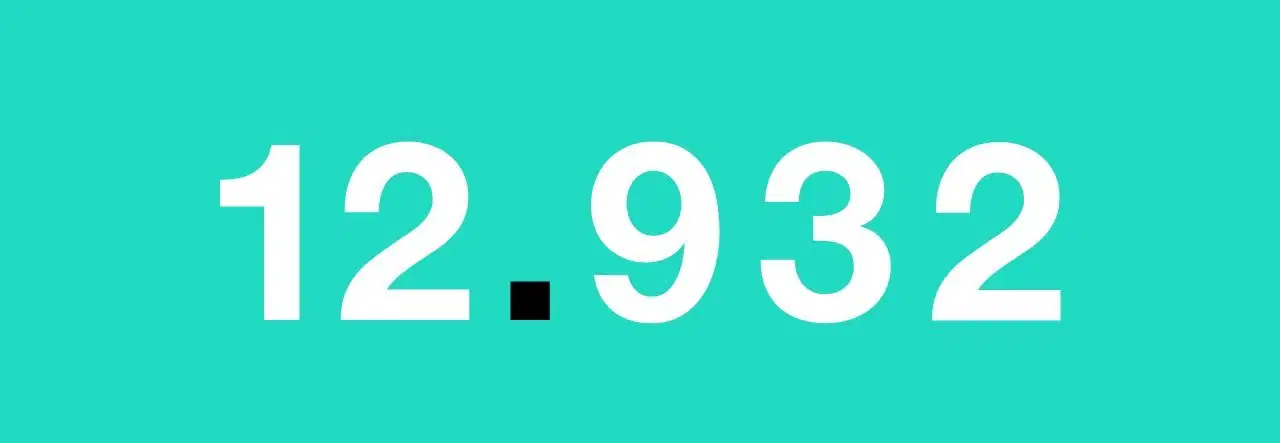
12.932 ✖ 10 =
139.32
23.35 ➗ 23 =
2.5 ➗ 1000 =

______ ➗ 2 = 4.4
1.25 ✖ 2.5 =
236.2 ➗10000 =
0.002362
00.02362
002.362
23.620
How Do you like this quiz?


Any Fit Back
10+10+10+10=
23
56
4090
40
if i have 5 pieceis of pizza and i eat 3 how many are left?
5 - 3
2
4
6
so far so good?
yes
no
20+20 is the same as?
10+10+10+10
123
2+4
1x2x3x4x5x6x7x8x9x10=
3628800
00888263
96456886
9985645
7x7x7x7=
2401
12331
9000
1212
if i have 5 pieceis of pizza and i eat 3 how many are left?
5 - 3
2
4
6
10+10+10+10=
23
56
4090
40
7x7x7x7=
2401
12331
9000
1212
1x2x3x4x5x6x7x8x9x10=
3628800
00888263
96456886
9985645
10+10+10+10=
23
56
4090
40
if i have 5 pieceis of pizza and i eat 3 how many are left?
5 - 3
2
4
6
20+20 is the same as?
10+10+10+10
123
2+4
in 8496 the digit 8 is in the?
thousand
hundred
tens
ones
(42−7+(−9))3÷(2×8)
0
32
-32
1
(52−6+(−5))×2
28
9
-9
1
(10÷(−5))×62+(−3)
-75
-66
66
75
(4÷(2−(−3)+(−9)))×(−10)2)
-100
40
-40
100
22×(−10)−5+(−5)
-50
40
-40
50
33÷(−3)×(2−9+5)
18
144
-144
-18
(4+(−6)−3)×(−3)2
-45
77
-77
45
8×((−6)+22)
-16
44
-44
16
((10−7)2×(−8))÷9+8
0
16
-16
-8
(−4)×((−8)+33)
-76
59
-59
76
7 - 3 + 5
(a)
8 ÷ 4 + 2 ⋅ 2
(a)
32 ⋅ 3 ÷ 9
2
3
27
(5 ⋅ 4) − 22 ⋅ 3
48
54
8
-28
8 − 3 ⋅ 2 + 210 − 4
(a)
42 − 216 ⋅ 3
(a)
If x = 9 and y = 5, what is 10y - x?
(a)
If x = 9 and y = 5, what is x2 −2y ?
8
20
71
41
If a = 2 and b = 6, what is 24b ?
12
21
8
6
If a = 2 and b = 6, what is 5a2b − a ?
(a)
6 + 7 + 2 = 2 + 6 + 7
5 * 1 = 5
2 ( a - 3 ) = 2a - 6
(a + 31) + b = a + (31 + b )
2 ( a + 7 )
10 ( b + 2c )
15 ( 2 + 1 )
10 ( 67 )
4y + 10y - 3y + 6
2x + 14h - 5h + 4x + 7
(18 ÷ 6) + (3 × 5)
(a)
25+(24÷8)+23
(a)
67 − 4 × 8
(a)
3 × 7 + 16 − 7
(a)
3 × [ (32× 5)+(25 ÷ 5) ]
(a)
3 × 8 ÷ −2
(a)
2 × [ (32×5) × (−6) ]
(a)
(30 − 3) ÷ (−3)
(a)
15+40÷20
(a)
6 + (5 + 8) ×4
(a)
9−7−6÷6 =
(a)
8 − 1 − (18 − 2) ÷8
(a)
( 12 + 10) ÷ 10 x 14 - 6
10 - 4 ÷ 1 x 5
10 + (2 - 1) + 32
Evaluate the expression 36÷(2+1)−2×(4+1)
22
2
27
3
Evaluate the expression 72÷(4+3)
1
49
7
2
10 x (4 + 5) =
90
45
100
80
(5 - 3) + (6 x 2)
12
8
14
-14
3 x 52 =
15
75
30
50
(32 x 4) + 6 =
30
12
18
42
2 + 5 x 4 =
28
22
21
24
3 x 5 - 1 =
14
12
15
11
20 − 10 ÷ 5 =
2
19
10
18
12 ÷6 +5 =
11
7
8
13
40 ÷ 4 ×5 =
20
2
40
50
(32 × 4) − (4 +5) =
15
27
36
43
(2 + 7 - 1) ÷ 22
5x(6-3)
19
27
15
23

