
Font size
 Worksheets
Science 5 198
Total questions: 198
Worksheet time: 5hrs 8mins
Identify the consumer


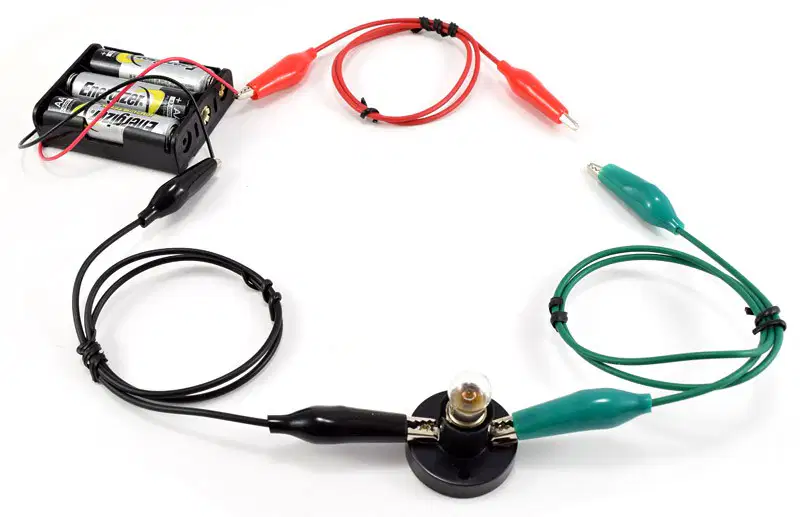
Which item could be placed between the green and red wires that would allow the flow of electricity? Choose the conductor

glass marble

plastic spoon

aluminum foil

rubberband
What does compaction mean in the formation of sedimentary rock?
When sediments are moved to a new location
When rock is broken down into sediments
When sediments are pressed together
When sediments are dropped in a new location

A glacier or ice formed this landform, what is it called?
U-shaped valley
Delta
Sand dune
Sea arch
Which one is an example of a nonliving component of an ecosystem?


Which physical properties is testable by dropping an item in water to see if it will sink or float?
magnetism
relative density
mass
electrical conductor
Which changes occur when lemon juice is mixed with water?
The water becomes a solid
The volume of the water decreases
The lemon juice dissolves and spreads out evenly
The mass of the lemon juice

What is the best way to separate iron fillings from sand?
funnel
magnet
tweezers
sieve

What happens when the Sun interacts with the ocean and changes water from a liquid to a gas?
condensation
evaporation
transpiration
precipitation

The prism shows an example of light
bouncing
reflection
absorption
refraction

Which force is being testing in this investigation?
magnetism
friction
tension
gravity

Which physical property is being shown?
relative density
magnetism
solubility
mass
Choose the image that shows an interaction between a living component and a nonliving component of an environment?

dolphin eating a fish

woodpecker on tree

grasshopper eating a plant

penguin swimming in water

The canyon is a result to changes to the Earth's surface by which force?
wind
water
ice
glacier

How long does Earth take to complete one day/night cycle or one rotation on it's axis?
12 hours
24 hours
1 month
1 year

Light travels in a straight line until is strikes an object and this image is an example of the _____________ of light.
bending
reflection
absortion
refraction

Which lights will work?
1
2,3, & 4
none
all of them
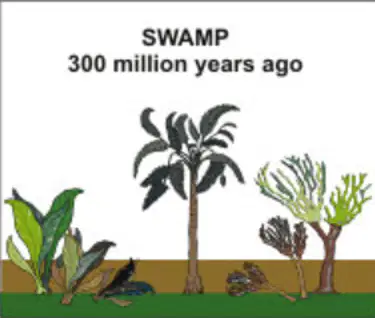
Which of the following resources were created from the the decayed remains of plants in ancient swamps?
silver
coal
petroleum
natural gas

Which one is NOT connected to the formation of oil and natural gases?
Dead plants and animals from millions of years ago
Heat and pressure help form
renewable resources
found under oceans or where oceans used to be

A hummingbird getting nectar from a flower is which type of interaction?
nonliving to nonliving
abiotic to nonliving
biotic to nonliving
living to living

What is the 5th planet from the Sun?
Venus
Earth
Mars
Jupiter
Which animal has a structure that helps it survive in cold tundra environment?


Lemonade is an example of which of the following?
A solid
A solute
Crystals
A solution
The particles in an object slide easily past each other. The object has no definite shape, but does have a definite volume. What is the state of matter of the object?
Plasma
Gas
Solid
Liquid.

How is volume measured?
A spring scale
A gram balance
A graduated cylinder
With a thermometer

Which idea below best describes the atomic theory?
Most atoms are metals.
Everything is made up of tiny particles called atoms.
Two or more elements make up compounds.
Atoms can be rearranged to form new elements.

Which of these is true about an ice cube?
It is made of clumps of particles that glide past each other.
It is made of particles that spread out evenly to fill the container they are in.
It's particles vibrate and are closely packed together.
It is made of particles that are far apart form each other.
Which of the following is a chemical change?
Baking cookies
Melting butter
Ripping paper
Blowing up a balloon

Which of the following is NOT a property of a metal
Conductive of electricity
Conductive of heat
Able to bend without breaking
Non-conductive

Diamonds and graphite are both made of carbon atoms. Why do they have different properties?
The carbon atoms in diamonds contain more protons than those in graphite.
The carbon atoms are connected differently in diamonds and graphite.
They are completely different compounds.
The atoms in diamonds are harder than those in graphite.

How is mass measured?
With a gram balance
A graduated cylinder
With a thermometer
With a spring scale
The particles in an object are very close together. They do not slide easily past each other. The object has a definite shape and volume. What is the state of matter of the object?
Plasma
Gas
Solid
Liquid.

What is the measure of the average amount of motion in particles of matter called?
Temperature
Mass
Volume
Color

Which is true?
When a solid dissolves, the individual particles spread evenly.
All solutions are made by dissolving a solid in a liquid
You can make solids dissolve faster by cooling the solutions.
Grinding a solid into smaller pieces does not affect dissolving.
Which of the following is an example of a physical change?
Mixing vinegar and baking soda
Digesting food
Snapping a glow stick and shaking it up till it lights up
Chopping wood

Which of the following is NOT a clue that a chemical change occurred?
The release of heat and light
A change in size
A change in color
A new smell or odor

Which of the following will cause a physical change in a slice of tomato?
Putting it into a blender or slicing it up
Letting it rot
Cooking it
Pouring vinegar on it
_________ helps build strong bones and prevents osteoporosis.
iron
calcium
Vitamin D
Unclean or stale food has _________ on them
less calorie
calcium
iron
_________ helps to fight illnesses like cough and cold.
Vitamin C
Vitamin D
vitamin A
Enlarged and weak bones are the symptoms of __________ caused due to deficiency of ______________
rickets, Vitamin D
marasmus, carbohydrates
anaemia, iron
Camels have nostrils that can be opened and closed to ________
keep out snow
keep out sand
keep out water
keep themselves warm
___________ is found in the polar region.
lotus
moss
cactus
water lily
_________ has a waxy coating on its leaves which prevents it from sinking.
catcus
water lily
bamboo
moss
An adaptation of animals that helps them survive harsh winters by falling into deep sleep is called ______________.
migration
camouflage
hibernation
adaptation
Amphibians have slimy and ________ skin.
Moist
Hard
Soft
Rubber
Fishes breathe using________
Moist
Fins
Gills
Reptile

What moon phase is this?
Waning Gibbous
3rd Quarter
First Quarter
Waxing Gibbous

Does the frog go through metamorphosis?
Yes
No
What is the soil with the smallest particles?
Clay
Silt
Sand
Humus
What is a plateau?
An opening in a landform.
A landform where rivers erode and deposit sediment at a bank of a river.
A landform in which reaches high places but a flat surface
A high place
What are things plants need to survive?
Sunlight , Food
Sunlight, Space, Water, Air, Soil, Food
Sunlight, Land, Space, Water, Food
Animals, Carbon Dioxide, People
The earth orbits the _______
Orbit
Sun
Moon
Earth
Fossils are mainly found in sedimentary rock.
True
False
Circuits ALWAYS need a-
Battery
Light
Buzzer
The sun rises in the __ and sets in the __
South East
West East
East west
North east

Which graph represents the volume of water most likely left in the containers after five days?


A group of students is performing an investigation to measure how much liquid water is produced from a 10 L sample of snow. What must occur in order for the students to perform this investigation?
The sample must be kept in freezer.
The temperature of the sample must change.
The investigation must be performed outside.
The physical state of the sample must remain the same.

In a investigation hot water is poured into a plastic clear cup. Another clear plastic cup is placed upside down over the cup of hot water. Which of these is likely to occur during the next three minutes?
The hot water will become hotter because air and heat are trapped in the two cups.
The water level will rise in the bottom cup because of evaporation.
Water droplets will form on the inside of the top cup as the water vapor cools.
Water from the bottom cup will become as the hot water cools.

5 Shadows cast by objects change throughout the day. The picture below shows the shadow cast by a tree at 3:00 P.M. Which picture shows how the tree’s shadow most likely looked at 9:00 A.M.?


The diagram above shows the process of evaporation over the ocean. What is the most likely effect of this process on the land areas nearby?
Increased drought conditions
Decreased erosion of the shoreline
Increased precipitation
Decreased solar energy
Each school year for 30 years, the amount of rain that fell at a school was measured and recorded. Tracking rainfall over a long period provides the most information about which characteristic of an area?
Weather
Temperature of one day
Climate
Type of soil

Some students used a globe to model the rotation of Earth. They shaded in Texas on the globe, as shown below. They rotated the globe and observed that Texas was in exactly the same place after each rotation. The students could rotate the globe quickly or slowly. If the globe could rotate only at the rate that Earth actually rotates, about how long would each complete rotation take?
30 days
60 minutes
24 hours
365 days

The picture below shows a child standing in a swimming pool. Why does the lower part of the child appear so much different in size from the upper part?
The light rays that travel through air and then into water are reduced.
The light rays that travel through water and then into air are enlarged.
The light rays that travel through air and then into water are reflected.
The light rays that travel through water and then into air are refracted.
One of the brightest objects in the night sky is a planet that is closer to the sun than Earth is. What is the name of this planet?
Saturn
Jupiter
Venus
Mars

The model shows a special glass fiber that is thinner than some metal wires. When light enters one end of the fiber, it moves through the fiber as shown. After the light leaves the fiber, it travels —
back into the fiber
in a straight line
around the fiber
in a curve

In which mixtures do all the ingredients maintain their physical state?
Mixture 3 and 4 only
Mixtures 1, 3, and 4
Mixtures 1, 2, and 5
Mixtures 2 and 5 only
Which change occurs when lemon juice is mixed with water?
The mass of the lemon juice decreases
The water becomes a solid.
The lemon juice dissolves and spreads out evenly in the water.
The volume of the water decreases.

Which column headings should the students use for their table?


Based on the student’s observations in the table, how many of the substances did NOT dissolve in the water?
1 Substances
2 Substances
3 Substances
4 Substances

Which statement correctly identifies two of the materials based on the classification of properties in the table?
Material 1 is a rubber ball. Material 2 is a piece of cardboard.
Material 2 is an aluminum washer. Material 3 is a copper wire.
Material 3 is a piece of cardboard. Material 4 is an aluminum washer.
Material 1 is a copper wire. Material 4 is a rubber ball.

Which two switches can be open and still allow all of the parts to work?
Switches 1 and 3
Switches 1 and 4
Switches 2 and 3
Switches 3 and 4

Which diagram best shows the shadow of the tree at 10:00 A.M. on the same day?


Which table correctly classifies statements about weather and climate?


Which of the following explains how water undergoes a change of state in one stage of the water cycle in order to move from the ocean’s surface into the air?
Gaseous water rises as it is cooled by the ocean
Liquid water that is heated by the sun condenses into rain.
Liquid water that is heated by the sun becomes a gas and rises
Gaseous water collects in drops of fog above the ocean’s surface.
Which statement correctly describes how a landform is formed?
A lake is formed when flowing water carves out the sides of a canyon.
A lake is formed when flowing water carves out the sides of a canyon
A delta is formed at the mouth of a river when flowing water slows and deposits sediment.
A U-shaped valley is formed when winds pick up and move sediment away from the landscape.
A company makes a prototype of a product. A prototype is a model. Workers in the company test the prototype before they make the final product. Which step will best help the workers when they test the prototype?
A. Perform a test once and then make the final product.
B. Stop working on the product if the test shows a problem with the prototype.
C. Make sure all the results show the prototype has no flaws.
D. Use results of the test to improve the prototype before making the final product.

Scientists found some fossil bones from an extinct animal. The scientists used the bones to make a model of the animal’s skeleton.
Based on the features shown, which of these is the best conclusion the scientists can make?
A. The animal lived in water.
B. The animal blended in well with its environment.
C. The animal had many offspring each year.
D. The animal migrated long distances to find food.

A glass of ice water is placed on a table inside a room that is at room temperature. The ice inside the glass melts. The diagram represents the changes observed.
Which piece of evidence supports the conservation of matter during the changes shown in the diagram?
A. The combined mass of the glass and its contents is the same before and after the ice melts.
B. The combined mass of the glass and its contents is less after the ice melts.
C. The contents of the glass are wet before and after the ice melts.
D. The contents of the glass are colorless before and after the ice melts.
Organisms have different types of behaviors. Some of these behaviors are natural responses called instincts. Other behaviors are learned through the use of an organism’s senses through interactions with the environment. Which three behaviors are examples of instincts?
M. birds returning to a bird feeder for food
P. monkeys using tools
R. ants living in a colony
S. sea turtles swimming
T. geese flying in a group

The picture shows a carousel. The carousel spins while the horses move up and down. A student determines that each horse completes one up-down cycle in 30 seconds. The student rides a horse on the carousel for 2 minutes, which equals 120 seconds.
How many times did the student riding the horse complete an up-down cycle?
M. 2 times
P. 3 times
R. 4 times
S. 5 times

Scientists study a fossil of an extinct fish. The scientists compare the extinct fish to fish that are living today.
Which of these is the best conclusion the scientists can make about the extinct fish?
A. The extinct fish had fins on its body similar to the fins on many fish that are living today.
B. The extinct fish had stripes on its skin similar to the stripes on some fish that are living today.
C. The extinct fish could live for many years, similar to some fish that are living today.
D. The extinct fish had many predators, similar to many fish that are living today
Which of these best describes the positions of the sun, the moon, and Earth during a solar eclipse?
A. The sun, the moon, and Earth are in a straight line, and the moon is between the sun and Earth.
B. The sun, the moon, and Earth are in a straight line, and the sun is between the moon and Earth.
C. The sun and Earth are in a straight line. The moon is not in a line but is at an angle between Earth and the sun.
D. The sun and Earth are in a straight line. The moon is not in a line but is at an angle on the side of Earth away from the sun.
Students completed four investigations where they combined two different substances. Which investigation shows evidence that the chemical properties of the substances changed?
A. Sand sinks in water when water and sand are combined.
B. Salt dissolves in water when salt and water are combined.
C. Bubbles form when baking soda and vinegar are combined.
D. Vegetable oil coats the surface of lettuce when oil and lettuce are combined.
Which statement correctly describes how the number of daylight hours is different at different times of the year in Tennessee?
M. The number of daylight hours is greater in December than it is in March.
P. The number of daylight hours is greater in June than it is in December.
R. The number of daylight hours is greater in September than it is in June.
S. The number of daylight hours is greater in March than it is in September.
How do plants grow differently in March compared to September?
A. As the days become steadily longer, plants grow better in Tennessee
B. As the days become steadily shorter, plants grow better in Tennessee.
C. As Earth travels farther from the sun, plants grow better in Tennessee.
D. As Earth travels closer to the sun, plants grow better in Tennessee.
Which seasons are the correct labels for one of the dates on the model?
M. September 21: winter in the Northern Hemisphere, spring in the Southern Hemisphere
P. December 21: winter in the Northern Hemisphere, summer in the Southern Hemisphere
R. June 21: spring in the Northern Hemisphere, summer in the Southern Hemisphere
S. March 21: spring in the Northern Hemisphere, spring in the Southern Hemisphere

Which set of items is less dense than water?
Plastic paper clip, penny, and cork
Toothpick, metal spoon, and plastic paper clip
Metal spoon, vegetable oil, and penny
Toothpick, cork, and vegetable oil
A student is classifying objects. Answering which question will provide the best evidence that an object is a metal?
What is its mass?
What is its physical state?
Does it conduct thermal energy?
How quickly does it dissolve in water?
A student pours 14 grams of sugar into a jar filled with 500 milliliters of water. The student thoroughly stirs the sugar and water to make a solution. Which change most likely occurs to the sugar when it is added to the water?
The sugar breaks down to form a new substance in the solution.
The sugar changes water into a new substance in the solution.
The sugar floats on the surface of the water in the solution.
The sugar completely dissolves in the solution.

The students are trying to determine the presence of which substance in the cereal?
Sugar
Iron
Salt
Wheat

Which conclusion best compares a property of cooking oil and water shown in this investigation?
Cooking oil is less dense than water.
Water is less dense than cooking oil.
Water dissolves in cooking oil.
Cooking oil dissolves in water.

Based on their common properties, how should these objects be classified?


Water in the gas state can be cooled into a liquid by which of the following?
Freezing
Condensing
Melting
Boiling
What can you observe about water on a hot summer day?
Heat evaporates water.
Heat has no effect on water.
Heat causes water to melt.
Heat makes the water more salty.

What causes the popsicle to drip?
Light from the Sun changed the popsicle from a liquid to a gas.
Heat from the Sun evaporated the popsicle into the air.
Wind caused the popsicle to change shape.
Heat from the Sun changed the popsicle from a solid to a liquid.

What will most likely happen to the liquids in the graduated cylinder?
The oil will remain on the bottom because there is more of it.
The oil will remain on the bottom because it was poured in first.
The oil will rise to the top because it is less dense than water.
The oil will mix with the water and form a solution.


The difference in the shape of these animals' teeth is most closely related to -

5.6C


Adult lacewings lay eggs, but adult frogs give birth to live larvae.
When they hatch, young lacewings and young frogs look different from their adult forms.
When they hatch, both lacewings and frogs have long legs for jumping.
Both adult lacewings and adult frogs have more legs than they had as larvae.
Which of the following explains how water undergoes a change of state in one stage of the water cycle in order to move from the ocean’s surface into the air?
Liquid water that is heated by the sun becomes a gas and rises.
Gaseous water rises as it is cooled by the ocean.
Liquid water that is heated by the sun condenses into rain.
Gaseous water collects in drops of fog above the ocean’s surface.


Which change occurs when lemon juice is mixed with water?
The mass of the lemon juice decreases.
The water becomes a solid.
The lemon juice dissolves and spreads out evenly in the water.
The volume of the water decreases.

A wetland ecosystem with slow-moving water
A coastal ecosystem with constant rough waves
A desert ecosystem where rainfall drains away quickly
An underground river ecosystem where the temperature remains constant

Student 1 pulls the cart to the left while Student 2 pulls the cart to the right.
Student 1 pulls the cart to the left while Student 2 pushes the cart to the left.
Student 1 pushes the cart to the right while Student 2 pushes the cart downward.
Student 1 pushes the cart to the right while Student 2 pulls the cart upward.

Mixtures 3 and 4 only
Mixtures 1, 3, and 4
Mixtures 1, 2, and 5
Mixtures 2 and 5 only
8 Which statement correctly describes how a landform is formed?
A lake is formed when flowing water carves out the sides of a canyon.
A mountain range is formed when glaciers slowly move across the landscape.
A delta is formed at the mouth of a river when flowing water slows and deposits sediment.
A U-shaped valley is formed when winds pick up and move sediment away from the landscape.

Light and its reflections travel in straight lines.
Light cannot reflect from more than one surface.
Light that goes through water cannot travel in straight lines.
Light can travel in a circular path.

Red-tailed hawks, snowshoe hares, and caterpillars
Snowshoe hares and caterpillars
Snowshoe hares and shrews
Shrews and red foxes

How many spaghetti noodles will it take to hold up the mass of a penny?
How much force will it take to break the spaghetti noodle?
How long should the string that holds the paper cup be in order to support the greatest mass of pennies?
How does the distance between the two chairs affect the amount of force it takes for the spaghetti noodle to break?

Switches 1 and 3
Switches 1 and 4
Switches 2 and 3
Switches 3 and 4

The erosion of a coastline
The deposition of sediments
The weathering of a mountain
The formation of a sea


A student wants to build a circuit with four lightbulbs and one bell. The student wants to place a switch in the circuit so that only one light will still be on and the bell will still ring when the switch is opened. Which of these circuits should the student build?


Ariana uses balloons to investigate static electricity. Which of the following best explains what will happen when she brings two positively charged balloons close to each other?
The balloons will move apart
The balloon will lose its charge
The balloons will come together
One balloon will gain a negative charge
The stem is an important part of many plants. Which of the following is most similar to the role performed by the stem of a plant?
an anchor holding a boat in place
a snack company producing energy bars
a colorful sign attracting people in a store
an elevator transporting supplies from one floor to another
Roger collected four rock samples and wrote a description of how each was formed. Which of the following rocks that Roger collected is a metamorphic rock?


Mr. Washington mixed iron filings with sand. Then, he asked his students to separate the iron filings from the sand. Which of the following is the best tool to use to separate the iron filings from the sand?


Jenny measures the outside temperature as 16 degrees Celsius (°C), 61 degrees Fahrenheit (°F). She observes precipitation falling from the clouds in a solid form. What type of precipitation is Jenny most likely observing?
hail
rain
sleet
snow

Plants are classified according to their structures. The plant pictured below reproduces without seeds and has simple tubes for transporting water. In which group of plants would this plant be classified?
spore-producing plants with many leaves
plants that produce fruit on their leaves
plants that carry seeds on their leaves
flowering plants with many leaves
Erosion and weathering can both cause changes to the surface of Earth. Which of the following happens only because of erosion and NOT because of weathering?
Rocks form deep underground
Rocks become smooth and round
Rocks are broken apart into small pieces
Rocks are moved from one place to another
Astronomers study many different kinds of objects in our Solar System. Which of the following best describes a difference between comets and asteroids?
Comets orbit planets, and most asteroids orbit the Sun.
Comets are hot balls of gas, and asteroids are made mostly of ice.
Comets are made mostly of ice, and asteroids are made mostly of rocks.
Comets orbit the Sun between Mars and Jupiter, and asteroids form patterns in the sky.

The organisms shown above live in or near bodies of water. Some are classified as vertebrates and some as invertebrates. Which organism is classified as an invertebrate?
crab
fish
manatee
turtle

A radiometer is a device with fins that spin when light energy strikes them. A picture of a radiometer is shown below. As part of an experiment, a light source was placed 50 centimeters (cm) from a radiometer. The light source gave off four different-colored lights for 30 seconds (s) each. After each color of light was turned off, the amount of time the fins on the radiometer spun was recorded. The results are shown in the table. Which color of light provided the greatest amount of light energy according to the data in the table?
red
green
blue
white


energy


Weathered pieces of rock.
pebbles
sediment
eroded
shale
Buried remains of ancient plants and animals that we now use as fuel.
hydrocarbons
alternative energy
fossil fuels
sediment
Breaking down earth's materials at or near the surface.
erosion
weathering
cementation
deposition
Wind or water carrying away weathered pieces of sediment.
deposition
weathering
erosion
cementation
Sediment is eroded, deposited, buried, mixed with surrounding material, and cemented together from heat and pressure.
weathering
deposition
cementation
compression
Eroded sediment finds a new home.
weathering
deposition
compaction
cementation
The solid innermost portion of our Earth.
outer core
mantle
inner core
crust
This layer of Earth is made of magma and is between the crust and core.
crust
mantle
core
outer core
The outermost layer of Earth composed mainly of rock.
crust
mantle
core
outer core
Gas surrounding Earth made of 78% nitrogen and 21% oxygen.
lake effect
greenhouse gas
atmosphere
climate
Orbit or movement around the sun.
rotation
revolution
Spinning of a planet on its axis.
rotation
revolution
Earth rotates on this imaginary line.
diagonal
axis
radius
diameter
A student in a fifth-grade classroom was put to the test to identify the cells inside of a plant leaf. Which of the following is the BEST for the student to gather evidence?
The student can use the naked eye and hold the plant close to their face and identify the cells.
The student can use a hand lens and study the ridges on the leaf to identify the cells.
The student can use a telescope to zoom in closely on the leaf and identify the cells.
The student can use a microscope to zoom in closely on the leaf and identify the cells.

Use the information and table to answer the following question.
Kelly is studying cells. She planned an investigation to view a plant leaf using a hand lens, a microscope, and with the naked eye then record her observations. The results of the investigation are shown.
Which claim is supported by the evidence in the investigation?
Kelly observed plant cells through the naked eye, microscope, and magnifying glass because cells are too small to be seen with the naked eye.
Kelly observed plant cells through the hand lens because cells are too small to be seen with the naked eye.
Kelly observed plant cells through the microscope because cells are too small to be seen with the naked eye.
Kelly observed plant cells through the microscope and magnifying glass because cells are too small to be seen with the naked eye.

Use the information and table to answer the following question.
A student is creating a 3D plant cell model using a cookie cake. There is an error in the student’s model.
Which of the following revisions will BEST fix the representation of the model?
The student should remove the box for the cookie cake because a plant cell does not have a cell wall.
The student should use 2 peppermints since there is more than one nucleus in a plant cell.
The student should switch the ingredients for the cytoplasm and the chloroplast.
The student should only use green gummy bears to represent the chloroplast.

The picture shows a cell.
Which table correctly identifies the structures in the cell?


How is the structure of a plant cell different from the structure of an animal cell?
Plant cells are smaller in size than animal cells.
Plant cells have fewer organelles than animal cells.
Plant cells have a nucleus and animal cells do not.
Plant cells have cell walls and animal cells do not.
Use the information to answer the following question.
Ava is watching a spider on a tree branch. The spider begins to spin a web between the branches. An insect gets caught in the web and the spider wraps it up in silk. Ava needs to determine if this action is instinct or learned behavior.
Which question will help Ava make this decision?
What color is the spider that is observed?
Does the spider do the action immediately without thought?
How big is the web?
What kind of food is the insect?
A fifth-grade is observing a sea turtle hatching on the beach and headed straight towards the ocean. The 5th grader is wondering if the behavior is a learned behavior. Which question would the 5th grader ask to determine that the behavior is an instinct?
Did the sea turtle automatically know where to go once it was born?
Did the sea turtle watch another turtle learn where to go once it was born?
Did the sea turtle need its mother to show the turtle the way?
What time of the day did the sea turtle hatch?
Use the information to answer the following question.
A student went to the Georgia Aquarium for a field trip to observe animal behavior and traits. She noticed that a penguin had a chipped beak. She turned to her friend to ask what happened to the penguin.
Which explanation will BEST explain the chipped beak?
The penguin shows an acquired physical trait here because it was most likely born with the chipped beak because if a parent penguin has a chipped beak, the offspring will too.
The penguin shows an acquired physical trait here because it was not likely born with this chipped beak and probably broke it when trying to break up its food.
The penguin shows an inherited trait here because it was not likely born with this chipped beak and probably broke it when trying to break up its food.
The penguin shows an inherited trait here because it was most likely born with the chipped beak because if a parent penguin has a chipped beak, the offspring will too.
Which scientific evidence supports the argument that some microorganisms are beneficial?
Lactobacillus, a type of bacteria, can be used to make common food that people eat such as cheese.
Many diseases that cause people to become sick such as the flu, influenza, are caused by viruses.
Algae that live in rivers, lakes, and streams can produce harmful poisons causing illnesses to animals that live in the contaminated water.
Salmonella, a type of bacteria, can be found in undercooked chicken that causes people to get food poisoning.
A student argues that some microorganisms are harmful. Which is the BEST evidence to support the student’s claim?
Fungi and bacteria are decomposers that break down dead organisms.
Lactobacillus, a type of bacteria is used to make soy sauce, cheese, and yogurt.
Vaccines are made from viruses that are given to people to fight against the chickenpox.
Bacteria in raw or undercooked meat can cause illness in humans.
A student is asked to plan a demonstration to show a physical change with a piece of paper. Which of the following investigations can the student use to accurately represent the type of change?
The student can cut the paper into tiny pieces to show how the paper changed its physical properties.
The student can burn the paper to show how the paper can also resemble ash and smoke to show a change in state.
The student can put water on the paper to show how the paper can change its state of matter from a solid to a liquid.
The student can fold the paper in half to show how the paper changed its chemical properties.
A teacher places Iron filings that are mixed with sand in a bowl. The teacher asks a group of students to plan and figure out a way to separate the materials. Which of the following is the MOST effective way to separate the mixture to demonstrate that a physical change has occurred?
Use a magnet to attract the iron filings so that they can be separated from the sand.
Add water to the bowl. The sand will dissolve in water, and the iron filings will be left.
Pour the contents of the bowl into a pot with boiling water. The sand will rise, leaving the iron filings at the bottom of the pot.
Place the contents of the bowl into a funnel made of filter paper, and use water to separate the sand from the iron filings.
A student placed a piece of ice into a bucket and left it out in the sun. The student then returned to record the observations. What evidence might the student use to defend whether a chemical or a physical change has occurred?
The student should report that a chemical change has occurred because the ice began at a different temperature than the resulting water. A temperature change is an indicator that proves a chemical change has occurred.
The student should report that a physical change has occurred because the ice began at a different temperature than the resulting water. A temperature change is an indicator that proves a physical change has occurred.
The student should report that a chemical change has occurred because the state of the substance changed from a solid to a liquid. If a substance changes state, it has created a new substance, and it indicated a chemical change.
The student should report that a physical change has occurred because even though the temperature has changed, the change did not result in a new substance being created.

Use the information and pictures to answer the following question.
A fifth-grade student is studying two cells.
Which of the following BEST explains the difference in structure between the two cells?
Cell A is a plant cell because it has a rigid shape, whereas Cell B is an animal cell because it has a round shape.
Cell A is an animal cell because it has a rigid shape, whereas Cell B is a plant cell because it has a round shape.
Both Cell A and B are animal cells because they have a nucleus in the middle of the cell.
Both Cell A and B are plant cells because they both have nucleus and cell walls.

Use the information and Venn diagram to answer the following question.
A fifth-grade student began comparing and contrasting the similarities and differences between plant and animal cells. The student handed her Venn diagram to her classmate to provide feedback on her work so far. The classmate said that there is an error in her work.
Which of the following TWO statements BEST describes where the student made an error?
Statement c, because animal cells have cell walls to provide structure
Statement d, because both animal cells and plant cells need chloroplasts to make food
Statement a, because plant cells have both a cell wall and a cell membrane
Statement b, because although a plant cell does have a chloroplast, the chloroplast is not the control center
Statement e, because only a plant cell has a cytoplasm to hold together the parts of the cell

Use the information and table to answer the following question.
Students went on a field trip to the Atlanta Zoo. Part of their field trip was to collect data on animals and classify them based upon how scientists classify animals.
Which of the following BEST describes how the student should develop a model to classify the animals?
Animals 1 and 4 will be classified together since they have scales. Animals 2 and 3 will be classified together since they do not have scales.
Animals 1 and 3 will be classified together since they both breathe with gills. Animals 2 and 4 will be classified together since they both breathe with lungs.
Animals 1, 3, and 4 will be classified together since they all lay eggs. Animal 2 will be classified separately since this animal has live birth.
Animals 1, 2, and 4 will be classified together since they have backbones. Animal 3 will be classified separately since this animal does not have backbones.

Use the information and table to answer the following question.
Students observed animals they saw at the beach. The students collected data on animals and classified them based on how scientists classify animals.
Which of the following models BEST illustrates how the animals are classified?


Use the information and model to answer the following question.
A fifth-grade student was asked by the teacher to sort animal pictures into categories based upon their characteristics. This is how the student sorted the pictures.
Which explanation BEST describes the feedback the teacher would provide to the student to refine the model?
The model is mostly correct. The only error is an alligator should be in a separate category since it is a reptile, not an amphibian.
The model is incorrect because a whale should be in the mammal subgroup since it has lungs, and another error is there needs to be another category under vertebrate for reptiles since alligators are not amphibians.
The model is incorrect because a whale should be in the mammal subgroup since it has lungs, and another error is there needs to be another category under vertebrate for reptiles since frogs are not amphibians.
The model accurately represents how scientists classify animals based upon their characteristics.

Use the information and table to answer the following question.
Four students went on a walk through a nature trail behind their school and collected the following data based on observations.
Which student was able to use the data to develop an accurate model about how the plants could be sorted into groups?
Student 2: Plants 2 and 3 are vascular plants due to their tall height. Plants taller than 5 cm must have vascular tissue to transport nutrients. Plant 1 is a nonvascular plant because it is very short. All plants need water, so they must all live in damp areas.
Student 4: The plants can be sorted into two groups. Plants 2 and 3 are nonvascular because they reproduce using spores. Plant 1 does not reproduce using spores, so it must be a vascular plant.
Student 3: Plants 1 and 3 are nonvascular because they do not have true leaves, stems, and roots; therefore, they only grow low to the ground. Plant 2 lives in a similar environment but is a vascular plant because it has these structures and vascular tissue to transport nutrients up the length of the plant.
Student 1: All of the plants are nonvascular plants, so they can each be sorted into the same group. Nonvascular plants must grow in areas where water is present, and vascular plants do not need water in their environments because vascular tissue can transport nutrients to great heights.

Use the information and table to answer the following question.
The table shows the characteristics of several different plants.
Which two plants in the table could be grouped together based upon its characteristics?
Pine tree and rose could be grouped together as a vascular plant since they have roots, stems, and leaves.
Rose and algae could be grouped together as a vascular plant since they have roots, stems, and leaves.
Fern and pine tree could be grouped together as seeded vascular plants since they both reproduce with seeds.
Fern and algae could be grouped together as non-seeded vascular plants since they both do not reproduce with seeds.
Use the information and chart to answer the following question.
Roberto’s family has much in common with each other.
Traits of a Roberto’s Family
-dimples on their cheeks when they smile
-they speak both English and Spanish
-they can all play an instrument
-their favorite food is pizza
Which question will help them determine which trait the family shares is an inherited physical trait?
What instrument does the family play?
Which language did the family speak first?
When did the family first eat pizza?
Were all family members born with dimples?
Use the information and chart to answer the following question.
A type of whale called the “right whale” lives off the coast of Georgia. This list shows some characteristics of the right whales.
Characteristics of a Right Whale
-diet consists of shrimp-like krill and small fish
-black in color
-travel alone or in small groups
-about 100 scars are documented each year
Which question can be asked to learn about the acquired physical trait of the right whale?
Do all right whales like to eat small fish?
Why do some right whales travel alone?
What causes the scars on the whales?
Are right whales in other areas in the ocean also black in color?

Use the information and picture to answer the following question.
The picture shows three cats with differences in patterns and fur length. All three cats had different parents.
Which of the following is the BEST explanation for the differences in this trait?
The cats come from different environments and the fur changes in response. This is an inherited physical trait.
The parents of the cats passed down their traits of patterns and fur length. This is an inherited physical trait.
The fur was damaged by disease when they were kittens. This is an acquired physical trait.
The differences in the type of food caused the fur to grow in unique patterns. This is an acquired physical trait.
Use the information and chart to answer the following question.
A student observes her mother eating yogurt with Probiotics. She realizes that her mother is eating microorganisms. The student is wondering if her mother will get sick, so she does some research.
Probiotics
-It is a type of live bacteria and yeast.
-It helps to digest food.
-It keeps the gut healthy.
Which statement has the BEST reason and evidence to give the student?
Probiotics are live bacteria and yeast. All bacteria can make humans sick. Mothers should not eat them.
Probiotics are microorganisms that are too small to be seen and can have no effect on the human body.
Probiotics make the yogurt taste better but they are microorganisms that can cause viruses and bacteria that can cause infections.
Probiotics are live bacteria and yeast that live in the digestive organs. They can digest foods and keep the gut healthy. Her mother will not get sick.

Use the information and table to answer the following question.
Blake Beck and his sisters, Jillian and Cara, visited Stoneridge Park yesterday and participated in several activities. Both Blake and his sister Cara are sick today with the same symptoms. Their mother wants to determine why they are sick and suspects that it might have to do with their visit to Stoneridge Park. The table shows what the children told their mother about their activities.
Which argument BEST supports why Blake and Cara are sick?
Mrs. Beck can conclude that there might have been E. coli on the undercooked hamburgers.
Mrs. Beck can conclude that there were harmful bacteria in the cave that caused the children to become sick.
Mrs. Beck can conclude that Jillian will be sick tomorrow due to getting wet on the hike.
Mrs. Beck can conclude that the children got sick due to the bacteria they swallowed while in the lake water.
A teacher takes a tray of ice cubes out of the freezer. Each student takes an ice cube and holds it in their hands.
Student Observations
- the ice cube is solid
- the ice cube is cold
- the ice cube is changing its shape
- my hands are starting to get wet
- the ice cube starts to get smaller
The student claims that changing the temperature of the water causes a physical change that turns water into ice and ice into water.
Which argument BEST supports the student’s claim?
The ice cube is freezing in the student’s hand since the hands are much warmer than the ice. Heat is being removed from the ice, which causes the particles to move slower.
The ice cube is melting in the student’s hand since the state is changing from a solid to a liquid. Heat is being removed from the ice, which causes the particles to move faster.
The ice cube is melting in the student’s hand since the state is changing from a liquid to a solid. Heat is being added to the ice, which causes the particles to move slower.
The ice cube is melting in the student’s hand since the hands are much warmer than the ice. Heat is being added to the ice, which causes the particles to move faster.

Use the information and chart to answer the following question.
Two students made a chart to show observations they made on a cup of water.
Which explanation BEST describes the outcome of their observations?
Student 1 removed heat from the water, which caused the water to change from a liquid to a solid. Student 2 added heat to the water, which caused the water to change from a liquid to a gas.
Both students added heat from the water, which caused the water to change its state.
Both students removed heat from the water, which caused the water to change its state.
Student 1 added heat to the water, which caused the water to change from a liquid to a solid. Student 2 removed heat from the water, which caused the water to change from a liquid to a gas.

Use the information and table to answer the following question.
Students were asked to choose from the list of materials to create a plan and carry out an experiment where a chemical change will occur.
Which of the following experiments would show evidence of a chemical change?
Mixing 100mL of water and red food coloring would show a chemical change. I know this because a color change is evidence of a chemical change and the clear water turned red.
Mixing 20 grams of baking soda and 50 mL of vinegar would show a chemical change. I know this because when the materials combine, they will begin to bubble, which shows evidence of gas emitted.
Mixing 20 grams of baking soda, 20 grams of salt, and red food coloring would show a chemical change. I know this because the materials would be difficult to separate.
Mixing 20 grams of salt into 100mL of water would show a chemical change. I know this because if you stir the salt enough, the salt will disappear, which creates a new substance.

se the information and table to answer the following question.
Three students at Burnette Elementary were given an assignment by their science teacher to plan and carry out experiments where chemical changes would occur. The table shows each student’s plan and the results he or she recorded.
Which of the following is TRUE about the students’ experiments?
Student B was the only one to create an experiment where a new substance was created, a gas. This shows evidence of a chemical change.
Student A was the only one to create an experiment where a color change occurred. This shows evidence of a chemical change.
Student B and Student C created experiments where chemical changes occurred. Student A just dyed her water. Student B created a gas while Student C got rid of the salt which are both chemical changes.
Student A, Student B, and Student C all created experiments where chemical changes occurred. Student A observed a color change, Student B saw bubbles, and Student C was able to dissolve the salt.

Use the information and table to answer the following question.
A fifth-grade student places hydrogen peroxide in a cup. The student then adds yeast to the cup. The student collects data from the experiment.
Based on the results of the experiment, which statement BEST describes whether the change is a physical or chemical change?
The data concludes that a physical change has occurred because it had an increased change in temperature, which
The data concludes that a chemical change has occurred because mixing two substances together will always result in a reaction.
The data concludes that a chemical change has occurred because there was a sudden increase in temperature when the materials reacted to each other.
The data concludes that a physical change has occurred because the color of the liquid changed when you mixed two materials.

