
 Worksheets
X-ray Film Audit & Reject Film Analysis
Total questions: 15
Worksheet time: 1hrs 20mins
Which data field most directly prevents mix-ups that could lead to misdiagnosis on an X-ray label?
Room number where X-ray was taken
Technologist’s badge number displayed
Patient’s name on the image header
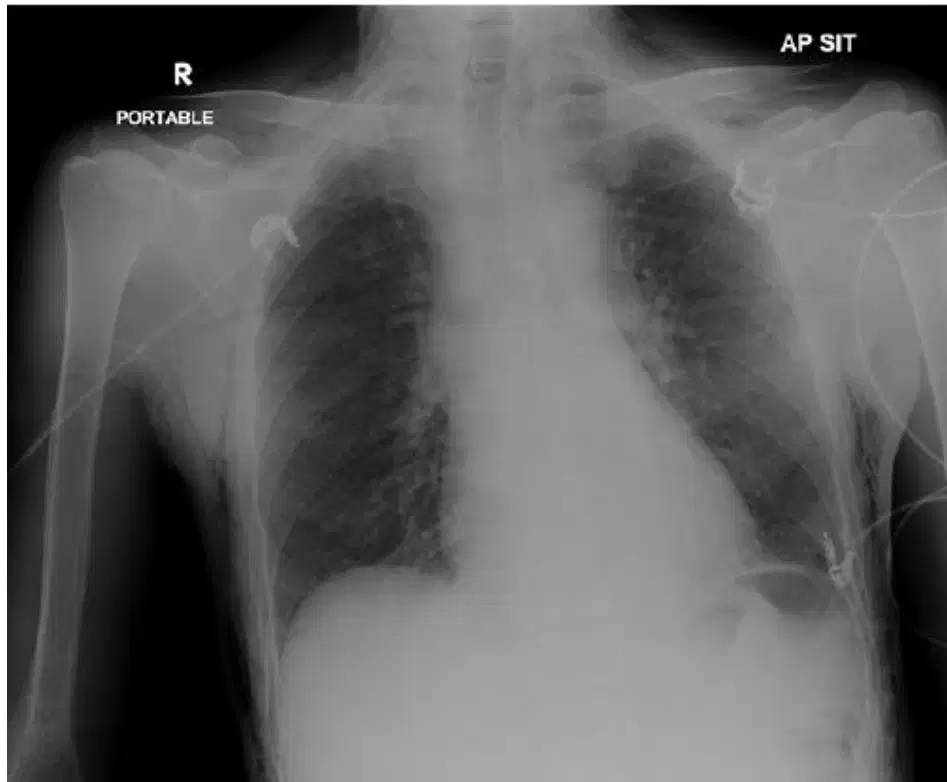
In radiographic practice, which statement best describes proper placement of a side marker on an image like the chest film shown?
Place R/L anywhere as long as it is visible
Place R/L within radiation field but off anatomy of interest
Place R/L outside radiation field to avoid exposure
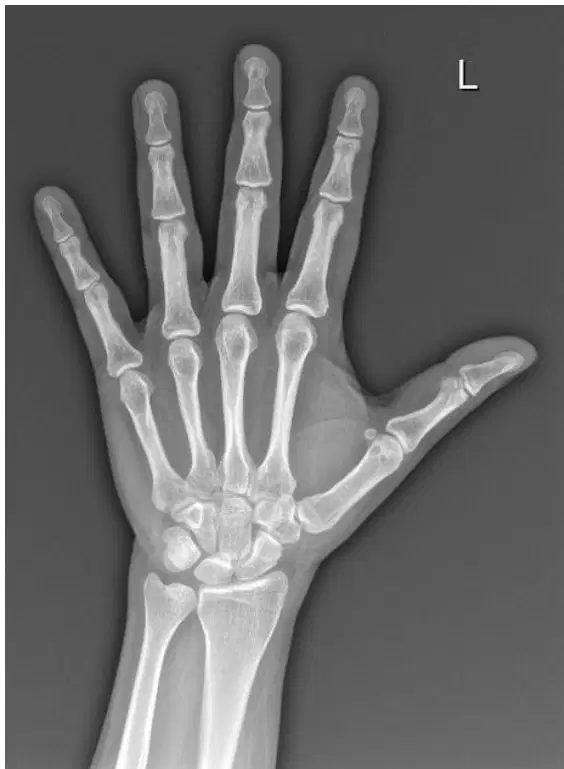
On the hand and foot radiographs shown, which choice correctly interprets the side and a best‑practice reason for marker position?
L indicates left hand; marker avoids carpal bones
R indicates right foot; marker centered on calcaneus
R indicates right hand; marker positioned over phalanges
In radiography, what best defines an artifact visible on an image?
Predictable patterns created by detector design
Normal anatomy enhanced by exposure settings
Intended markers used to identify orientation
Unintended structures recorded in the image
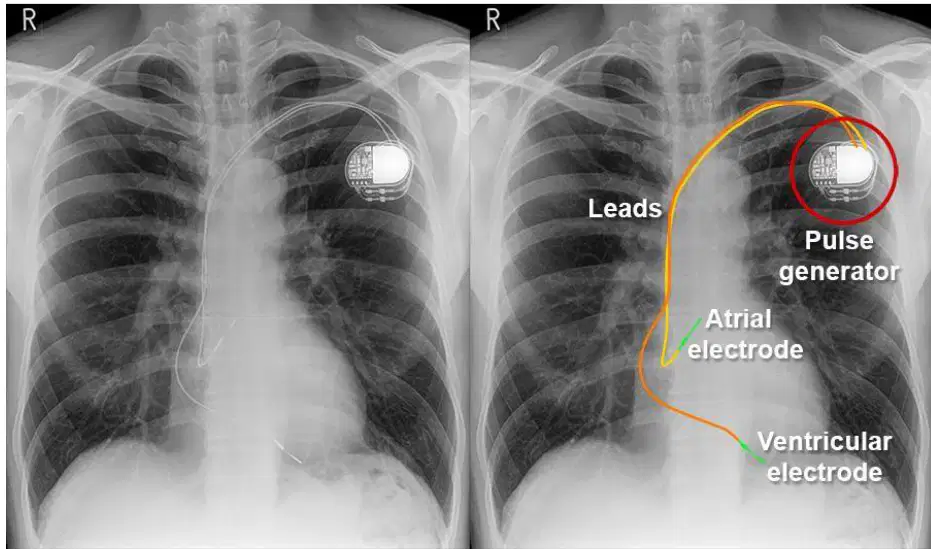
A chest radiograph shows pacemaker leads and an immobilization clip as in the right images. How should these be classified for quality assessment?
Equipment calibration-related artifacts
Unpreventable patient-related artifacts
Image processing software artifacts
Preventable technologist positioning artifacts
In plain radiography, which parameter primarily controls image density (overall brightness/blackening)?
Grid ratio controls density mainly
SID controls density mainly
mAs controls density mainly
kVp controls density mainly

In a chest radiograph, which collimation approach best ensures the region of interest is captured without unnecessary exposure?
Exclude costophrenic angles to reduce scatter
Include lungs and heart within 1–2 cm margins
Open collimation widely to include shoulders and abdomen
Collimate tightly around the mediastinum only

A hand radiograph appears with excessively high contrast and overpenetration. What adjustment most directly corrects this exposure issue while preserving anatomy visibility?
Increase mAs while keeping kVp constant
Decrease kVp slightly and maintain mAs
Add a grid and increase kVp substantially
What is the recommended routine for performing reject film analysis across the year?
Weekly spot checks without documentation
Only at the end of each fiscal year
Quarterly tracking without annual rollup
Monthly tracking with cumulative annual reporting
Which indicator best measures reject-retake performance in an imaging facility?
Percentage of reject-retake images
Number of scheduled appointments
Average scan duration per patient
Total number of technologists on duty
Who can determine that an image is clinically unacceptable and requires a retake?
Facilities engineer or IT support staff
Medical receptionist or billing specialist
Radiographer or requesting clinician/radiologist
Pharmacy technician or ward clerk
In calculating the indicator in reject-film analysis, what does the denominator represent?
Total number of staff on the roster
Total films used or total images produced
Total rejected images across modalities
Total number of equipment downtime hours
A department recorded 45 rejected or retaken images out of 2,400 images produced. What is the reject-retake rate?
Using the reject‑retakes rate formula shown in the image, which department has the lower reject rate for November 2025? Department A: 6 rejects out of 250 films. Department B: 5 rejects out of 130 films.
Department B with approximately 2.0 percent
Department A with approximately 4.0 percent
Department A with approximately 2.4 percent
Based on the universal World Health Organization (WHO), the acceptance of reject or bad x-ray film per month is less than ______%.
1.5
2.5
5.0
10.0

