
Font size
 Worksheets
Unit 45 – Additive Manufacturing Worksheet Questions
Total questions: 30
Worksheet time: 15mins
What is the best definition of Additive Manufacturing.
A process that builds objects by adding material layer by layer
A method that carves shapes out of a solid block by removing material
A printing technique that relies on chemical etching to form parts
A finishing process that smooths parts after they are made
What is the best definition of Extrusion.
Pushing or pulling material through an opening to form or deposit it
Cutting material away with a rotating tool to form a shape
Hardening liquid resin with ultraviolet light to create layers
Gluing pre‑cut sheets together to make a solid
What is the best definition of Slicing.
Converting a 3D model into stacked layer instructions for the printer
Cutting the finished print into smaller parts
Selecting filament colors before printing
Reducing wall thickness to save material
With regards to 3D printing, what do you think the following mean? Choose the best definition of Infill.
The internal patterned material that fills the inside of a print
The outermost shell that forms the surface of a print
The support pillars under overhanging features
The adhesive applied to the build plate
What is the best definition of Support.
Temporary structures that hold up overhangs during printing
Extra shells that thicken exterior walls
Patterned interior material used to save weight
Software settings that change color mid‑print
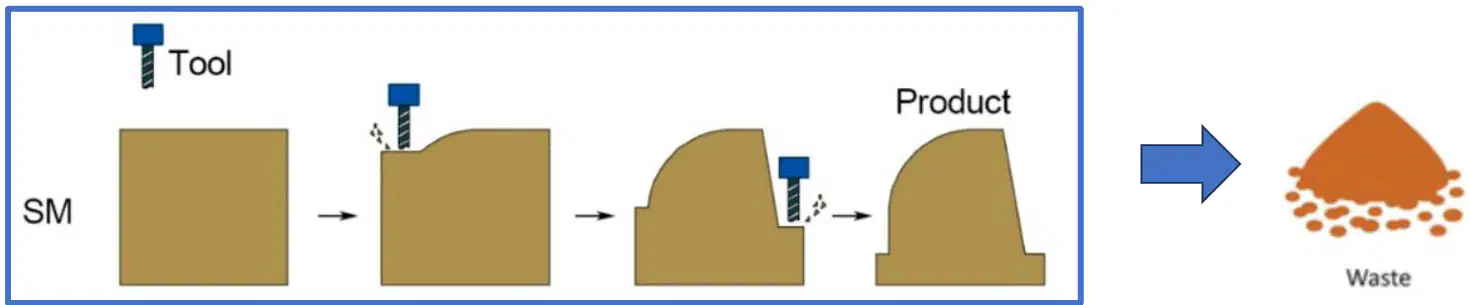
According to the diagrams comparing manufacturing methods, which statement describes Subtractive Manufacturing?
Start with a block of material and remove material to shape the product
Start with nothing and build up layers to form the product
Bond sheets together to create a laminated object
Cast molten material into a mold to form the product
Based on the comparison of both manufacturing methods, which approach typically produces less waste?
Additive Manufacturing
Subtractive Manufacturing
Both produce the same amount of waste
Neither produces measurable waste
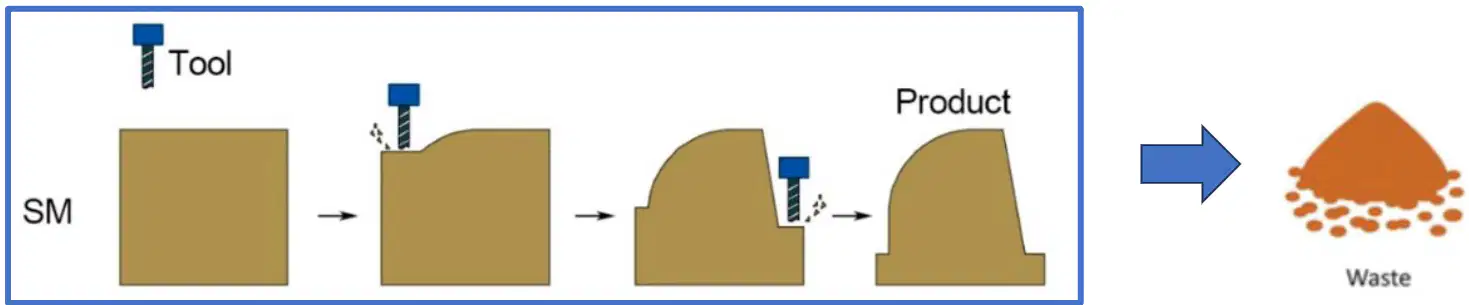
In the Subtractive Manufacturing diagram, what element interacts with the material to remove it?
A cutting tool
A heated nozzle
A heat bed
A support pillar
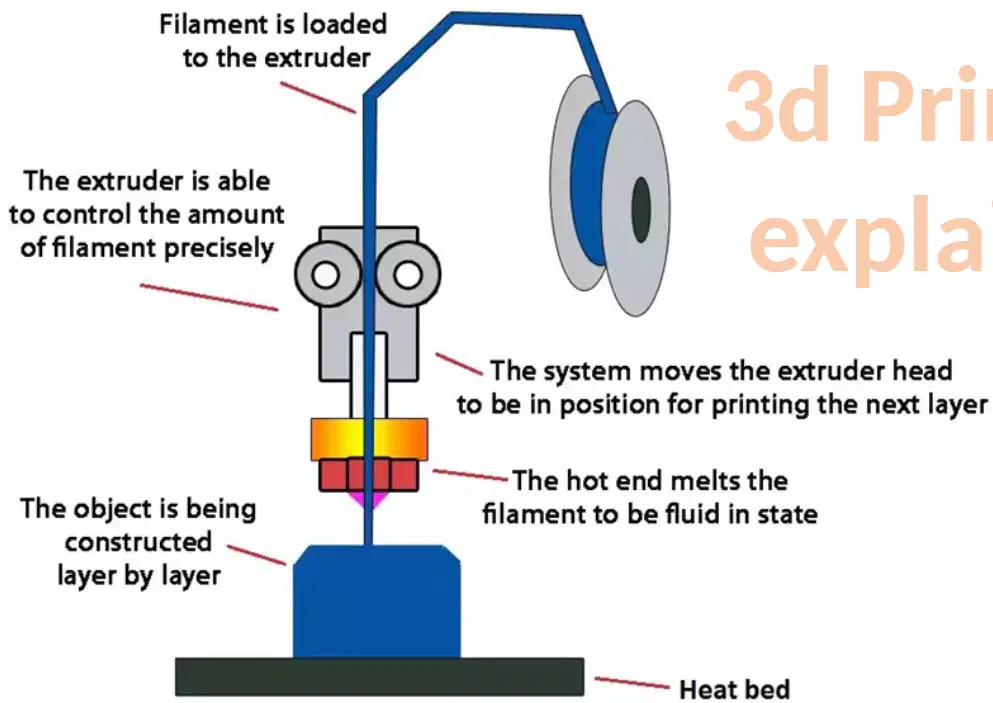
In the material extrusion setup shown, which component melts the filament to a fluid state?
The hot end
The build plate
The extruder gears
The filament spool
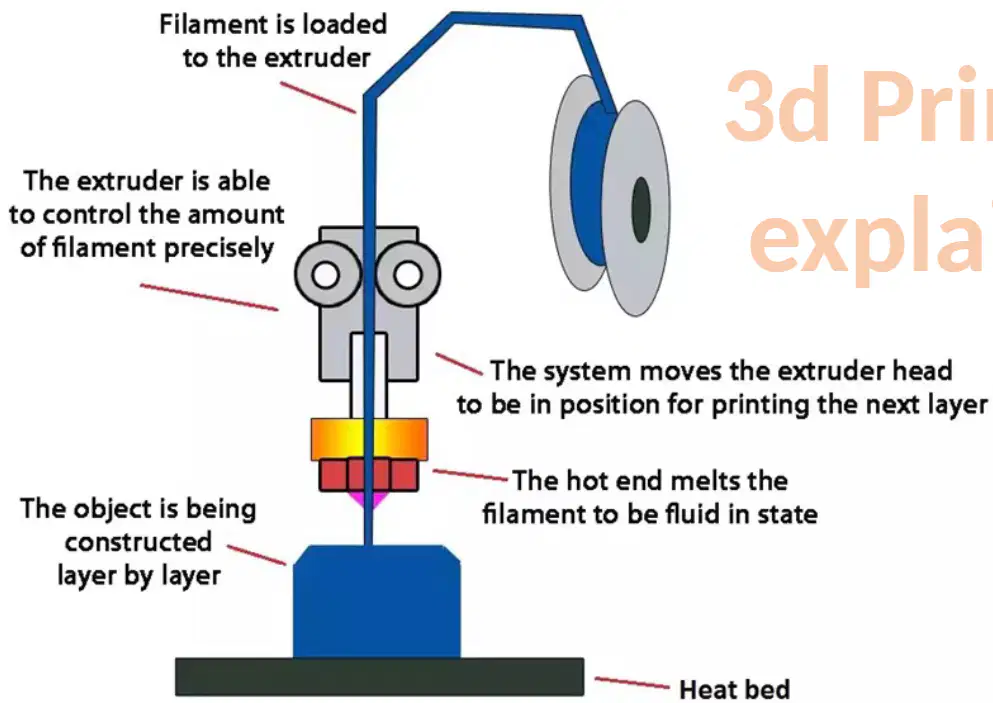
Which statement best defines Extrusion in the context of additive manufacturing?
Pushing or pulling material through an aperture to deposit it in layers
Removing material from a block using a rotating cutter
Curing liquid resin with light to harden it in a vat
Sintering powder with a laser to form a solid
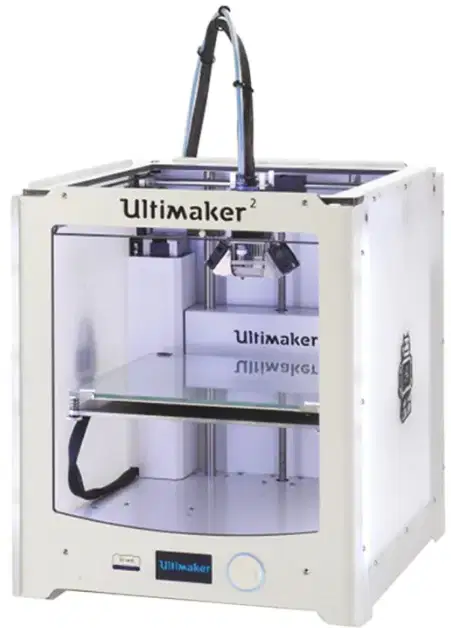
According to the slide, this style of additive manufacturing is known as what?
Material Extrusion
Material Jetting
Vat Photopolymerization
Binder Jetting

The printed object shown is being constructed layer by layer using which process?
Material Extrusion
Subtractive Milling
Binder Jetting
Casting
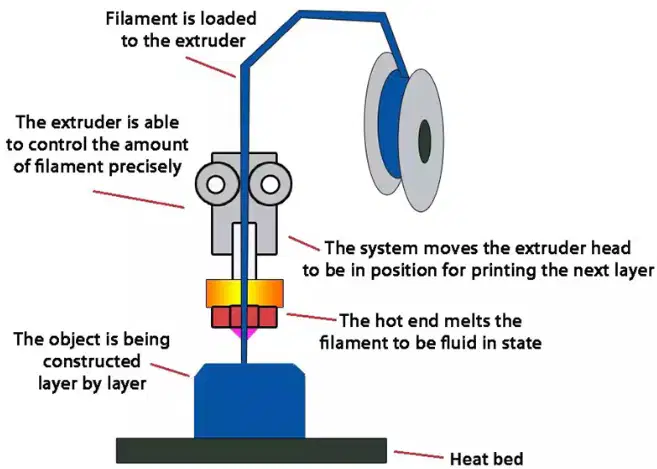
Using NOTES AND SKETCHES explain the principle of operation of MATERIAL EXTRUSION. Select all statements that correctly describe the process based on the labeled diagram and the keywords: layers, slicing, spool, filament, heat, head, extrusion.
Filament from a spool is loaded to the extruder.
The hot end melts the filament so it becomes fluid for deposition.
The system moves the extruder head to position for printing the next layer.
The object is constructed layer by layer on a heated bed.
Slicing is performed by the machine after printing to remove excess material.
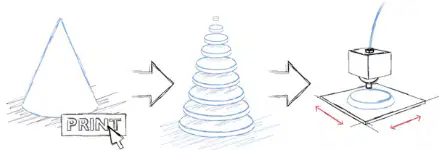
Which option best explains slicing in FDM 3D printing?
Separates a 3D model into layers and generates instructions for the printer to produce each layer, enabling the software (e.g., Cura) to estimate print time
Combines multiple parts into one solid object to print faster
Changes filament type mid‑print to add color
Virtually smooths surfaces after printing by simulating sanding
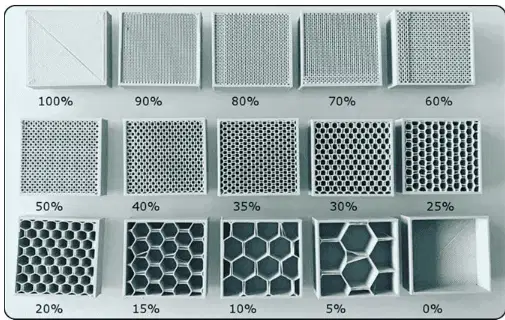
Which statements about infill in 3D printing are correct? Select all that apply.
It refers to the amount of internal honeycomb structure inside a printed part
Lower infill generally reduces material use, cost, and weight
Lower infill generally reduces part strength
100% infill makes a part completely solid
0% infill makes a part completely solid
With regards to 3D printing, match each term to its correct meaning.
Additive manufacturing
Building objects layer-by-layer by adding material rather than removing it
Extrusion
Forcing heated filament through a nozzle to lay down material
Slicing
Converting a 3D model into sequential layers and toolpaths for printing
Infill
The internal lattice or density inside a printed part to provide strength
Support
Temporary structures that hold up overhangs during printing and are removed afterward
With regards to 3D printing, match each item to the best description.
Support
Temporary printed structures that prevent drooping on overhangs
Raft
A sacrificial base printed first to improve bed adhesion and reduce warping
Post processing
Finishing steps performed after printing, such as removing raft/supports and deburring

What is support material in FFF/FDM 3D printing?
Temporary printed structures that prevent overhangs from collapsing and are removed after printing
Extra filament added to increase part strength by raising infill density
A base layer printed beneath the part to help it stick to the build plate
A surface coating applied after printing to improve appearance
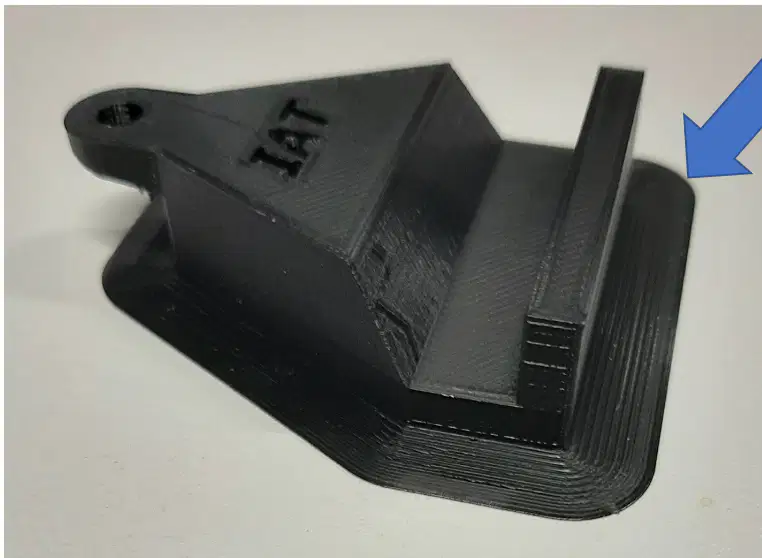
According to the raft explanation shown, which reasons justify using a raft before printing the actual object? Select all that apply.
To improve adhesion so the plastic sticks to the printer bed
To minimise warping caused by material shrinkage as it cools
To significantly increase print speed
To add a decorative border to the finished part
To reduce the need for any supports on extreme overhangs
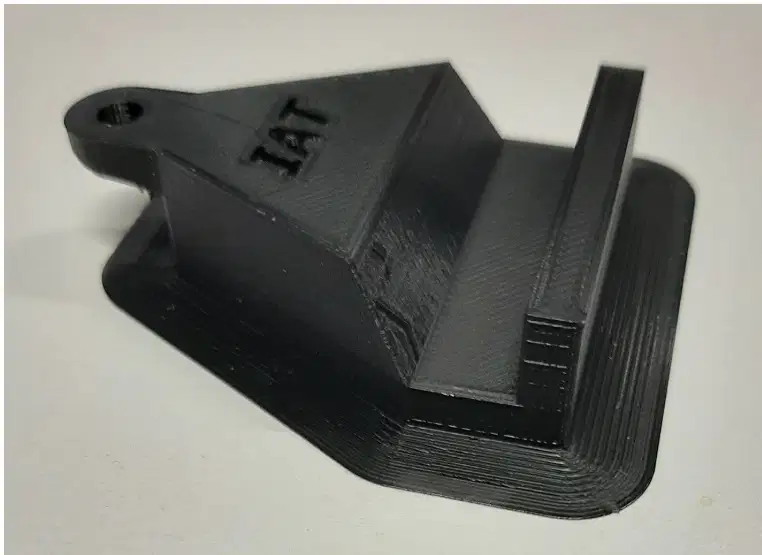
Which actions are typically part of post processing after 3D printing, as listed? Select all that apply.
Remove the raft
Remove support material
Deburr edges so no sharp edges remain
Increase infill density in the slicer
Change nozzle diameter and reprint
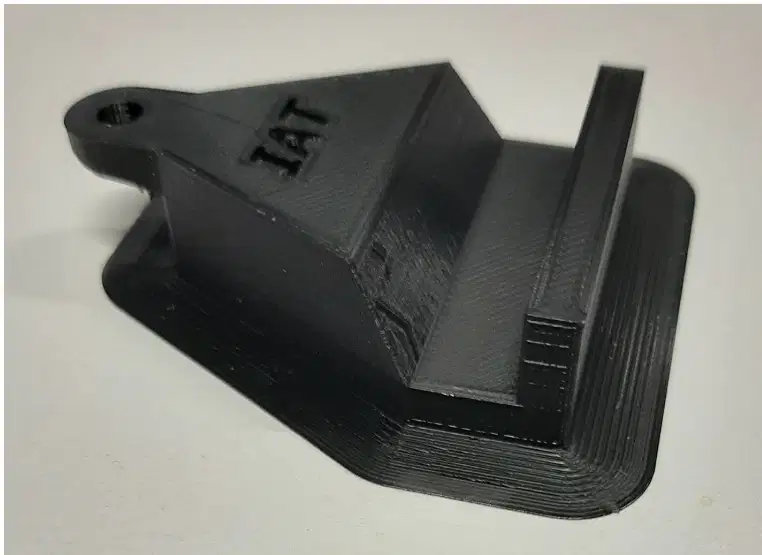
Which tools are suggested for post processing in the slide? Select all that apply.
Scissors
Fine file
Emery cloth or wet and dry
Soldering iron
Heat gun
In FDM 3D printing, what is support material used for and why is it needed?
To temporarily hold up overhangs and bridges so they do not collapse during printing
To change the filament color while printing
To increase infill density for stronger parts
To lubricate the printer’s moving parts
According to the worksheet section titled “The Raft,” which reasons justify adding a raft to a 3D print?
Improve adhesion of the plastic material to the printer bed
Help prevent warping caused by shrinkage of the material as it cools
Reduce slicer computation time
Add a decorative base that remains on the finished part
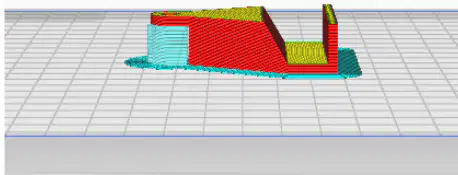
Which tasks are part of post processing after 3D printing as listed in the worksheet?
Remove the raft
Remove support material
Deburr to eliminate sharp edges
Change filament mid‑print
Which tools are suggested in the worksheet for completing post processing?
Scissors
Fine file
Emery cloth or wet and dry
Soldering iron
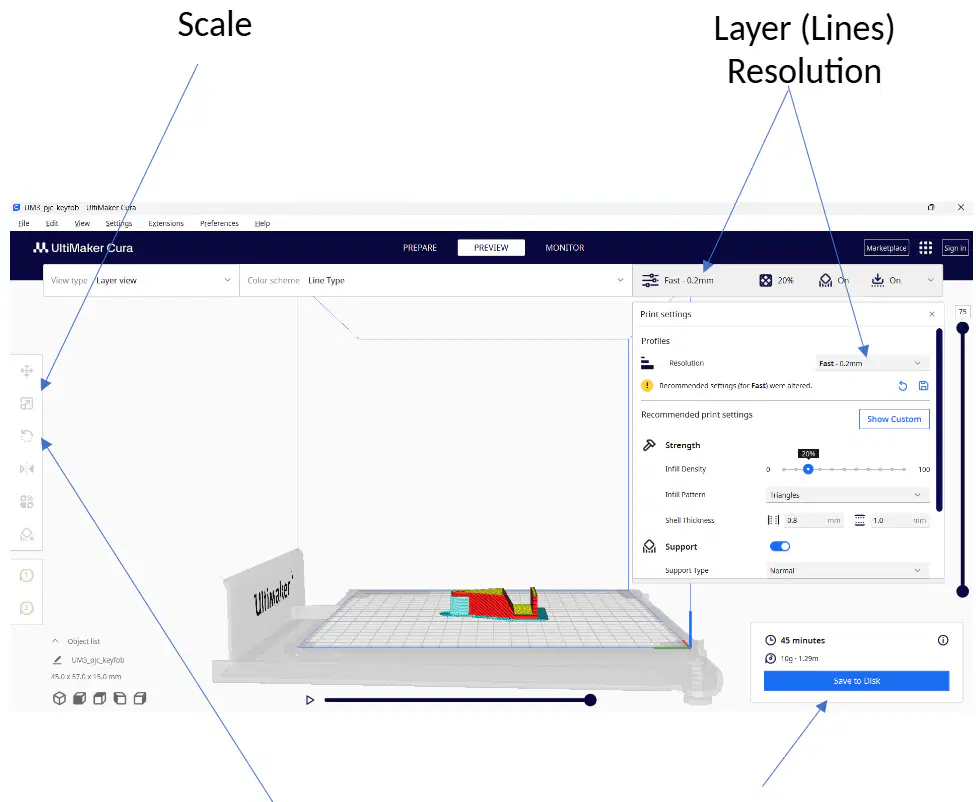
In the slicer interface shown, which action tells you how long the print will take?
Slice
Rotate
Scale
Change filament
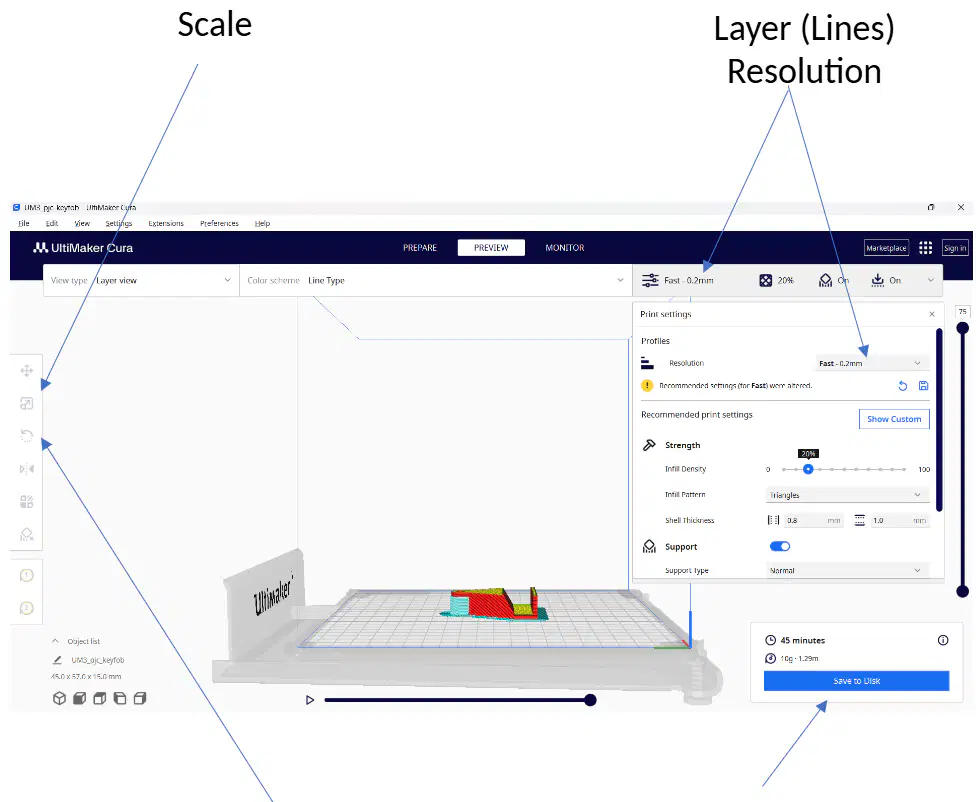
In the slicer interface shown, which feature adjusts the model’s size?
Scale
Rotate
Layer resolution
Slice
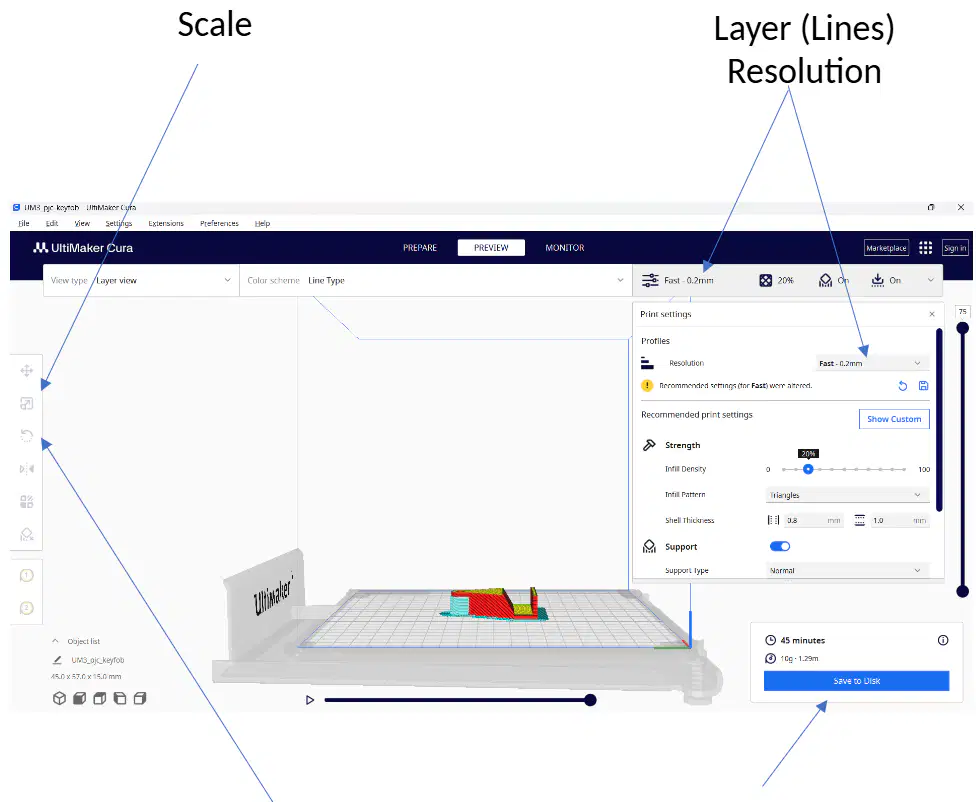
In the slicer interface shown, what does layer resolution control?
The thickness of each printed layer
The color of the filament
The bed temperature
The model’s orientation
With regards to 3D printing, what is a raft?
A disposable base printed first to improve bed adhesion and reduce warping
An internal honeycomb infill pattern
The final top surface of the part
A permanent support structure left attached to the part
With regards to 3D printing, what is post processing?
Finishing tasks performed after printing, such as removing raft/supports and deburring
Slicing the model before printing
Adding supports in software prior to printing
Changing printer settings during printing

