
 Worksheets
Introduction to Laws and Criminal/Civil Law
Total questions: 20
Worksheet time: 10mins

Which statement best defines laws or statutes in a society?
Voluntary guidelines without enforcement
Personal beliefs guiding daily choices
Government-made rules regulating conduct
Suggestions from community leaders
Customs passed orally through families

What is the primary focus of criminal law?
Regulating international trade
Setting standards for civil behavior only
Dealing with crimes and punishment
Managing taxes and public spending
Resolving business contract disputes

Which scenario most clearly describes a felony?
Petty theft with brief community service
Serious crime punishable over one year
Traffic infraction with warning ticket
Minor offense with small fine only
Local ordinance violation at park
A misdemeanor is best contrasted with a felony because a misdemeanor usually involves what?
International court prosecution
No legal consequences at all
Punishment longer than one year
Less serious offense and shorter penalty
Automatic loss of citizenship
Why does a government create and enforce laws?
To eliminate all disagreements
To increase the number of prisons
To regulate conduct within society
To reward elected officials
To replace community traditions

Which statement best describes civil law in this context?
It handles treason and other public offenses
It governs noncriminal matters and private rights
It focuses on felony sentencing and prison terms
It enforces criminal codes and police procedures

What is a civil action primarily used to do?
Punish criminal behavior with incarceration
Set criminal bail amounts for defendants
Enforce a right or seek redress for a wrong
Determine guilt in felony prosecutions

Which situation would most likely be handled under civil law rather than criminal law?
A misdemeanor vandalism of public property
A felony assault involving serious injury
A dispute over a breached service contract
A burglary at a neighborhood store at midnight

Which role best fits the person being sued in a civil lawsuit?
Defendant against whom a claim is made
Plaintiff bringing the legal action
Judge presiding over the courtroom
Prosecutor representing the government
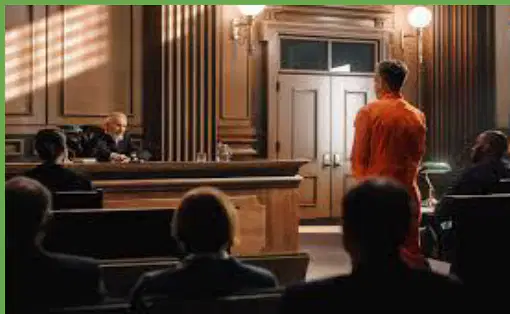
In a criminal case, who is charged with committing a crime?
Prosecutor filing government charges
Witness providing testimony
Defendant accused of the offense
Plaintiff alleging the wrongdoing

Who is the injured party that brings legal action against an alleged wrongdoer in a civil case?
Prosecutor for the government
Defendant facing the lawsuit
Jury deciding the verdict
Plaintiff initiating the claim

Which statement accurately describes a prosecutor?
Judge overseeing civil disputes
Private attorney for the defendant
Injured party in a lawsuit
Government’s attorney in criminal cases
A shop owner sues a customer for unpaid damages. Identify the parties.
Shop owner is plaintiff; customer defendant
Customer is plaintiff; shop owner defendant
Prosecutor is plaintiff; customer witness
Judge is prosecutor; shop owner defendant

Which statement best describes "beyond a reasonable doubt" in criminal cases?
Highest proof to convict a crime
More than half of the evidence standard
Equal evidence for both sides rule
Clear and convincing but not absolute

In a civil lawsuit, what does "preponderance of the evidence" require?
More than 50 percent convincing evidence
Proof eliminating all reasonable doubts
Evidence beyond a moral certainty
A unanimous jury decision always
Which scenario correctly contrasts standards in criminal versus civil trials?
Civil needs absolute certainty; criminal needs majority
Criminal and civil both require same certainty
Criminal needs highest certainty; civil needs slight majority
Neither criminal nor civil requires proof standards
Who carries the burden of proof in most trials, and how does it differ by case type?
Prosecution or plaintiff; standard varies by case
Judge; always beyond reasonable doubt
Defendant; must disprove all claims
Jury; must gather and present evidence
Which statement best explains why societies establish laws?
To give leaders absolute power over people
To limit freedom in all daily activities
To increase taxes for public projects
To maintain order and promote stability
A town removes all punishments for crimes. What is the most likely outcome over time?
Conflicts are peacefully self-resolved
Businesses thrive without rules
Citizens become more responsible
Crime increases and safety declines
What is the main responsibility of the plaintiff in a civil lawsuit?
To prove the defendant's guilt beyond a reasonable doubt
To enforce criminal penalties
To present evidence supporting their claim
To sentence the defendant

