
 Worksheets
MUSIC AND ARTS 3RD QUARTER
Total questions: 133
Worksheet time: 2hrs 31mins
Is a performing art form consisting of purposely selected sequences of human movement.
(a)
A highly favored dance of the Visayan people especially the Waray people of the Eastern Visayan Region in the Philippines.
Cariñosa
Kuratsa
Maglalatik
Habanera Botolena
Tinikling
Kuratsa was based on the courtship movements between a rooster and hen.
True
False
Which characterizes the amenudo way of Kuratsa?
The couple dances at a time
Another dancer enters as the lady dances
The lady dances the whole time while the man watches
Only one from the couple dances at a time
Kuratsa is what kind of dance?
Wedding
Ceremonial
War
Courtship
A folk dance that originated in Cuba. It is a fusion of Filipino and Spanish techniques usually performed in grand celebrations such as weddings.
(a)
Habanera Botolena is also known as (a) or Da'nza Habanera.
Habanera Botolena is strongly influenced by which Spanish dance?
(a)
Habanera Botolena originated from which Philippine province?
(a)
What is the step pattern for Habanera Botolena?
Step Step Close
Step Close Step
Close Step Step
Step Close
Habanera Botolena includes a procession of the bride and groom's parents, bridesmaids, groomsmen and a solo performed by the newlyweds.
True
False
A classic form of Filipino love song - or so it seemed to the colonialist forces in the Philippines.
The singer may also express undying love for his beloved country.
(a)
An ideology based on the premise that the individual's
loyalty and devotion to the nation-state surpass individual or group interests.
(a)
The period when the country gained full independence
from its American colonizers in 1946 until the 1970s.
(a)
What is the title of the Philippine National Anthem?
(a)
What is the title of the music composition
used for the Philippine National Anthem?
(a)
Who is the composer of Marcha National Filipina?
(a)
The lyrics of the Philippine National Anthem
were adopted from which Spanish poem?
(a)
Who wrote the poem "Filipinas"?
(a)
The Philippines had various historical anthems before.
True
False
When did Jose Palma write the poem "Filipinas"?
1898
1899
1920s
1956
1962
When did Julian Felipe compose Marcha Nacional Filipina?
1898
1899
1920s
1956
1962
When was the lyrics of Lupang Hinirang translated to Filipino?
1898
1899
1920s
1956
1962
When was the lyrics of Lupang Hinirang translated to English?
1898
1899
1920s
1956
1962
When was the last revision of the Philippine National Anthem made?
This is the version now sung publicly.
1898
1899
1920s
1956
1962
The singing and playing of the Philippine National Anthem is governed by the law,
specifically R.A. (a) or the Flag and Heraldic Code of the Philippines.
(R.A. means Republic Act)
What is R.A. 8491 known as?
(a)
All other provisions on the national anthem are detailed in
Chapter ____ Sections 35-39 of R.A. 8491.
I
II
III
IV
Which section of R.A. 8491 says:
The rendition of the National Anthem shall be
in accordance with the musical arrangement and composition of Julian Felipe.
Section 37
Section 38
Section 39
Which section of R.A. 8491 says:
The attending public shall sing the national anthem whenever it is played at a public gathering.
Section 37
Section 38
Section 39
Which section of R.A. 8491 says:
The public shall stand at attention facing the Philippine flag as a sign of respect.
Section 37
Section 38
Section 39
What is the original time signature
of the Philippine National Anthem, "Lupang Hinirang"?
2/4
3/4
4/4
6/8
Lupang Hinirang is now commonly performed in 4/4 (quadruple time), especially when sung, to slow the tempo and allow for proper enunciation and a more dignified feel, as per R.A. 8491 which respects Julian Felipe's composition but allows for practical adaptation.
True
False
The height of experimentation of Filipino composers with European styles
started during the American period until after the Japanese occupation.
True
False
Who are the 4 Nationalistic Filipino composers
during the American period until after the Japanese occupation?
Redentor Romero
Francisco Santiago
Antonio Buenaventura
Juan Hernandez
Lucio San Pedro
The Father of Nationalism in Music
Redentor Romero
Francisco Santiago
Antonio Buenaventura
Juan Hernandez
Lucio San Pedro
He composed "Malakas and Maganda Overture".
Redentor Romero
Francisco Santiago
Antonio Buenaventura
Juan Hernandez
Lucio San Pedro
He composed "Mga Katutubong Tanawin".
Redentor Romero
Francisco Santiago
Antonio Buenaventura
Juan Hernandez
Lucio San Pedro
He transformed Kundiman from folk song to art song that requires advanced vocal technique and musical maturity for its performance on the concert stage.
Redentor Romero
Francisco Santiago
Antonio Buenaventura
Juan Hernandez
Lucio San Pedro
He is the conductor of the Royal Philharmonic Orchestra.
Redentor Romero
Francisco Santiago
Antonio Buenaventura
Juan Hernandez
Lucio San Pedro
He used nationalist themes in his compositions from the 1930s - 1940s.
Redentor Romero
Francisco Santiago
Antonio Buenaventura
Juan Hernandez
Lucio San Pedro
What are the two popular compositions of Antonio Buenaventura?
Mga Katutubong Tanawin
Malakas and Maganda Overture
Pandanggo sa Ilaw
Mindanao Sketches
Lupang Hinirang
A composition made in 1947 that are based on the
rhythm of the dances and songs of the Manobo tribe who duel in the hinterland of Bukidnon.
Mga Katutubong Tanawin
Malakas and Maganda Overture
Pandanggo sa Ilaw
Mindanao Sketches
Lupang Hinirang
Which of the following are TRUE about the composition
Mindanao Sketches by Antonio Buenaventura?
It was performed by the Royal Philharmonic Orchestra conducted by Redentor Romero.
It was first performed by the Municipal Symphony Orchestra of Manila on May 15, 1948 at the UST Gymnasium.
It was performed in the USA, Europe, and Soviet Russia.
It's world premiere performance was on August 19, 1948 in Honolulu, Hawaii.
Mindanao Sketches focuses on Western classical music styles.
What are the two movements in the composition Mindanao Sketches?
Malakas and Maganda Overture
Offering to the Gods
Pandanggo sa Ilaw
A Village Festival Dance
Choose the correct conducting pattern or time signature.
6/8
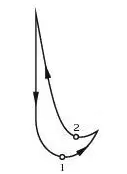
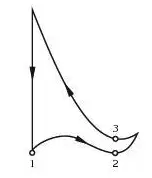
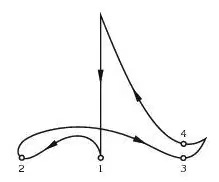
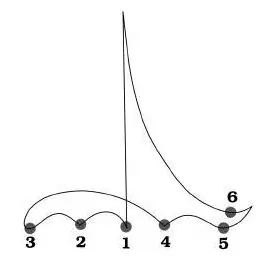
Choose the correct conducting pattern or time signature.
2/4
Choose the correct conducting pattern or time signature.
4/4
Choose the correct conducting pattern or time signature.
3/4
What is the title of Indonesia's National Anthem?
(a)
Who wrote the Indonesia National Anthem in 1928?
(a)
Who is the composer (music) of the Indonesia National Anthem?
(a)
Who performed the first recording of the Indonesia National Anthem
with the Dutch composer Jos Cleber?
the Royal Philharmonic Orchestra
the Municipal Symphony Orchestra of Manila
the Philharmonic Orchestra of Indonesia
the resident symphony orchestra of the Republic of Indonesia Radio (RRI)
When is the the Proclamation of the Indonesian Independence
when they also adapted the Indonesia Raya as their National Anthem?
(Full Date)
(a)
Indonesia Raya as a national anthem is full of ________.
anger
hope
optimism
regret
Indonesia's founding president who was
involved in the musical arrangement of Indonesia Raya.
He wanted the bridge to be calmer and more textured, less monotonous
so that when it hits the chorus, it soars.
(a)
The legendary composer and conductor in Indonesia
who said that the Indonesia Raya is memorable for its directness.
He is also known as Addie M.S.
(a)
A kundiman about the Philippine's struggle for independence during the American regime.
(a)
Who made the music for Bayan Ko?
(a)
Who made the Tagalog Lyrics for Bayan Ko in 1929?
(a)
Jose Corazon de Jesus is also known as:
(a)
Which of the following are TRUE about the song Bayan Ko?
The song expressed opposition to the American Occupation.
The Spanish lyrics was originally written for the Severino Reyes zarzuela titled Walang Sugat.
It has only one version which was sung to unite all Filipinos.
It was played during the Japanese occupation.
It was played during the protest marches against the Marcos government in the early 80s.
Father of Kundiman Art Song
(a)
What are the popular music composition of Francisco Santiago?
Anak Dalita
Concerto in B flat minor for pianoforte and orchestra
Pilipinas Kong Mahal
Jocelynang Baliwag
Sariling Bayan
Which of the following are Filipino Patriotic songs?
Anak Dalita
Concerto in B flat minor for pianoforte and orchestra
Pilipinas Kong Mahal
Jocelynang Baliwag
Sariling Bayan
A Filipino composer who does piano accompaniment for kundiman.
Nicanor Abelardo
Redentor Romero
Freddie Aguilar
Lucio D. San Pedro
Felipe de Leon
A composer who also wrote materials and compositions based from Filipino folk songs.
He also wrote publications highlighting the importance of music as an expression of nationalism.
Nicanor Abelardo
Redentor Romero
Freddie Aguilar
Lucio D. San Pedro
Felipe de Leon
He arranged the song Bayan Ko for violin and piano.
Nicanor Abelardo
Redentor Romero
Freddie Aguilar
Lucio D. San Pedro
Felipe de Leon
He arranged the song Bayan Ko for guitar.
Nicanor Abelardo
Redentor Romero
Freddie Aguilar
Lucio D. San Pedro
Felipe de Leon
National Artist for Music who also made a rendition of Bayan Ko.
Nicanor Abelardo
Redentor Romero
Freddie Aguilar
Lucio D. San Pedro
Felipe de Leon
The first Constitutional Republic in Asia.
(a)
Entertainment including song, dance, magic, and costumes
introduced in the Philippines by the Americans.
(a)
Nationalistic song from Indonesia created in 1949
which is a story about admiration for the homeland.
This was also the OST of the film 'Soekarno' in 2013.
(a)
Indonesian National Hero who created the song
Indonesia Pusaka in 1949.
(a)
While Japanese Imperial Forces occupied Manila from 1941 to 1945, ironically, this was also the same period when Philippine theater flourished and was called “the Golden Age of Philippine theater".
True
False
Why did the Japanese allow the staging of the Bodabil?
(vaudeville or staged show consisting of comic skits, music and dance numbers)
they were convinced it will make the Filipinos busy and not think of rebellion
they were convinced that it was only meant to entertain people
they were convinced it will make the Filipinos like the Japanese government
they were convinced it was a way to compete with the Americans
Anti-Japanese satirical skit produced by Joe Climaco two well-loved comedians of the
period: Togo and Pugo as the latter mocked a Japanese general in Filipino language.
(a)
A traditional form of passion play that depicts the life, death and resurrection of Jesus Christ performed during Holy week as a religious tradition.
(a)
Which of the following are TRUE about the Senakulo?
It was named after the Upper Room (Cenacle), which is thought to be the place where the Last Supper was held.
The Filipino version of a Catholic tradition, which is known as Passion Play around the world.
It is performed only inside churches and never in public streets or open spaces.
Relives biblical events pertinent to the life, tribulations and ultimate sacrifice of Jesus Christ.
What is Senakulo called in other countries?
(a)
Passion Play is also known as:
(a)
Performance in the streets or in public places
inspired by the stories people get from their surroundings.
(a)
Which are examples of street theatre in post-war Philippines?
pastores
pusaka
sinakulo
dulansangan
Societal plays during rallies and strikes.
pastores
pusaka
sinakulo
dulansangan
Life and suffering of Jesus
pastores
pusaka
sinakulo
dulansangan
The shepherd’s worship of the Holy Child.
pastores
pusaka
sinakulo
dulansangan
Used as a form of societal commentary and political activism.
Street Theater
Protest Theater
Contemporary Theater
Musical Theater
Theater exploring various themes and styles
Street Theater
Protest Theater
Contemporary Theater
Musical Theater
A growing and vibrant theater genre in the Philippines.
Street Theater
Protest Theater
Contemporary Theater
Musical Theater
A festival devoted to the Santo Niño or Child Jesus
held every January in Kalibo, Aklan.
(a)
3 businessmen who signed the testament with a Kalibo priest
to institutionalize the holding of the annual Kalibo Santo Niño Ati-atihan Festival.
Jose Gomez
Ramon Barrios
Basilio Gomez
Pedro Fuentes
The gobernadorcillo of Kalibo who signed the testament with a Kalibo priest
to institutionalize the holding of the annual Kalibo Santo Niño Ati-atihan Festival.
Jose Gomez
Ramon Barrios
Basilio Gomez
Pedro Fuentes
The mother of all Philippine festivals.
Ati-atihan Festival
(Kalibo, Aklan)
Sinulog Festival
(Cebu City)
Dinagyang Festival
(Iloilo City)
Blackened skin, simple tribal costumes
Ati-atihan Festival
(Kalibo, Aklan)
Sinulog Festival
(Cebu City)
Dinagyang Festival
(Iloilo City)
Elaborate, warrior-inspired costumes
Ati-atihan Festival
(Kalibo, Aklan)
Sinulog Festival
(Cebu City)
Dinagyang Festival
(Iloilo City)
Bright, festive costumes
Ati-atihan Festival
(Kalibo, Aklan)
Sinulog Festival
(Cebu City)
Dinagyang Festival
(Iloilo City)
Festival in Iloilo City where they wear warrior-inspired costumes
and got inspiration from Ati-Atihan Festival.
(a)
What are the “Big Four” film companies post-WWII.
FAMAS
Sampaguita Pictures
LVN
Premiere Productions
Lebran
National Artist of the Philippines for Film
Lino Brocka
Manuel Silos
Jose Nepomuceno
Gerardo de Leon
Ishmael Bernal
1952 movie by Manuel Conde
accepted for screening at the Venice Film Festival.
Anak Dalita
Sisa
Genghis Khan
Ifugao
Habambuhay
A film showing the stark tragedy of post-WWII survival
set in Intramuros by Lamberto Avellana.
Anak Dalita
Sisa
Genghis Khan
Ifugao
Habambuhay
1954 movie by Gerardo de Leon
Anak Dalita
Sisa
Genghis Khan
Ifugao
Habambuhay
1951 film based on a character from Jose Rizal's first novel, Noli Me Tangere, by National Artist of the Philippines for film Gerardo “Gerry” de Leon.
It won two Maria Clara Awards (Best Direction and Best Actress).
Anak Dalita
Sisa
Genghis Khan
Ifugao
Habambuhay
Docuseries or Filipino documentary series that features real-life stories of ordinary Filipinos, highlighting their life struggles, values, culture, and perseverance.
Anak Dalita
Sisa
Genghis Khan
Ifugao
Habambuhay
Folk songs using indigenous instruments and regional styles
Traditional music
Modern Music
Refers to Pop, Rock, and Contemporary genres
Traditional music
Modern Music
Bodabil
Theater
Dance
Visual Art
Habambuhay
Theater
Dance
Visual Art
Ati-Atihan
Theater
Dance
Visual Art
Dinagyang
Theater
Dance
Visual Art
Senakulo
Theater
Dance
Visual Art
Sisa
Theater
Dance
Visual Art
Sinulog
Theater
Dance
Visual Art
Street, Protest, and Contemporary
Theater
Dance
Visual Art
Textile, Prints, Painting, Sculpture, Installation, Architecture
Theater
Dance
Visual Art
This is the “what” in a piece of art: the topic, focus, or image.
(a)
The message that the artist wishes to convey through the artwork.
(a)
An abstract idea; a general notion.
(a)
What the artist chooses to work with when creating art.
(a)
An oral or written discussion strategy used to
analyze, describe, and interpret works of art.
(a)
The most common subjects of Art:
Art about arrangements of objects.
portraiture
still-life
landscape
non-
objective
The most common subjects of Art:
Art about abstractions.
portraiture
still-life
landscape
non-
objective
The most common subjects of Art:
Art about the natural world.
portraiture
still-life
landscape
non-
objective
The most common subjects of Art:
Art about people.
portraiture
still-life
landscape
non-
objective
What are the Steps in Producing Critique-inspired Creative Work?
PREPARATION PHASE
INCUBATION PHASE
ILLUMINATION PHASE
OBSERVATION PHASE
VERIFICATION PHASE
The first phase of the creative process where an artist
conducts a rigorous study about experience, knowledge, and subject.
PREPARATION PHASE
INCUBATION PHASE
ILLUMINATION PHASE
VERIFICATION PHASE
The second phase of the creative process where an artist ponders on the problem. This may involve thinking, daydreaming, and exploration of ideas, materials, or processes.
PREPARATION PHASE
INCUBATION PHASE
ILLUMINATION PHASE
VERIFICATION PHASE
This is when possibilities crystallize and an artist sees the signs of a solution that meets the requirements. This is the moment when general points are determined.
PREPARATION PHASE
INCUBATION PHASE
ILLUMINATION PHASE
VERIFICATION PHASE
The final stage when an artist works on the production or actually creating,
refining the possibilities that emerge at the illumination stage.
PREPARATION PHASE
INCUBATION PHASE
ILLUMINATION PHASE
VERIFICATION PHASE
A four-step process used to study, understand, and evaluate artworks.
(a)
What are the 4 Steps in the Feldman’s Model of Art Criticism?
Description
Creation
Analysis
Interpretation
Judgment/Evaluation
Which of the following are considered the main Musical Behaviors?
Active Listening; Describing; Interpreting; Composing; Finding Relations; Performing
Singing; Active Listening; Improvising; Composing; Performing; Memorizing
Listening; Describing; Playing; Interpreting; Creating; Performing
Composing; Performing; Dancing; Listening; Finding Relations; Reciting
Which of the following are considered the main Arts Processes?
Listening; Interpreting; Performing; Creating; Reflecting
Sketching; Painting; Sculpting; Collaging; Designing
Analyzing; Composing; Performing; Interpreting; Evaluating
Describing; Dramatizing; Producing; Creating; Finding Relations

