
 Worksheets
Grade 2 Q2 Science Review
Total questions: 74
Worksheet time: 55mins
What is a vertebrate animal?
An animal with no backbone
An animal with a backbone
An animal that has lungs
An animal that can swim
Mammals, fish, reptiles, amphibians and birds are ________________
invertebrates animals
mammals
insects
vertebrate animals.
Which one is a mammal?


Which one is a bird?


Which one is NOT a fish?


Reptiles are....
vertebrates
invertebrates
fish
Which one is an amphibian?


Which one is a reptile?


Birds have
fur
scales
feathers
moist skin
Fish have
feathers
scales
fur
Fish have
legs
fins
lungs

Have the invertebrates got a backbone?
yes
no

Use the diagram/picture to answer the question.
What is a good description for this picture?
A food chain
An ecosystem
A food web


A simple "line" of plants and animals that transfer energy by the process of eating.
Food Chain
Food Web
Ecosystem
Decomposers

Scavenger

A community of living and non-living things in their natural environment makes up a

An animal that gets energy from eating other animals.
An organism that gets energy from eating only plants.
An animal that gets energy by eating both plants and other animals.
An animal that eats only herbs.

An animal that is hunted and eaten for food is called __________.


Name the habitat.
polar region
ocean
jungle
desert

What do you find in the desert?
tiger
penguin
camel
shark
Rainforest and grassland habitats are similar in...................
Types of animals
Types of plants
Tall trees
Warm weather
A place where an organism gets everything it needs to survive.
Community
Population
Habitat
Region
Where does the monkey live?
Desert
Rainforest
Grassland
Wetland


What type of habitat might a gazelle live in?
Grasslands
Rainforest
Desert
Rainforest
Choose ALL the items that are living things
People
Rocks
Plants
Animals

What does dispersal mean?
To germinate
To move away from the adult plant
To grow into an adult
To become a mature seed
Why do seeds need to get away from the parent plant?
to have space to grow
the seed needs a quiet space
the parent cannot raise offspring
because it will use the parents resources
Which seed travels in the ocean?
coconut
dandelion
sunflower
tomato

How are dandelion seeds dispersed?
by animals
by explosion or bursting
by wind

How are coconuts dispersed?
by animals
by water
by wind
I am a plant that has hooks to cling to animal fur. What is likely my dispersal method?
Seed dispersal is the ________________.
process of moving water from one place to another
process of moving pollen from one place to another
process of moving seeds from one place to another

Where does the light reflection on the moon come from?
Nuclear Fusion
Sunlight
Mirrors
Flood Lights
How long does it take the moon to orbit around Earth?
day
year
week
about a month

Name the moon phase
Waning Crescent
Waxing Gibbous
Waning Gibbous
What causes the moon's phases
Where you are standing on Earth
the amount of sunlight reflected onto the moon from the sun
The tilt of Earth
how fast the moon is moving
What is the moon mostly made of?
Green Cheese
Hot gases
Lava
Rocks
Which phase below is NOT a phase of the moon?
New Moon
Waxing Crescent
Old Moon
Waning Gibbous
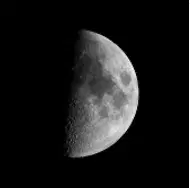
Select the moon phase shown.
First Quarter
Full Moon
New Moon
Third Quarter
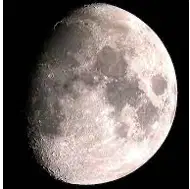
Select the moon phase shown.
Waning Crescent
Waning Gibbous
Waxing Crescent
Waxing Gibbous
When the sun gets higher in the sky, shadows get ______.
longer
gone
shorter
darker
When the sun gets lower in the sky, shadows get______.
longer
gone
shorter
darker
Shadows are shortest around______.
morning and evening
noon
night
The sun appears to __________.
rise in the east, set in the west
rise in the west, set in the east
When the Sun is behind you, your shadow is ...
behind you
in front of you
at the side of you
not there
Behavioral adaptations…
Are things the animals do to survive
Are physical characteristics of an animal or plant
Are only found in plants
If an animal has sharp teeth, I know
it eats plants (herbivore)
it eats meat (carnivore)
it uses camouflage for protection
it hibernates for the winter
Plants store water to help them survive in the desert by having:
Thick stems and waxy leaves
short roots
thorns and spines

Birds have different beaks to help them survive in their habitat, which is a type of ___________ adaptation.
behavioral
physical
learned
migration

Squirrels gather and store acorns for the winter, which is a ___________ adaptation.
behavioral
structural
physical
environmental
an animal without a backbone
vertebrate
invertebrate

