
NEW
Font size
 Worksheets
Unit 1: Introduction to Power Systems
Total questions: 20
Worksheet time: 3hrs 1mins
In the illustrated power system, which stage typically operates at the highest voltage before stepping down for transmission and distribution?
Extra-high-voltage substation equipment right after generation
Residential service lines at around four hundred volts
Step-up transformer station adjacent to the power plant
High-voltage substation interfacing regional networks
Urban distribution feeders serving commercial users
A planner must deliver power from a 66 kV sub-transmission bus to city customers shown. Which equipment sequence best achieves safe distribution?
Connect bus directly to residential service conductors
Route to high-voltage substation then customer meters
Feed distribution substations then distribution transformers
Link extra-high-voltage yard then underground cables
Tie bus to power plant alternators using overhead lines
Which primary mover listed is NOT a common source for electrical generation in Malaysia’s context?
Geothermal steam from deep reservoirs
Combustion of conventional fuel sources
Ocean wave motion harnessed devices
Hydro resources driving turbine runners
Available natural gas from local fields
Electrical generation is described as producing large amounts of electrical energy by which fundamental mechanism?
Heating conductors to raise carrier density
Electrolytic reactions in saline solutions
Flux cutting by coils inside a generator
Piezoelectric deformation of crystal stacks
Static charge accumulation on capacitors
In the diagram showing two bar magnets with flux lines between poles, what does the dashed path between the red end faces represent?
Mechanical coupling force
Heat transfer between magnets
Electrical current in conductor
Magnetic flux linkage path
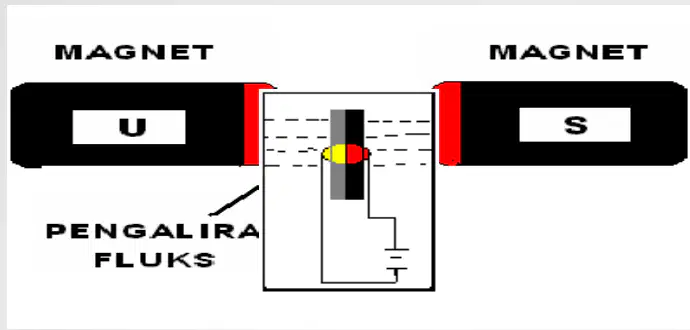
A conductor rotates between opposite magnetic poles. At which orientation is the instantaneous induced EMF maximum?
When the conductor cuts flux at right angles
When the conductor is parallel to flux lines
When the conductor is stationary at center
When the conductor aligns with the magnet faces

During transmission from a power station to the main intake substation, why is generator voltage stepped up from about 11 kV to levels like 132 kV, 275 kV, or 500 kV?
To match household single‑phase 240 V sockets
To eliminate the need for underground cables
To increase current for smaller transformer size
To reduce current and cable heating losses

Which statement best describes how an electrical generator produces voltage?
A conductor cuts magnetic flux to induce emf
A capacitor stores charge for later discharge
A resistor converts current into thermal energy
A battery releases electrons by chemical reaction
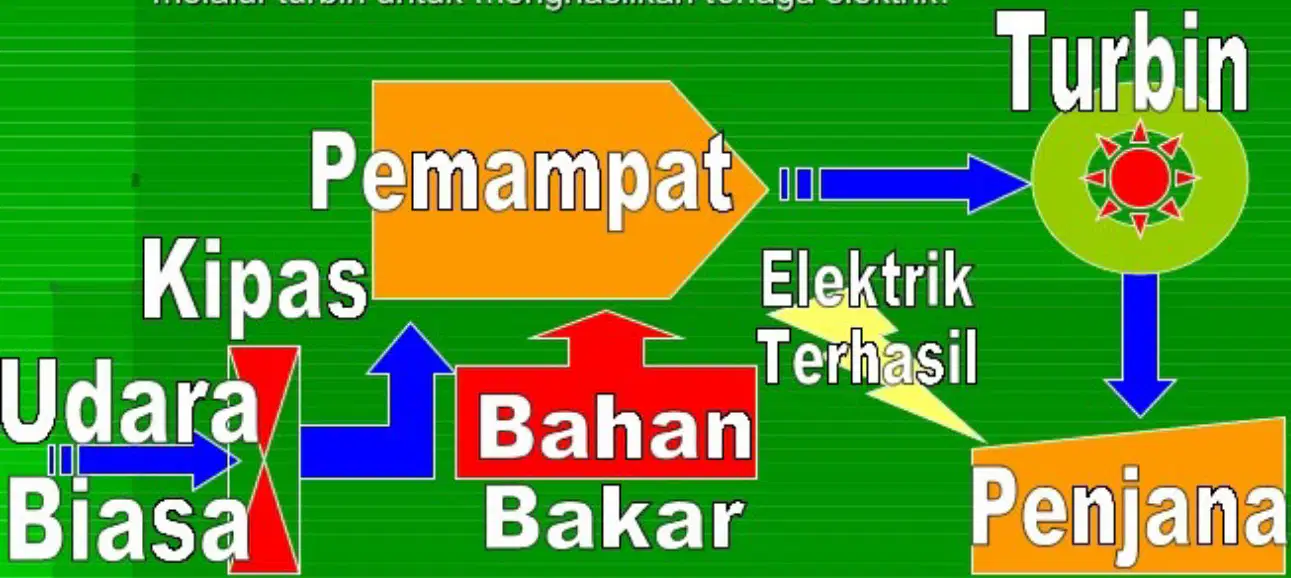
Which energy conversion chain matches a steam power plant driving an AC generator?
Chemical to thermal to mechanical to electrical
Electrical to mechanical to thermal to chemical
Mechanical to chemical to thermal to electrical
Thermal to electrical to mechanical to chemical

Which stage of the power system primarily uses step-up transformers to improve transmission efficiency?
Generation at the power plant output
Secondary distribution to consumers
High-voltage transmission substations
Primary distribution to feeders
Why are voltages stepped up for long-distance transmission lines?
To increase reactive power flow
To reduce current and I²R losses
To simplify substation grounding
To balance phase sequence errors
A utility delivers power at 132 kV on the transmission network and 11 kV on primary distribution. Which device performs the change from 132 kV to 11 kV at the substation?
Step-down transformer at the substation
Step-up transformer at the bus
Autotransformer at the generator
Static VAR compensator unit
Which characteristic best differentiates hydro turbines from steam turbines in generator prime movers?
Use smooth blades driven by high‑pressure steam
Rely on combustion of coal, gas, or nuclear fuel
Installed horizontally with two‑pole alternators
Operate at low rotational speeds like 80–150 rpm
A plant needs a generator at 3000–3600 rpm for a horizontal shaft. Which prime mover–alternator pairing is most appropriate?
Kaplan turbine with rock embankment dam
Hydro turbine with Francis runner vertical
Hydro turbine with multipole alternator
Steam turbine with two‑pole alternator
A remote telecommunications site needs 24/7 power with no grid access. Which operational mode fits best?
Emergency-only running for fire pumps
Peak‑shaving during utility high tariffs
Continuous operation supplying the full load
Standby operation with rare weekly tests
Two diesel generators must share a facility load without overloading either unit. What process is required before closing both breakers to the bus?
Grounding the neutral to a local earth
Calibration of fuel injectors and governors
Insulation resistance testing of windings
Synchronization of voltage, frequency, and phase
In standby mode, how is the generator typically used in relation to the utility supply?
It runs continuously at rated power
It runs to shave tariff peaks
It runs to maintain battery charge
It runs only during grid outages
In a combined-cycle power plant, what role does the heat recovery unit play between the gas turbine and the steam turbine?
It stores fuel for staged combustion
It vents exhaust gases directly to atmosphere
It recirculates intake air back to compressor
It converts exhaust heat to steam for turbines
Which hydroelectric parameter most directly determines the potential energy available at the turbine inlet?
Water head between reservoir and turbine
Pipe diameter along penstock length
Generator rotor pole pair count
Tailrace channel cross-sectional area
In a high-head hydroelectric plant layout, which component directly converts water’s kinetic energy into mechanical shaft power as shown in typical turbine–generator diagrams?
Excitation system mounted on the generator
Spiral casing with stay vanes around the runner
Francis or Pelton turbine runner on the shaft
Draft tube diffuser beneath the turbine runner
Trash rack screens at the intake structure

