
 Worksheets
Identity, Norms, and Discrimination
Total questions: 36
Worksheet time: 32mins
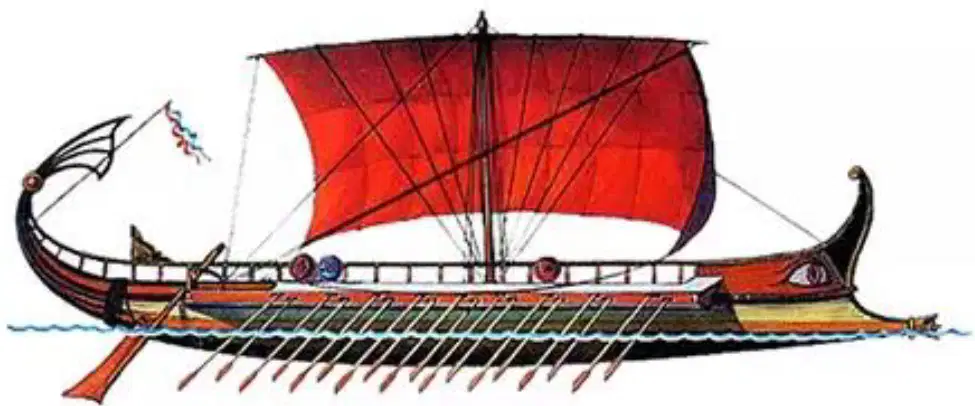
In the Ship of Theseus scenario, which issue is primarily being examined?
Continuity of identity through change
Ethics of maritime trade routes
Speed of travel in ancient ships
Design features of Greek triremes
According to Body Theory, what grounds personal identity?
Sameness of the body
Accumulation of social roles
Persistence of moral values
Continuity of public reputation
What does Memory Theory claim maintains a single person over time?
External recognition by others
Unchanging physical appearance
Retention of connected memories
Presence of innate character traits
Which statement aligns with Soul Theory as described?
Narrative formed by future aspirations
Self defined only by bodily functions
Identity built on social institutions
Consciousness linked to a supernal soul
What is a key claim of Existentialist Theory of identity?
Identity fixed by biological essence
Identity determined by childhood memories
Identity secured by community labels
Identity changes whenever you change
Which statement best defines Social Identity Theory?
Self-concept drawn from perceived group membership
Identity formed from unique personal traits alone
Personality shaped solely by early childhood memories
Behavior determined only by biological characteristics
Which element is part of social identity?
Favorite movie genre
Preferred smartphone brand
Ability or disability status
Daily caffeine consumption
Positive distinctiveness in groups refers to what?
Pursuing favorable comparison for one’s in‑group
Seeking equality across all groups always
Eliminating all differences between group members
Ignoring status differences in society
Which pair meets the two needs for group membership?
Shared feature and belief it matters
Large size and formal leadership
Equal status and identical interests
Common language and geographic proximity
Primary groups are typically characterized by which features?
Temporary, task focused, minimal contact
Large, impersonal, weak belonging
Competitive, hierarchical, limited trust
Small, close knit, strong belonging
Secondary groups are best described as which?
Secretive and identity shaping
Exclusive and family based
Large and impersonal connections
Small and intimate relationships
Interpersonal interactions are primarily based on which foundation?
Personal characteristics of two people
Rigid in‑group identity rules
National affiliation alone
Anonymous crowd behavior
Which example fits an interpersonal relationship?
Partisanship in political parties
Romantic partnership between two people
Membership in a large fandom
Nationalism across a whole country
Intergroup interactions are defined mainly by what?
Individual preferences and hobbies
Private one‑to‑one conversations
In‑group or out‑group identity
Dyadic trust and intimacy
Which condition must be present before people form a group?
Government recognition or legal status
Formal rules and elected officers
A shared characteristic seen as significant
Economic incentives and material rewards
Which statement best defines social norms in a group context?
Temporary trends with no consequences
Personal habits unrelated to society
Shared expectations guiding acceptable behavior
Random rules created by authorities
What is the primary goal of social control?
Replace morals with customs
Eliminate all nonconformity forever
Regulate thoughts and behaviors
Encourage deviance through freedom
Which option describes a negative sanction?
Praise for following rules
Instruction from an authority figure
Legal codification of norms
Social reaction punishing deviance
Formal sanctions are best characterized as
Unwritten expectations enforced informally
Personal vows about ethical behavior
Private judgments within families
Legal penalties for breaking codified norms
Which description fits a positive sanction in everyday life?
Silence when rules are ignored
Orders to continue a procedure
Applause for conformity to norms
Arrest for violating legal codes
Which statement best captures how behavioral standards relate to religious groups?
Ethnic groups ignore religious standards entirely
All religions share identical standards across cultures
Standards evolve over time within religious traditions
Standards remain fixed due to universalist doctrines
What is the main role of religions in establishing sanctions within communities?
To define acceptable behavior and consequences
To replace civil laws in every society
To eliminate differences among denominations
To ensure all norms are universally identical
What distinguishes covert bias from overt bias?
It is exclusively about economic status
It is always measured using surveys
It is publicly endorsed by institutions
It is privately held and not openly stated
Which pairing correctly matches bias type with example?
Gender bias with sexism and transphobia
Ethnic bias with classism and poverty
Religious bias with xenophobia only
Sexual bias with atheism and agnosticism
Which phrase captures the Just World Phenomenon?
People think groups are identical inside
People believe outcomes are deserved
People reject moral responsibility entirely
People assume luck overrides effort
Ingroup bias most likely leads to which behavior?
Favoring members of one’s own group
Preferring counter-stereotypical examples
Punishing all deviance equally across groups
Seeing out-group individuals as unique
Which feature best describes implicit bias as assessed by the Implicit Association Test?
Publicly declared moral beliefs
Explicit, conscious attitudes admitted
Covert, unconscious associations revealed
Deliberate reasoning about stereotypes
Which statement illustrates the G.I. Joe Fallacy?
Conscious beliefs always guide actions
All groups deserve equal outcomes
Punishing deviance corrects all behavior
Knowing about bias does not eliminate it
Which outcome can biases lead to when generalized about groups?
Individualized understanding of people
Improved accuracy in judgments
Stereotyping that fuels discrimination
Elimination of social hierarchies
Which statement best distinguishes prejudice from discrimination?
Prejudice and discrimination are the same thing
Prejudice is attitude; discrimination is behavior
Prejudice is behavior; discrimination is attitude
Prejudice is law; discrimination is custom
Which group characteristic is commonly targeted for discriminatory behavior?
Race or ethnicity
Political affiliation only
Eye color mainly
Hobby preferences
What does the slide define discrimination as?
Random differences among individuals
A legal doctrine applied in courts
Treatment or distinction based on perceived group
A neutral classification without impact
Under strict scrutiny, which classifications are reviewed by courts?
Race, ethnicity, religion
Geographic residence only
Age and income groups
Gender and sexual orientation
Which of the following is the best example of prejudice?
Tommy will not let girls play on his hockey team
Sam dislikes cheerleaders
Alice says she can run faster than anybody on the playground.
Jeri thinks all Asians are smart
We have discussed how identity, group membership, and norms strongly influence how people judge others and explain social outcomes. Choose one real-world example (historical, contemporary, or hypothetical) in which a group labels certain behavior as deviant.
In your response:
Identify the group involved and the norm being enforced
Explain how social identity (in-group vs. out-group thinking) shapes reactions to the behavior
Describe one bias (implicit or explicit) that helps justify the group’s response
Conclude by explaining whether the reaction reflects prejudice, discrimination, or both, and why
Group involved and the norm being enforced
how social identity (in-group vs. out-group thinking) shapes reactions to the behavior
one bias (implicit or explicit) that helps justify the group’s response
Does the reaction reflects prejudice, discrimination, or both, and why

